
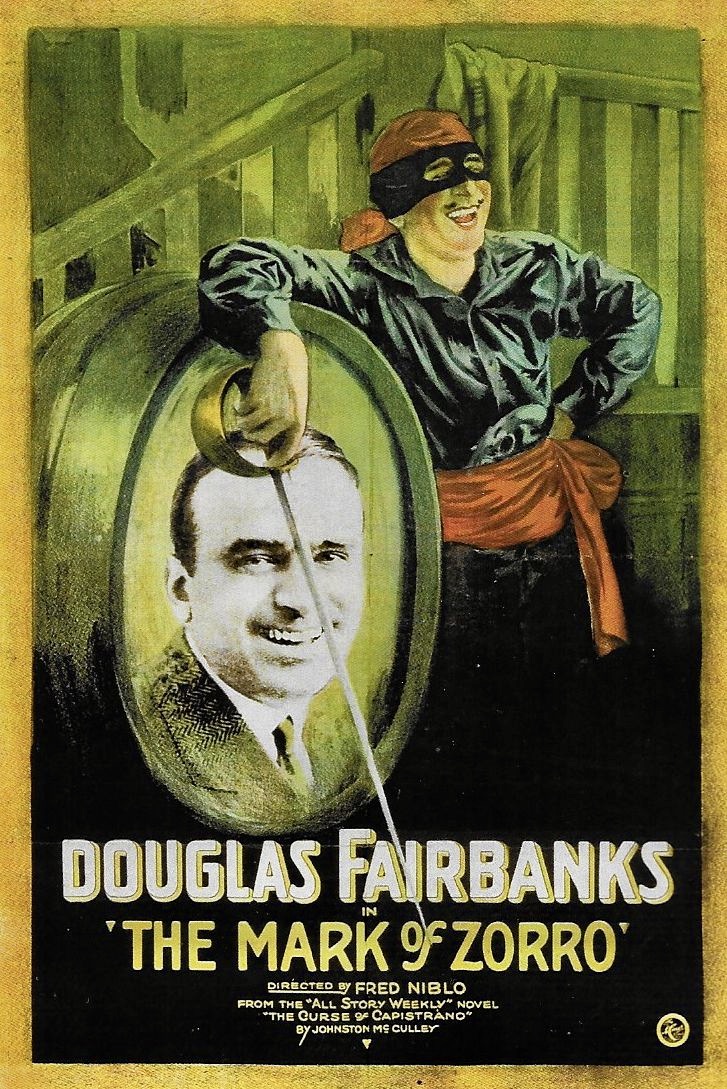
It is a well known fact that Douglas Fairbanks was one of the first superstars of the silent era but he first became famous as a leading man in romantic comedies such as Wild and Woolly (1917) and Reaching for the Moon (1917). In the aftermath of World War I, audiences had grown bored with the cheerful, boy-meets-girl formula that had made Fairbanks a popular screen idol so the star decided to try a different tactic. A short story by Johnston McCulley, “The Curse of Capistrano,” had appeared in the pulp magazine, All-Story Weekly, and he decided to read it during a long train trip from New York to Los Angeles. This was unusual in itself since Fairbanks did not like to read (and that included his movie scripts) but actress Mary Pickford encouraged him to read the serial and McCulley’s story became his next project. It was first called The Curse of Capistrano, which was then changed to The Black Fox and finally released as The Mark of Zorro in 1920.
Continue reading
 Cinema Sojourns