
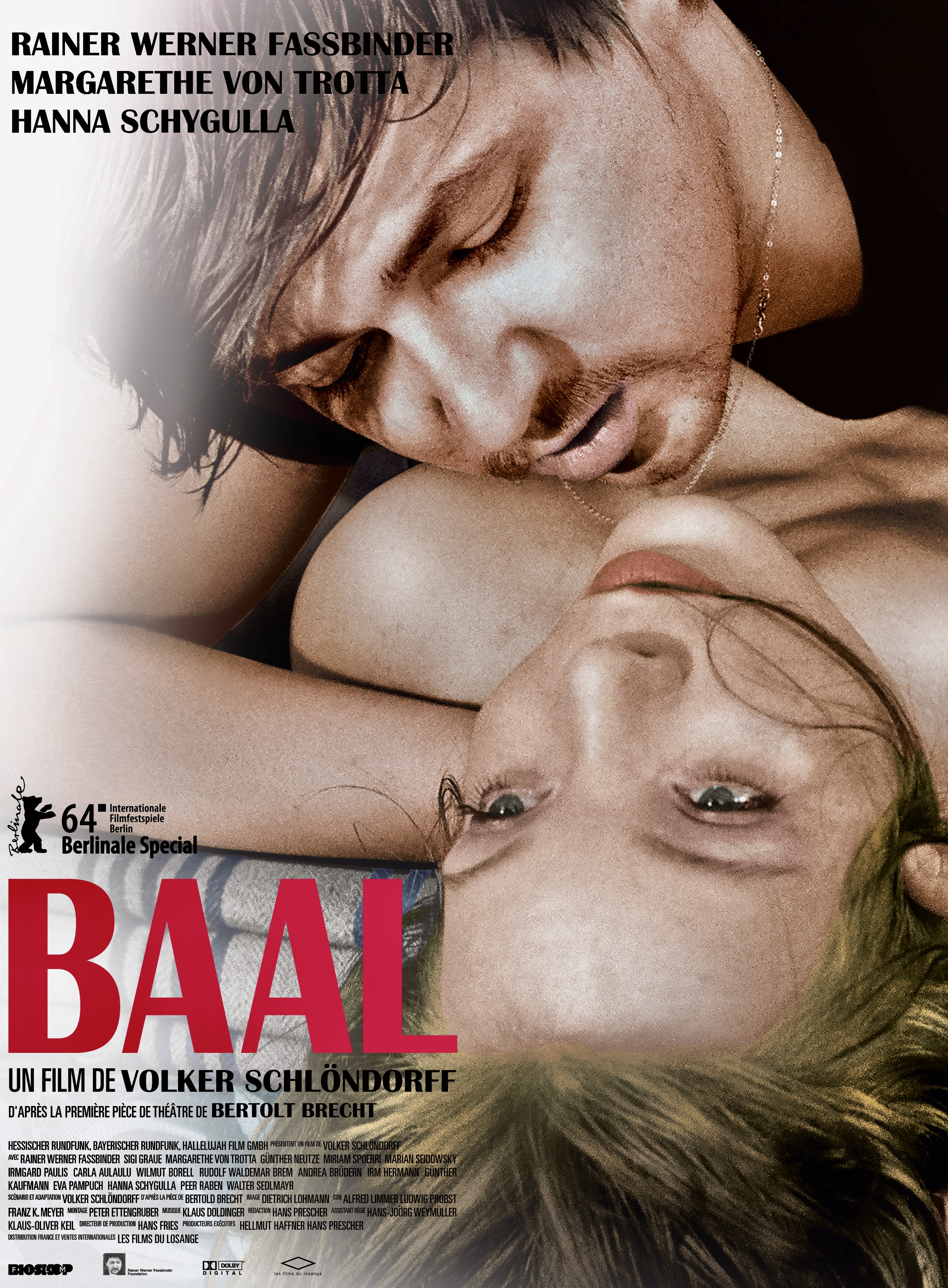
The Poet of Chaos

People tend to forgive artistic geniuses for their human imperfections when their talent is so monumental – this could also apply to any super-celebrity with landmark achievements in any field from sports to politics to music – but at a certain point, there is a limit to what society will tolerate. The protagonist of Baal, a 1970 film adaptation of the Bertolt Brecht play, is the embodiment of this. A former office clerk turned itinerant poet and musician, Baal’s work propels him to the level of a literary icon, beloved by the intelligentsia and the common man. He could care less because he hates everything, including the society that helped shape his talent. More importantly, he hates himself and that self-destructive urge informs his every act, making him one of the most nihilistic and anti-social characters even conceived for the stage or screen.

Continue reading

Salvatore Samperi’s Cuore di Mamma

The late sixties were a time of social and political upheaval on an almost global scale but Italy, in particular, seemed to be coming apart at the seams. Bloody clashes between the police and student demonstrators, bombings and factory worker strikes were on the rise as rival political parties like the DC (Christian Democrats), PRI (Republican party) and PCI (communist party) vied for power. This turbulent time was reflected in some of the edgier, more troubling movies of that period by such major filmmakers as Gillo Pontecorvo (The Battle of Algiers, 1966), Bernardo Bertolucci (Partner, 1968), Pier Paolo Pasolini (Teorema [1968], Porcile [1969]), and Michelangelo Antonioni (Zabriskie Point, 1970). Even more polarizing but less well-known is Cuore di Mamma (Mother’s Heart, 1969) by director Salvatore Samperi, which is much more of an avant-garde provocation than anything else. It was based on a story by Samperi and Sergio Bazzini (Dillinger is Dead) and fashioned into a screenplay by Dacia Maraini (The Future is Woman).

Continue reading