
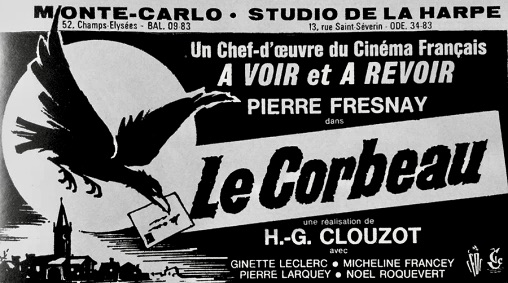
In a small village in rural France, an anonymous writer sends a series of poison-pen letters to selected residents. Signed with the mysterious name of “Le Corbeau”, the letters accuse the new physician in town, Dr. Remy Germain (Pierre Fresnay), of adultery and performing abortions. While the townspeople are scandalized by this information, it soon becomes apparent that Dr. Germain is not the only target of this vicious character assassination and that other respected members of the community will soon be victimized, their most shameful secrets exposed to all by “The Raven.” Soon, the villagers begin turning on each other, creating an atmosphere of increasing paranoia and mistrust that culminates in murder, suicide and an angry mob scene. There might not be a more misanthropic view of humanity than Le Corbeau (aka The Raven, 1943), directed by Henri-Georges Clouzot (The Wages of Fear, 1953), but the movie is not only a dark, brilliantly conceived melodrama which unfolds like a suspense thriller but a cautionary character study of how fear of others brings out the worst in everyone.
Continue reading
 Cinema Sojourns