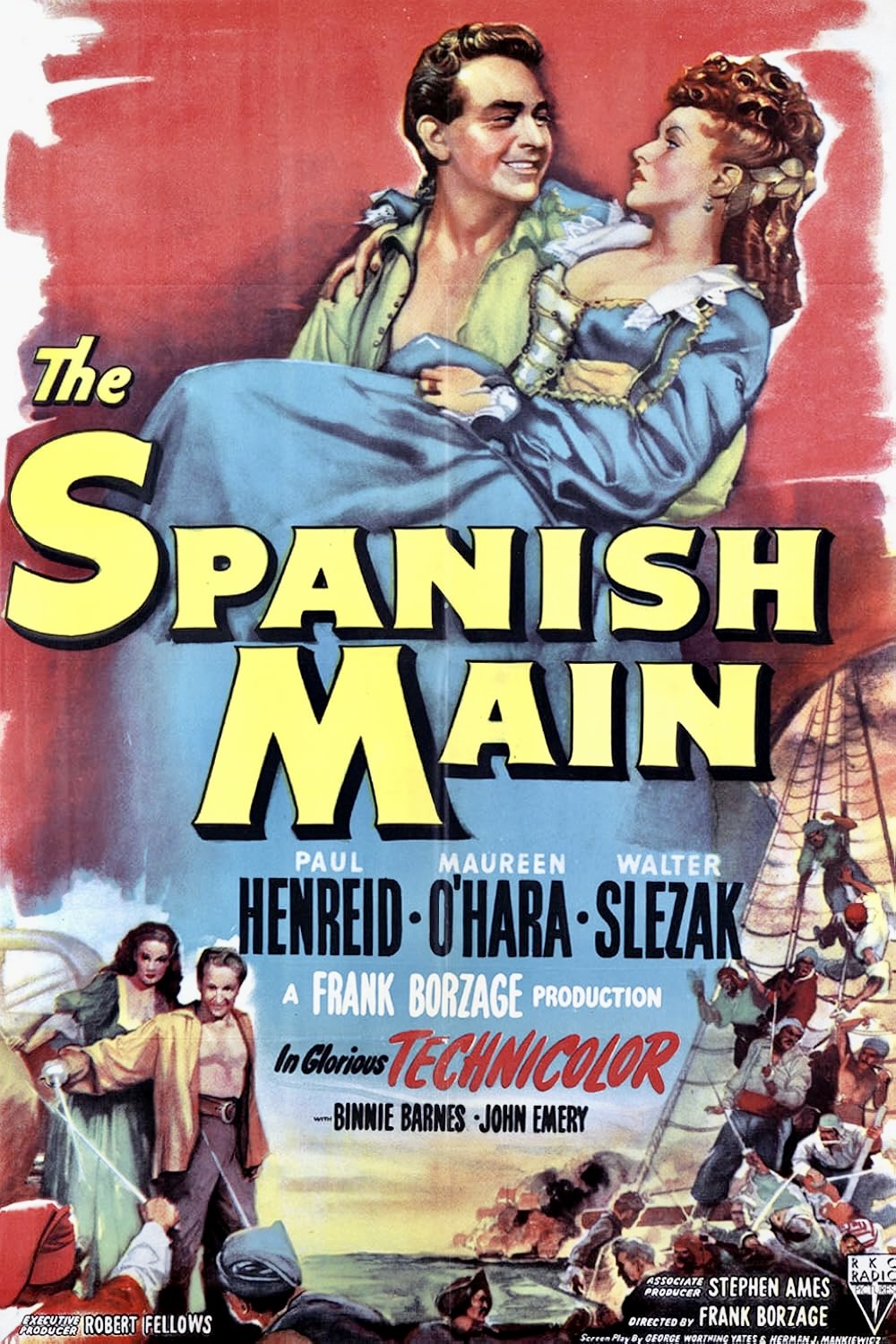
In the pantheon of great Hollywood directors from the 1930s, Frank Borzage and his films are often overshadowed by the work of such peers as Frank Capra, George Cukor and Ernst Lubitsch. Yet many film historians and scholars consider his work the equal of these better-known directors with such exemplary examples as 7th Heaven (1927) and Bad Girl (1931) – both of which won Borzage the Oscar for Best Director – plus Man’s Castle (1933), History is Made at Night (1937), Three Comrades (1938) and The Mortal Storm (1940). Often referred to as “The Great Romanticist,” whose most famous films usually focused on the redemptive power of love, Borzage began to fall out of favor in his later career when his films were seen as old-fashioned and anachronistic. But he was still capable of turning out a late period masterpiece such as the poetic film noir Moonrise (1948) as well as handle a big budget studio entertainment like The Spanish Main (1945). The latter pirate tale may seem atypical for a Borzage film but don’t forget he also dabbled in other unlikely genres such as war dramas (Flight Command, 1940) and musicals (Seven Sweethearts, 1942). It was also a rousing costume adventure which compared favorably to the swashbucklers of Errol Flynn such as Captain Blood (1935) and The Sea Hawk (1940), with the added attraction of being filmed in glorious Technicolor by George Barnes.
Continue readingTag Archives: Man’s Castle

The Working Woman’s Dilemma
By 1935 Kay Francis was at the peak of her film career and the highest paid actress on the Warner Bros. lot. While her image as a chic and stylishly dressed sophisticate eventually worked against her, obscuring her genuine talent as an actress, Francis was amazingly prolific in the early sound era, averaging four to five movies a year opposite such dashing leading men as Ronald Colman (Raffles, 1930), William Powell (Ladies’ Man, 1931), Joel McCrea (Girls About Town, 1931), Fredric March (Strangers in Love, 1932), and Herbert Marshall (Trouble in Paradise, 1932).
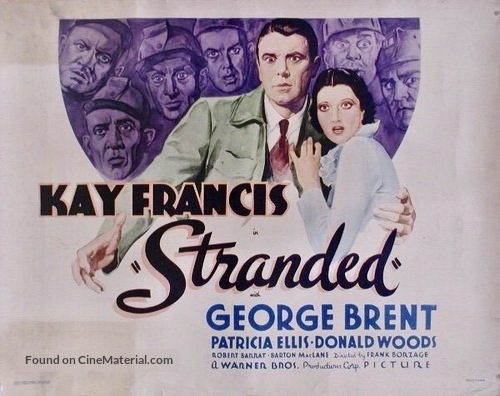
Despite the often clichéd and formulaic scripts she was given by the studio, which were mostly soap operas, tearjerkers and romantic dramas, Francis still managed to display her versatility in a variety of films that deserve to be better known today such as the delightful caper comedy Jewel Robbery (1932), the exotic Pre-Code melodrama Mandalay (1934) and the offbeat espionage thriller British Agent (1934). But there are plenty of lesser known efforts in her filmography that deserve rediscovery and one of the most intriguing is Stranded (1935), a curious blend of romance, New Deal optimism, and crime drama directed by Frank Borzage and pairing Francis with George Brent, who first appeared with the actress in The Keyhole (1931). (Brent would soon become Bette Davis’s leading man of choice at Warner with that actress replacing Francis as the queen of the lot). Continue reading