
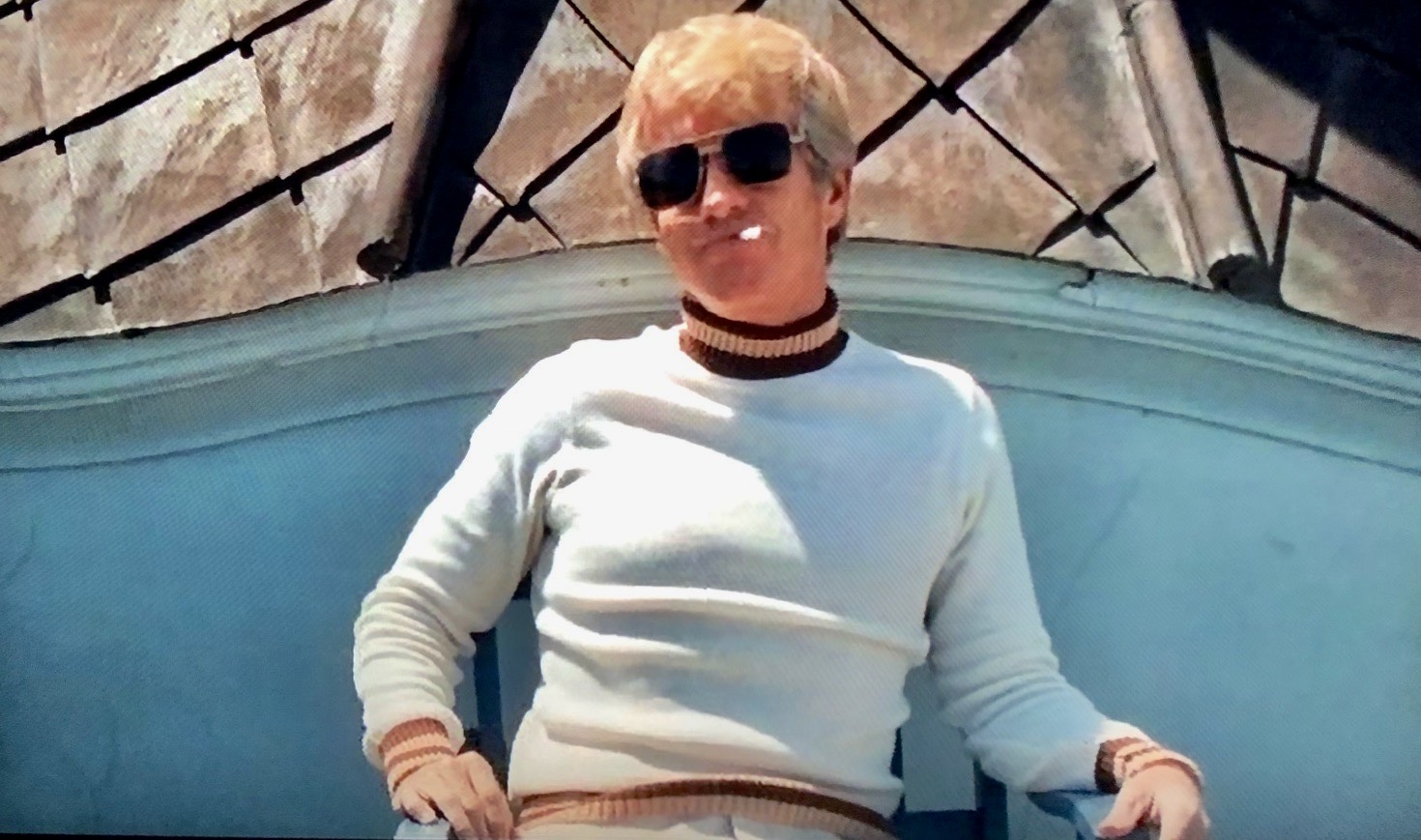
Clu Gulager in Sweden

American gangster Glenn Mortenson (Clu Gulager) relocates to a small town in Sweden with plans to build a new empire in the 1974 Swedish cautionary tale, GANGSTER FILM.

Holdenville, Oklahoma native Clu Gulager was an extremely busy and prolific actor (over 160 TV and movie credits) who worked right up to his death at 93 in August 2022. Even if he never quite graduated to the A list of Hollywood actors, he will always be remembered for starring roles in two iconic TV westerns, The Tall Man (1960-62), as Billy the Kid, and The Virginian (1963-68) as Sheriff Emmett Ryker as well as several cult movies. Among them are his feature film debut opposite Lee Marvin as a pair of sociopathic hit men in the 1964 remake of The Killers, directed by Don Siegel, The Return of the Living Dead (1985), Dan O’Bannon’s macabre zombie comedy, and A Nightmare on Elm Street 2: Freddy’s Revenge (1985). Other notable roles include memorable parts in the Paul Newman racetrack drama Winning (1969), Peter Bogdanovich’s The Last Picture Show (1971) and McQ (1974), a John Wayne cop thriller, but if American audiences had been given an opportunity to see him in the 1974 Swedish film Gangsterfilmen (U.S. title: Gangster Film aka A Stranger Came by Train), they would surely rank it right up there with his intimidating but off-the-wall performance in The Killers, which should have made him a major star.
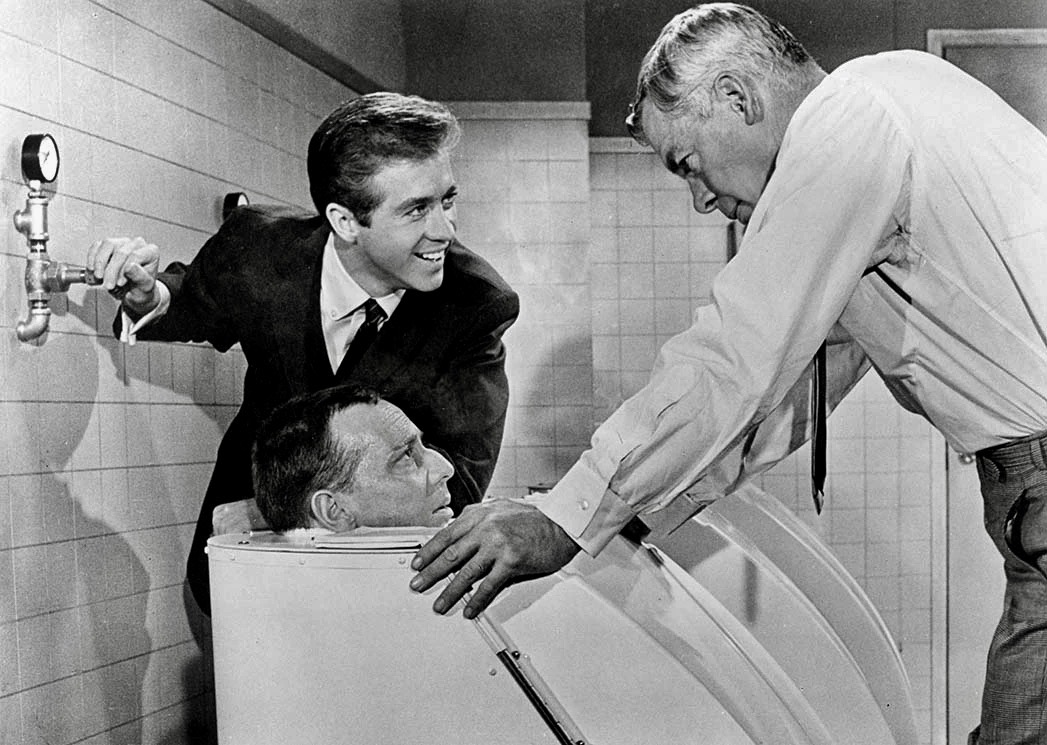
Lee (Clu Gulager, left) plays a devilish hit man who wants to turn up the heat on a victim in THE KILLERS (1964), co-starring Lee Marvin (right).
Continue reading

Salvatore Samperi’s Cuore di Mamma

The late sixties were a time of social and political upheaval on an almost global scale but Italy, in particular, seemed to be coming apart at the seams. Bloody clashes between the police and student demonstrators, bombings and factory worker strikes were on the rise as rival political parties like the DC (Christian Democrats), PRI (Republican party) and PCI (communist party) vied for power. This turbulent time was reflected in some of the edgier, more troubling movies of that period by such major filmmakers as Gillo Pontecorvo (The Battle of Algiers, 1966), Bernardo Bertolucci (Partner, 1968), Pier Paolo Pasolini (Teorema [1968], Porcile [1969]), and Michelangelo Antonioni (Zabriskie Point, 1970). Even more polarizing but less well-known is Cuore di Mamma (Mother’s Heart, 1969) by director Salvatore Samperi, which is much more of an avant-garde provocation than anything else. It was based on a story by Samperi and Sergio Bazzini (Dillinger is Dead) and fashioned into a screenplay by Dacia Maraini (The Future is Woman).

Continue reading