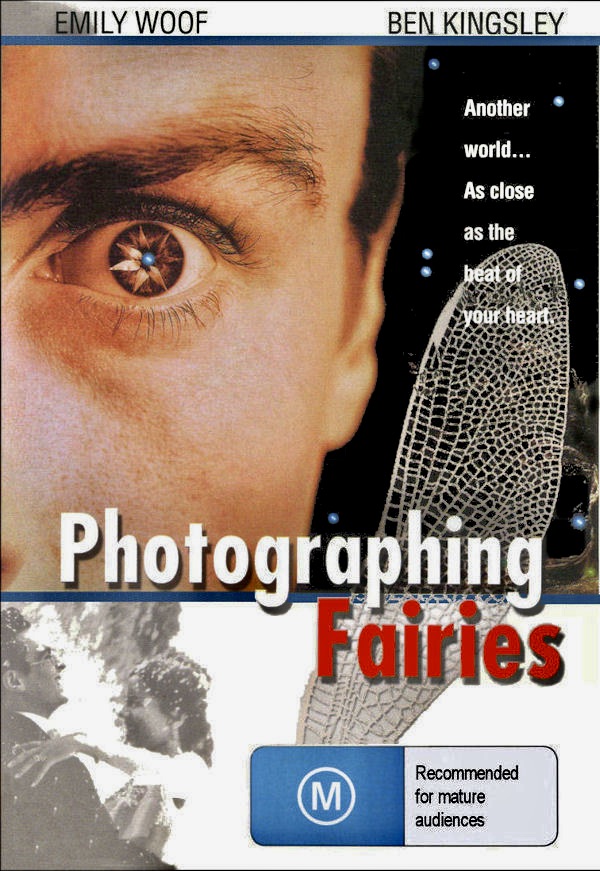
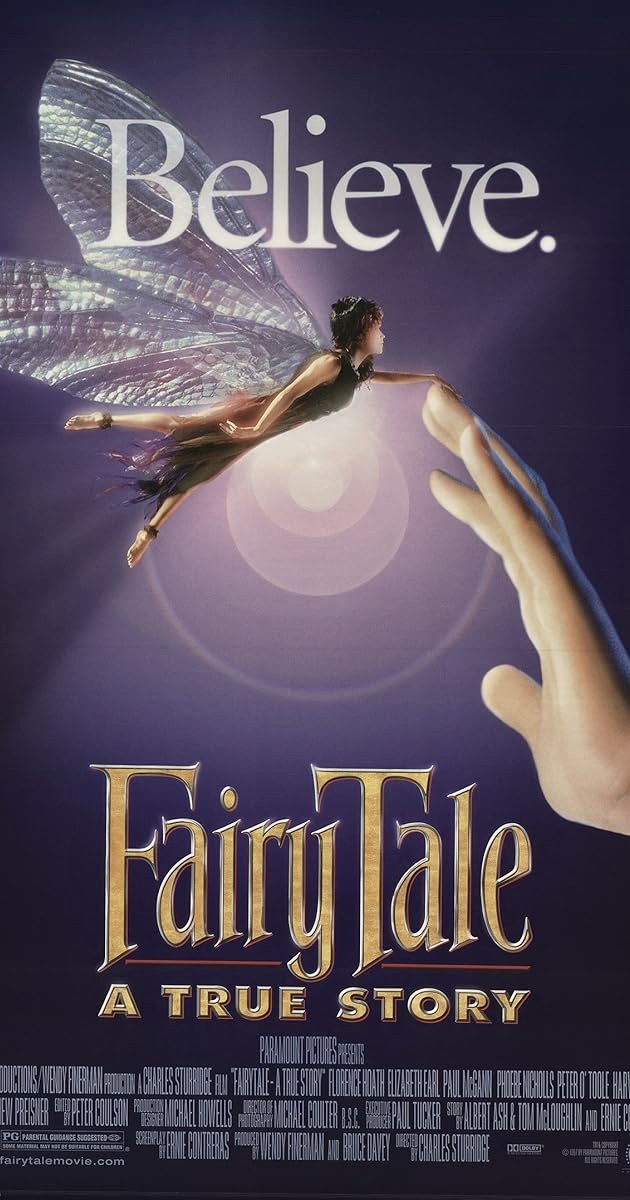
In 1917 sixteen year old Elsie Wright and her nine year old relative Frances Griffith were playing in the Wright family garden in Cottingley, England. Elsie borrowed her father’s camera to take some photos of Frances playing and a few months later she borrowed the camera again with both girls snapping photos. When the photos were developed, both girls but mainly Frances, were seen cavorting with what looked like fairies. Elsie’s father thought the photographs were faked but Elsie’s mother believed they revealed actual sprites and the photos were revealed to the public in 1919, creating an international sensation. The incident attracted the attention and support of the Theosophical Society in Bradford, England and prominent people like author Sir Arthur Conan Doyle, who was involved in the spiritualist movement, found the evidence convincing. The photographs were also denounced by non-believers like Harry Houdini, who famously campaigned against fraudulent psychics and mediums. For years, the Cottingley fairies remained a source of mystery and fascination and, in 1997, strangely enough, two different movies on the subject were produced and released in the U.K., FairyTale: A True Story and Photographing Fairies.
Continue readingTag Archives: Jean Harlow
From Socialite to Streetwalker

There have been some terrific Pre-Code dramas that were set in the Depression and were actually playing in movie theaters at the time but, for obvious reasons, were not box office hits because audiences wanted escapism, not a reminder of their problems. Still, several of these social problem dramas like William Wellman’s Heroes for Sale (1933) and Wild Boys of the Road (1933) were championed by film critics and today provide an invaluable window into that era. Faithless (1932), directed by Harry Beaumont (Dance, Fools, Dance) and based on the novel Tinfoil by Mildred Cram, also belongs in that category, even if it was poorly received at the time, and deserves a revival for its unusual mixture of soap opera, social issues and adult themes like prostitution.
Continue readingLee Tracy Does Washington
Whenever a repertory cinema like NYC’s Film Forum or a film archive like the George Eastman Museum programs a Pre-Code series you can bet that Lee Tracy is bound to be in a few of the famous titles such as The Strange Love of Molly Louvain, Love is a Racket, Doctor X, Blessed Event (all released in 1932) and Bombshell (1933). He’s also likely to be playing some kind of shady careerist such as a carnival barker, ambulance-chasing lawyer or tabloid newsman. That’s probably due to his legendary performance on Broadway in 1928 as reporter Hildy Johnson in The Front Page, written by Charles MacArthur and Ben Hecht. Unfortunately, he didn’t get to play the role in the 1931 screen version – Pat O’Brien won that honor and Rosalind Russell played the female version in Howard Hawks’ 1940 remake, His Girl Friday – but Fox Pictures realized Tracy’s potential and brought him to Hollywood in 1929. Continue reading

