People tend to forgive artistic geniuses for their human imperfections when their talent is so monumental – this could also apply to any super-celebrity with landmark achievements in any field from sports to politics to music – but at a certain point, there is a limit to what society will tolerate. The protagonist of Baal, a 1970 film adaptation of the Bertolt Brecht play, is the embodiment of this. A former office clerk turned itinerant poet and musician, Baal’s work propels him to the level of a literary icon, beloved by the intelligentsia and the common man. He could care less because he hates everything, including the society that helped shape his talent. More importantly, he hates himself and that self-destructive urge informs his every act, making him one of the most nihilistic and anti-social characters even conceived for the stage or screen.
Continue readingTag Archives: Harry Baer
An Immigrant’s Journey
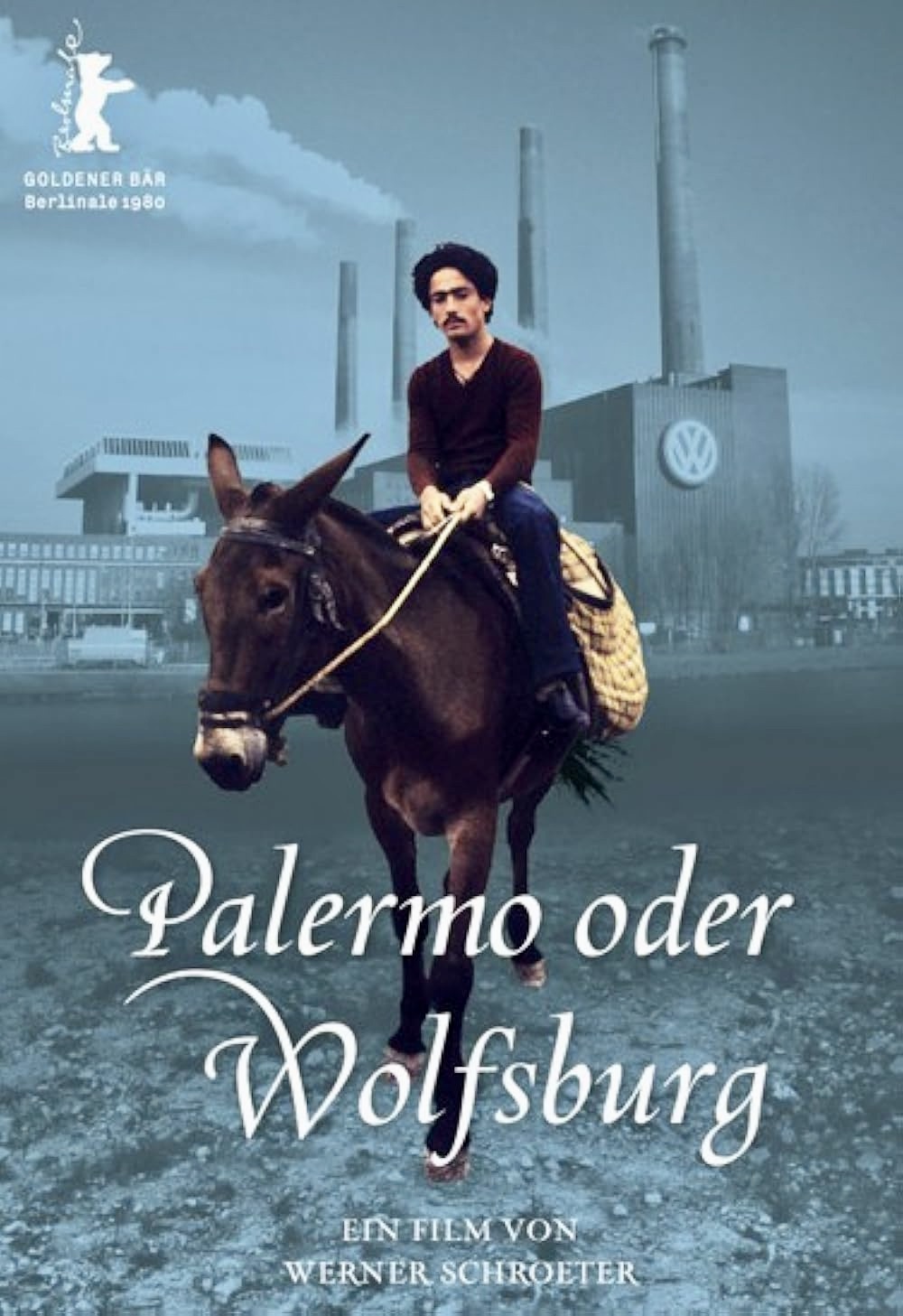
In recent years the immigrant problem in Germany has become more severe than previous times with Ukraine refugees joining the constant stream of immigrants from Turkey, Romania and other countries. This mirrors another migration that occurred in the seventies in Germany but that one helped fuel the country’s economy because the work force was supplemented by much needed laborers coming from Greece, Italy and other European locales. Palermo oder Wolfsburg aka Palermo or Wolfsburg (1980), directed by Werner Schroeder, is set during this latter period and tracks one man’s journey from Sicily to Germany where he hopes to find work to help support his impoverished family back home. Schroeder’s film not only shows the difficulties of outsiders trying to adapt to German life but also suggests that there is an incompatibility factor between Germany and other European cultures that can never be overcome. And this particular immigration tale unfolds like an epic tragedy.
Continue readingR.W. Fassbinder and Daniel Schmid: Shadow of Angels

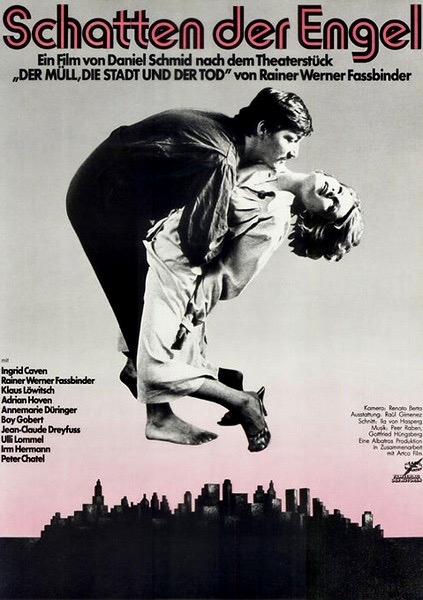
In his relatively brief lifetime of 37 years, Rainer Werner Fassbinder turned out 21 feature films, two TV mini-series (Berlin Alexanderplatz, Eight Hours Don’t Make a Day), 11 made-for-TV movies, 1 documentary, several film shorts, and numerous theatrical productions. He also helmed an episode of the quasi-documentary/fiction compilation Germany in Autumn (1978), served as producer on other German films like Tenderness of the Wolves (1973) and appeared as an actor, not only in many of his own films but in those of other contemporaries from the New German cinema like Volker Schlondorff. Fassbinder’s role as the contemptuous anti-social rebel Baal (1970), adapted for television by Schlondorff from Bertolt Brecht’s play, is one of his finest performances (Criterion released a beautifully restored version of it on Blu-ray and DVD in March 2018). Equally impressive but lesser known is Daniel Schmid’s Shadow of Angels (Schatten der Engel, 1976), which is based on Fassbinder’s play The Garbage, the City and Death and features R.W. in a pivotal role.
Continue readingThe Phobophobic Housewife

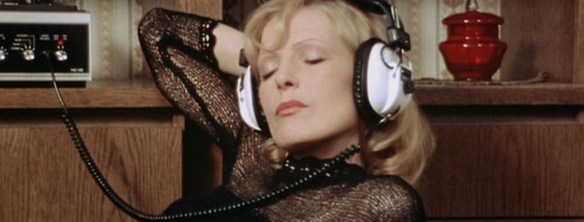
Margit Carstensen tries to relax by listening to music in Fear of Fear (1975) but it doesn’t stop her increasing bouts of anxiety and depression.
Films about housewives losing their identity in a marriage or slowly going bonkers from the daily rituals of domesticity are plentiful enough to form their own distinctive subgenre. Among the most intriguing of these films, all of which reflect the specific time and cultural moment in which they were made, are Frank Perry’s Diary of a Mad Housewife (1970), John Cassavetes’ A Woman Under the Influence (1974), Chantal Akerman’s landmark 1975 feature, Jeanne Dielman, 23 Quia du Commerce, 1080 Bruxelles, Dusan Makavejev’s Montenegro (1981), and the curious Canadian indie Dancing in the Dark (1986), directed by Leon Marr. But the one I’d like to highlight and which I had the pleasure of revisiting recently on DVD is Fear of Fear (German title: Angst vor der Angst, 1975), directed by Rainer Werner Fassbinder. Continue reading