Memories of the 2011 TCM Classic Film Festival

*This article originally appeared on Movie Morlocks, Turner Classic Movies’s official blog in May 2011 (The blog was discontinued years ago and is no longer available)

In the event-packed hurly burly of TCM’s second annual Film Festival in Los Angeles from April 28-May 1 of 2011, I didn’t have a chance to blog about all of the films or attending guests that I saw but here are a few that linger in the memory and deserve to be singled out –cinematographer/director Haskell Wexler, who participated in a Q&A with Leonard Maltin before a screening of Who’s Afraid of Virginia Woolf?(1966), Hayley Mills, who appeared after a screening of Whistle Down the Wind (1961) with interviewer/author Cari Beauchamp, a midnight screening of The Mummy (1932) introduced by Boris Karloff fan Ron Perlman, Buster Keaton’s The Cameraman (1928) accompanied by a live orchestra score by Vince Giordano and His Nighthawks, the MoMA restoration print showing of 1933’s Hoopla (Clara Bow’s final film) and the underrated Ernst Lubitsch Pre-Code delight Design for Living (1933).

Continue reading
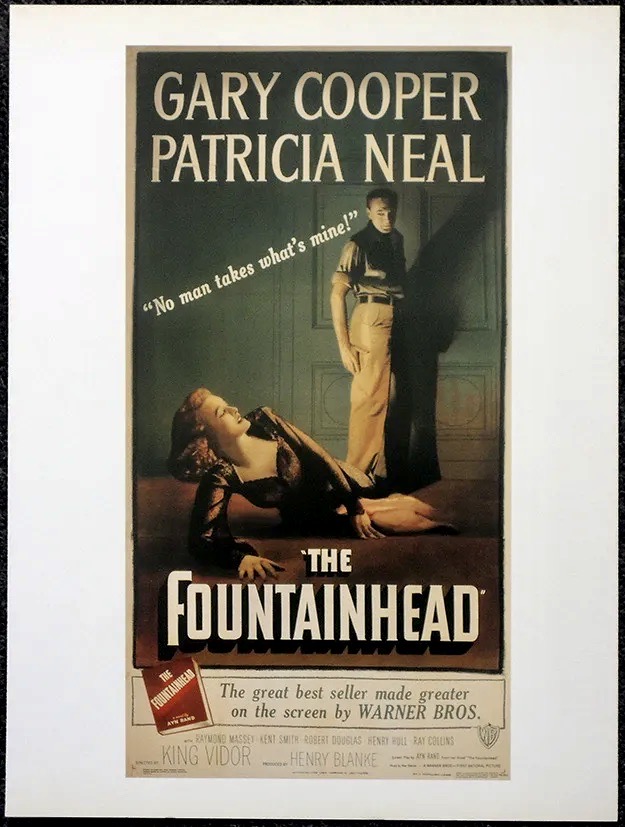
A Monument to Objectivism

If you look up the word melodrama in the Merriam-Webster Dictionary, the description reads “a work (such as a movie or play) characterized by extravagant theatricality.” The Oxford Learner’s Dictionaries offers a similar definition: “a story, play, or novel that is full of exciting events and in which the characters and emotions seem too exaggerated to be real.” Some popular examples of this in the movies would have to include The Bad and the Beautiful (1952), The Barefoot Contessa (1954) and The Best of Everything (1959). But they are some films in this category that are so excessive in tone and style that they belong in their own category of extreme melodrama. Among the more glaring examples of this are Douglas Sirk’s Written on the Wind (1956), The Caretakers (1963), which is set in a psychiatric hospital where Joan Crawford teaches karate, the Tinseltown expose The Oscar (1966), and four films – yes, four! – from director King Vidor: Duel in the Sun (1946), Beyond the Forest (1949) with Bette Davis, Ruby Gentry (1952) starring Jennifer Jones, and my personal favorite, The Fountainhead (1949), which scales dazzling heights in operatic excess.

Continue reading

A Western for Adults

The Hanging TreeUnderrated at the time of its release, The Hanging Tree (1959) is now considered a superior western from the waning years of that popular genre which coincided with the end of the studio era. It is also considered one of Gary Cooper’s best performances from his final decade in film, comparable to his fine work in High Noon (1952) and Man of the West (1958), and a late period achievement for director Delmer Daves (Broken Arrow, 3:10 to Yuma). I was encountered the film at a Saturday matinee in Harrisburg, Pennsylvania when I was seven years old and remember being disturbed by it. This is an adult western. It is not a film for children.  Continue reading