
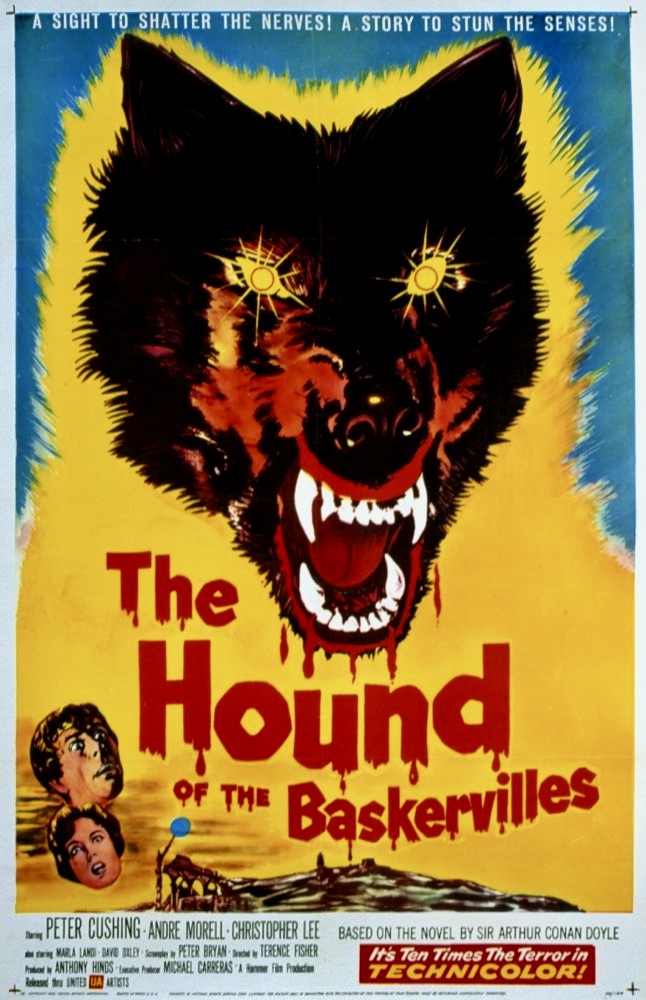
Howling on the Moors

Almost thirteen years after Basil Rathbone had filmed his final screen appearance as Sherlock Holmes, Hammer Studios decided to resurrect Sir Arthur Conan Doyle’s internationally famous detective in a Technicolor remake of The Hound of the Baskervilles (1959) which had been previously filmed with Rathbone in 1939. The eerie tale, which opens in a flashback sequence to an earlier time, depicts the origins of the Baskerville curse: the decadent Sir Hugo Baskerville brutally murders a servant girl who flees a group orgy at his mansion. Immediately following her death, however, Baskerville hears a strange braying on the moors before encountering an immense spectral hound which avenges the girl’s death. We then flash forward to the present, where Sherlock Holmes and his partner, Dr. Watson, are investigating the mysterious recent death of Sir Charles Baskerville.

Continue reading
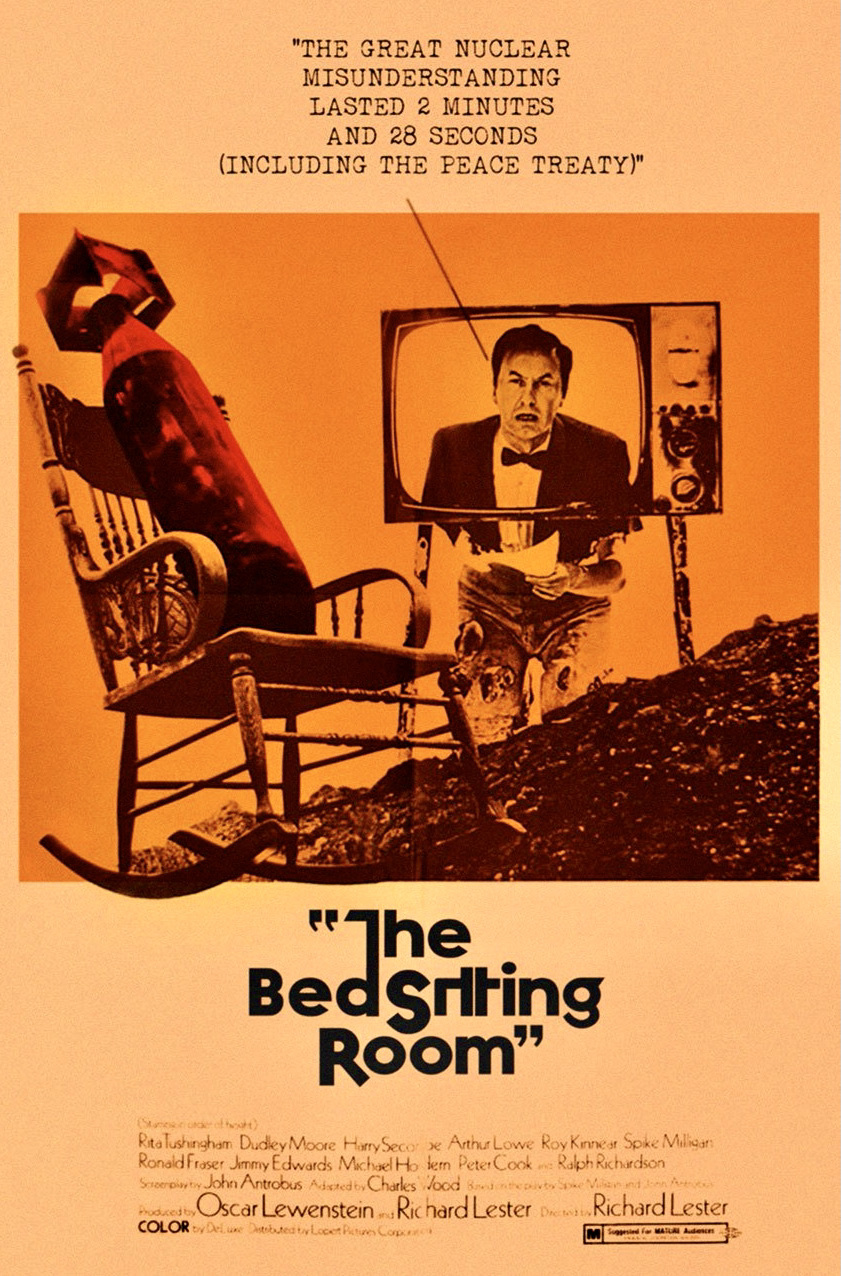
Life After the Bomb

What would life be like after a global apocalyptic event or would there be any life at all? It is certainly a topic that has inspired filmmakers to create an entire subgenre upon the premise. Some of the more famous and/or infamous efforts have usually focused on a handful of survivors like Arch Oboler’s low-budget message melodrama Five (1951), Stanley Kramer’s On the Beach (1959), the interracial menage-a-trois of The World, the Flesh and the Devil (1959) and Roger Corman’s similar three-character B-picture, The Last Woman on Earth (1960). Other variations have been more epic in scope and ambition with a distinct sci-fi/horror approach like the various film versions of Richard Matheson’s I Am Legend, The Road Warrior (1981) and other Mad Max sequels and clones as well as post-apocalyptic zombie flicks like World War Z (2013).  Comedies about life-after-the-bomb, however, are a rarity but probably the weirdest and most deeply cynical of them all is The Bed-Sitting Room (1969), directed by Richard Lester.

Continue reading