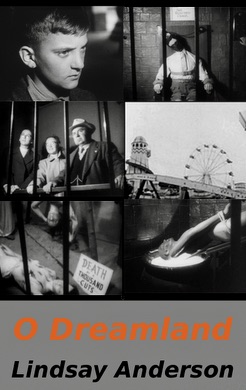
The Free Cinema Shorts of Lindsay Anderson

The 1960s might be seen as the decade that ushered in a significant number of game changing film movements such as the Czech New Wave, Cinema Verite and New German Cinema but the 1950s shouldn’t be overlooked for inspiring the birth of the Nouvelle Vague in France and the self-reflective ‘kitchen sink’ realism trend in England. One of the most influential but short lived film developments during this period was the Free Cinema movement, which flourished between 1956 and 1959 in the U.K.. It rejected the conservativism and class bound traditions of commercial filmmaking as well as the didactic approach to documentaries made famous by Scottish director John Griegson (Song of Ceylon [1934], Night Mail [1936]]. Instead, Free Cinema was dedicated to making personal films that expressed the opinion and artistic vision of their directors despite limited budgets and semi-amateur conditions (most of the movies were shot with a 16mm Bolex camera). Karel Reisz, Alain Tanner, Claude Goretta, Tony Richardson and Lindsay Anderson were among the leaders of the Free Cinema group but Anderson, in particular, created some of the movement’s most significant work, including Wakefield Express (1952), O Dreamland (1953), Thursday’s Children (1955) and Every Day Except Christmas (1957). Continue reading
Charlotte Rampling’s Wild Card

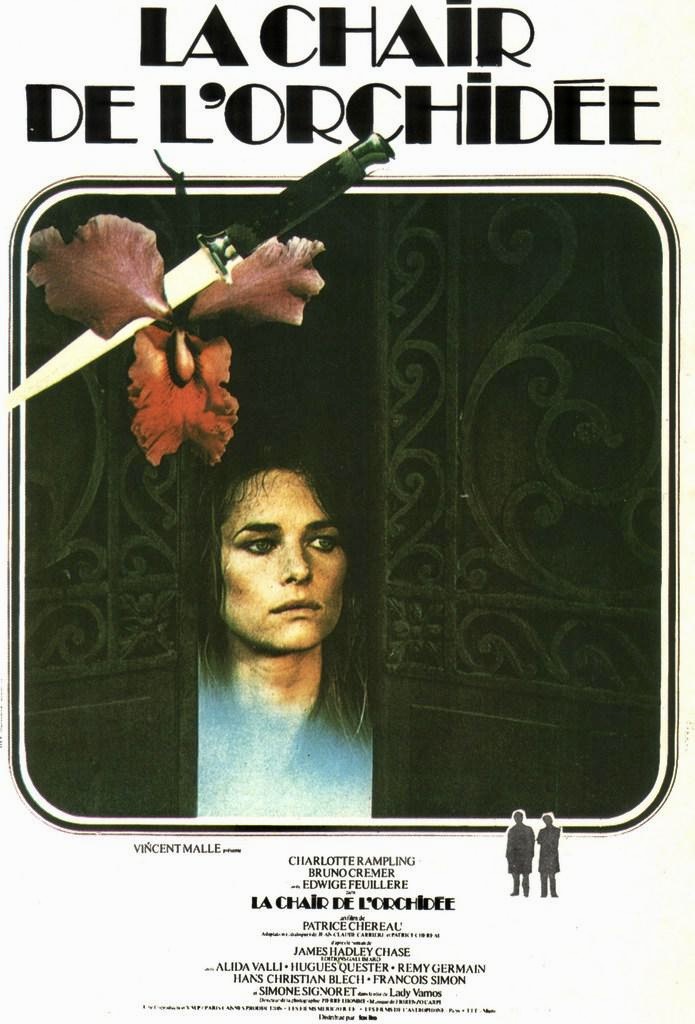
The French film poster for the 1975 thriller THE FLESH OF THE ORCHID, directed by Patrice Chereau.

Charlotte Rampling has been an international star since the mid-1970s when she appeared in Zardoz (1974), The Night Porter (1974) and Farewell, My Lovely (1975), but during her early career, critics were more likely to comment on her beauty and sex appeal over her acting talent. It wasn’t until she began appearing in the films of Francois Ozon (Under the Sand [2000], Swimming Pool [2003]) and other independent, cutting-edge directors like Dominik Moll (Lemming, 2005) and Laurent Cantet (Heading South, 2005) that Rampling finally came into her own as a critically acclaimed actress and cult favorite. She has rarely steered clear of edgy material or doing nude scenes or choosing unconventional roles over more audience friendly fare and her movies from the late sixties through the mid-nineties reflect this. Some were pretentious misfires like The Ski Bum (1971) or eccentric one-offs (Yuppi du, 1975) or mainstream showcases for her talent such as Woody Allen’s Stardust Memories (1980) and Sidney Lumet’s The Verdict (1982). Yet, even her lesser known work from this period is often worth seeking out and La Chair de I’orchidee (English title, The Flesh of the Orchid, 1975), the debut film of French director Patrice Chereau, is certainly a wild card. A psychological thriller that seems to take place in an alternate universe where everyone is misanthropic, corrupt, greedy or violent, Chereau’s first film is based on a 1948 pulp fiction novel by James Hadley Chase.

Continue reading

Claude Goretta’s Garden Party

Most people who work for a company, regardless of its size, have probably attended an office party for the employees at a certain point. For some, the idea of socializing with co-workers outside of work is something to avoid if possible. For others, it is an opportunity to score points with the boss and maybe advance your career. Then there are employees who simply enjoy social gatherings where an open bar and free food is theirs for the taking. All of these personality types and more – the gossip, the prude, the party animal, etc. – are on display in The Invitation (French title: L’invitation, 1973), a comedy of manners by Swiss director Claude Goretta, in which the employees of a small firm gather at a country estate for an office party given by one of the most unlikely employees to host a soiree.

Continue reading