
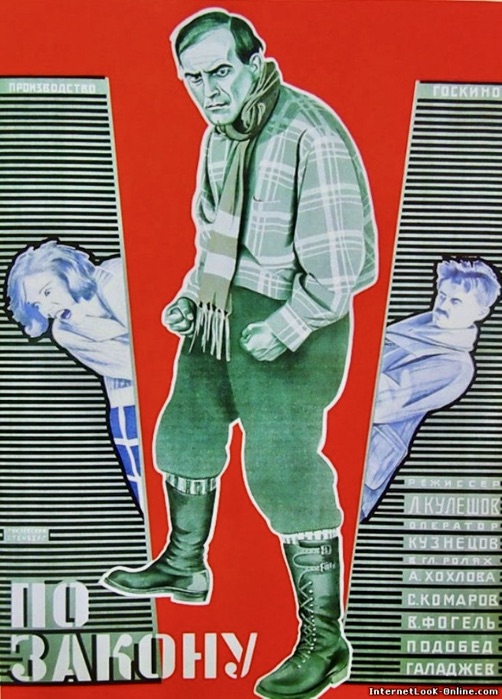
Law of the Yukon

The Russian film poster for BY THE LAW (1926)

It is not a surprise that novelist/journalist Jack London was the most popular writer of the early 20th century and he enjoyed an international readership, especially in Japan, Eastern Europe and Russia. In fact, one of the landmark films of early Soviet cinema is By the Law (Russian title: Po Zakonu, 1926), based on London’s short story The Unexpected, and directed by Lev Kuleshov, a former painter turned set designer who eventually became a film theorist and director who launched the montage movement of the 1920s (Sergei Eisenstein [The Battleship Potemkin, 1925] was one of his students).

Continue reading
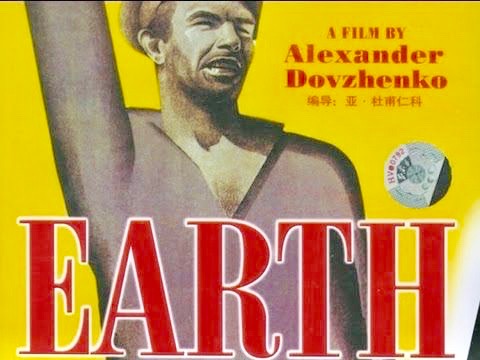
A Paean for Terra Firma

From an early age I developed a fascination with film but it wasn’t until college when my film interests expanded beyond American cinema to include international films and more specialized genres like underground, silent, documentary and exploitation movies. A Film History 101 course at the University of Georgia, curated by a drama professor, was partly responsible for that due to his eclectic overview which sampled the early work of Sam Fuller (The Steel Helmet, Park Row), Fritz Lang silents (Die Nibelungen: Siegfried & Kriemhild’s Revenge), the roots of Neorealism (La Terra Trema) and Hollywood studio system gems (George Sidney’s Scaramouche, An Affair to Remember). What made one of the strongest impressions, however, were examples of early Soviet cinema like Sergei Eisenstein’s Battleship Potemkin and Dziga Vertov’s Man With a Movie Camera. And my favorite of them all was Aleksandr Dovzhenko’s Earth (Russian title: Zemlya, 1930), the third film in a trilogy that included Zvenyhora (1928) and Arsenal (1929).  Continue reading