A Warrior’s Path to Redemption

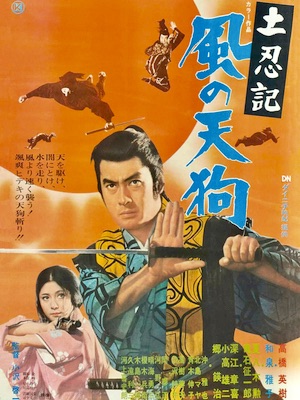
The Japanese film poster for HAUNTED SAMURAI (1970)

The samurai film in Japanese cinema was often classified as a chanbara, a sub-category of the jidai-geki (period drama) which was more action oriented. The chanbara was at the peak of its popularity in Japan from the early 50s to the early 70s with occasional revivals of the form up through the present and some of the most famous examples of the genre are Teinosuke Kinugasa’s Gate of Hell (1954), Hiroshi Inagaki’s Samurai Trilogy (1954-1956), and Akira Kurosawa’s Seven Samurai (1954) and Yojimbo (1961). One aspect of the samurai film that always struck me was that it seemed like a period variation on the American western and the fact that Kurosawa was a huge fan of director John Ford seems obvious when you look at Seven Samurai and Yojimbo, whose main protagonists are samurai-for-hire, not unlike professional gunfighters or bounty hunters in the wild west. Both of Kurosawa’s films went on to inspire two popular westerns respectively – John Sturges’s The Magnificent Seven (1960) and Sergio Leone’s A Fistful of Dollars (1964). Reminiscent of Kurosawa’s chanbara efforts is Haunted Samurai (Japan title: Kaze no Tengu, 1970), an often overlooked samurai action-adventure from director Keiichi Ozawa that came toward the tail end of the genre’s peak period but also seems custom made for an American western remake.

Continue reading
Good Cop, Bad Cop

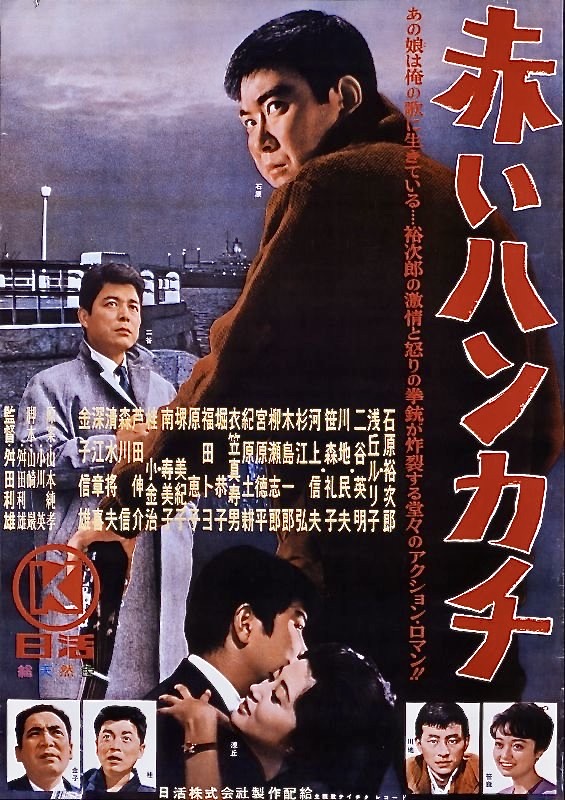
The Japanese film poster for RED HANDKERCHIEF (1964)

Among the major film studios in Japan, Nikkatsu is generally regarded as the oldest but it almost didn’t survive the post-WW2 years after shutting down production in 1942. When it relaunched in 1954, audience tastes had changed and so had the moviegoing public, which was younger and hungry for films that reflected the problems, attitudes and pop culture of their generation. As a result, the studio began to churn out different kinds of films – yakuza and cop thrillers, youth rebellion dramas and frenetic comedies/musicals – that were partially inspired by American genre films and the rise of rebel icons like James Dean and Elvis Presley. Often categorized as “Nikkatsu Action Cinema,” these films experienced a surge of popularity in the late 50s as such directors as Seijun Suzuki, Shohei Imamura, Koreyoshi Kurahara and Toshio Masuda emerged as the most creative filmmakers at Nikkatsu during the post-war new wave. Masuda, in particular, was one of the most commercially successful filmmakers at the studio and helped actor Yujiro Ishihara achieve major stardom after their first collaboration Rusty Knife (1958), a gritty crime drama about a volatile street tough who crosses the mob. They went on to make 25 features together but, curiously enough, one of their most successful films, Akai Hankachi (Red Handkerchief, 1964), is almost forgotten and difficult to see outside of Japan.

Continue reading