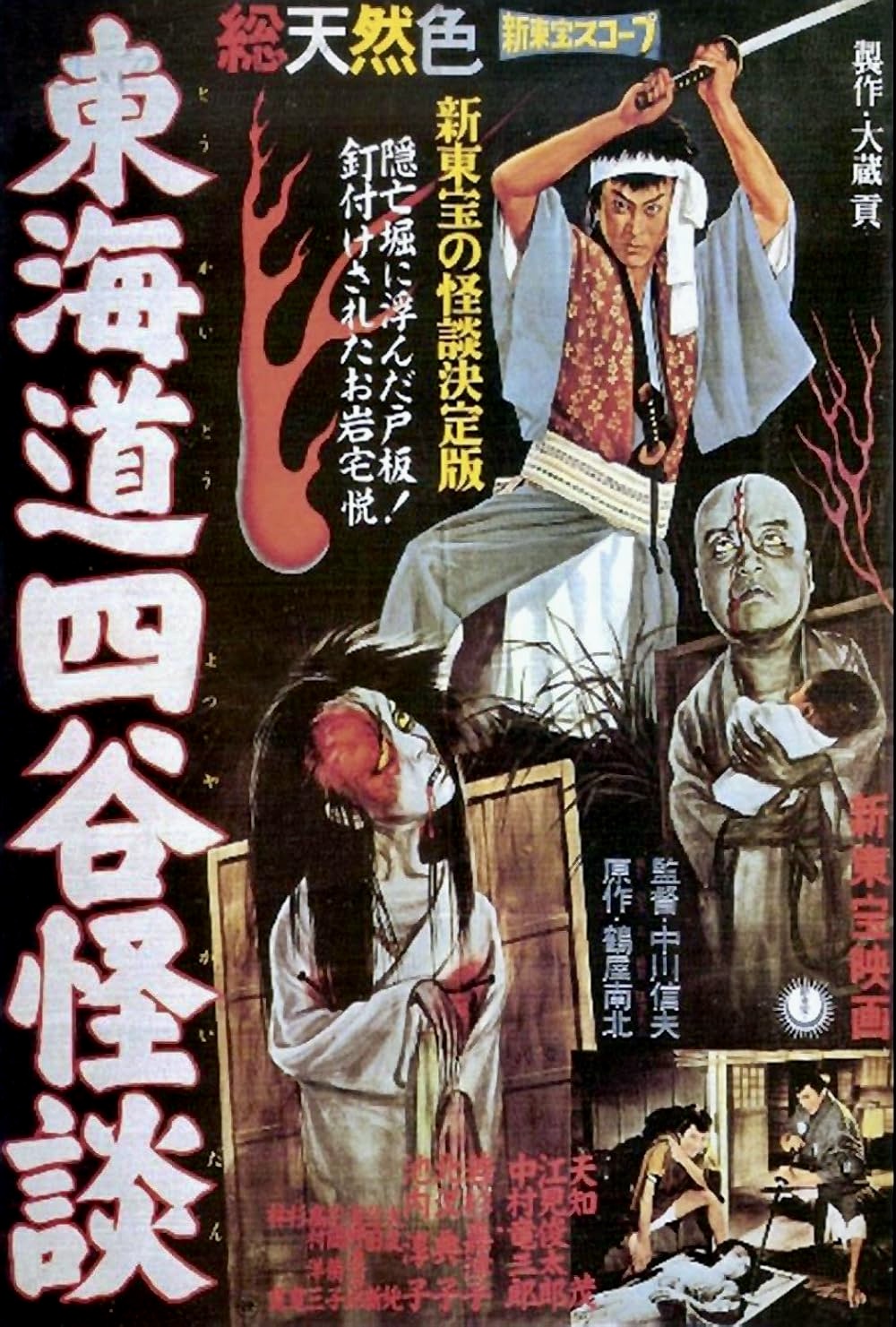
The Japanese film poster for THE GHOST OF YOTSUYA (1959), directed by Nobuo Nakagawa.
Based on a kabuki play written in 1825 by Nanboku Tsuruya, The Ghost of Yotsuya (Japanese Title: Tokaido Yotsuya Kaidan) is one of the most popular and famous of all Japanese ghost stories. It has been filmed countless times over the years but Nobuo Nakagawa’s 1959 version of The Ghost of Yotsuya might be the definitive version. The story is one of fate, passion, betrayal and revenge – all classic themes of kabuki theatre and Greek tragedy.
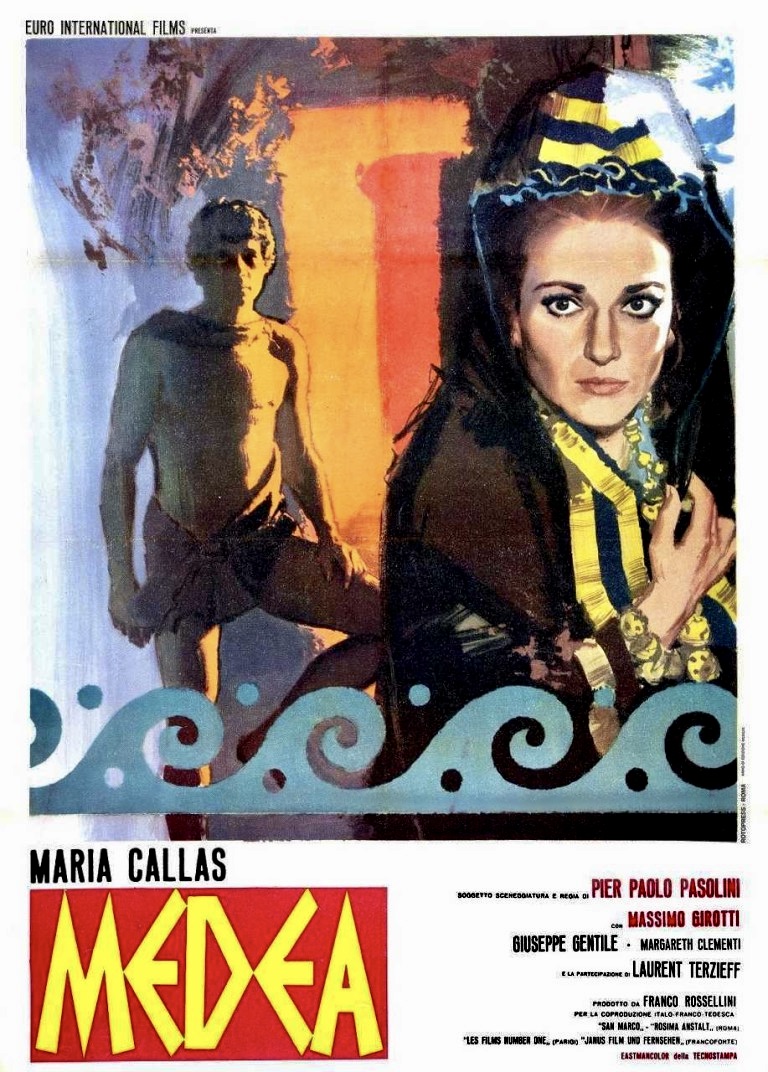
Are you well versed in Greek mythology? You’ll need to be if you take a deep dive into Pier Paolo Pasolini’s 1969 version of Medea starring the world’s most famous opera diva Maria “La Divina” Callas in her only feature film role (and she doesn’t sing). Freely adapting narrative elements from the original Greek myth as well as Euripides’ play, which was first performed in 431 BC, Pasolini presents the tragic tale in the manner of a social anthropologist crossed with an experimental filmmaker dissecting an ancient case history of a marriage gone wrong. If you aren’t familiar with the story of Jason and Medea, this interpretation can be confusing, mysterious and inaccessible at times but it is also one of the most visually and aurally dazzling of the many versions produced on stage, TV or film over the years.
World War I has been the subject of some of the most powerful and prestigious films in cinema from King Vidor’s The Big Parade (1925) and Lewis Milestone’s All Quiet on the Western Front (1930) to Stanley Kubrick’s Paths of Glory (1957) and more recently, Sam Mendes’ 1917 (2019), nominated for ten Oscars including Best Picture. All of those films captured the grim horrors of the battlefield, the demoralization and death toll of the troops and the often reckless or unnecessary military strategies of commanding officers. Going against the grain is Thomas l’imposteur (Thomas the Impostor), based on Jean Cocteau’s 1923 novel which was inspired by his own experiences during WW1 as an ambulance driver for the Red Cross. Directed by Georges Franju from a screenplay by himself, Cocteau and Michel Worms, the 1965 film views war through the experiences of two idealistic dreamers, one an aristocrat, the Princess de Bormes (Emmanuelle Riva), the other an orphan (Fabrice Rouleau), who lies about his age and invents a fake backstory for himself so he can enlist. The result is a unique take on the Great War which combines the ambiance of a dark fairy tale with a realistic but emotionally detached approach to the events as they affect the two main protagonists.


 Cinema Sojourns