
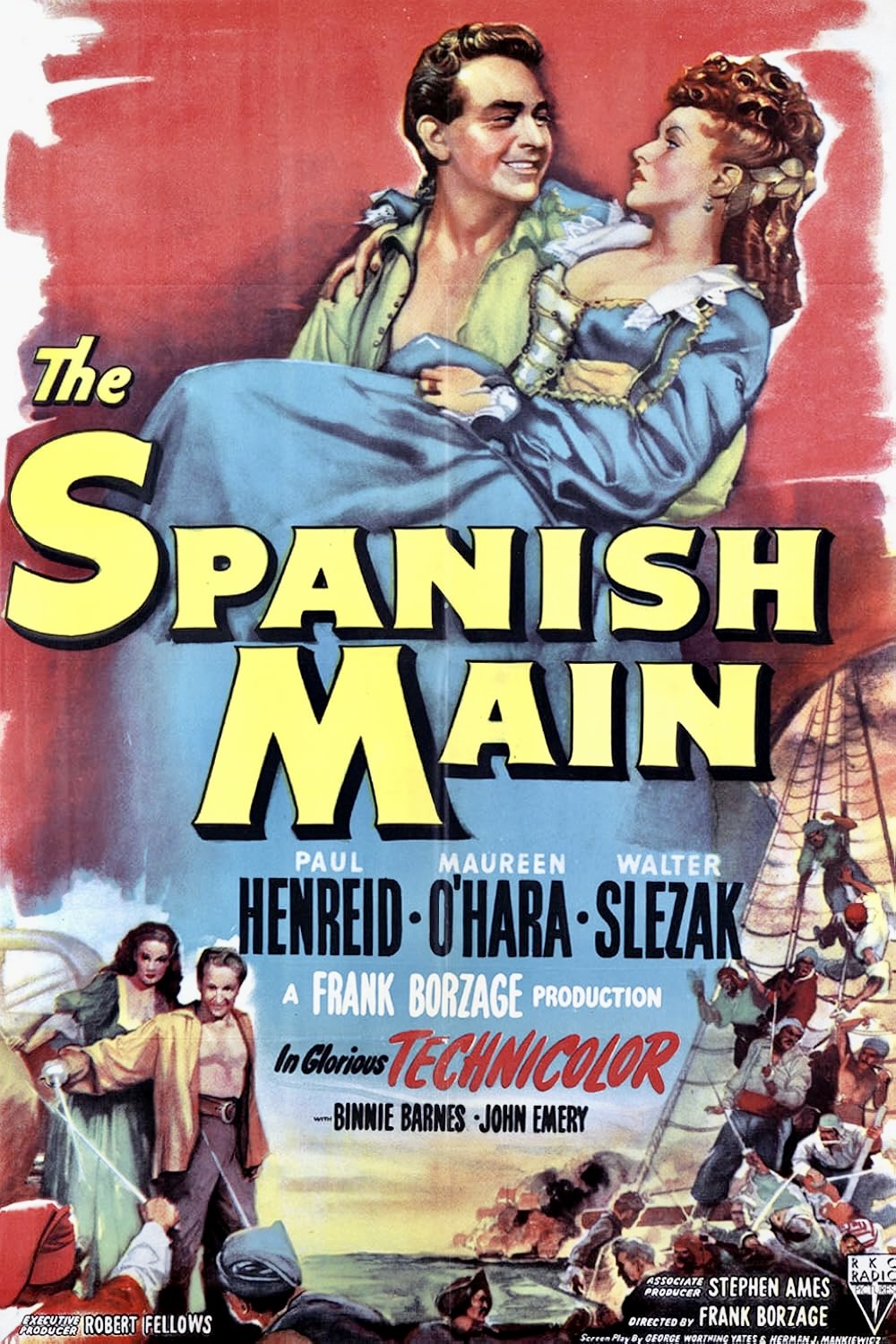
Raise the Pirate Flag!

In the pantheon of great Hollywood directors from the 1930s, Frank Borzage and his films are often overshadowed by the work of such peers as Frank Capra, George Cukor and Ernst Lubitsch. Yet many film historians and scholars consider his work the equal of these better-known directors with such exemplary examples as 7th Heaven (1927) and Bad Girl (1931) – both of which won Borzage the Oscar for Best Director – plus Man’s Castle (1933), History is Made at Night (1937), Three Comrades (1938) and The Mortal Storm (1940). Often referred to as “The Great Romanticist,” whose most famous films usually focused on the redemptive power of love, Borzage began to fall out of favor in his later career when his films were seen as old-fashioned and anachronistic. But he was still capable of turning out a late period masterpiece such as the poetic film noir Moonrise (1948) as well as handle a big budget studio entertainment like The Spanish Main (1945). The latter pirate tale may seem atypical for a Borzage film but don’t forget he also dabbled in other unlikely genres such as war dramas (Flight Command, 1940) and musicals (Seven Sweethearts, 1942). It was also a rousing costume adventure which compared favorably to the swashbucklers of Errol Flynn such as Captain Blood (1935) and The Sea Hawk (1940), with the added attraction of being filmed in glorious Technicolor by George Barnes.

Continue reading
With Sword in Hand

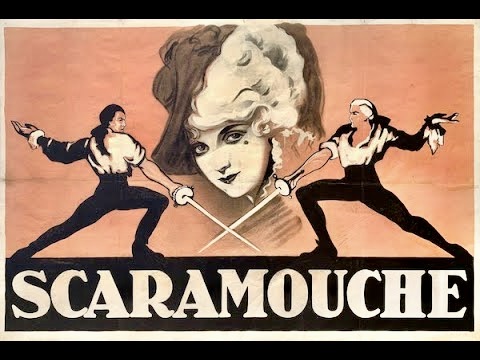
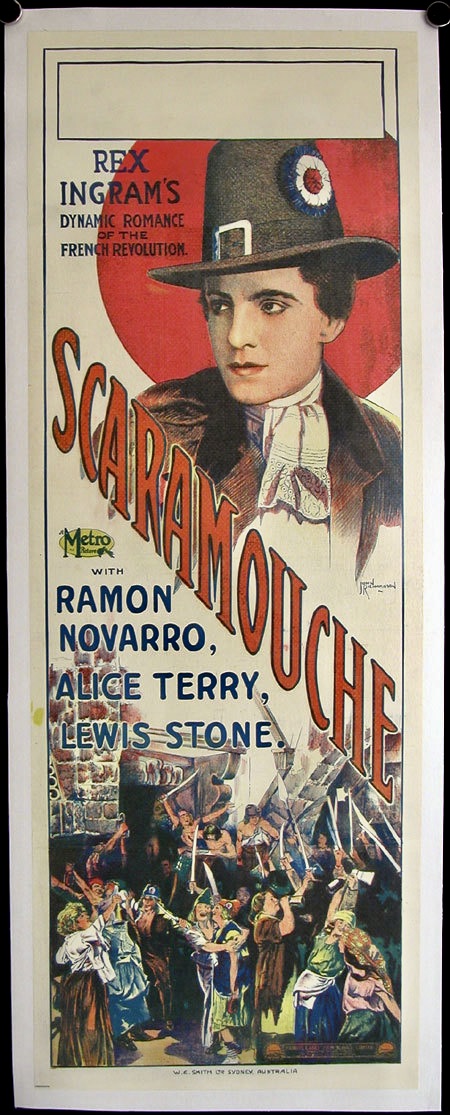
When was the last time you heard someone use the term swashbuckler? That’s a word that harkens back to another time but cinephiles associate it with a specific kind of action-adventure costume drama that became popular during the silent era. It also brought the work of novelist Rafael Sabatini to a larger audience thanks to movie adaptations of his most popular books. Early film adaptations include Scaramouche (1923) with Ramon Novarro in the title role, the 1924 versions of Captain Blood and The Sea Hawk and Bardeleys the Magnificent (1926) starring John Gilbert. And it was Errol Flynn who would come to represent the epitome of a swashbuckling hero, one skilled in sword fighting and other daring feats, in definitive versions of two Sabatini novels, Captain Blood (1935) and The Sea Hawk (1940) plus his iconic role in The Adventures of Robin Hood (1938)

Yet, of all the swashbuckling novels written by Rafael Sabatini, Scaramouche is probably his best and most enduring work, even more so than Captain Blood, because of its rich and complex narrative, which spawned so many movie adaptations. Besides the superb 1924 silent version, there is MGM’s lavish 1952 Technicolor remake with Stewart Granger, the 1963 French costumer The Adventures of Scaramouche, an Italian comedy spoof Da Scaramouche or se Vuoi L’assoluzione Baciar devi sto…Cordone! (1973), a Spanish spinoff Los Hijos de Scaramouche (1975) and the 1976 international production The Loves and Times of Scaramouche (1976), directed by Enzo G. Castellari. There were even more adaptations and ripoffs including TV versions but my favorite of the lot is MGM’s 1952 remake.

Continue reading