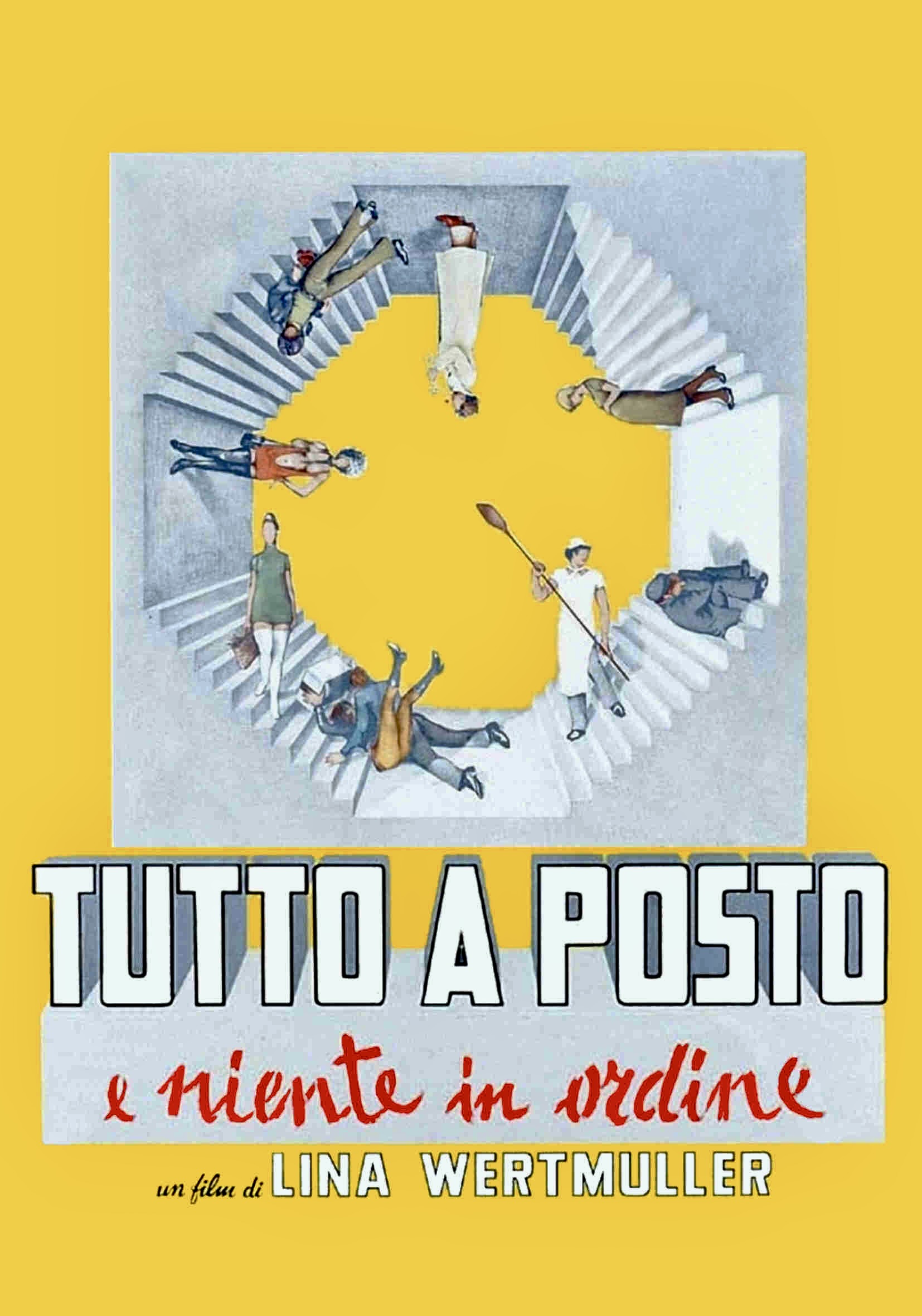
Gigi and Carletto are two naïve country bumpkins who, like many others from rural Italy and southern regions like Sicily, have come to the northern city of Milan to seek their fortunes. They soon fall in with other recent arrivals to the city seeking work and eventually set up a communal living situation in an abandoned apartment with others. Both men have big dreams and expectations but the reality is quite different from what they imagined and they fall prey to the city’s corrupting influences. It is a familiar scenario that you have probably seen in numerous other movies but director Lina Wertmuller gives it her own unique spin in Tutto a posto e niente in ordine (English title: All Screwed Up, 1974), an exuberant, gleefully crude satire that uses broad comedy and eccentric characters to magnify the myriad problems of Italy during the early 70s. This is her idiosyncratic contribution to Commedia all’italiana, a genre of comedic social commentary first created by Mario Monicelli and Pietro Germi in the late fifties/early sixties with such films as Big Deal on Madonna Street (1958) and Divorce Italian Style (1961), satires where serious themes like poverty, unemployment, marital woes and economic hardships are treated in a lighthearted style.
Continue readingTag Archives: Seven Beauties
The Cinema Art House Visionary
When did movie theaters specializing in repertory cinema, foreign language films and alternatives to Hollywood mass-produced entertainments become an option for movie lovers in the U.S.? Some might think it all began with the Landmark Theater chain, founded in 1974, which eventually expanded into a network of 46 cinemas in 26 markets. No, the concept of the art house cinema can be traced back to 1952 when the Beekman Theater on Manhattan’s East Side opened and turned movie-going into an event. The man behind the venue was Donald Rugoff and his entrance into the world of film exhibition was due to his father Edward’s partnership with Herman Becker; the two men had built up a small empire of theaters across New York City during the days of the nickelodeon and vaudeville. Rugoff would soon have a major impact on movie-going, film distribution and film culture in the 1960s and 1970s but he is virtually forgotten today. Ira Deutchman, a former employee of Cinema V, Rugoff’s trail-blazing film distribution company, is bound to correct that situation with his fascinating, warts-and-all homage, Searching for Mr. Rugoff (The documentary was completed in 2019 and is finally screening and streaming at various venues).
Continue readingErnesto Gastaldi’s Seminal Giallo
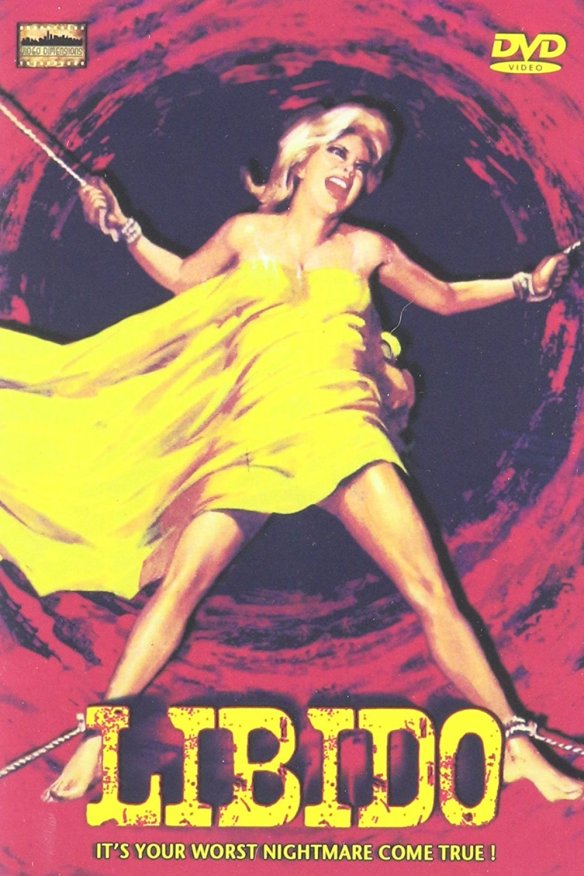
With a tumultuous background of waves crashing against a rocky coast, a descriptive statement from Sigmund Freud on the meaning of libido scrolls down the screen. Part of the Austrian psychoanalyst’s quotation defines libido as “the energy, regarded as a quantitative magnitude… of those instincts which have to do with all that may be comprised under the word ‘love.’” But the film that follows is not about love but rather the perversion of it starting with an opening sequence in which a child witnesses the aftermath of his father’s violent S&M session with a female companion, an incident that scars him for life. Continue reading