
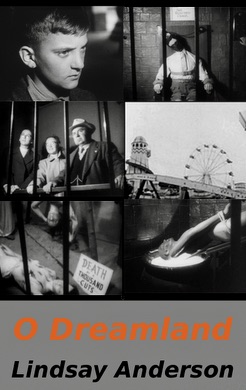
The 1960s might be seen as the decade that ushered in a significant number of game changing film movements such as the Czech New Wave, Cinema Verite and New German Cinema but the 1950s shouldn’t be overlooked for inspiring the birth of the Nouvelle Vague in France and the self-reflective ‘kitchen sink’ realism trend in England. One of the most influential but short lived film developments during this period was the Free Cinema movement, which flourished between 1956 and 1959 in the U.K.. It rejected the conservativism and class bound traditions of commercial filmmaking as well as the didactic approach to documentaries made famous by Scottish director John Griegson (Song of Ceylon [1934], Night Mail [1936]]. Instead, Free Cinema was dedicated to making personal films that expressed the opinion and artistic vision of their directors despite limited budgets and semi-amateur conditions (most of the movies were shot with a 16mm Bolex camera). Karel Reisz, Alain Tanner, Claude Goretta, Tony Richardson and Lindsay Anderson were among the leaders of the Free Cinema group but Anderson, in particular, created some of the movement’s most significant work, including Wakefield Express (1952), O Dreamland (1953), Thursday’s Children (1955) and Every Day Except Christmas (1957). Continue reading
Tag Archives: Richard Burton
Seize the Day
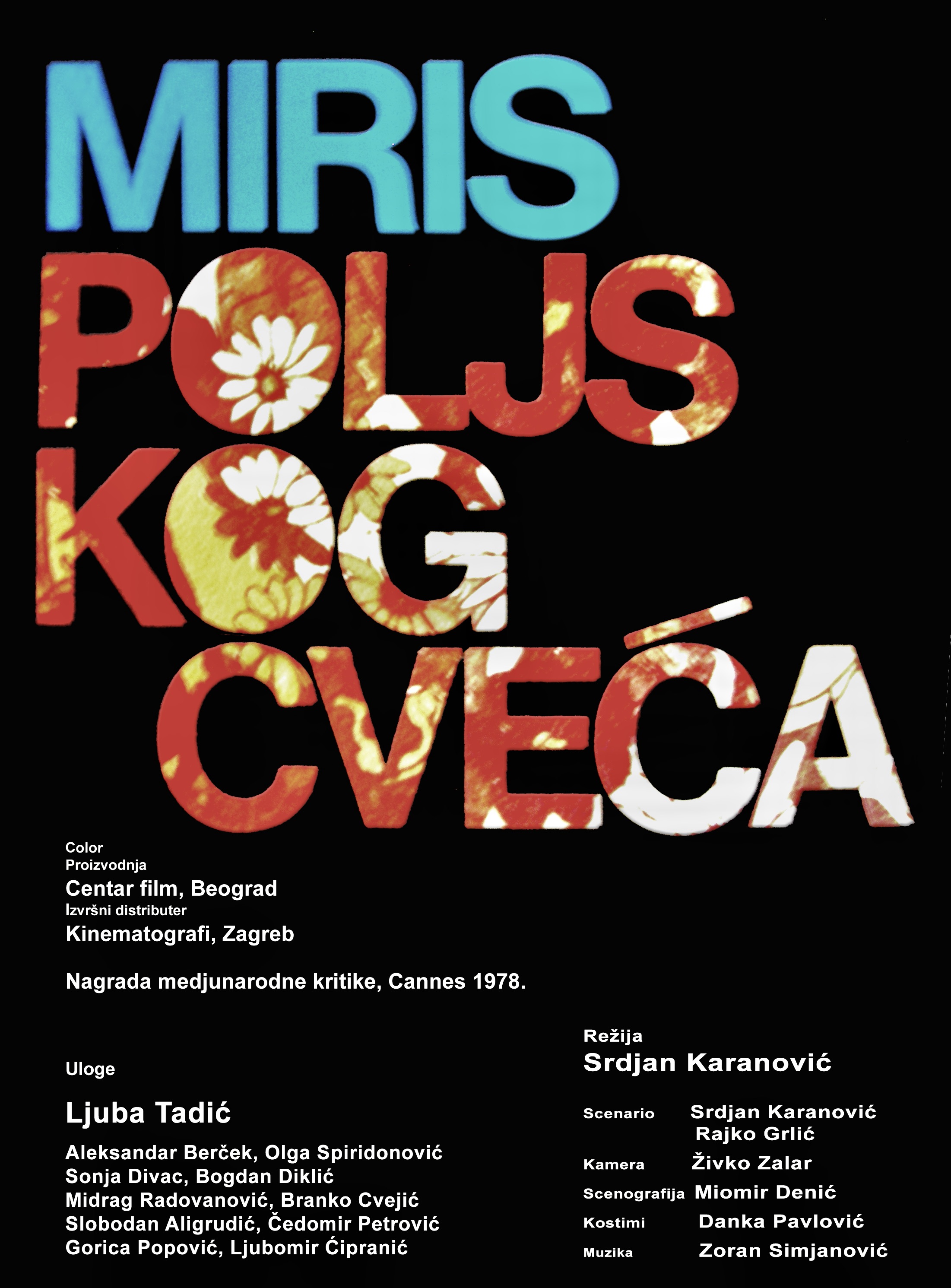
Have you ever felt like you were not leading the life you imagined for yourself or worse – you had achieved success in your field but felt as if everything had become a boring, mechanical routine and you were trapped? This is the existential dilemma that is facing Ivan Vasiljevic (Ljuba Tadic), a famous theater actor, who is currently preparing for a production of Oscar Wilde’s An Ideal Husband. The day before the play’s premiere, Ivan walks out during the rehearsal, refusing to return, and decides to abandon everything, including his wife. He joins his friend Jeca Smrda (Nemanja Zivic) aboard a rundown barge and settles into a life of leisure with no responsibilities as they drift along the shore of the Danube. While Ivan’s nonconformist rebellion seems to mirror the behavior of free-spirited characters in American films like Murray (Jason Robards Jr.) in A Thousand Clowns (1965) or the poet Samson (Sean Connery) in A Fine Madness (1966), his journey, as depicted in Miris Poljskog Cveca (English title: The Fragrance of Wild Flowers, 1977), becomes a wry satire and meditation on one man’s life in Yugoslavia under a Socialist regime. But the film is not a political critique and opts instead for an offbeat character study.
Continue readingMemories of the 2011 TCM Classic Film Festival
*This article originally appeared on Movie Morlocks, Turner Classic Movies’s official blog in May 2011 (The blog was discontinued years ago and is no longer available)
In the event-packed hurly burly of TCM’s second annual Film Festival in Los Angeles from April 28-May 1 of 2011, I didn’t have a chance to blog about all of the films or attending guests that I saw but here are a few that linger in the memory and deserve to be singled out –cinematographer/director Haskell Wexler, who participated in a Q&A with Leonard Maltin before a screening of Who’s Afraid of Virginia Woolf?(1966), Hayley Mills, who appeared after a screening of Whistle Down the Wind (1961) with interviewer/author Cari Beauchamp, a midnight screening of The Mummy (1932) introduced by Boris Karloff fan Ron Perlman, Buster Keaton’s The Cameraman (1928) accompanied by a live orchestra score by Vince Giordano and His Nighthawks, the MoMA restoration print showing of 1933’s Hoopla (Clara Bow’s final film) and the underrated Ernst Lubitsch Pre-Code delight Design for Living (1933).
Continue reading


