Sun Tribe Redux

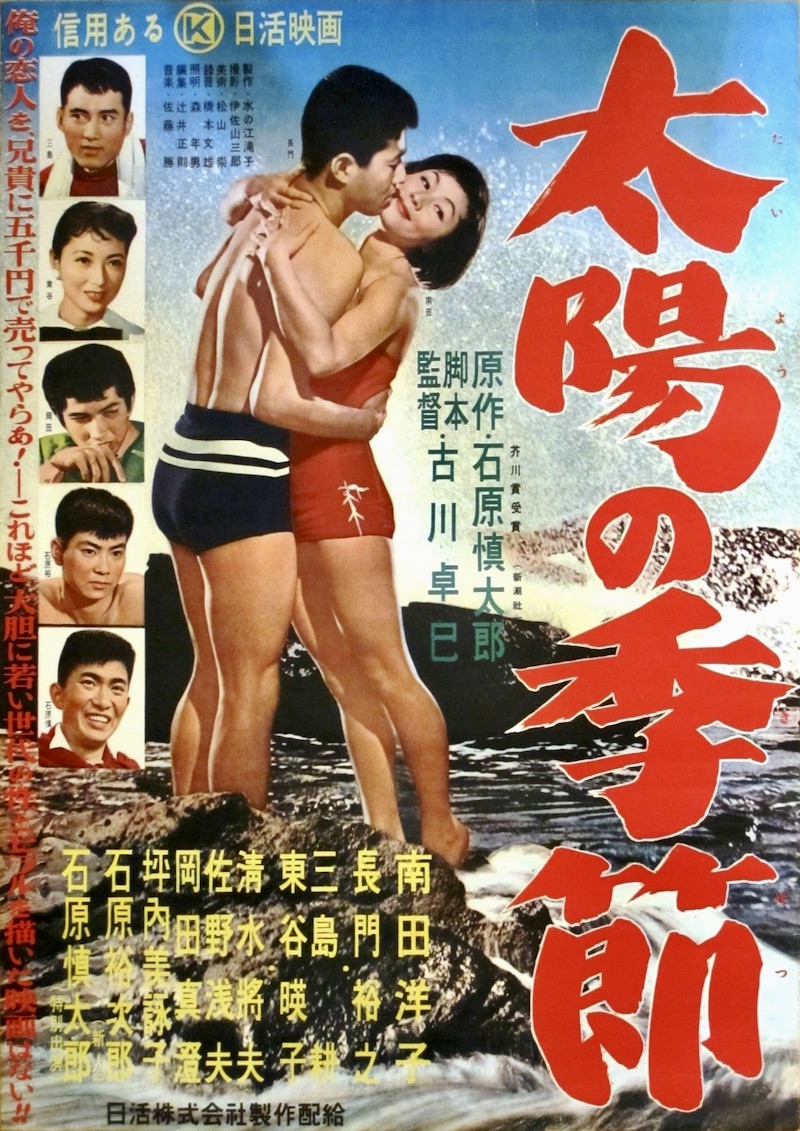
The Japanese film poster for SEASON IN THE SUN (1956) aka Taiyo no Kisetsu.

When Ishihara Shintaro died on February 1, 2022 at age 89, most obituaries focused on his career as a politician in Japan. He first served as a member of the House of Councillors (1968 to 1972) and then as a member of the House of Representatives (1972-1995) before becoming the Governor of Tokyo from 1999 to 2012. A controversial figure in his own country, Shintaro was famous for his ultra-nationalist stance on Japan and extreme right-wing views such as discriminating against Japanese-Koreans, the disabled, women, LGBT and other social minorities. He is now considered an early proponent of “hate speech” and often denied historical accounts of atrocities committed by the Japanese against the Chinese in the infamous Nanjing Massacre of 1937, which in Japan is the same as being a Holocaust denier. What is most surprising about Shintaro, however, is his earlier career as an author and highly successful screenwriter for movie studios like Nikkatsu, Daiei and Shochiku. His critically acclaimed first novella, Taiyo no Kisetsu (English title: Season of the Sun), was published in 1955 and he adapted it into a film for director Takumi Furukawa. It became a box office sensation and inspired several successors in a film movement that became known as the “Sun Tribe” (aka Taiyozoku) movies.

Continue reading
Good Cop, Bad Cop

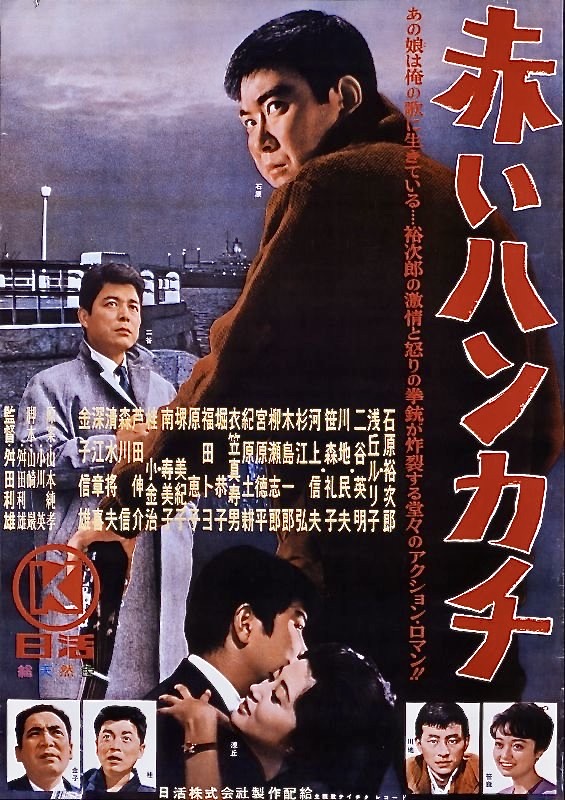
The Japanese film poster for RED HANDKERCHIEF (1964)

Among the major film studios in Japan, Nikkatsu is generally regarded as the oldest but it almost didn’t survive the post-WW2 years after shutting down production in 1942. When it relaunched in 1954, audience tastes had changed and so had the moviegoing public, which was younger and hungry for films that reflected the problems, attitudes and pop culture of their generation. As a result, the studio began to churn out different kinds of films – yakuza and cop thrillers, youth rebellion dramas and frenetic comedies/musicals – that were partially inspired by American genre films and the rise of rebel icons like James Dean and Elvis Presley. Often categorized as “Nikkatsu Action Cinema,” these films experienced a surge of popularity in the late 50s as such directors as Seijun Suzuki, Shohei Imamura, Koreyoshi Kurahara and Toshio Masuda emerged as the most creative filmmakers at Nikkatsu during the post-war new wave. Masuda, in particular, was one of the most commercially successful filmmakers at the studio and helped actor Yujiro Ishihara achieve major stardom after their first collaboration Rusty Knife (1958), a gritty crime drama about a volatile street tough who crosses the mob. They went on to make 25 features together but, curiously enough, one of their most successful films, Akai Hankachi (Red Handkerchief, 1964), is almost forgotten and difficult to see outside of Japan.

Continue reading