Breaking Up is Hard to Do

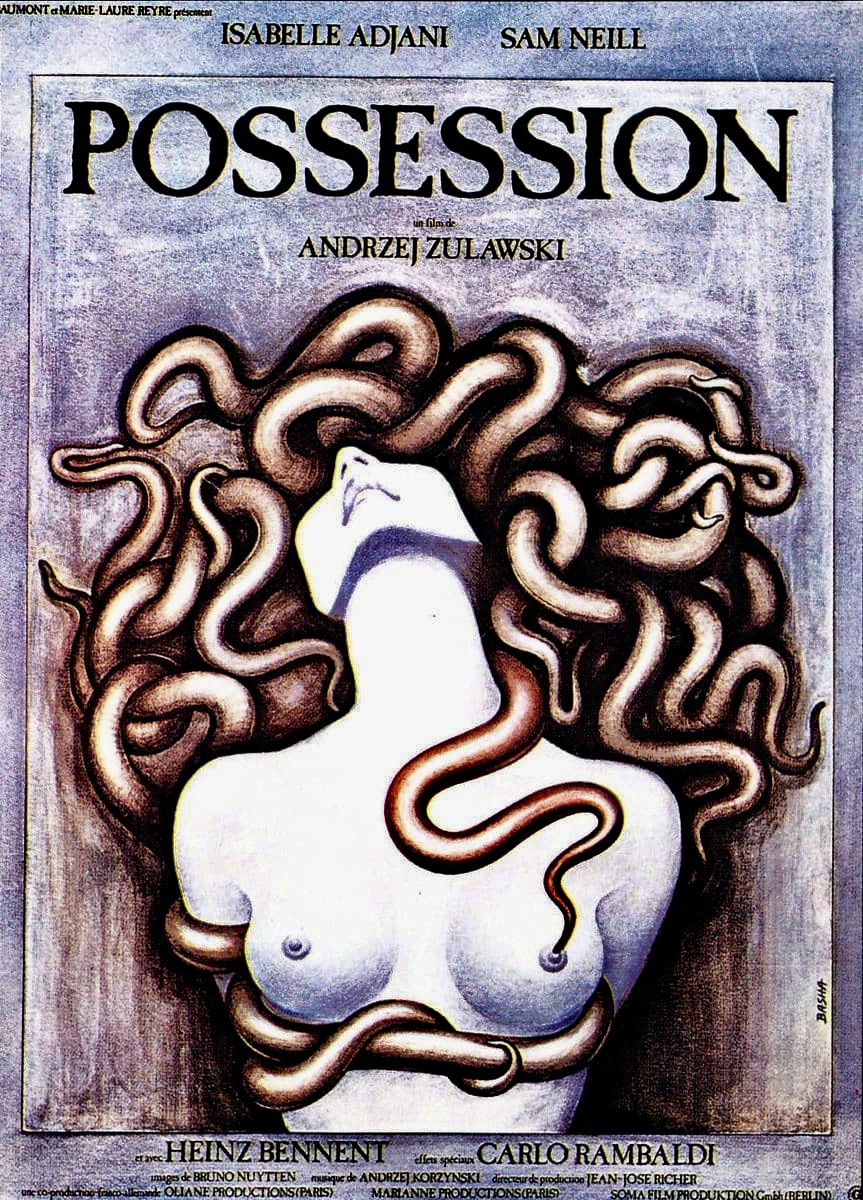
In The Devil’s Dictionary, a satirical lexicon written by Ambrose Bierce which was first published in 1906 under the title The Cynic’s Word Book, marriage is described as “The state or condition of a community consisting of a master, a mistress and two slaves, making in all, two.” While it may be an amusing if not particularly favorable definition of what should be a sacred union between two people, it does reflect a negative viewpoint embraced by some who have suffered through it. Possession (1981), directed and co-written by Andrzej Zulawski with Frederic Tuten, takes this conceit a step further, depicting the institution of marriage as not just a form of slavery but the embodiment of hell on earth.
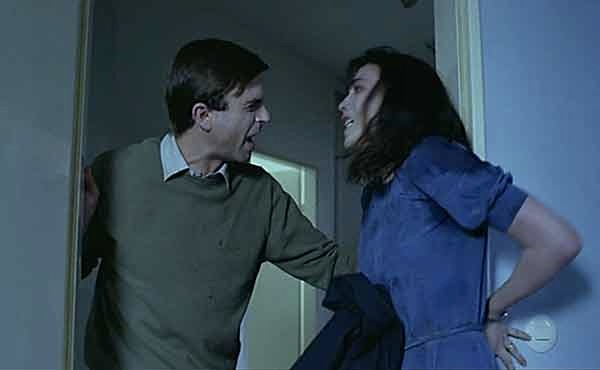
Mark (Sam Neill) confronts Anna (Isabelle Adjani) over her reasons for wanting to end their marriage in POSSESSION (1981).
Continue reading

The Watcher and the Watched

The Polish film poster for A SHORT FILM ABOUT LOVE (1988)

A lonely nineteen-year-old boy watches his neighbor Magda (Grazyna Szapolowska) through binoculars as she moves about her apartment across the courtyard in her underwear. Tomek (Olaf Lubaszenko) has been spying on this alluring older woman for almost a year and he has his routine down to a fine science, which includes setting his alarm clock to go off at the time she comes home from work so he won’t miss a thing. He soon graduates from binoculars to a telescope he stole from a local school. He also calls her up occasionally on the telephone but never has the nerve to say anything. His obsession, however, has come to the point where he requires more direct contact and so he begins to manipulate some face to face encounters with Magda through his work as a postal clerk and a milk delivery man for the apartments. While this basic premise for Polish filmmaker Krzysztof Kieslowski’s Krotki Film o Milosci (English title: A Short Film About Love,1988) sounds like the set-up for a creepy voyeur thriller in the vein of Rear Window (1954), Psycho (1960), or Peeping Tom (1960), the movie that unfolds goes in a completely different direction, depicting two lonely souls – one cynical, the other naïve – who forge a unique connection through unlikely circumstances.

Continue reading

The Vows Not Taken

The Polish film poster for THE CONTRACT aka Kontrakt (1980)

I remember the first time I heard about Polish director Krzysztof Zanussi. Friends of mine in Seattle were attendees at the annual Seattle International Film Festival and saw one of his films there in the early 1980s and raved about it. They became fans after that and tried to see everything he did that received distribution in their city. Unfortunately, outside of film festivals, few of his movies enjoyed wide (or any) distribution in the U.S. with the exception of a few art house dates in major cities like New York and Chicago. The first and only Zanussi film I saw was The Catamount Killing, which was released in 1974, but I only caught up with it on VHS in the mid-eighties. It is that rare anomaly in his career – a low-budget crime drama filmed in Burlington, Vermont with an English-speaking cast – and was not a success or even characteristic of his work with the possible exception of one of its themes – guilt and how it can destroy relationships. Only recently I have discovered some streaming sources for Zanussi’s work and my first foray into his past filmography is the 1980 made-for-Polish television satire Kontrakt (English title: The Contract), which was filmed in and around Warsaw and features an international cast of Polish, English and French actors including Leslie Caron in a key role.

Continue reading

Break Up the Dance and Other Film Shorts from Poland

Polish film director Roman Polanski during his student years at the Lodz Film School.

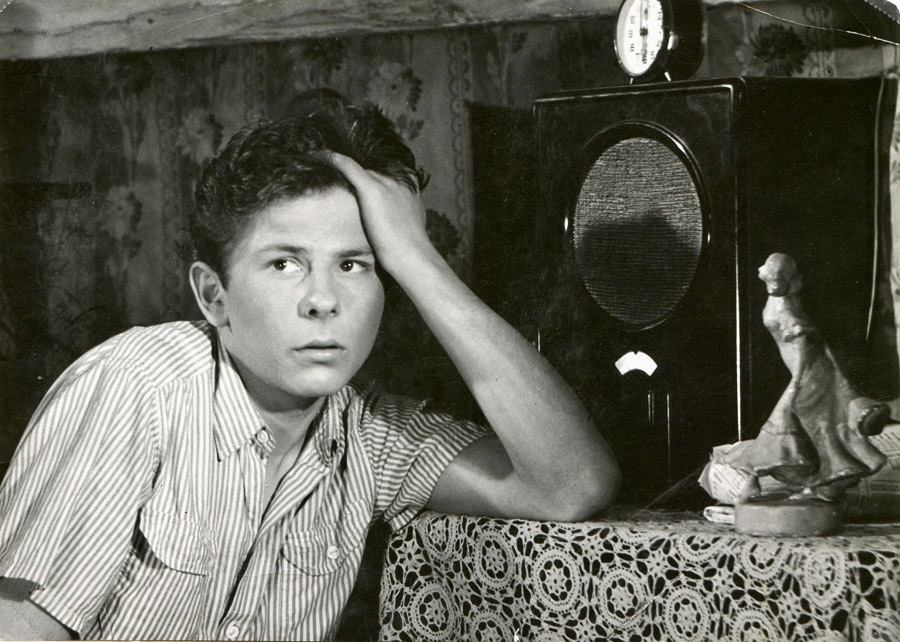
At an early age Roman Polanski began to realize his true ambition to be a filmmaker with a series of short films which were made during his time as a student at Poland’s prestigious National Film School at Lodz. His debut film Morderstwo [English title, Murder aka The Crime, 1957] – a three minute short without dialogue about a senseless murder – and the one that followed it, the three-minute Usmiech Zebiczny [English title: Teeth Smile aka A Toothful Smile, 1957], about a peeping tom, were atmospheric studies in violence and voyeurism that disturbed his fellow filmmakers and raised speculations about the young filmmaker’s dark side. His third short, Rozbijemy Zabawe… [English title: Break Up the Party, 1957], however, aroused considerably more controversy over his directorial methods. 

Continue reading

Trance State

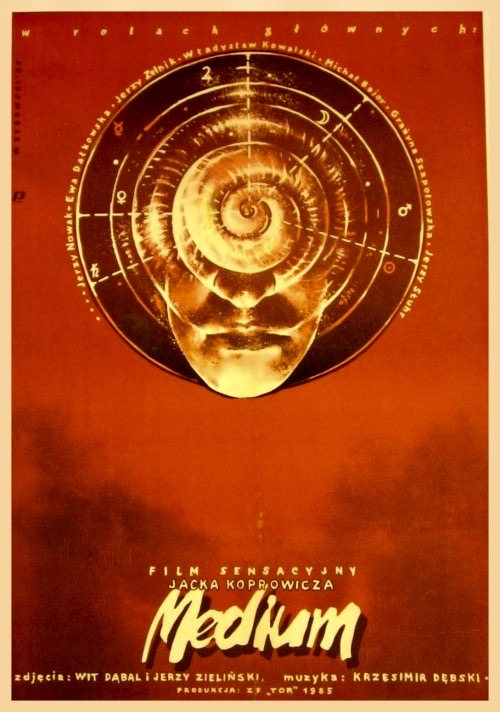
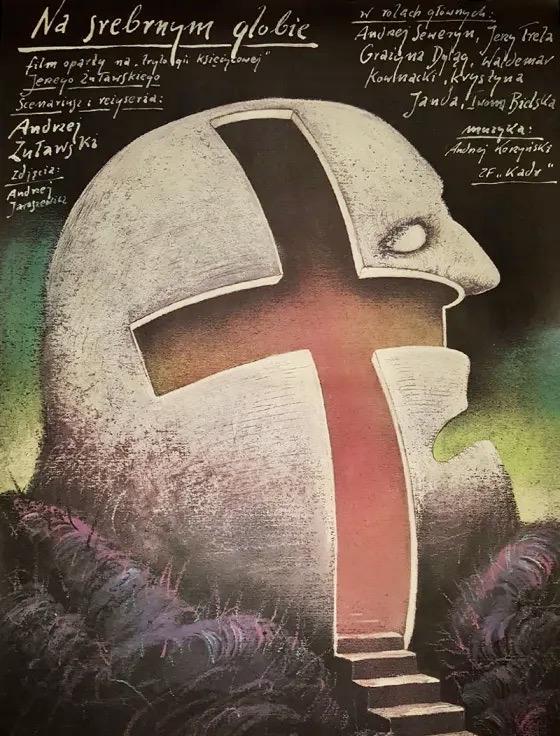
The Polish film industry is not exactly famous for its contributions to the science fiction genre but there have been a few novel exceptions over the years. Piotr Szulkin’s O-Bi, O-Ba: The End of Civilization (1985) and Andrzej Zulawski’s On the Silver Globe (1988) are among the more renowned titles although they are much closer to art house/avant-garde cinema than accessible commercial entertainments for the movie-going public. Much more audience friendly but even more obscure is Medium, a fascinating blend of science fiction, murder mystery and the occult, which has slowly developed a cult following since its original release in 1985 (It can be streamed on Youtube with English subtitles).

The Polish film poster for Andrzej Zulawski’s ON THE SILVER GLOBE (1988)
Continue reading

Beatlemania Comes to Poland

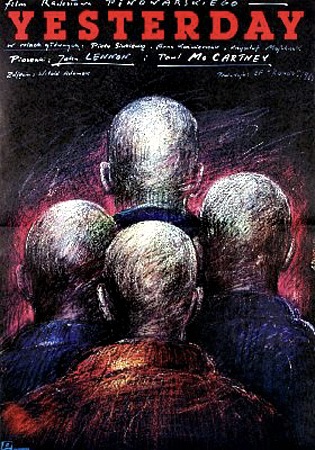
The Polish film poster for YESTERDAY (1985)

While most of the world fell in love with The Beatles during their emergence in the early sixties, communist controlled countries like Poland viewed the band’s music as anarchic and a corrupt influence on the country’s youth. That is certainly the situation as presented in the 1985 film Yesterday, written and directed by Polish director Radoslaw Piwowarski, which focuses on four high school students who bond over their love of The Beatles, create their own band and defy school authorities and parents over their appearance (long hair) and behavior.

Continue reading

In the Kingdom of G

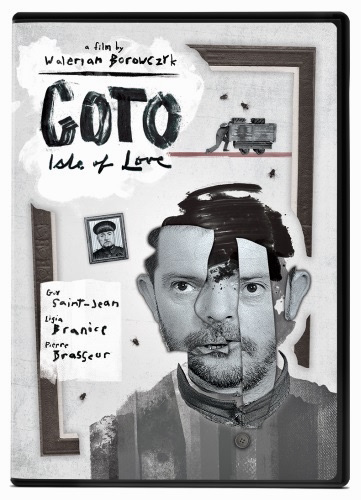
In the film world of the 20th century, there were not too many animators who made the transition to live action feature film directing. Certainly Frank Tashlin was one of the most famous, going from Porky Pig and Daffy Duck cartoon shorts to manic pop culture comedies like The Girl Can’t Help It (1956) and Hollywood or Bust (1956). Another rare exception was George Pal, who became famous for his Puppetoon shorts for Paramount before establishing himself as a director of fantasy features such as Tom Thumb (1958) and The Time Machine (1960). It is far easier to name more contemporary filmmakers like Terry Gilliam, Tim Burton and Brad Bird,  all of whom graduated from cartoons to live-action features successfully. The above are all artists who worked in the commercial cinema but, if you are talking about art cinema, the list is much smaller and Polish animator Walerian Borowczyk should be in the top slot. Goto, Island of Love (1969, Polish title: Goto, I’ile d’amour), his feature film debut, is a fascinating achievement that successfully brings the avant-garde sensibilities of his animated shorts to a live action feature.

Continue reading

Pool Days

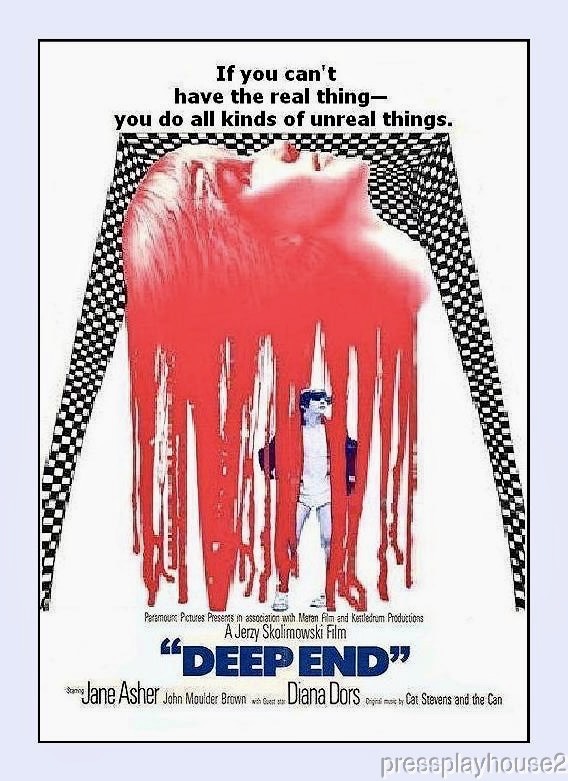
Sometimes a film comes along that no marketing department can get a handle on and as a result it just gets tossed out there to fend for itself and to find an audience on its own. That was the case with Deep End, made in 1970 but released in 1971 by Paramount Pictures to selected art houses and whatever theaters were willing to book it. I saw the film at the Westhampton Theatre in Richmond, Virginia, which was obviously run by an Anglophile because almost any new British film would play there. Of course, Deep End is only British on the surface. It is set in London but the cast includes British, Germany actors and Polish actors and much of the film was shot in Munich, Germany by Polish director Jerzy Skolimowski.

Continue reading