
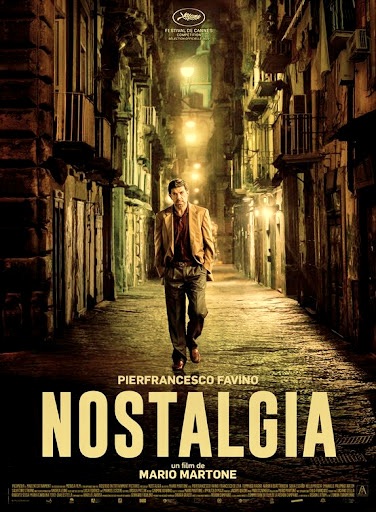
In Italy and most of Europe Mario Martone is well known and highly regarded as a director, screenwriter and producer who first rose to prominence in the theater world. He formed Falso Movimento, his first theater company, in 1979 and made his debut as a director of operas in 1989 with the world premier of Lorenzo Ferrero’s Charlotte Corday. However, it was in the 1990s that Martone emerged as one of the leading film directors of the new wave of Neopolitan cinema that produced such major talents as Paolo Sorrentino and Toni Servillo. Martone is still relatively unknown in the U.S. but his 2022 feature Nostalgia garnered critical acclaim on the art house circuit and continued Martone’s fascination with the city of Naples, where he was born in 1959. Based on a novel by Ermanno Rea, the film is a slow burn character study of Felice Lasco, an expatriate living in Cairo, Egypt, who returns to his childhood home of Naples after a 40-year hiatus.
Continue readingTag Archives: Pierfrancesco Favino
The Italian Conspiracy
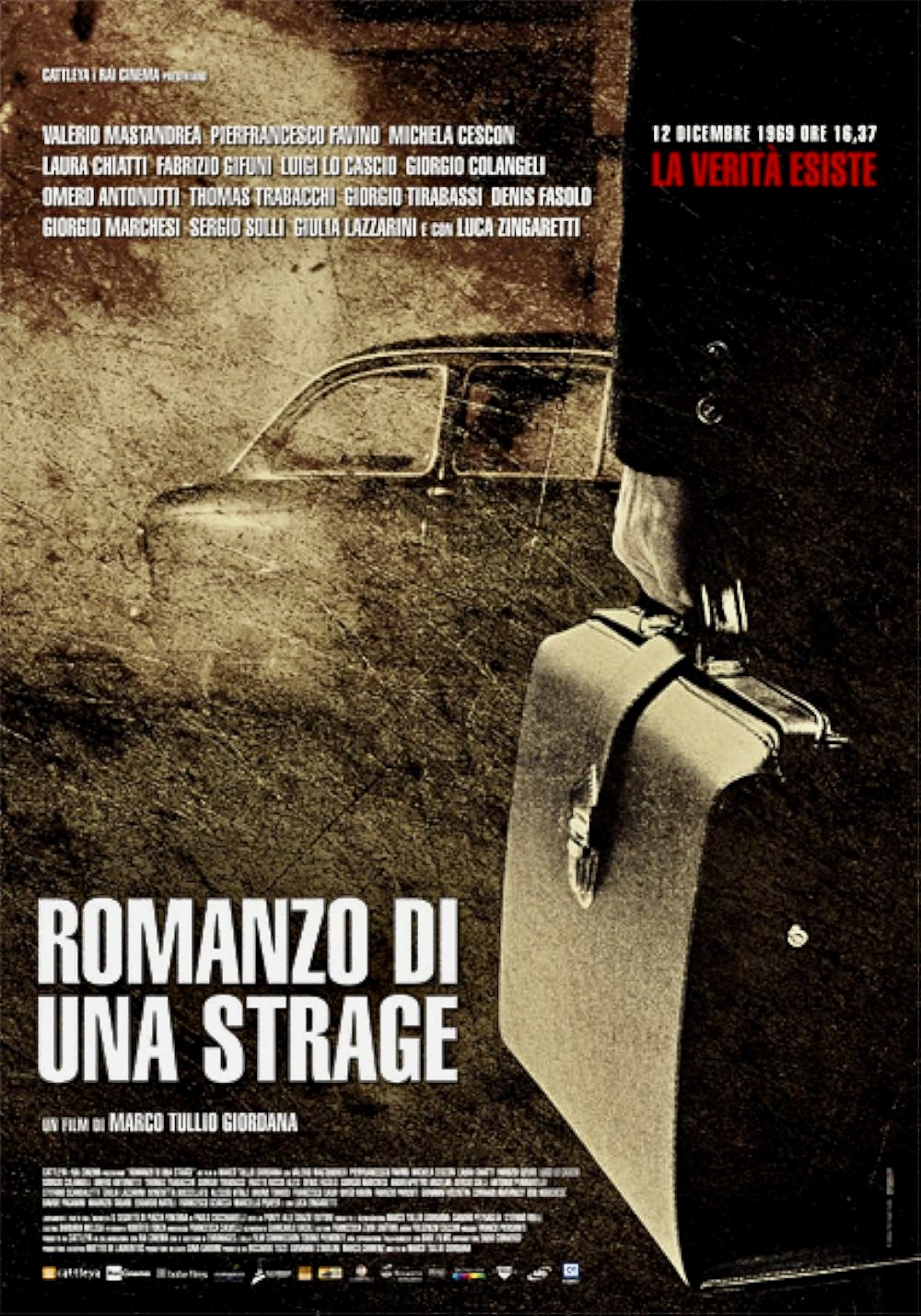
On December 12, 1969, a bomb exploded in the Banca Nazionale dell’Agricoltura (National Agricultural Bank) in Piazza Fontana, near the Duomo in Milan, Italy. 17 people died from the explosion and more than 84 were injured. Other unexploded bombs were discovered at several places in the city the same day and the attack was obviously the coordinated effort of a terrorist group. More than 80 arrests were made and, at first, the police suspected members of the Anarchists Club. One of them – Giuseppe ‘Pino’ Pinelli – was held for questioning at police headquarters for more than 72 hours. During a break in his interrogation on the fourth floor, he allegedly went to the window for air and fell to his death below. Luigi Calabresi, the police commissioner, had left the room briefly to retrieve a telegram when this occurred, but was told varying accounts of what happened when he returned – most of which stated that Pinelli had committed suicide by leaping to this death. The press and the public were immediately suspicious of this and the investigation became more complicated with other terrorist groups being implicated, most notably the neo-fascist group Ordine Nuovo. The Piazza Fontana bombing resulted in three different trials – one in 1972, one in 1987 and one in 2000 – but no one was ever officially changed and convicted for the crime. The investigations launched countless conspiracy theories and remain a controversial subject even today but it was more than forty years later that a filmmaker would dramatize the events in a movie. That would be celebrated Italian director Marco Tullio Giordana, who released Romanzo di una Strage (English title: Piazza Fontana: The Italian Conspiracy) in 2012.
Continue reading

