
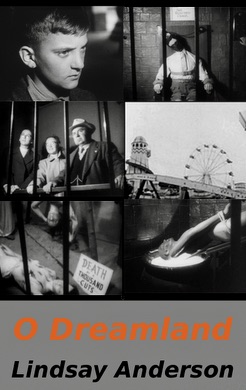
The 1960s might be seen as the decade that ushered in a significant number of game changing film movements such as the Czech New Wave, Cinema Verite and New German Cinema but the 1950s shouldn’t be overlooked for inspiring the birth of the Nouvelle Vague in France and the self-reflective ‘kitchen sink’ realism trend in England. One of the most influential but short lived film developments during this period was the Free Cinema movement, which flourished between 1956 and 1959 in the U.K.. It rejected the conservativism and class bound traditions of commercial filmmaking as well as the didactic approach to documentaries made famous by Scottish director John Griegson (Song of Ceylon [1934], Night Mail [1936]]. Instead, Free Cinema was dedicated to making personal films that expressed the opinion and artistic vision of their directors despite limited budgets and semi-amateur conditions (most of the movies were shot with a 16mm Bolex camera). Karel Reisz, Alain Tanner, Claude Goretta, Tony Richardson and Lindsay Anderson were among the leaders of the Free Cinema group but Anderson, in particular, created some of the movement’s most significant work, including Wakefield Express (1952), O Dreamland (1953), Thursday’s Children (1955) and Every Day Except Christmas (1957). Continue reading
 Cinema Sojourns