
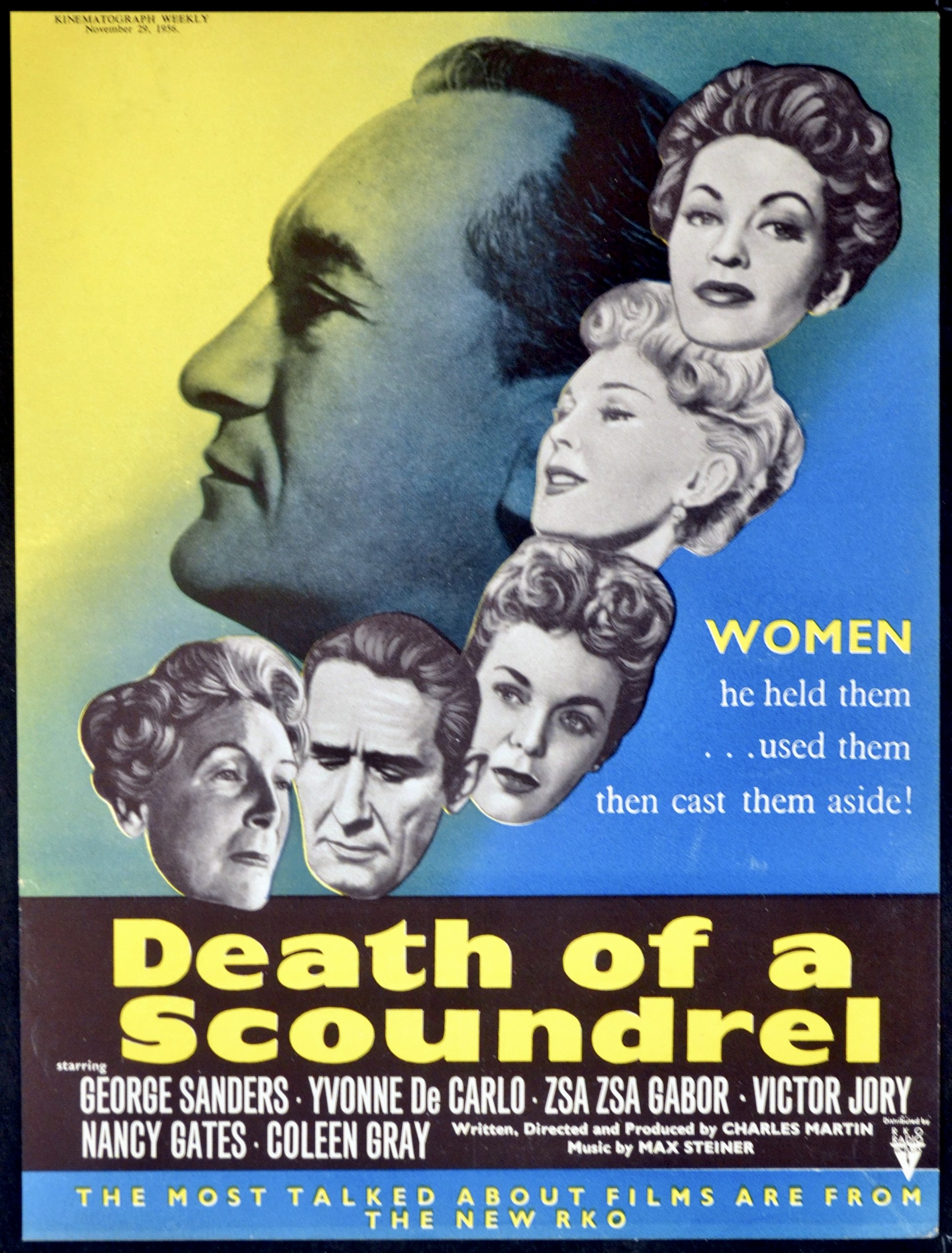
Imagine Citizen Kane (1941) on a miniscule budget with a much more ruthless and totally despicable protagonist and you have Death of a Scoundrel (1956), a contemporary take on The Rake’s Progress. Like the former film, it was shot on the RKO backlot and unfolds in a flashback structure, starting with Bridget Kelly (Yvonne De Carlo), personal assistant to self-made tycoon Clementi Sabourni (George Sanders), revealing to the police the circumstances that led to the millionaire’s murder. “He was the most hated man on earth,” she declares, “But he could have been one of the great men in history. He was a genius.”
Continue readingTag Archives: Max Steiner
A Monument to Objectivism
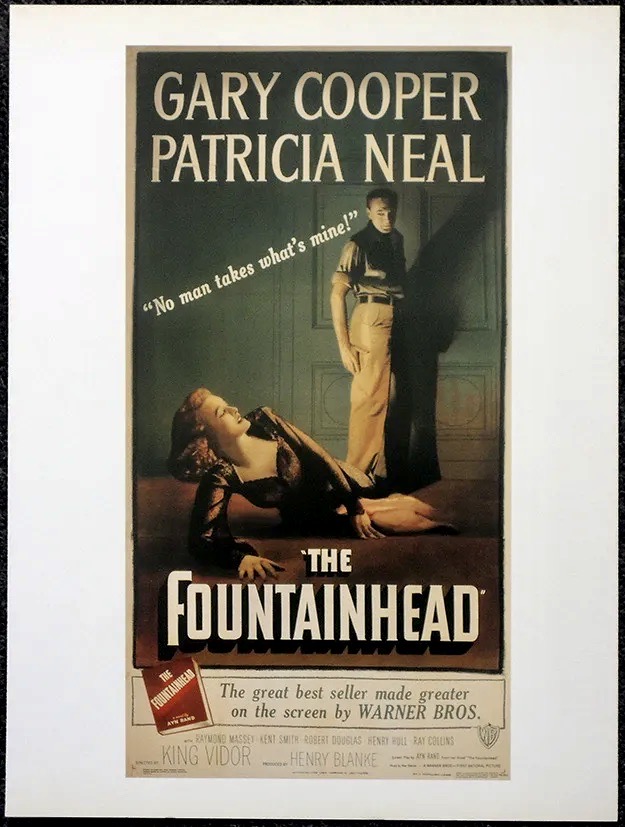
If you look up the word melodrama in the Merriam-Webster Dictionary, the description reads “a work (such as a movie or play) characterized by extravagant theatricality.” The Oxford Learner’s Dictionaries offers a similar definition: “a story, play, or novel that is full of exciting events and in which the characters and emotions seem too exaggerated to be real.” Some popular examples of this in the movies would have to include The Bad and the Beautiful (1952), The Barefoot Contessa (1954) and The Best of Everything (1959). But they are some films in this category that are so excessive in tone and style that they belong in their own category of extreme melodrama. Among the more glaring examples of this are Douglas Sirk’s Written on the Wind (1956), The Caretakers (1963), which is set in a psychiatric hospital where Joan Crawford teaches karate, the Tinseltown expose The Oscar (1966), and four films – yes, four! – from director King Vidor: Duel in the Sun (1946), Beyond the Forest (1949) with Bette Davis, Ruby Gentry (1952) starring Jennifer Jones, and my personal favorite, The Fountainhead (1949), which scales dazzling heights in operatic excess.
Continue readingThe Corporate Ladder and How to Climb It
Despite a long and prolific career, Douglas Fairbanks Jr. is more famous for being the son of the silent era superstar Douglas Fairbanks Sr., his Hollywood social connections (including ex-wife Joan Crawford) and a handful of films in which he’s overshadowed by his co-stars (Greta Garbo in A Woman of Affairs [1928], Edward G. Robinson in Little Caesar [1931], Katharine Hepburn in Morning Glory [1933], and Cary Grant in Gunga Din [1939]). Continue reading

