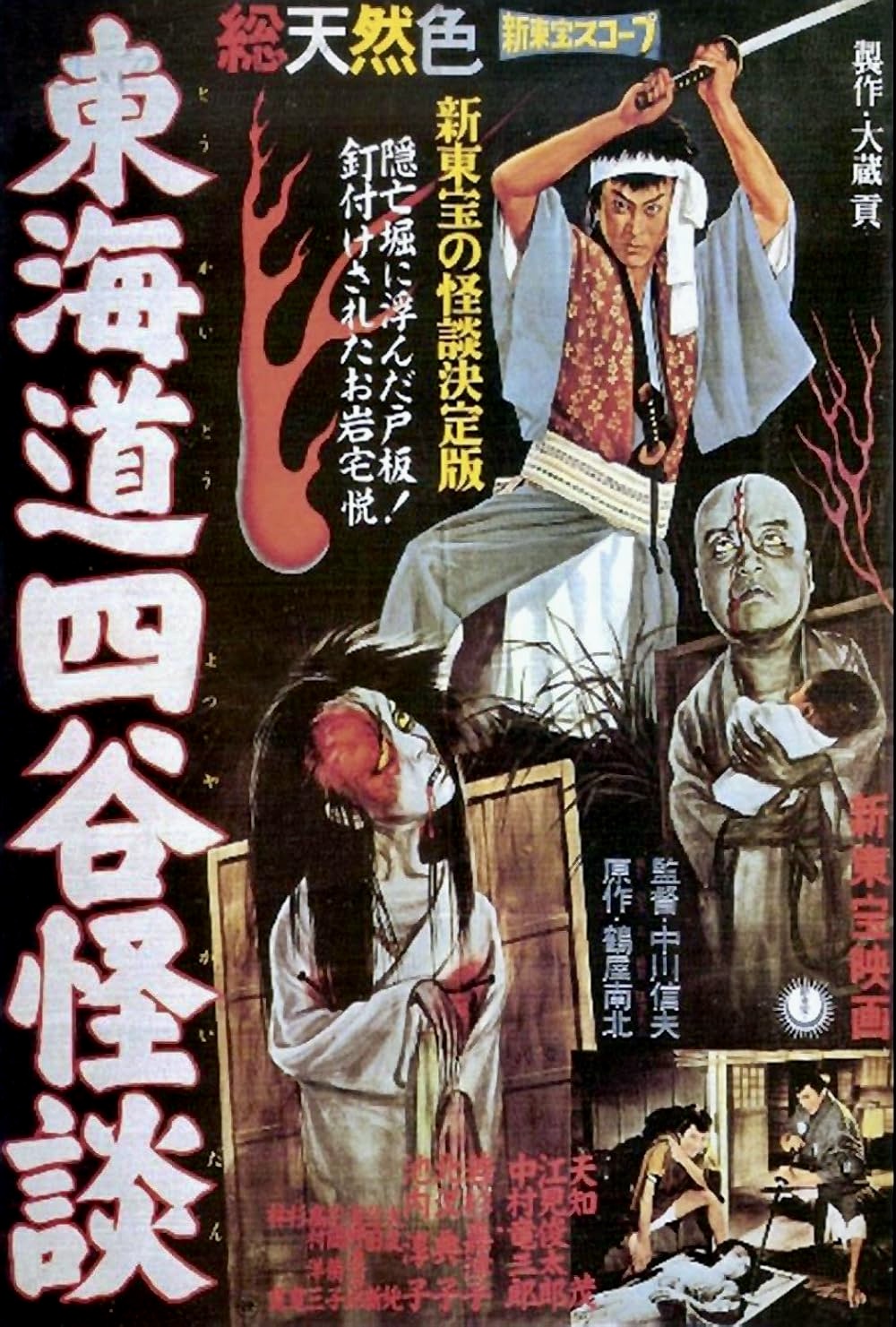
The Japanese film poster for THE GHOST OF YOTSUYA (1959), directed by Nobuo Nakagawa.
Based on a kabuki play written in 1825 by Nanboku Tsuruya, The Ghost of Yotsuya (Japanese Title: Tokaido Yotsuya Kaidan) is one of the most popular and famous of all Japanese ghost stories. It has been filmed countless times over the years but Nobuo Nakagawa’s 1959 version of The Ghost of Yotsuya might be the definitive version. The story is one of fate, passion, betrayal and revenge – all classic themes of kabuki theatre and Greek tragedy.
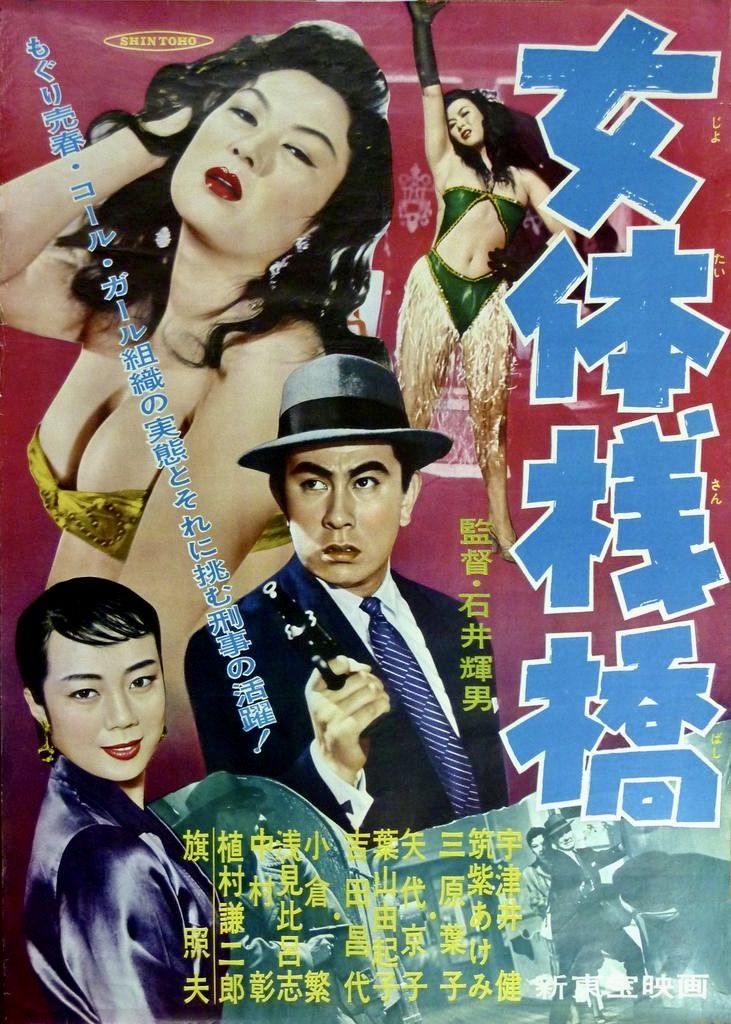
The Japanese film poster for NYOTAI SANBASHI (1958) aka FLESH PIER.
In January 1950 U.S. Senator Estes Kefauver launched an investigation into organized crime across America that exposed rampant corruption, racketeering and illegal practices being committed within public institutions across the country. Since these hearings were broadcast on television and the radio, the American public soon learned about various crime syndicates that were operating in specific cities and states. Movie studios in Hollywood also took note and began turning out numerous crime expose movies filmed in a semi-documentary fashion and often featuring an opening narration that used a real law official to warn against the situation being depicted. Among the more representative of these crime expose thrillers were Kansas City Confidential (1952), The Captive City (1952), Down Three Dark Streets (1954), The Phenix City Story (1955) and The Brothers Rico (1957). Without a doubt, this new trend in crime movies influenced filmmakers around the globe with countries as diverse as Germany, the U.K. and Japan creating their own variations on the formula. Nyotai Sanbashi (1958), which roughly translates as Pier of a Woman’s Body or Flesh Pier, is a particularly tantalizing down-and-dirty B-movie from Japanese director Teruo Ishii that mimics the expose approach of The Phenix City Story in its tale of mob-controlled businesses, sex trafficking and other criminal activities in Tokyo.
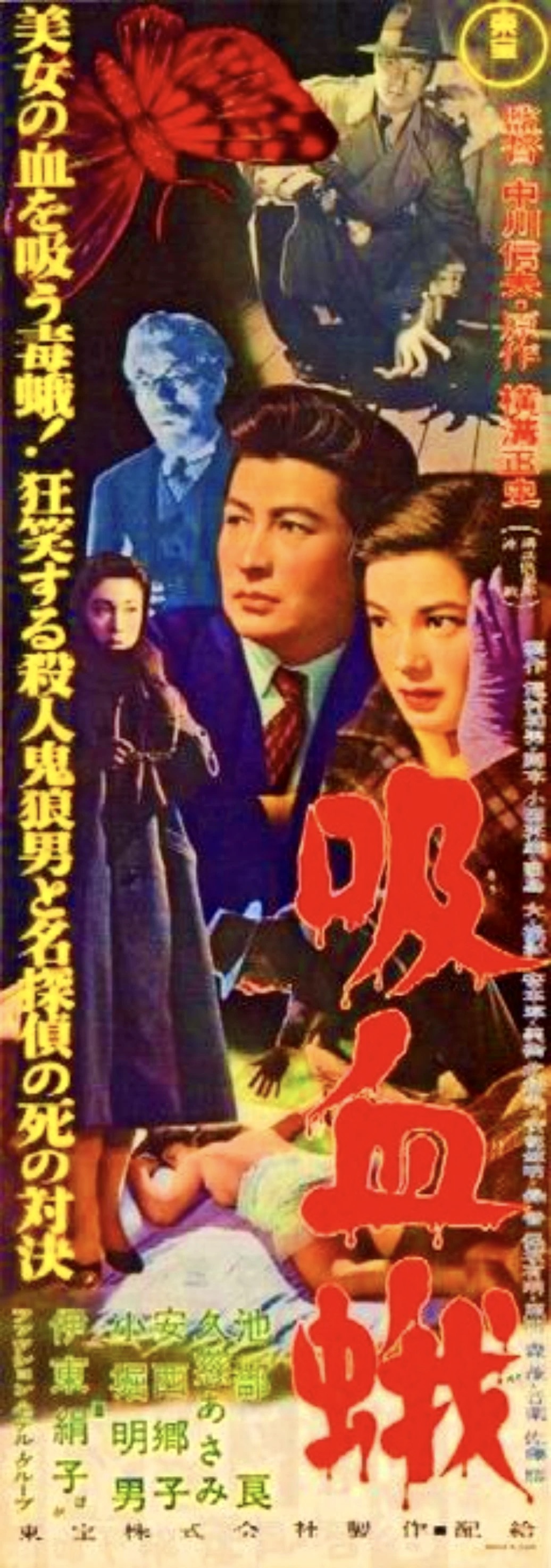
The Japanese film poster for Kyuketsu-ga (English title: THE VAMPIRE MOTH, 1956).
There are a number of classic Japanese horror/fantasy films from the fifties and sixties that genre fans in the U.S. have read about but never seen due to their unavailability on DVD or Blu-ray. In recent years a few of these have appeared in domestic release versions such as Nobuo Nakagawa’s 1960 allegorical masterpiece Jigoku (released by The Criterion Collection), in which a hit-and-run driver literally goes to hell, and the director’s 1968 supernatural tale Snake Woman’s Curse (released by Synapse Films). Many of the most famous examples of Japanese fantasy/horror from this period, however, still remain elusive for American viewers unless you own an all-region DVD/Blu-ray player and are willing to purchase import discs from Japan, often with no English subtitles. It is also true that many of these classic genre efforts were directed by Nakagawa who is famous for supernatural chillers as The Ghosts of Kasane Swamp (1957), Black Cat Mansion (1958), and The Ghost of Yotsuya (1959). But I have to admit that one of the director’s creepiest and least seen films is Kyuketsu-ga (English title: The Vampire Moth, 1956), which combines mystery thriller tropes with grotesque horror elements to achieve a delightfully macabre brew.
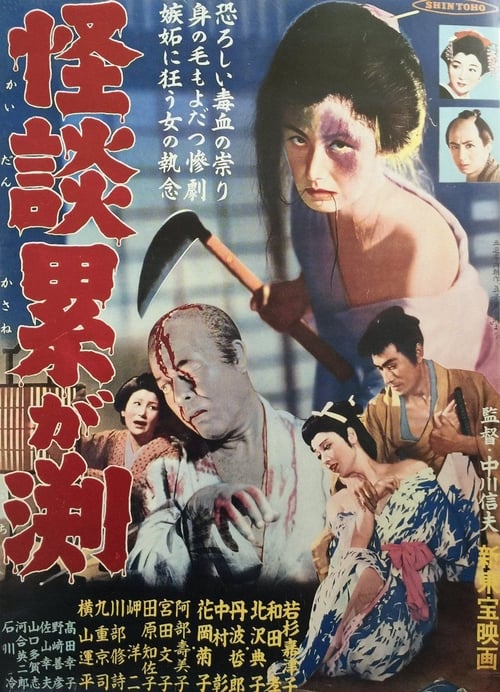
The Japanese poster for Kaidan Kasane-ga-fuchi (English title: THE GHOSTS OF KASANE SWAMP aka THE DEPTHS, 1957).
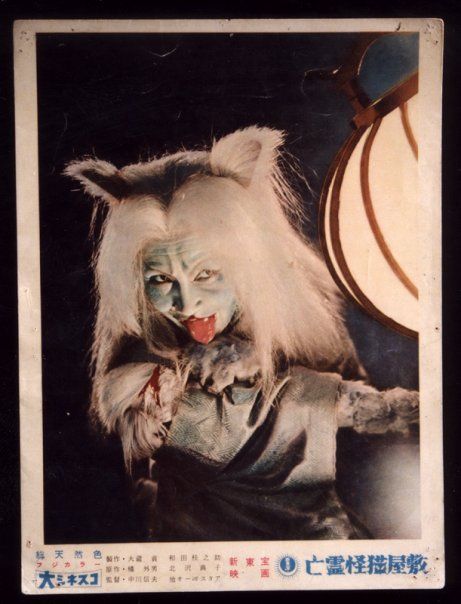
The avenging cat witch ghost is the star of Nobuo Nakagawa’s Black Cat Mansion aka Borei Kaibyo Yashiki (1958).
Every national cinema has their own homegrown subgenres and mythology when it comes to horror films and I think Japan has some of the most unique and bizarre creatures of all such as the hopping Umbrella ghost from Yokai hyaku monogatari (1968, aka The Hundred Monsters) or the rampaging stone idol of the Majin trilogy which began in 1966. Yet, in terms of eerie beauty and supernatural creepiness, I’m drawn to the bakeneko-mono stories from Japanese folklore with their shape-shifting cat demons and one of my favorites is Borei Kaibayo Yashiki (1958, aka Black Cat Mansion aka Mansion of the Ghost Cat). Continue reading →

 Cinema Sojourns