
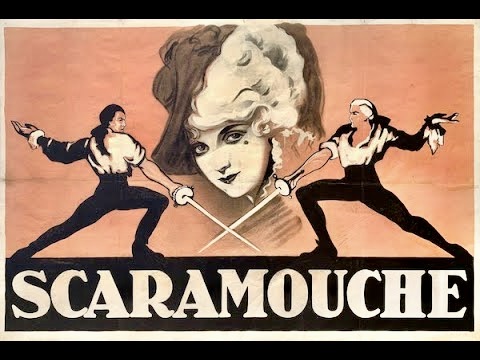
When was the last time you heard someone use the term swashbuckler? That’s a word that harkens back to another time but cinephiles associate it with a specific kind of action-adventure costume drama that became popular during the silent era. It also brought the work of novelist Rafael Sabatini to a larger audience thanks to movie adaptations of his most popular books. Early film adaptations include Scaramouche (1923) with Ramon Novarro in the title role, the 1924 versions of Captain Blood and The Sea Hawk and Bardeleys the Magnificent (1926) starring John Gilbert. And it was Errol Flynn who would come to represent the epitome of a swashbuckling hero, one skilled in sword fighting and other daring feats, in definitive versions of two Sabatini novels, Captain Blood (1935) and The Sea Hawk (1940) plus his iconic role in The Adventures of Robin Hood (1938)
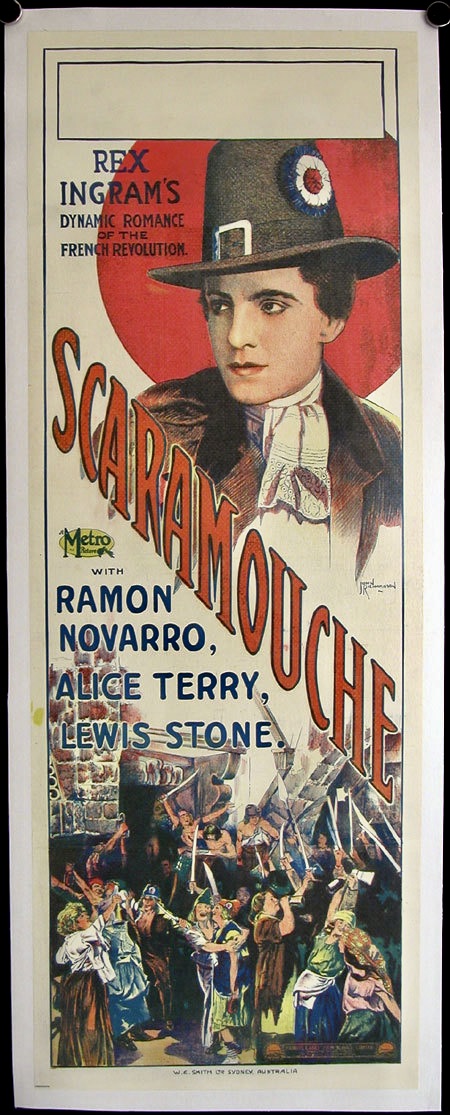
Yet, of all the swashbuckling novels written by Rafael Sabatini, Scaramouche is probably his best and most enduring work, even more so than Captain Blood, because of its rich and complex narrative, which spawned so many movie adaptations. Besides the superb 1924 silent version, there is MGM’s lavish 1952 Technicolor remake with Stewart Granger, the 1963 French costumer The Adventures of Scaramouche, an Italian comedy spoof Da Scaramouche or se Vuoi L’assoluzione Baciar devi sto…Cordone! (1973), a Spanish spinoff Los Hijos de Scaramouche (1975) and the 1976 international production The Loves and Times of Scaramouche (1976), directed by Enzo G. Castellari. There were even more adaptations and ripoffs including TV versions but my favorite of the lot is MGM’s 1952 remake.
Continue reading Cinema Sojourns