
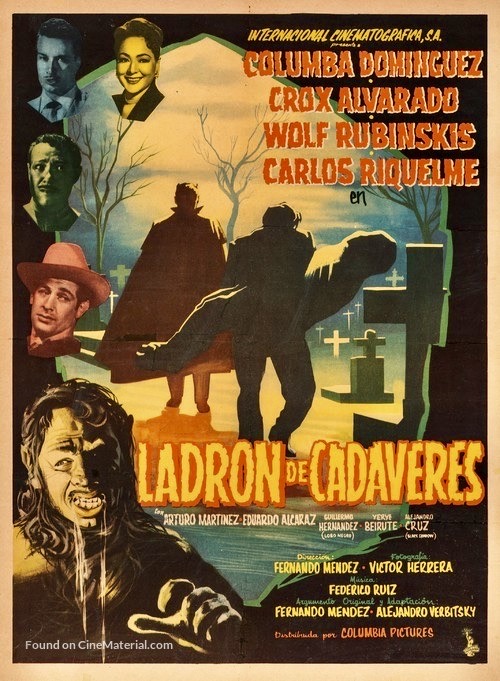
What makes a mad scientist mad? Is it the realization that his skill set is not sufficient to achieve the medical breakthroughs he envisions or the fact that the medical community is too unenlightened to understand his genius? In the case of Don Panchito aka The Professor (Carlos Riquelme) it’s a little bit of both. His goal is to build a master race of super beings with the help of his two assistants but so far the experiments aren’t working. The Professor has been kidnapping world class athletes and wrestlers and transplanting monkey brains into their bodies (yes, that again) but so far none have survived. Maybe the problem is that he needs a stronger body so his quest continues in Ladron de Cadaveres (English title: The Body Snatcher, 1957), the first Mexican horror/fantasy genre film to combine mad scientists, brain transplants and wrestlers in an audience pleasing formula that would soon inspire a series of movies pitting the popular wrestler El Santo against a variety of supernatural creatures.
Continue readingTag Archives: El Vampiro
Carlos Enrique Taboada’s Poison for the Fairies
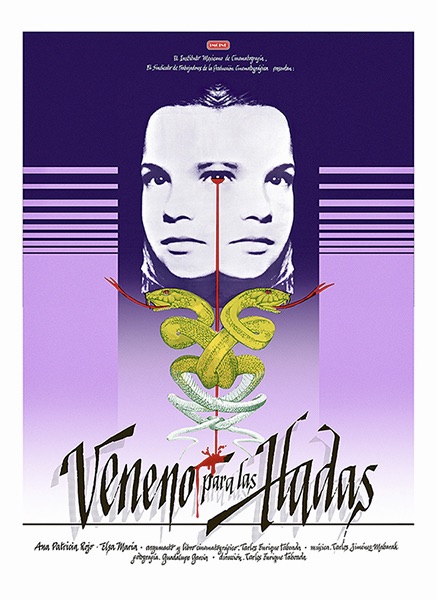
Most film historians point to a timeline between 1957 through 1967 as the Golden Age of Mexican horror cinema. This was a period that produced such iconic titles as El Vampiro (1957), The Black Pit of Dr. M (1959), The Brainiac (1962) and Dr. Satan (1966). The country’s film industry continued to make horror and fantasy films through the seventies and beyond, of course, but the majority of them tended to be cheaper productions in which masked wrestlers like Santo and Blue Demon battled a variety of monsters. A welcome exception to this popular but overworked formula are the horror films of Carlos Enrique Taboada, which were more subtle and suggestive in comparison like the atmospheric chillers Val Lewton produced for RKO Pictures in the forties. An outstanding example of Taboada’s original approach to the genre is Veneno para las hadas (English title: Poison for the Fairies, 1986), which is less of a supernatural thriller and more of an exploration of evil in the tradition of The Bad Seed (1956) and The Other (1972).
Continue reading

