
Anthony Mann’s Overlooked Western

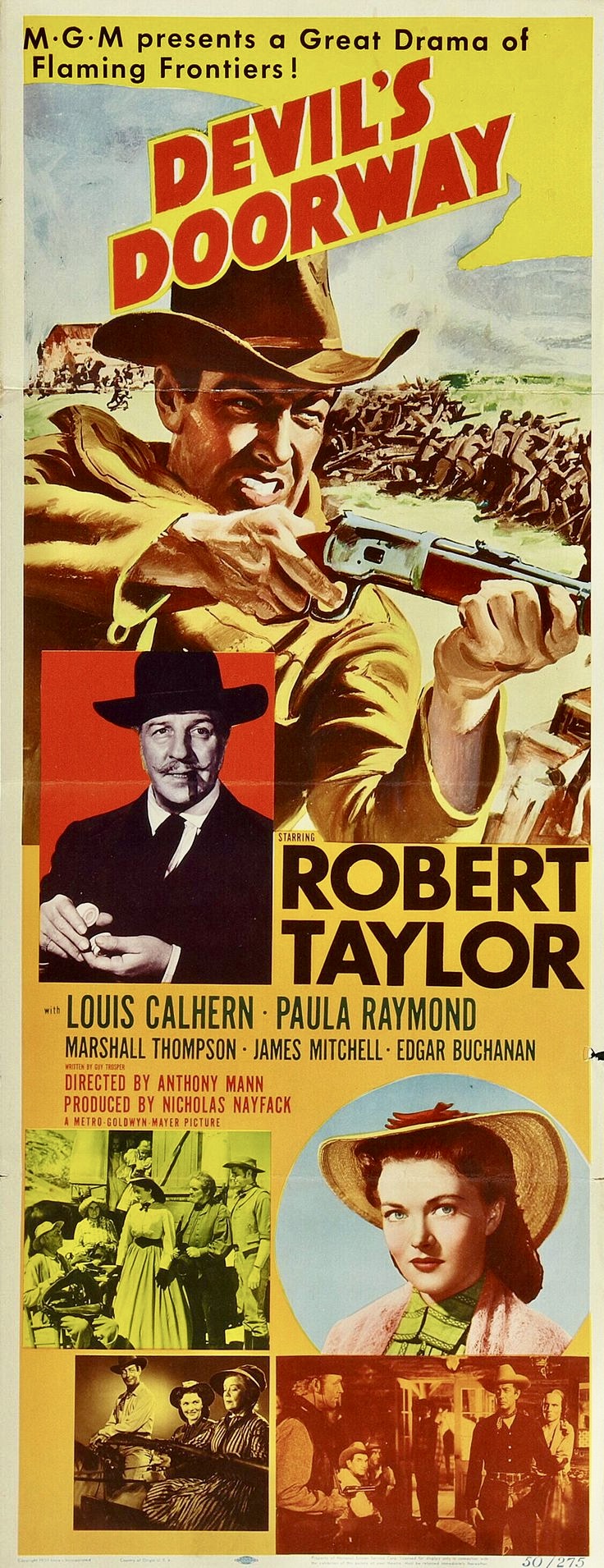
1950 marked an important turning point in the evolution of the Hollywood Western and Broken Arrow, directed by Delmer Daves, was largely responsible for that. A sympathetic treatment of the plight of the Apache people and their way of life, the film was the first major studio western to depict Native Americans as something other than bloodthirsty savages or naive primitives. The real hero of Broken Arrow was Cochise (Jeff Chandler), the Apache leader, and not the cavalry scout (James Stewart) who marries an Apache woman (Debra Paget). The film’s liberal views on race and the white man’s treatment of the Native-American were considered daring at the time and garnered much critical acclaim. It also earned three Oscar nominations including one for Best Screenplay (by Michael Blankfort). The downside of all this is that Broken Arrow‘s success completely overshadowed Devil’s Doorway, which was released the same year and also addressed the terrible treatment of this nation’s original settlers.

Continue reading
The Working Woman’s Dilemma

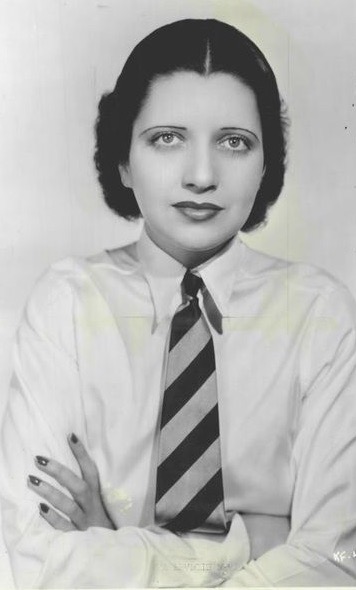
Kay Francis was the most glamorous and popular actress on the Warner Bros. lot in the early 1930s.

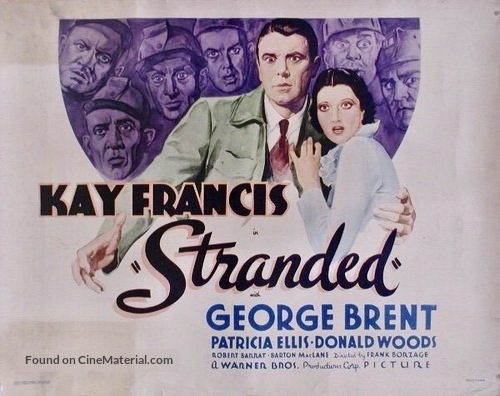
By 1935 Kay Francis was at the peak of her film career and the highest paid actress on the Warner Bros. lot. While her image as a chic and stylishly dressed sophisticate eventually worked against her, obscuring her genuine talent as an actress, Francis was amazingly prolific in the early sound era, averaging four to five movies a year opposite such dashing leading men as Ronald Colman (Raffles, 1930), William Powell (Ladies’ Man, 1931), Joel McCrea (Girls About Town, 1931), Fredric March (Strangers in Love, 1932), and Herbert Marshall (Trouble in Paradise, 1932).   Despite the often clichéd and formulaic scripts she was given by the studio, which were mostly soap operas, tearjerkers and romantic dramas, Francis still managed to display her versatility in a variety of films that deserve to be better known today such as the delightful caper comedy Jewel Robbery (1932), the exotic Pre-Code melodrama Mandalay (1934) and the offbeat espionage thriller British Agent (1934). But there are plenty of lesser known efforts in her filmography that deserve rediscovery and one of the most intriguing is Stranded (1935), a curious blend of romance, New Deal optimism, and crime drama directed by Frank Borzage and pairing Francis with George Brent, who first appeared with the actress in The Keyhole (1931). (Brent would soon become Bette Davis’s leading man of choice at Warner with that actress replacing Francis as the queen of the lot).   Continue reading