
Canadian writer/director Denys Arcand burst upon the international film world in 1986 with his film The Decline of the American Empire, which won the FIPRESCI Prize at Cannes and the Best Foreign Language Film from the New York Film Critics Circle plus it received an Oscar nomination for Best Foreign Language Film (it lost to The Assault, a Nazi-themed WW2 drama from the Netherlands). A witty but cynical talkfest about a gathering of academics obsessed with sex, Decline was often compared by critics at the time to 1983’s The Big Chill, except it was a “feel bad” version of it. More critical acclaim and awards followed for Arcand’s follow-up feature Jesus of Montreal (1989) and his later work, The Barbarian Invasions (2003), which is often regarded as his finest achievement.

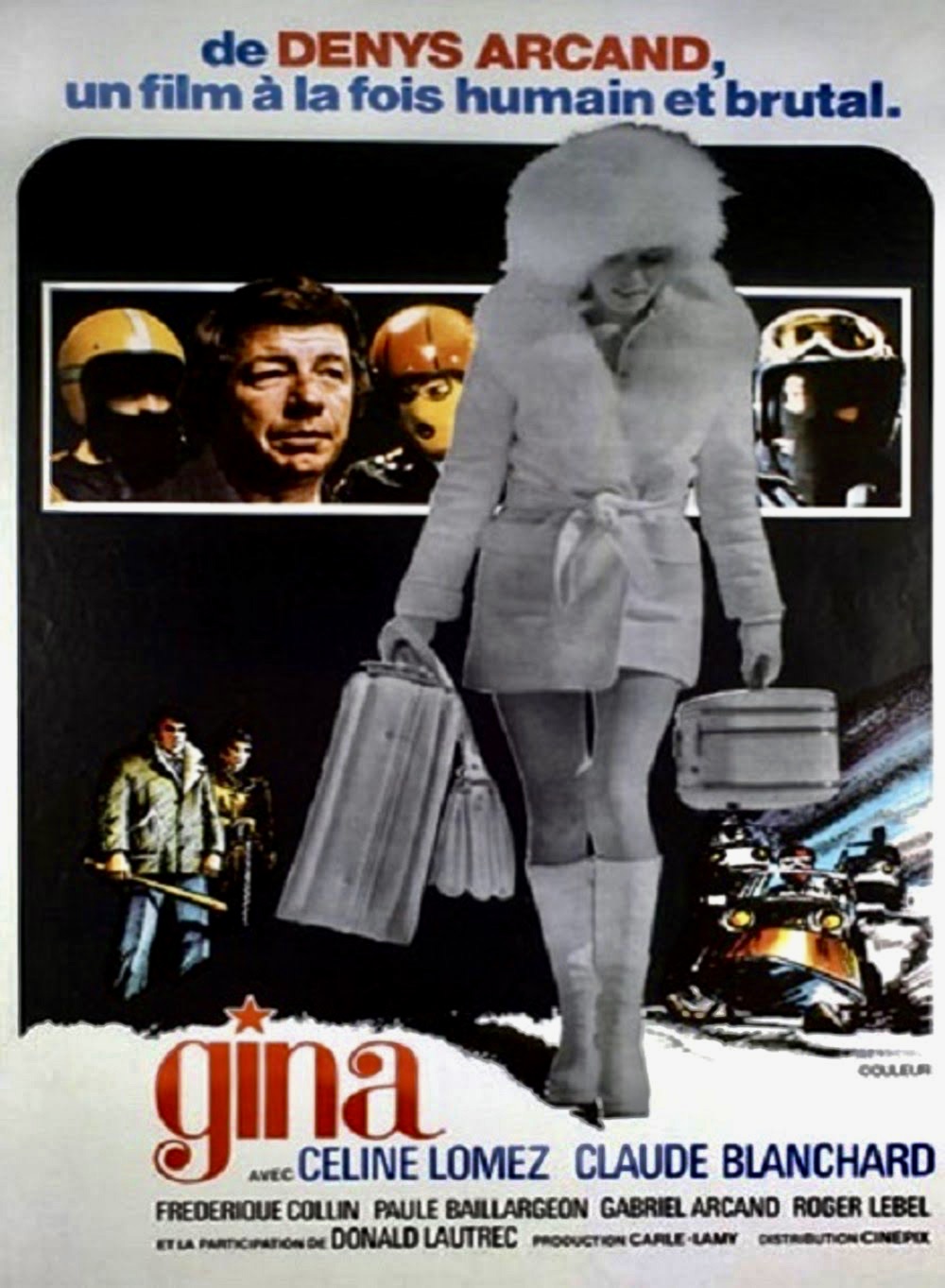
What most non-Canadians didn’t know at the time was that Arcand had made a name for himself making award-winning documentaries for the National Film Board of Canada and then dabbled in the B-movie genre with an unofficial trilogy of crime dramas: La Maudite Galette (English title: Dirty Money, 1972), Rejeanne Padovani (1973) and Gina (1975). These low budget efforts, all of which were shot in Quebec in the French language, helped Arcand hone his skills as a director but were decidedly down and dirty efforts compared to his more intellectual art-house fare in the 1980s yet there is nothing typical or cliched about Arcand’s crime trilogy. Dirty Money depicts a murder scheme for money gone wrong and looks like a precursor to The Coen Brothers’ Blood Simple (1984). Rejeanne Padovani is a sordid tale of political corruption, bribery and murder that was seen as a barely disguised critique of the Canadian government at the time. And Gina, probably my favorite of the three, is a strangely effective hybrid of softcore melodrama and revenge thriller crossed with a bleak portrait of working class life in the provinces – in this case, the textile mill town of Louiseville, Quebec during a particularly frigid winter.
Continue reading
 Cinema Sojourns