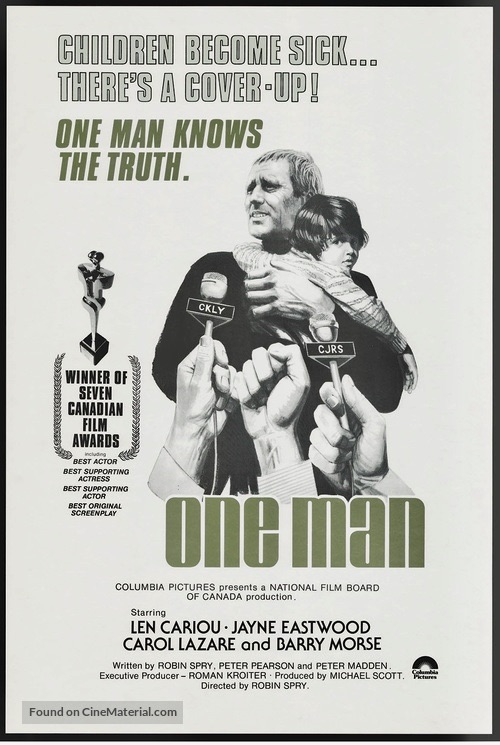
People can complain about the seventies all they want but it was a watershed decade in terms of launching new film genres like disaster movies (Airport, Earthquake, The Towering Inferno), Blaxploitation (Sweet Sweetback’s Baadasssss Song, Shaft, Superfly), conspiracy thrillers (Executive Action, The Parallax View, Three Days of the Condor), Eco-horror/sci-fi (Frogs, Night of the Lepus, Soylent Green) and slasher flicks (Black Christmas, Friday the 13th, Halloween). Arriving later in the decade was the environmental drama as represented by The China Syndrome (1979) and other films that addressed the dangers of nuclear power, man-made toxins and air pollution. Interestingly enough, one of the first movies to address the lethal health hazards of air pollution in the guise of an investigative thriller came from Canada entitled One Man (1977). It was produced by the National Film Board of Canada, directed and co-written by Robin Spry and featured Len Cariou in the leading role of a television reporter who is threatened by a powerful corporation over a controversial news story
Continue readingMonthly Archives: March 2024
Yum! Yum! Eat’em Up!
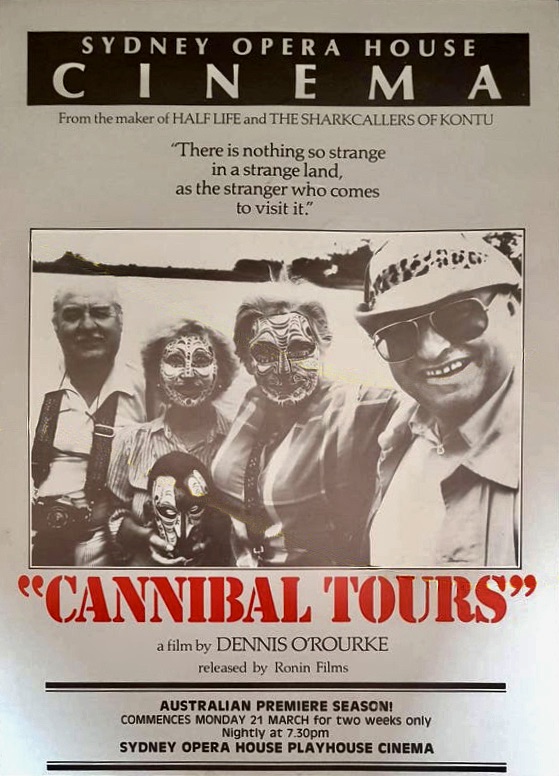
The Cambridge Dictionary definition of a tourist is “someone who visits a place for pleasure and interest, usually while on vacation.” That doesn’t have to have negative connotations but it usually does because most tourists in holiday mode are totally focused on their own enjoyment. As a result, they might not fully appreciate or understand the culture they are encountering and Cannibal Tours (1988), a documentary by Dennis O’Rourke, is an excellent example of this. The film follows a chartered river cruise of the Sepik River in Papua, New Guinea in which the travelers – mostly from Germany, Australia, Italy and the U.S. – disembark at several villages along the way and interact with the local residents while visiting nearby tourist attractions. The title may be facetious – there are no cannibals on display in the film – but cannibalism was practiced in the region up to 1960 when it was outlawed by the Australian government, which was in control of Papua, New Guinea at the time.
Continue readingWhere the Wild Things Are
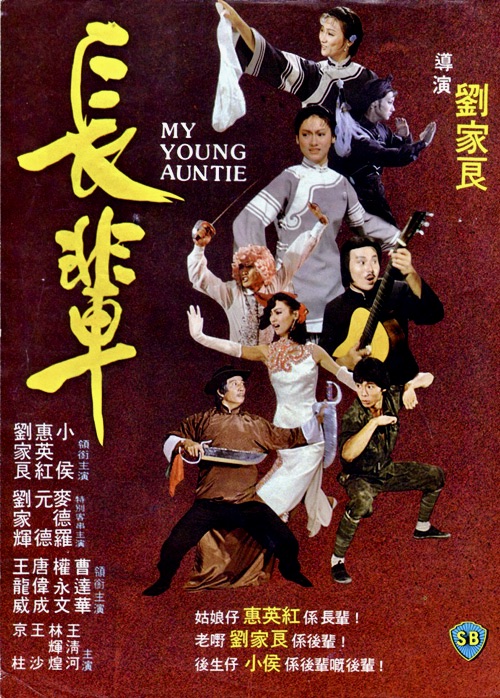
Remember the first wave of Hong Kong cinema to hit American movie screens in 1972? Bruce Lee was transformed into an international superstar after the release of The Big Boss and Fist of Fury and other martial arts masters like Jimmy Wang Yu and Lieh Lo developed cult followings for films such as One-Armed Boxer and Five Fingers of Death. Most of these movies were the product of a male-dominated film industry but, as early as the mid-sixties, female heroines begin to emerge in the genre as witnessed by Cheng Pei Pei in King Hu’s Come Drink with Me (1966). Others would follow like Angela Mao in Deadly China Doll (1973) and Kara Hui in My Young Auntie (1981).
The Hong Kong movie business became even more diversified in 1988 after a new censorship ordinance created a rating system: Category I (general viewing), Category II (parental guidance) and Category III (adults only over 18 years of age). That third category quickly became notorious for an anything-goes-approach to the depiction of sex and violence on-screen. A major turning point was 1991 when Michael Mak’s Sex and Zen, Robotrix starring Amy Yip, and Black Cat with Jade Leung in the title role were among the first to push these boundaries to extremes in Hong Kong cinema. Martial arts actioners got even more outrageous the following year with the release of Chik Loh Goh Yeung (English title: Naked Killer (1992), in which a pair of lesbian assassins terrorize the male scumbags of Hong Kong before squaring off against a rival duo of lesbian hired killers.
Continue readingHeavenly Hijinks
Audiences are obviously suckers for films about helpful ghosts or guardian angels because Hollywood has been grinding out variations on this theme for years. Alternately saccharine and sentimental, these films are rarely well received by the critics but there have been a few exceptions over the years, the chief one being Here Comes Mr. Jordan (1941), which is really the film that started the whole trend. In its wake, there were numerous contenders covering the same celestial terrain – I Married an Angel (1942), Angel on My Shoulder (1946), Down to Earth (1947) and Angels in the Outfield (1951) – but Here Comes Mr. Jordan remains the most imaginative, comical, and romantic of the lot.
Continue readingThe Fishermen of Aci Trezza
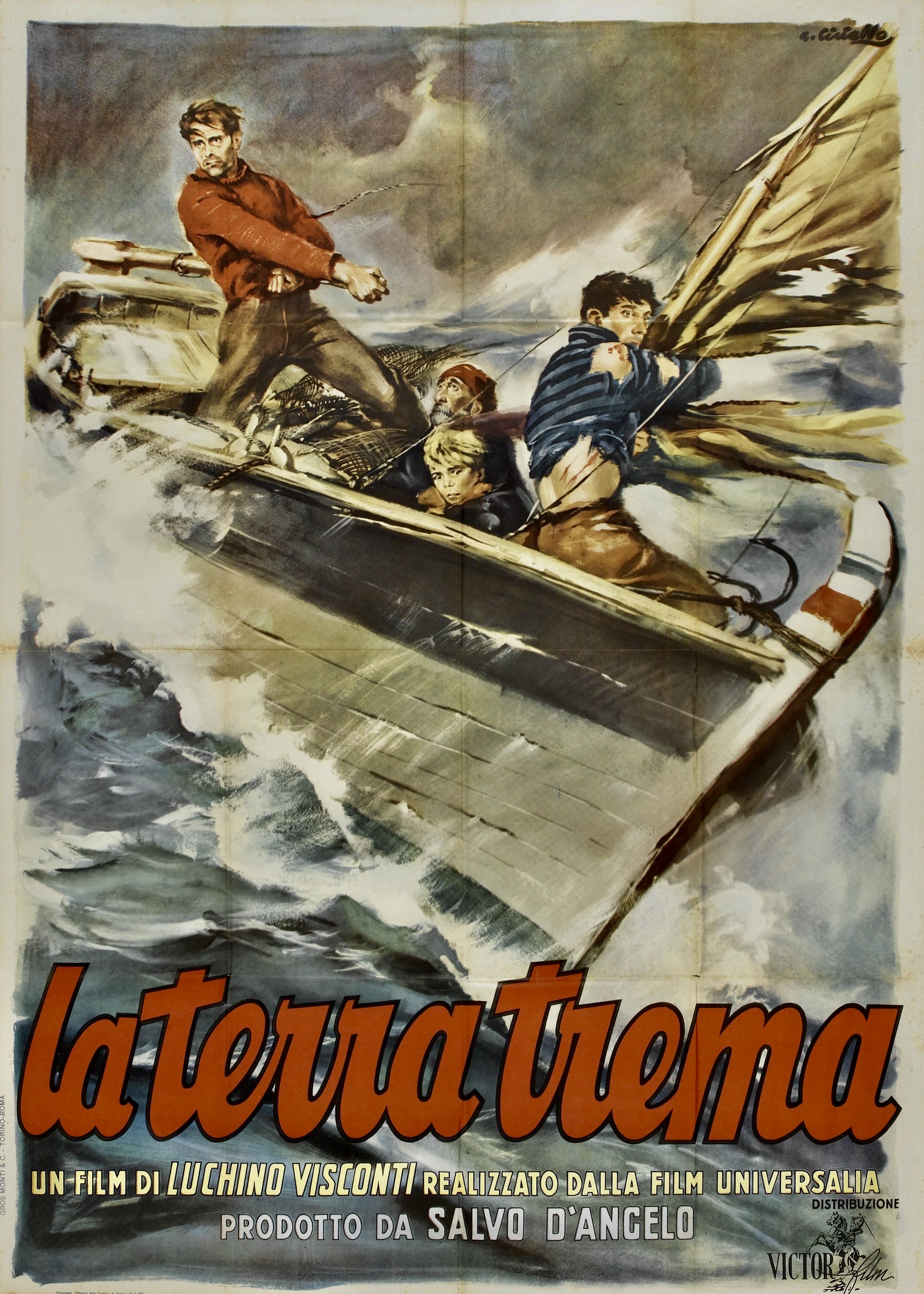
Every film lover remembers a point when they begin to view cinema as an art form and not just ephemeral entertainment. A turning point for me was the PBS series Film Odyssey, which presented classics from the Janus Collection, hosted by Los Angeles Times’ film critic Charles Champlin in 1971. That marked my first exposure to Ingmar Bergman (Wild Strawberries), Federico Fellini (La Strada), Jean Cocteau (Beauty and the Beast) and Akira Kurosawa (Rashomon), among others. But it was the film history class I took at the University of Georgia in 1974 that really opened my eyes to the possibilities of film as a creative medium. I learned about the auteur theory in that class with screenings of Sam Fuller’s The Steel Helmet and Nicholas Ray’s Bigger Than Life and developed an appreciation for silent cinema (D.W. Griffith’s Orphans of the Storm, Aleksandr Dovzhenko’s Earth) and the virtues of the Studio System (represented by George Sidney’s Scaramouche and Leo McCarey’s An Affair to Remember). What made the biggest impact on me, however, were the Italian neorealism films of the post-WW2 era, especially Luchino Visconti’s La Terra Trema [1948] (The English translation is The Earth Trembles).
Continue readingNo Help Coming
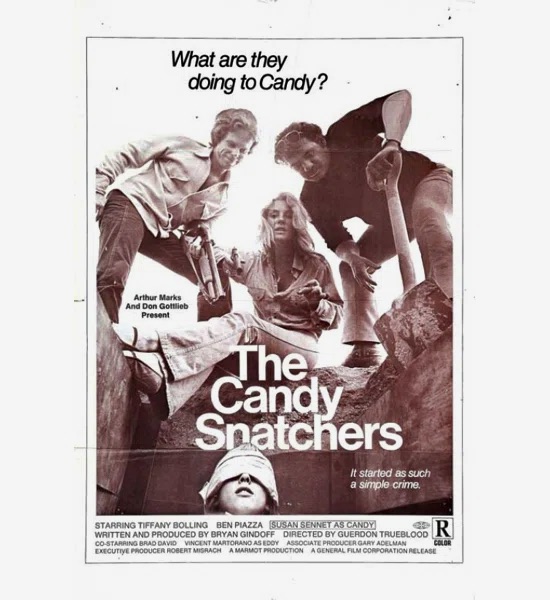
Between 1984 and 1986, WVEU (Channel 69) in Atlanta dropped its VEU affiliate programming and served up a schedule of cartoons, music videos, syndicated series and low-budget feature films. Among the latter were such Crown International drive-in faves as The Stepmother (1972) and Trip with the Teacher (1975) starring Zalman King in his most wacked-out performance (and probably the reason that he gave up acting for producing). Other ‘can you believe this?’ oddities that turned up were The Baby (1973) in which a man-hating mom (Ruth Roman) raises her son to be a gurgling, helpless man-baby and The Psychopath (1975) about a deranged kid’s show host who murdered abusive parents. You never knew what was going to turn up on Channel 69 but for a film buff it was a treasure trove of marginalized cinema. It was here that I first saw The Candy Snatchers (1973), a film which in many ways is just as misanthropic, sleazy and uncompromising as Wes Craven’s Last House on the Left which came out the following year. It was actually shocking to see this movie play in a late afternoon slot where school kids could easily tune in but the simple truth is that hardly anybody watched Channel 69 making it easy for something like The Candy Snatchers to pass unnoticed by all but a few.
Continue readingPorcelain Mania
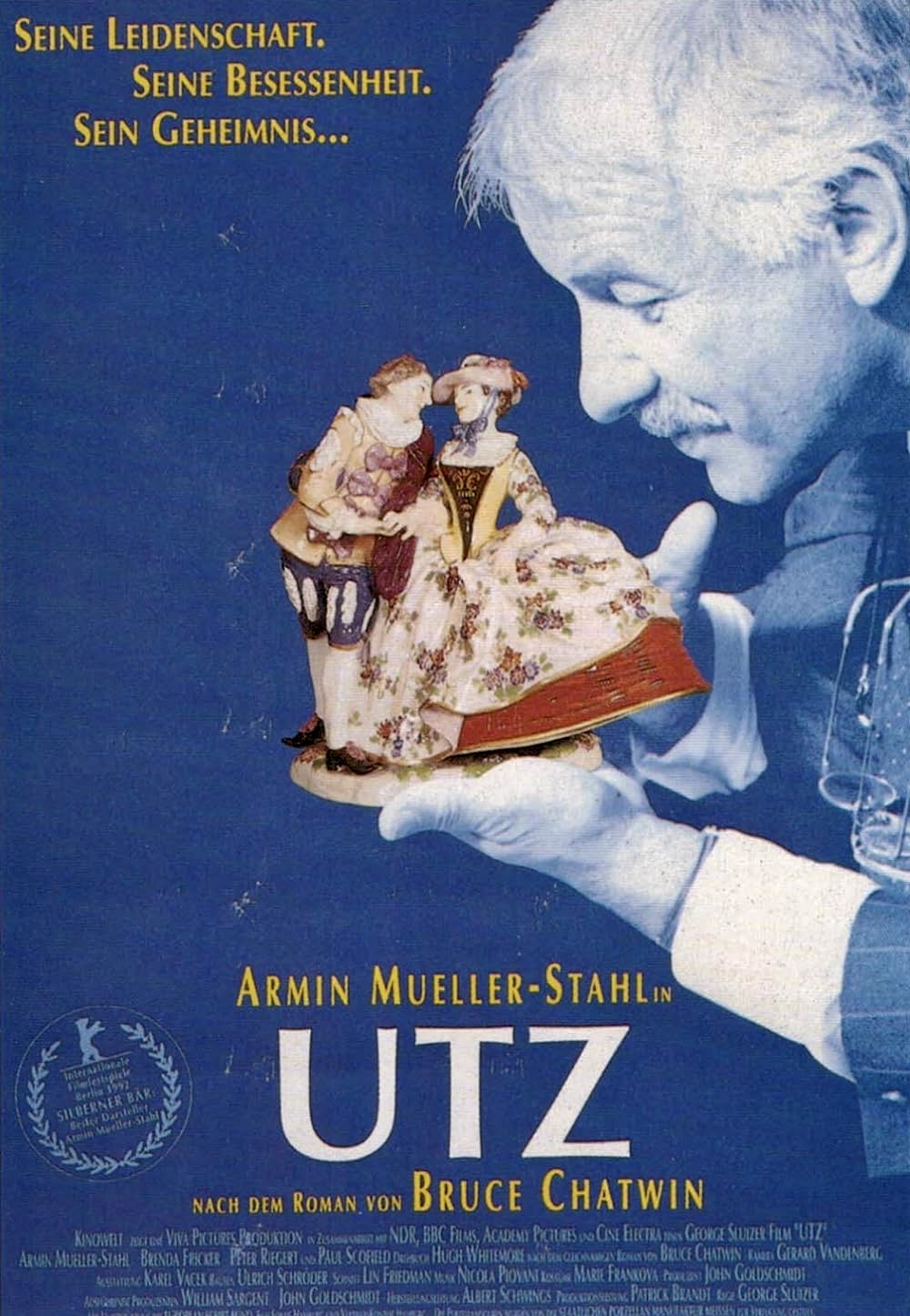
Often considered one of the most acclaimed and intriguing writers of the 20th century, Bruce Chatwin was more than just a novelist. He was also a journalist, anthropologist, and world traveler who is best known for his debut novel In Patagonia (1977), which he wrote after leaving his prestigious position as an art expert at Sotheby’s. Three of his novels have been adapted to the screen, including Cobra Verde (1987), based on his novel The Viceroy of Ouidah and directed by Werner Herzog with Klaus Kinski in the lead, On the Black Hill (1988), which was filmed on location in Wales by Andrew Grieve, and Utz (1992), which Chatwin once described as a “Middle European fairy-story”. Of these three film adaptations, Utz is often considered the most personal and intricately detailed of the lot because it reflects the author’s own interest in antiquities and art objects. The movie also transforms a highly eccentric story into an accessible portrait of an obsessive personality, one who has amassed a priceless collection of pottery, much of it devoted to ceramic figurines from the Meissen factory (Europe’s oldest porcelain manufacturer).
Continue reading