
Anatomy of a Marriage

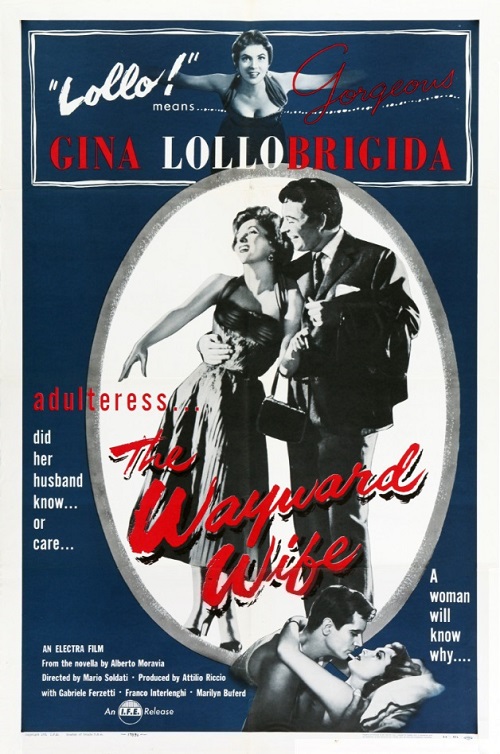
There is little doubt that Gina Lollobrigida’s rise to fame in the post-WW2 years was attributed to her beauty and sex appeal but there was another reason she achieved international recognition – she was a gifted actress who was magnetic and believable in any film genre. In fact, some of her best work is evident in a few key films of the early 1950s but is often overshadowed by the glossy Hollywood productions she made during her peak years such as Solomon and Sheba (1959), Never So Few (1959) and Come September (1961). Rene Clair’s romantic fantasy Beauties of the Night (1952) is generally credited as Lollobrigida’s breakthrough film and Luigi Comencini’s Bread, Love and Dreams (1953) brought her international acclaim as an actress (She was nominated for Best Foreign Actress by BAFTA and won Best Actress from the Italian National Syndicate of Film Journalists). But she had already proven herself as someone who could convincingly move from war drama (Achtung! Banditi!, 1951) to costume swashbuckler (Fanfare La Tulip, 1952) to sex farce (Wife for a Night, 1952) and La Provinciale (English title: The Wayward Wife, 1953), directed by Mario Soldati, is an impressive early dramatic showcase for Lollobrigida that is almost forgotten today.

Continue reading
The Lee Art Theater: A Forgotten Cinema Treasure

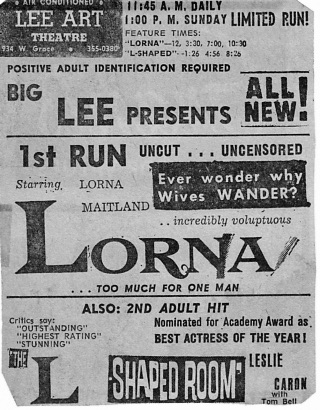
As a lifelong film lover, I have fond memories of my movie-going youth in Richmond, Virginia. There were not only distinctly different neighborhood venues like The Westover Theater, the Willow Lawn and the Westhampton but also much more opulent movie palaces in the city like the Byrd, the Loew’s and three first-run hardtops, which were situated on one Broad Street block known as Richmond’s Theater Row – the State, Colonial and the National; the latter was later renovated and rebranded the Towne. B-movie double features, sword and sandal epics and English dubbed European genre films were more likely to show up at seedier theaters like The Grand and the Venus. There was even a theater that catered solely to black audiences – The Booker T – and a plethora of drive-in theaters scattered around the city like the Sunset, Rose Bowl and Twin Pines which exhibited some of the most obscure and bizarrely titled films of the period as witnessed by marque headliners Invasion of the Animal People, Daughter of the Sun God and other oddities. But the most eclectic of all was The Lee Art Theater on West Grace Theater, which often paired racy adult features (Russ Meyer’s Lorna, Paris Ooh-La-La) with serious art house dramas (The L Shaped Room, Breathless).

Continue reading