
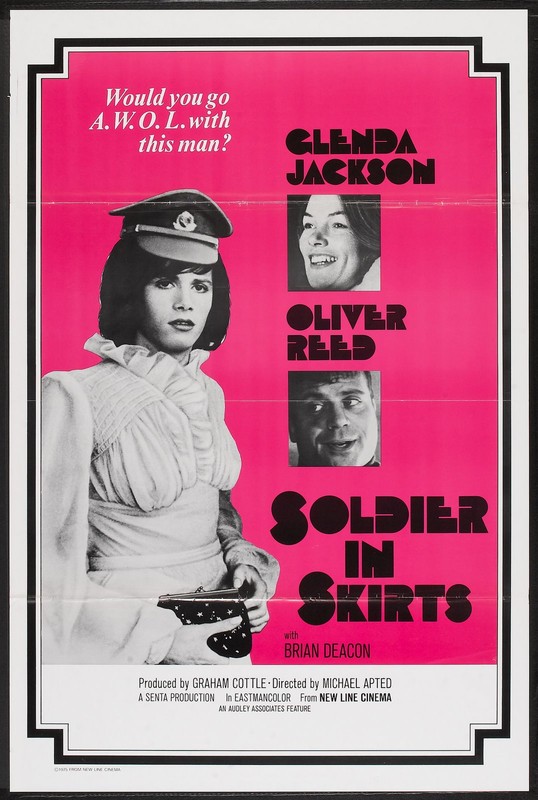
In the spring of 1943 on a rural farm in Wiltshire, England, Alice Charlesworth (Glenda Jackson) encounters a trespasser on her farm land by the name of Barton (Brian Deacon). He turns out to be an army recruit who is stationed at a nearby military base and the two strike up a friendship that turns into something deeper. Barton proves to be quite adept at helping Alice with work chores as he was raised on a farm and his presence is a comfort to Alice (her husband is currently a prisoner-of-war in Japan). When Barton’s military leave ends, he opts to go AWOL and stay on with Alice but takes on a new identity with Alice’s encouragement. He disguises himself as the farmwife’s sister Jill and for a while they lead a blissful existence as lovers/companions until a sergeant (Oliver Reed) from the nearby army camp and his buddy Stan (Gavin Richards) pay them a surprise visit and become regular visitors to the house as potential romantic suitors.
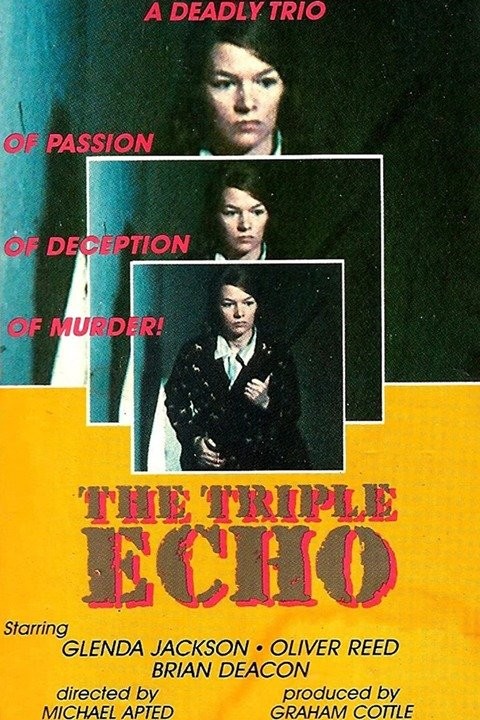
The idea that an army deserter in wartime England would resort to such a strange masquerade to avoid military duty might seem like an outlandish premise for a movie but The Triple Echo aka Soldier in Skirts (1972) avoids what could have been an unintentional campy comedy and creates instead an oddly compelling and tragic human drama. The film, which was based on a novel by H.E. Bates (The Daring Buds of May), was mostly overlooked by critics in the U.K. and the U.S. during its initial release but it holds up remarkably well today and is significant as the first feature film from director Michael Apted.
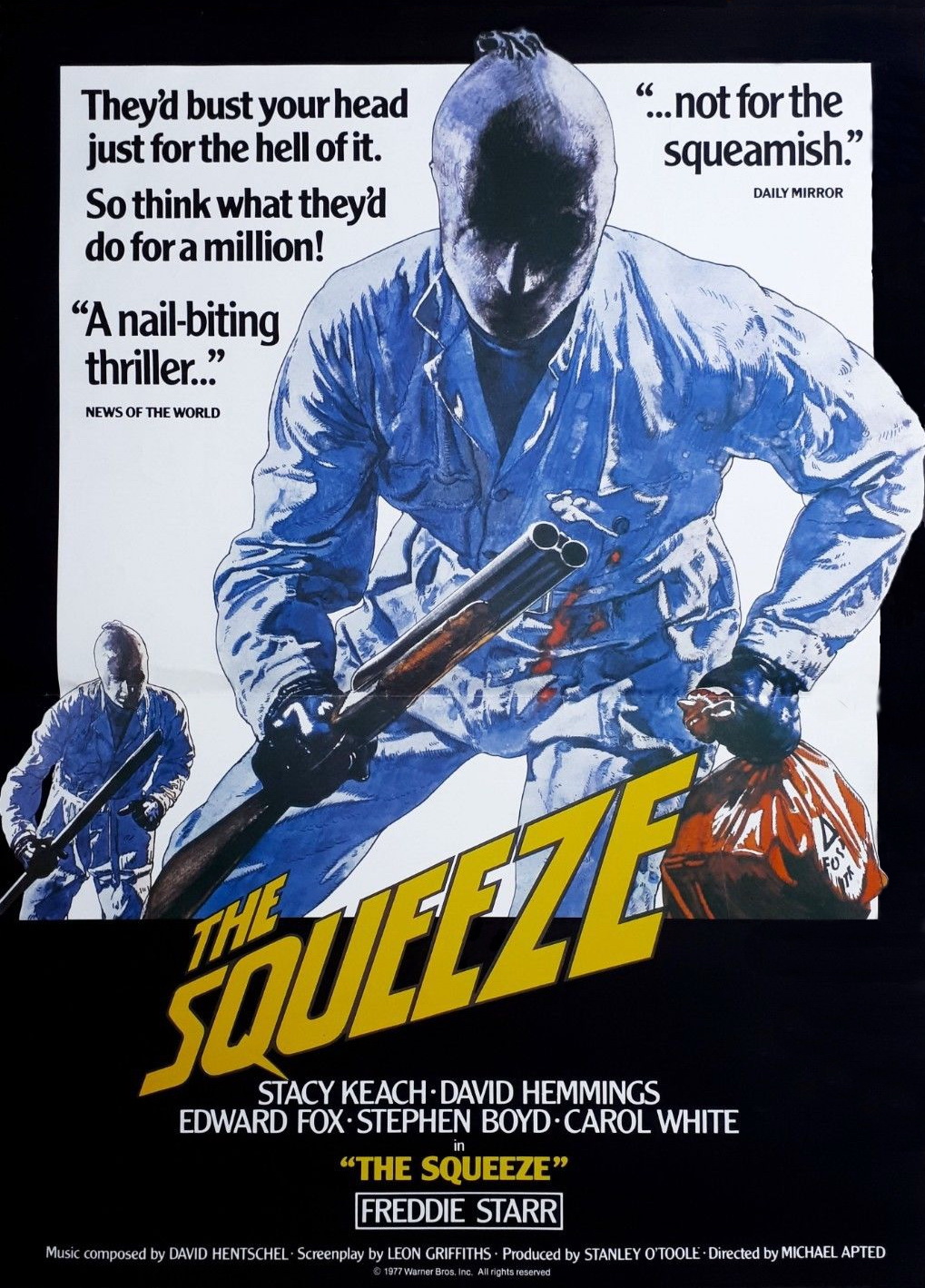
The Triple Echo might not seem like the sort of film Apted would tackle for his directorial debut but the British filmmaker has had a remarkably eclectic career which is divided into his early TV work including the critically acclaimed documentary series 21 Up (1977), a successful Hollywood career with such high profile hits as Coal Miner’s Daughter (1980), Gorillas in the Mist (1988), the coming of age drama Nell (1994) with Jodie Foster, and the James Bond adventure The World is Not Enough (1999) and a slew of lesser known but offbeat projects such as the rock ‘n’ roll musical Stardust (1974), The Squeeze (1977), a gritty crime thriller, and Thunderheart (1992), a Native American murder mystery with Val Kilmer. The Triple Echo fits in perfectly with the quirky, personal work in this latter category and it is also a reunion of sorts for Glenda Jackson and Oliver Reed, who first appeared together in Women in Love (1969) and would go on to co-star in a third film in 1978, The Class of Miss MacMichael, a dark comedy about a troubled alternative school in London.
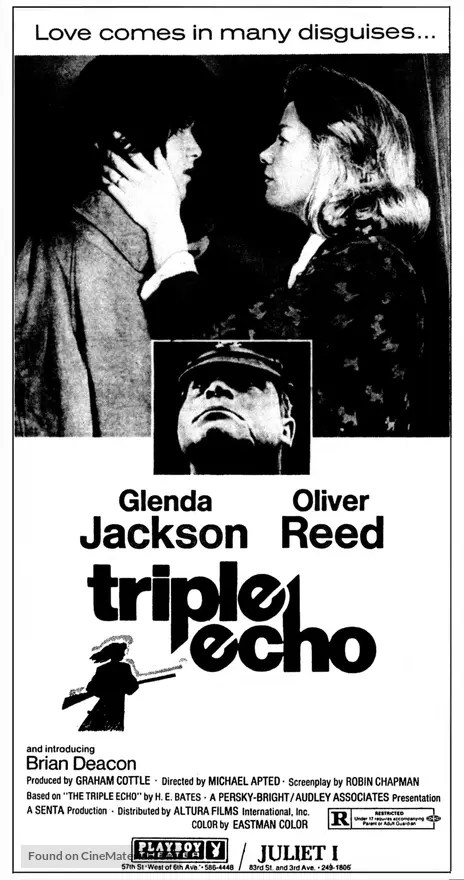
In The Triple Echo, Jackson and Reed are not paired romantically as they were in Women in Love. Instead, they are rivals for the soldier in drag. In real life, the two actors steered clear of each other in social situations or off the set. Yet, despite their mutual dislike of each other, Jackson and Reed respected each other’s approach to acting. And as both performers have intense, volatile screen personas, their scenes together generate real tension and conflicting emotions. Equally impressive in the film’s most challenging role is Brian Deacon in his screen debut as Barton/Jill. His transition from a naïve country boy and reluctant army recruit to the willing lover of an older woman and eventually a cross-dresser who pretends to be Alice’s sister is completely convincing. Even his slow infatuation with women’s clothes and the desire to be praised and courted by male admirers seems plausible if highly dangerous. (In some ways Barton becomes as deluded in his role playing as Jack Lemmon’s Daphne in Some Like It Hot where the fantasy of pretending to be a woman becomes more pleasurable than his true identity).
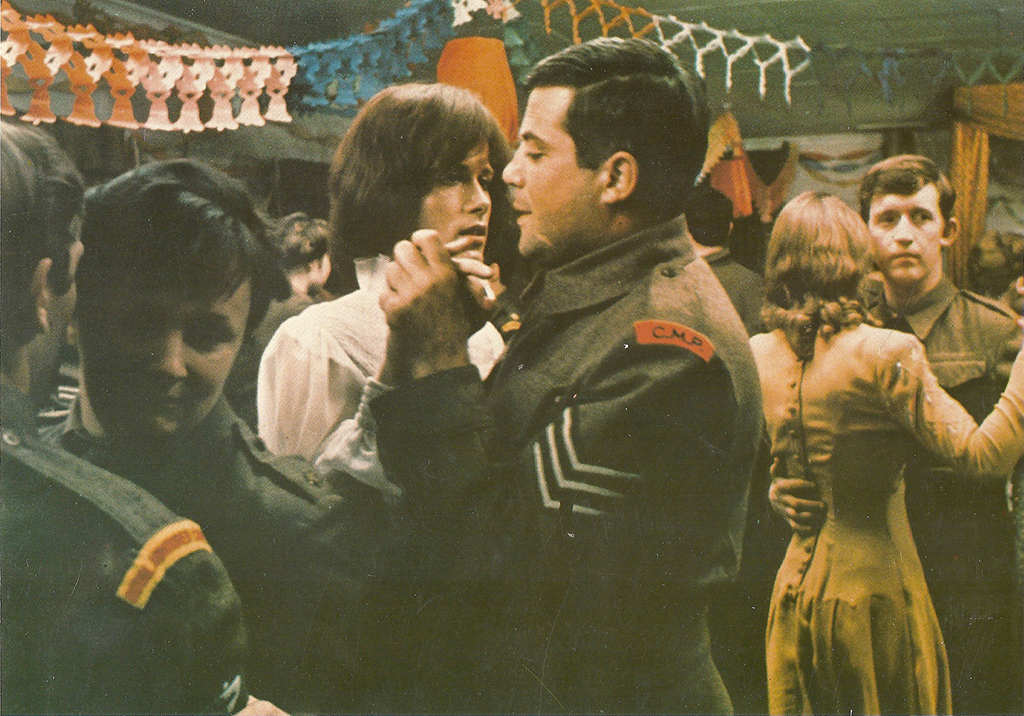
The Triple Echo wouldn’t work at all if Apted hadn’t taken the time to develop the growing relationship between the older woman and the young AWOL soldier in the first half of the movie. Their coming together as a couple out of mutual need and loneliness is touching and believable and for a while Alice and Barton settle into an almost idyllic existence on the farm with Barton performing the sort of tasks Alice’s missing husband would have handled. Once Alice convinces Barton to stay with her on the farm after he goes AWOL, however, the dynamics of the relationship change. Alice takes the more dominant role while Barton begins to enjoy exploring his feminine side as Jill’s fictitious sister. The isolation of the farm and the lack of social interaction with other people becomes too claustrophobic and confiding for Barton and he begins to rebel at Alice’s rules. Eventually Barton’s quarantine drives him to seek some fun and he begins to entertain some delusional ideas about the sergeant once the latter begins courting him in earnest.
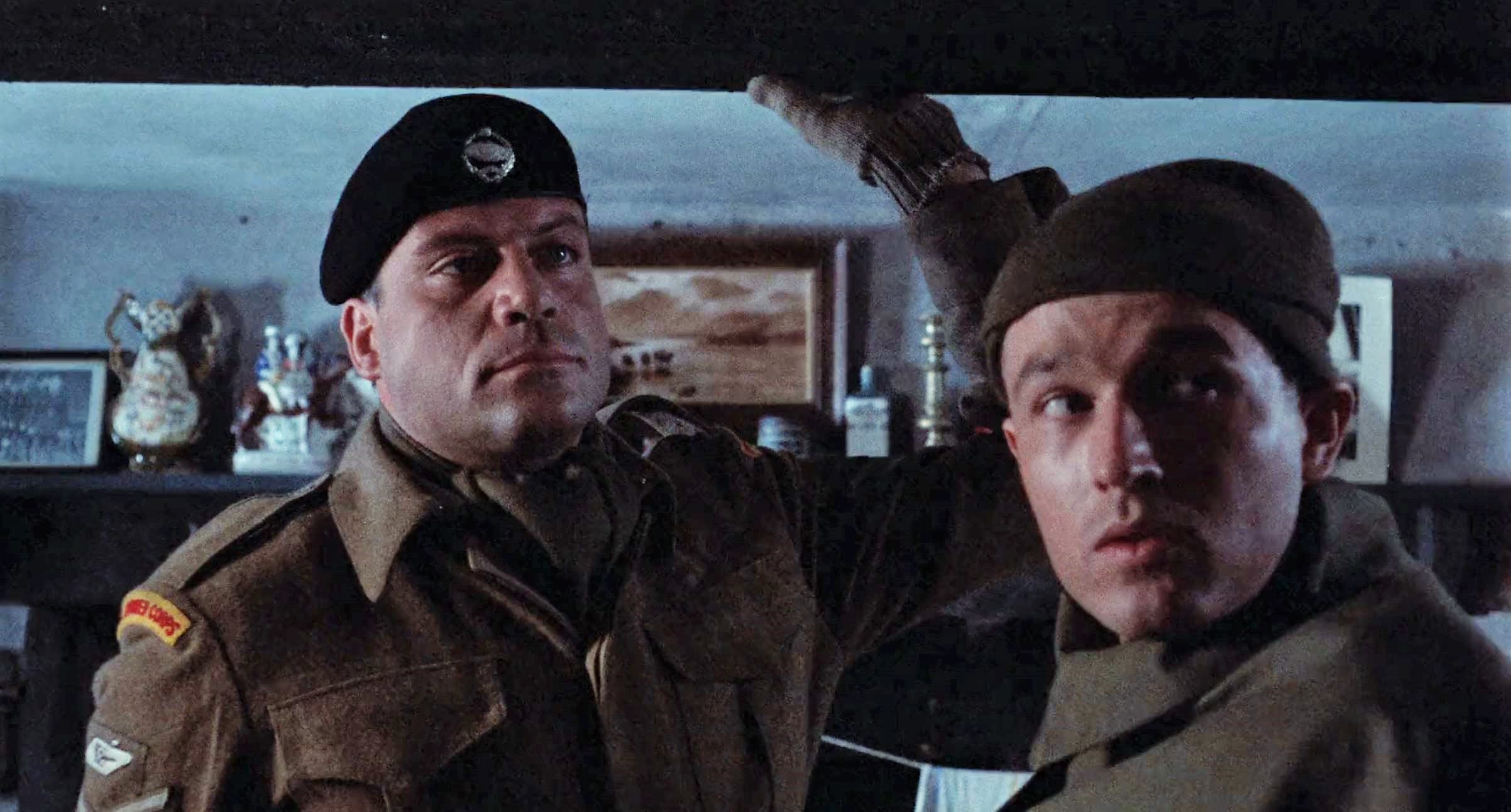
Some reviewers simply couldn’t buy the concept of Brian Deacon passing as Alice’s sister in the film. He looks like what he is – a man in drag – but what the viewer thinks isn’t the point. The important thing is that the sergeant becomes infatuated with Jill and never suspects that she is an AWOL soldier until a climatic seduction scene that sets the movie off on the road to tragedy. And it is Reed’s powerful and frightening performance as the obsessive sergeant that transforms the second half of The Triple Echo into a suspense thriller. The scene where he literally jumps into the room to announce his arrival at their farmhouse is the stuff of nightmares and so is his delivery of innocuous slang like “Dippy, dippy, dippy” which sounds menacing from his lips. It is one of Reed’s great middle period performances and you watch in dread as Barton foolishly encourages the sergeant’s flirtatious behavior.
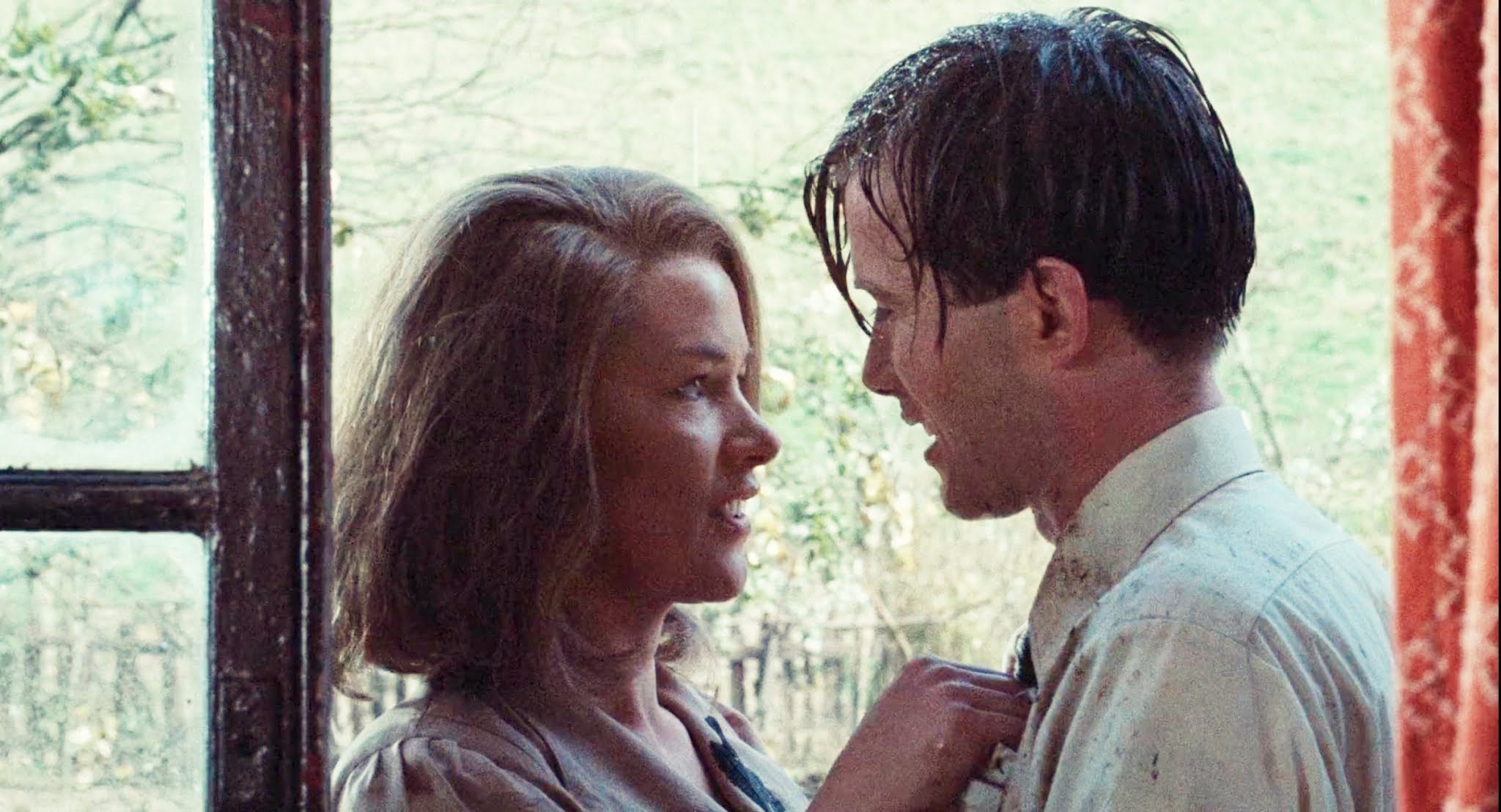
Shot in and around Wylye Valley in Wiltshire, England over a tight six-week production schedule, The Triple Echo was a mostly positive working experience for the cast and crew (The cinematography is by frequent Sam Peckinpah collaborator John Coquillon [Straw Dogs, Pat Garrett and Billy the Kid]). Although this was Apted’s first theatrical feature, he was happy to receive advice and suggestions from the crew and Jackson in particular. Reed, on the other hand, was difficult to control and insisted on taking Apted out and getting him drunk to “loosen him up.” It was worth it in the end because Reed added a lot of original and unexpected touches to his performance that kept Jackson on her toes and creatively challenged.
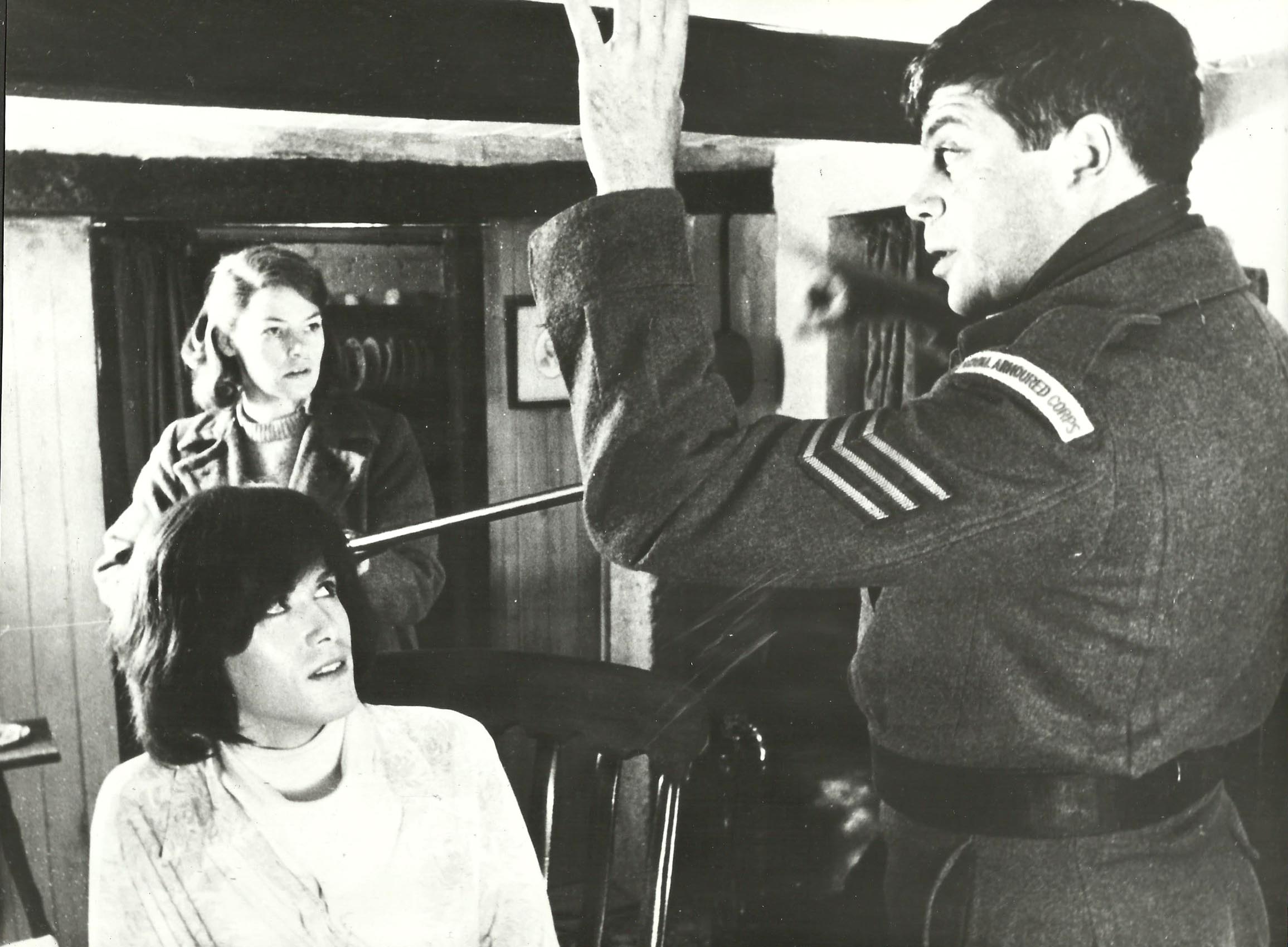
When The Triple Echo opened at theaters, however, critics were decidedly mixed. The Evening Standard called it “fresh, poignant, and perfectly period” while Radio Times wrote, “Michael Apted’s careful direction makes the ruse of disguising deserter Deacon as Jackson’s sister seem almost credible, while his recreation of the tranquil wartime countryside makes the abrupt intrusion of vulgar sergeant Oliver Reed all the more foreboding.”
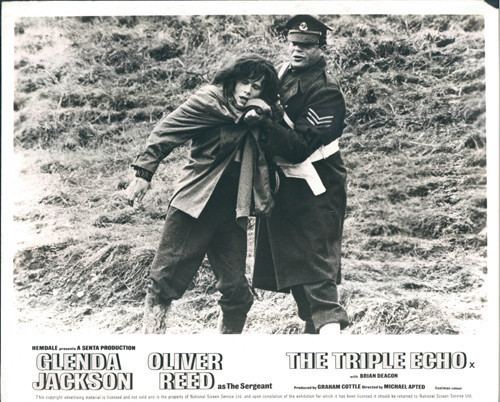
Pauline Kael of The New Yorker was one of the dissenting critics and proclaimed it a “grim (but absurd) pastoral tragedy,” adding “…It’s a very weird picture; spiky-thin Glenda Jackson, who speaks as if she were biting on a bullet, is so masculine here that she gives it an extra dimension of sexual ambiguity.” Recent assessments of the film are much more favorable with some critics seeing the movie as an examination of gender roles in a rural period setting. Certainly, Glenda Jackson’s Alice makes a strong feminist role model since she plays someone who can run a farm without a man if necessary. But Apted’s film is also fascinating for Barton’s exploration of his feminine side, which leads to sexual identity panic but also a realization of women’s limited choices in wartime England.
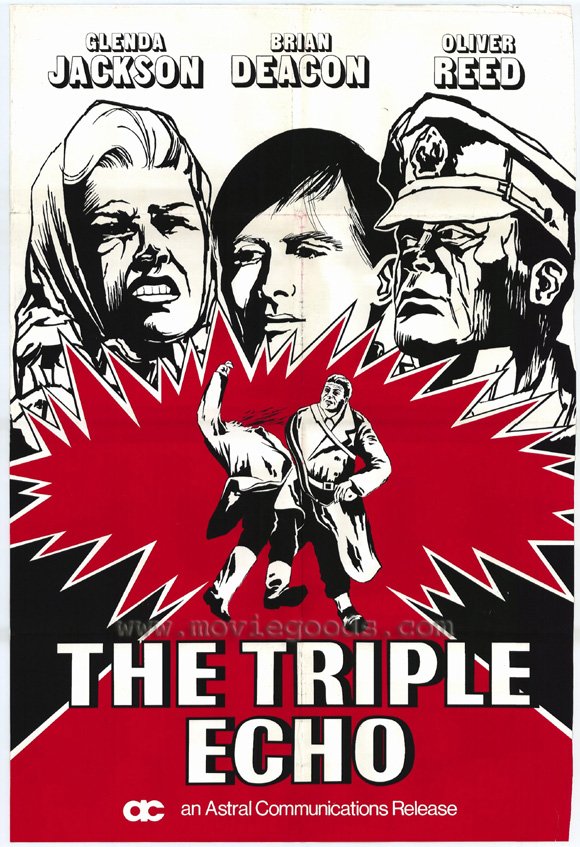
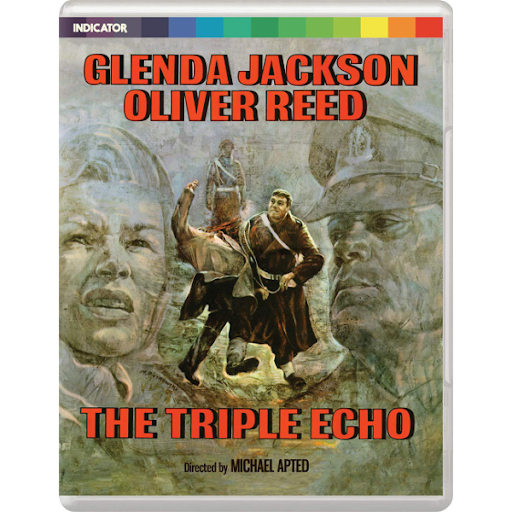
The Triple Echo has appeared on some streaming platforms like Prime but fans of the film will want to own the Blu-ray edition released by Indicator/Powerhouse Films in April 2023. You will need an all-region player to view it since it is a region B release and includes a host of extra features including interviews with Michael Apted, co-star Brian Deacon, the film composer Marc Wilkinson, the costume designer Emma Porteous and the editor Barrie Vince.
Other links of interest:
https://thehollywoodinterview.blogspot.com/2008/03/michael-apted-hollywood-interview.html
http://www.filmreference.com/Actors-and-Actresses-Po-Ro/Reed-Oliver.html
https://www.pbs.org/newshour/show/a-look-at-the-life-of-actor-turned-politician-glenda-jackson
https://hebates.com/writing/writing-menu/film-tv-radio-1

