
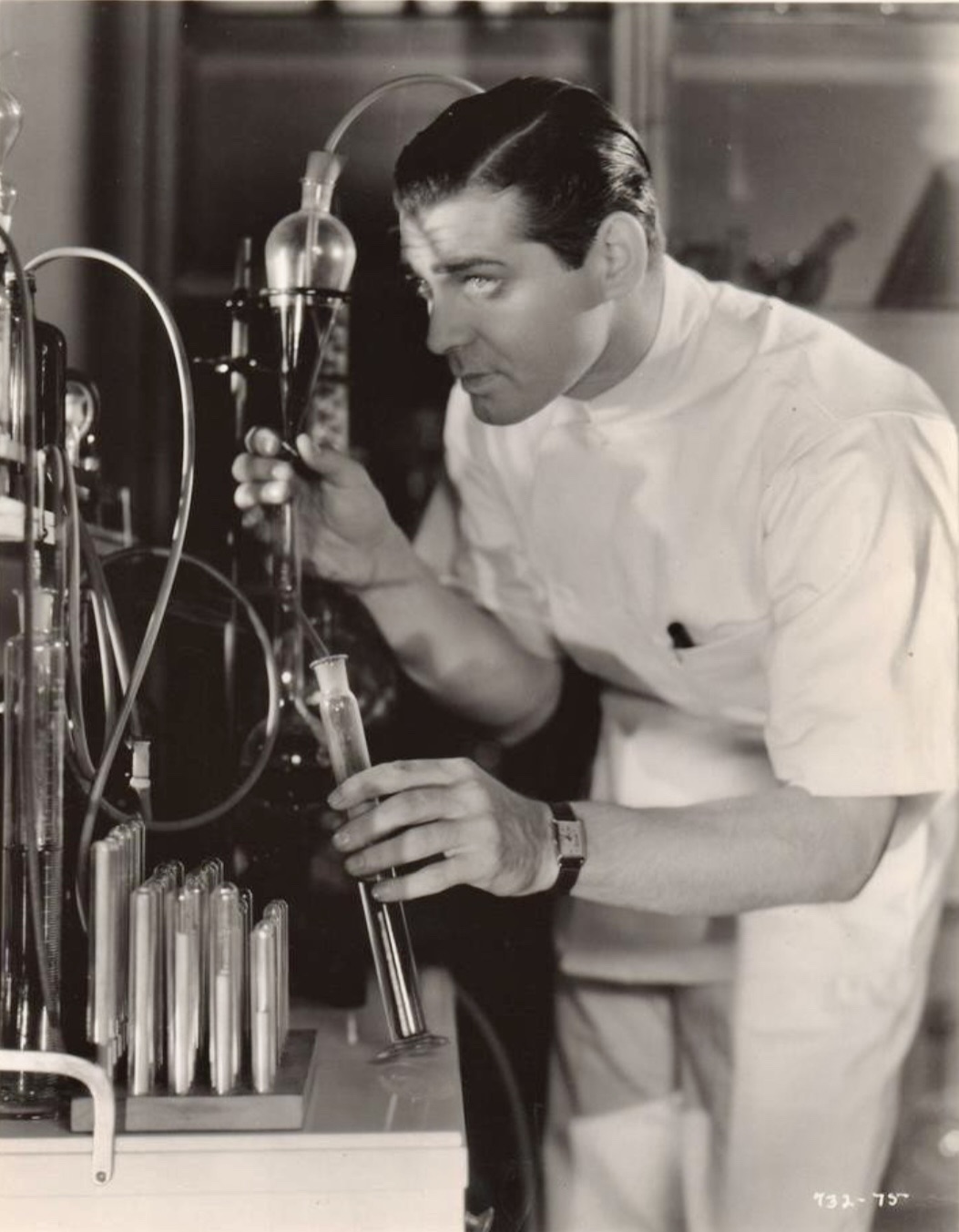
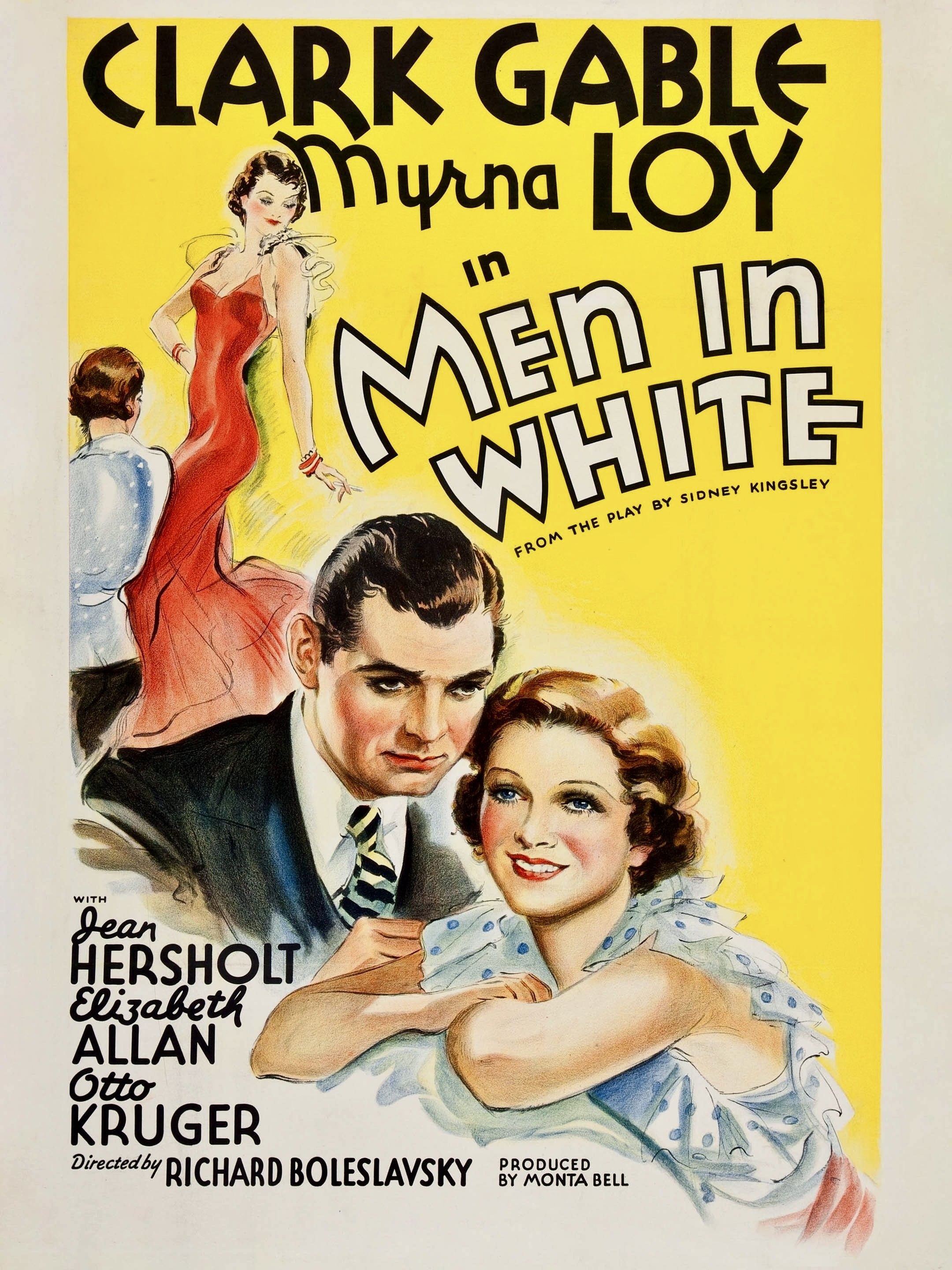
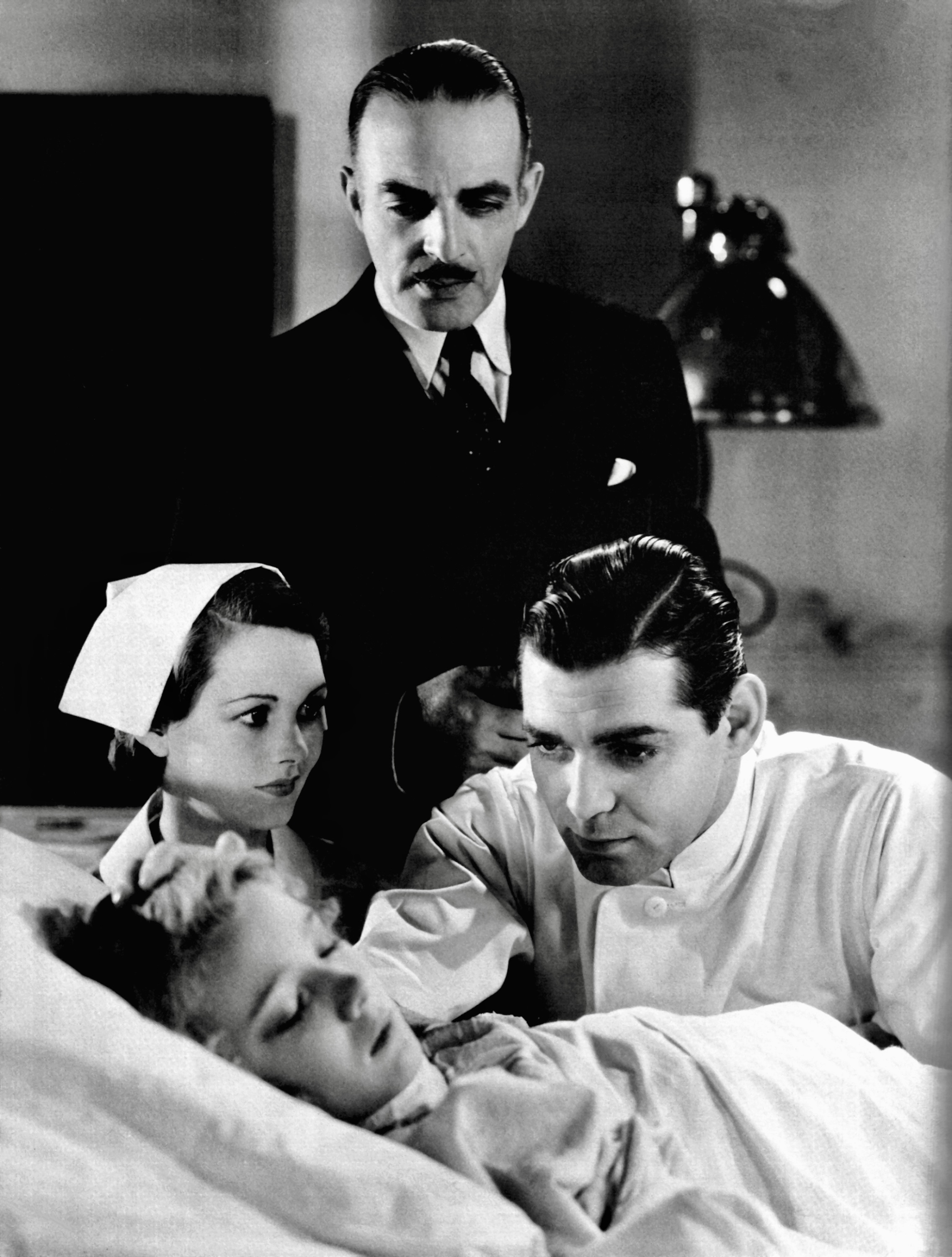
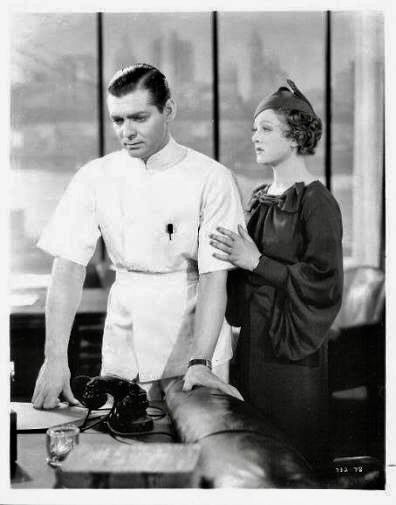
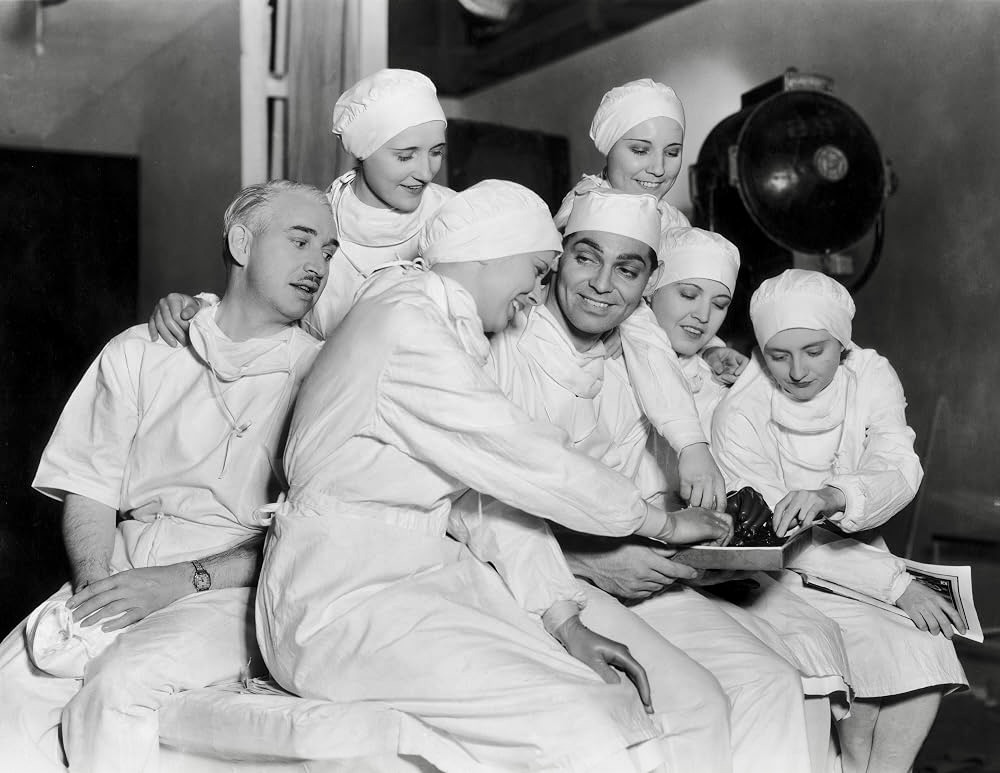
Long before television became the premiere destination for that subgenre known as the hospital drama, stories about the medical profession were an almost guaranteed audience draw for movie studios. You can actually blame MGM for starting the whole fad with Men in White, directed by Richard Boleslawski in 1934. A forerunner and prototype of such popular TV series as Marcus Welby, M.D., Medical Center and E.R., the movie depicts the moral dilemma facing Dr. George Ferguson (Clark Gable), an ambitious but idealistic physician whose society fiancee (Myrna Loy) feels he is devoting more time to his profession than their relationship. After one of their quarrels, he turns for sympathy to his student nurse Barbara (Elizabeth Allan), a situation that leads to an unexpected pregnancy and life-threatening medical complications.
The box office success of Men in White would encourage MGM to produce more medical dramas with the “Dr. Kildare” series (featuring Lew Ayres in the title role) becoming one of their most popular franchises; the first entry was Young Doctor Kildare in 1938.
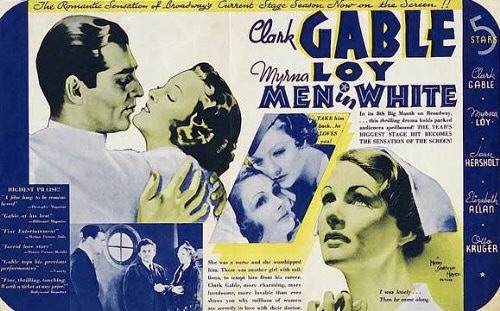
At the time, Men in White was more significant as a turning point in Clark Gable’s career. Although he had already proven himself adept at comedy (It Happened One Night, 1934) and tough-guy roles (Red Dust, 1932), Men in White gave him an opportunity to display a more sensitive side as well as a broader dramatic range. The critics were suitably impressed; The Film Daily wrote that Gable was “very real and warm and unlike anything we’ve seen him doing before” and the Motion Picture Herald proclaimed that “Gable does a remarkable acting job.” MGM wasted no time in grooming the actor for bigger and better things as witnessed by his breakout performance the following year in the historical epic, Mutiny on the Bounty (1935), for which he received a second Oscar nomination for Best Actor.
Based on the Pulitzer Prize-winning play by Sidney Kingsley (Dead End, 1937) the controversial nature of the material was considerably toned down for the movie version of Men in White. After the racy, anything-goes period of the Pre-Code era, censors were much more vigilant about prohibiting potentially inflammatory subjects like abortion from being depicted on movie screens. Yet, it is exactly that topic which gave Kingsley’s original story such power and urgency. In an interview, the playwright later stated that “At that time, there were millions of illegal abortions in the United States, and God knows how many women died because they weren’t operated on with proper medical care.”
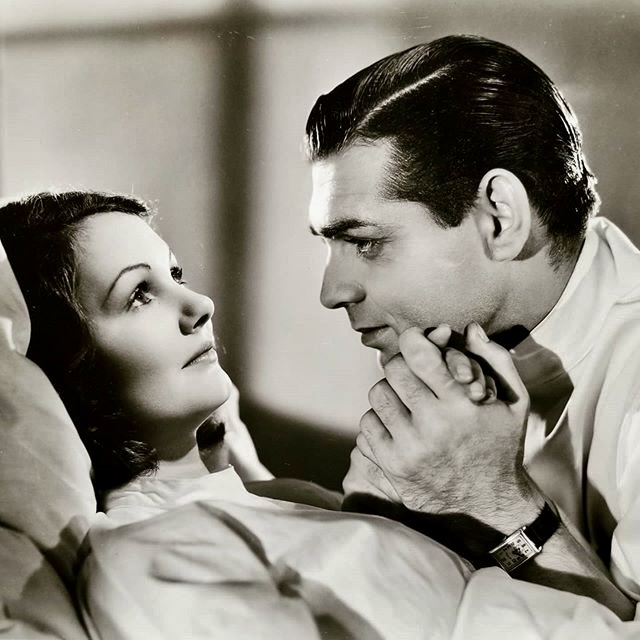
Unfortunately, Men in White carefully sidesteps the whole situation by never showing or discussing Barbara’s ill-fated abortion; Instead, the movie concentrates on the up and down love affair of Dr. Ferguson and his fiancee though George’s one-night stand with the nurse and its consequences is never in doubt. Protests from the Legion of Decency was the main reason for this omission of the controversial scene.
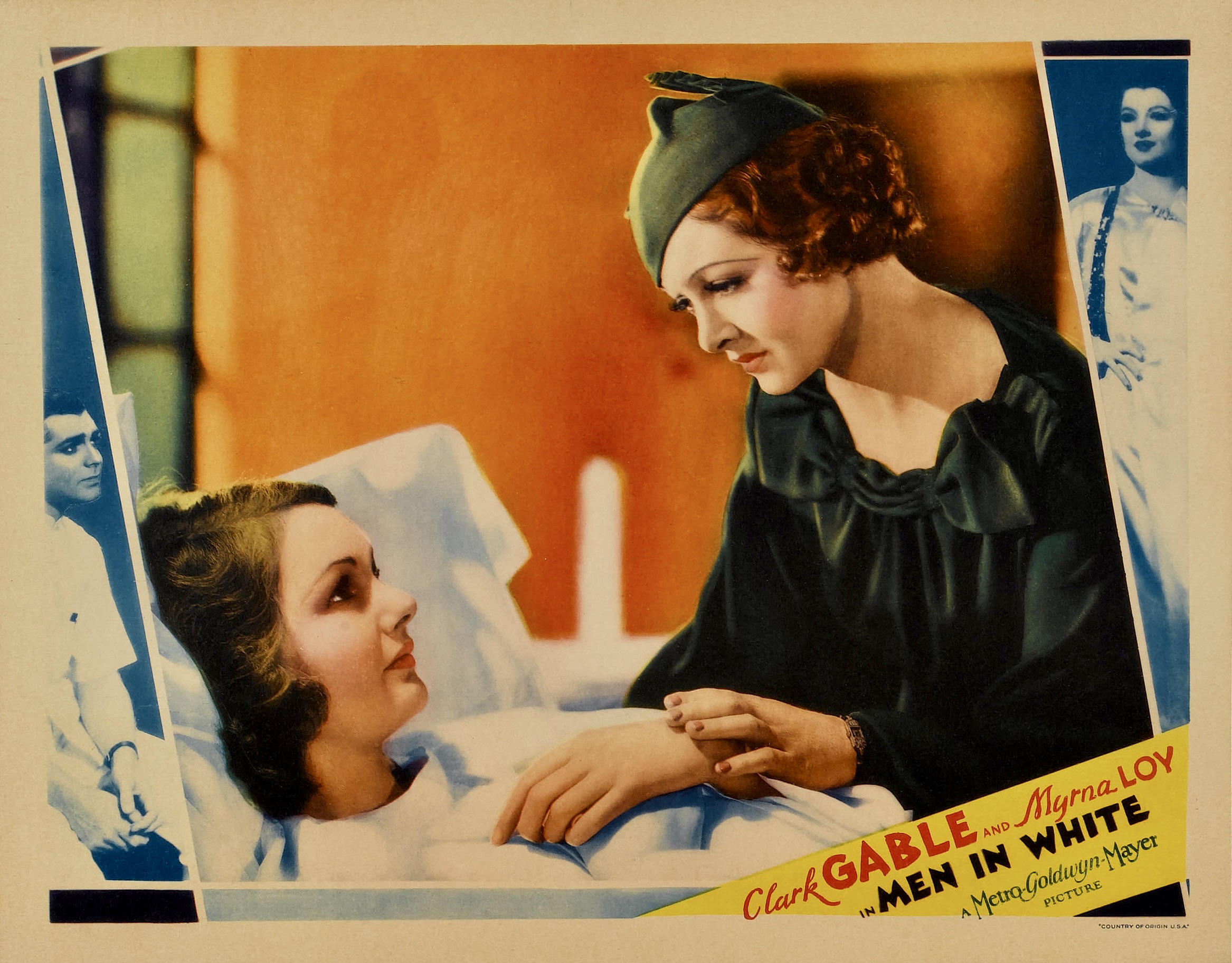
Men in White marked the first of seven films that Gable would make with Myrna Loy and it was not an auspicious beginning according to the actress in her autobiography, Myrna Loy: Being and Becoming. She revealed that Gable, who was married at the time, had tried to make a pass at her (she rejected him) after bringing her home from a social event – while his wife sat in the car! Loy said, “When I saw Clark at the studio soon after that, he walked right past me with his nose in the air. Next thing I knew, we were cast together in Men in White…When we started the film, Clark developed a pretty serious thing with Elizabeth Allan, a lovely English girl in the cast, and greeted her with coffee and cakes every morning. The crew always put out sweet breads, so Clark would load up and, just to get my goat, walk right past me to Elizabeth. He was punishing me. We managed to be convincing lovers on camera, which wasn’t easy while he virtually ignored me. That Dutchman just wasn’t taking no for an answer.” Loy and Gable never did become lovers but they did end up as good friends through their subsequent collaborations at MGM.
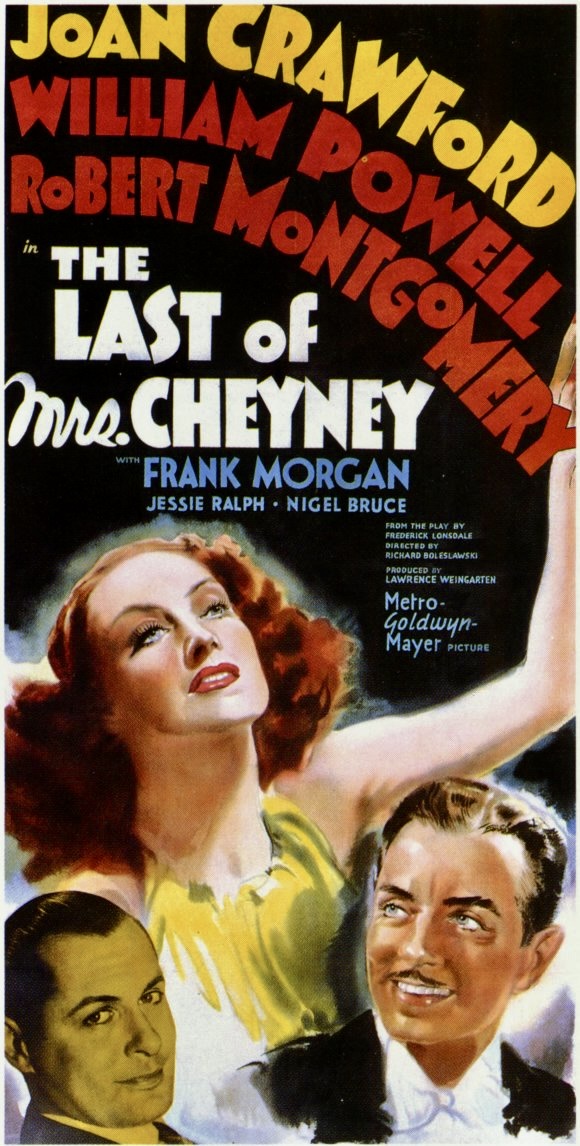
Director Richard Boleslawski, who was born in Poland and served as a cavalry lieutenant in Russia during WWI, immigrated to the U.S. in 1922 and became a theater director in New York City. He was one of the first to introduce the Stanislavski method of acting to the profession and Lee Strasberg, Stella Adler and Harold Clurman were among his students. Boleslawski eventually accepted an offer in Hollywood in 1929 and directed his first U.S. feature in 1930 – The Last of the Lone Wolf, a mystery thriller. He would go on to direct such prestigious movies as Rasputin and the Empress (1932), The Painted Veil (1934) starring Greta Garbo, the 1935 film version of Les Miserables, The Garden of Allah (1936) with Marlene Dietrich and the 1936 screwball comedy Theodora Goes Wild, which launched Irene Dunne’s career as a comedic actress. He died of a heart attack at age 47 while directing Joan Crawford in The Last of Mrs. Cheyney (1937); the film was completed by Dorothy Arzner.
Some additional trivia on Men in White: Franchot Tone was initially considered for the role of Dr. Ferguson when Gable was temporarily unavailable; Jean Hersholt, who plays Dr. Hochberg in the film, would go on to be honored twice by the Academy of Arts and Sciences – once in 1939 for serving as the President of the Motion Picture Relief Fund and once in 1949 for his “distinguished service to the motion-picture industry.” Men in White would later be produced for television in 1960 with Richard Basehart.
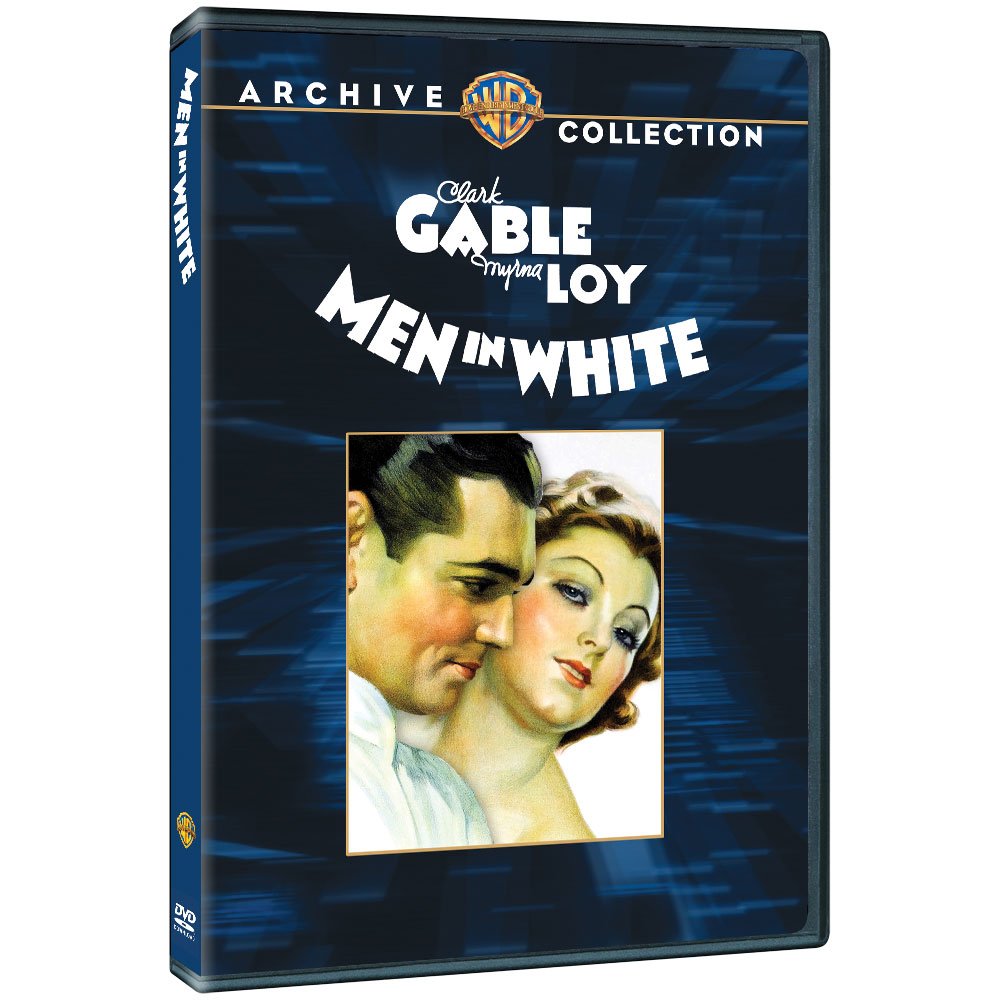
Men in White was released on DVD in a no frills edition (no extras) in June 2009 by the Warner Archive Collection and may still be available from online sellers.
*This is a revised and expanded version of an article that originally appeared on the Turner Classic Movies website.
Other links of interest:
https://culture.pl/en/artist/ryszard-boleslawski
https://variety.com/1995/scene/people-news/sidney-kingsley-99128407

