
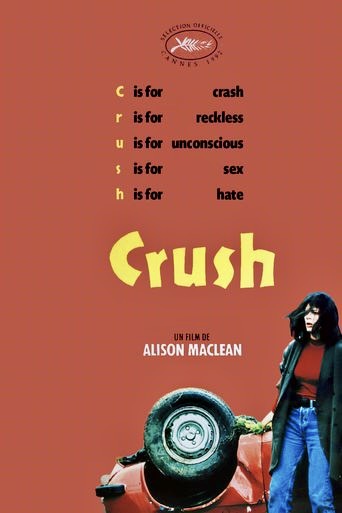
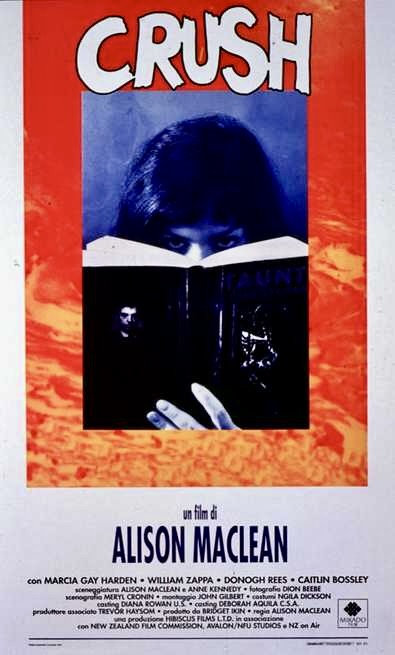
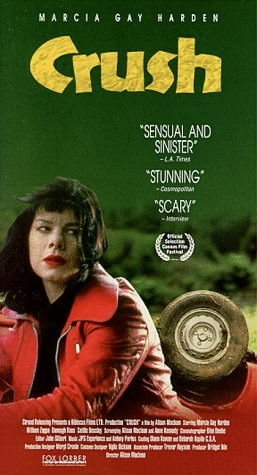
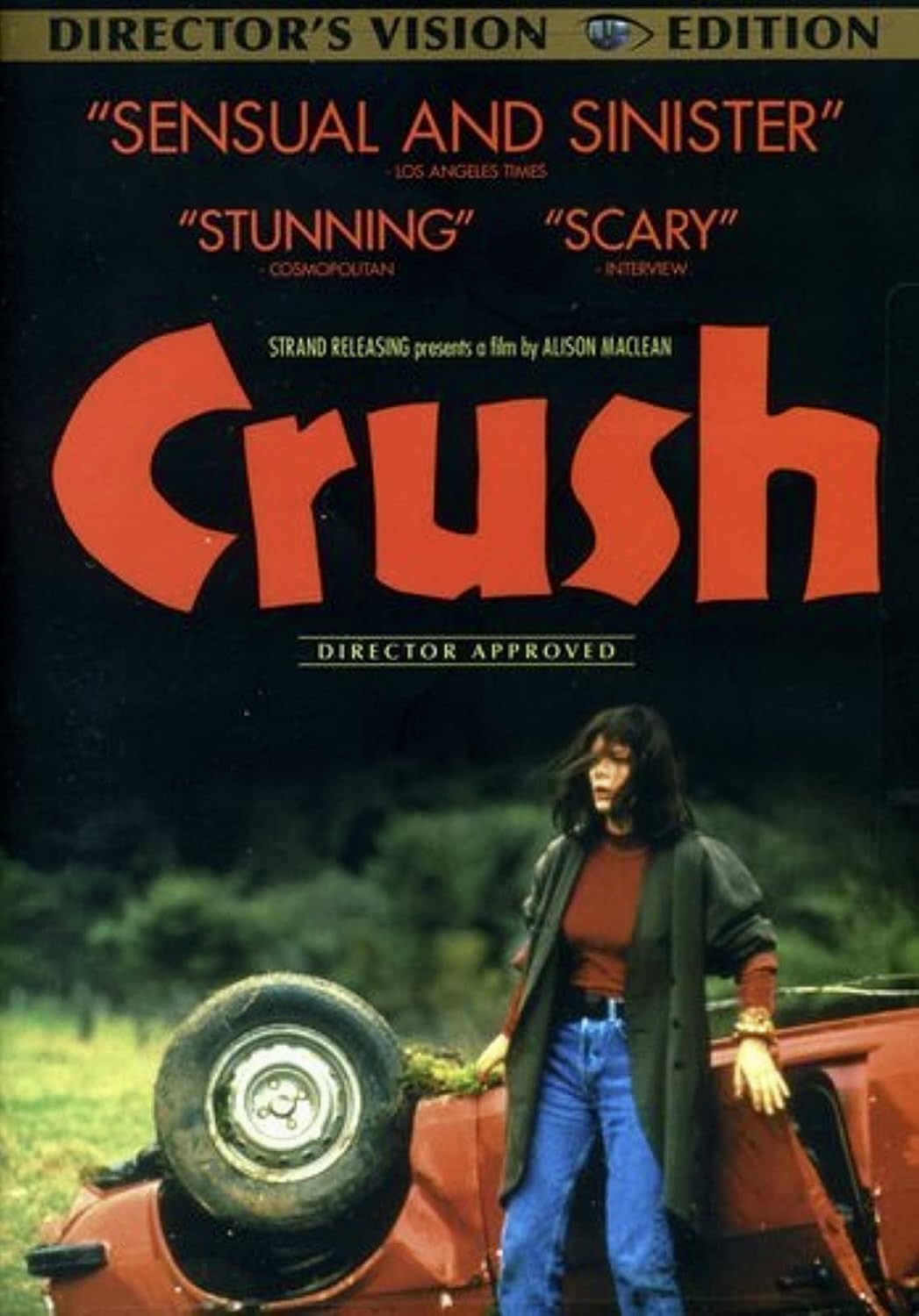
When film buffs talk about their favorite female directors from New Zealand, Jane Campion (The Power of the Dog [2021], The Piano [1993]) is usually the first to be mentioned but there are plenty of other worthy contenders. Niki Caro (Whale Rider, 2002), Gaylene Preston (Perfect Strangers, 2003) and Merata Mita (Boy, 2010) also have impressive filmographies worth exploring and Alison Maclean is a particular favorite who should be better known. She first attracted attention for her nightmarish film short Kitchen Sink (1989) and followed it with Crush, her 1992 feature film debut. Jesus’ Son (1999), based on a collection of short stories by Denis Johnson and starring Billy Crudup as a heroin addict, was critically acclaimed and an art house success but Maclean still remains relatively unknown outside her own country despite directing TV episodes of Sex and the City (1998), The L Word (2005), The Tudors (2007), Gossip Girl (2009) and more recent work such as The Rehearsal (2016), a drama about a prestigious acting school. Yet I’m still surprised that her first feature Crush didn’t attract more attention at the time since it was such an emotionally complex and riveting psychological drama.
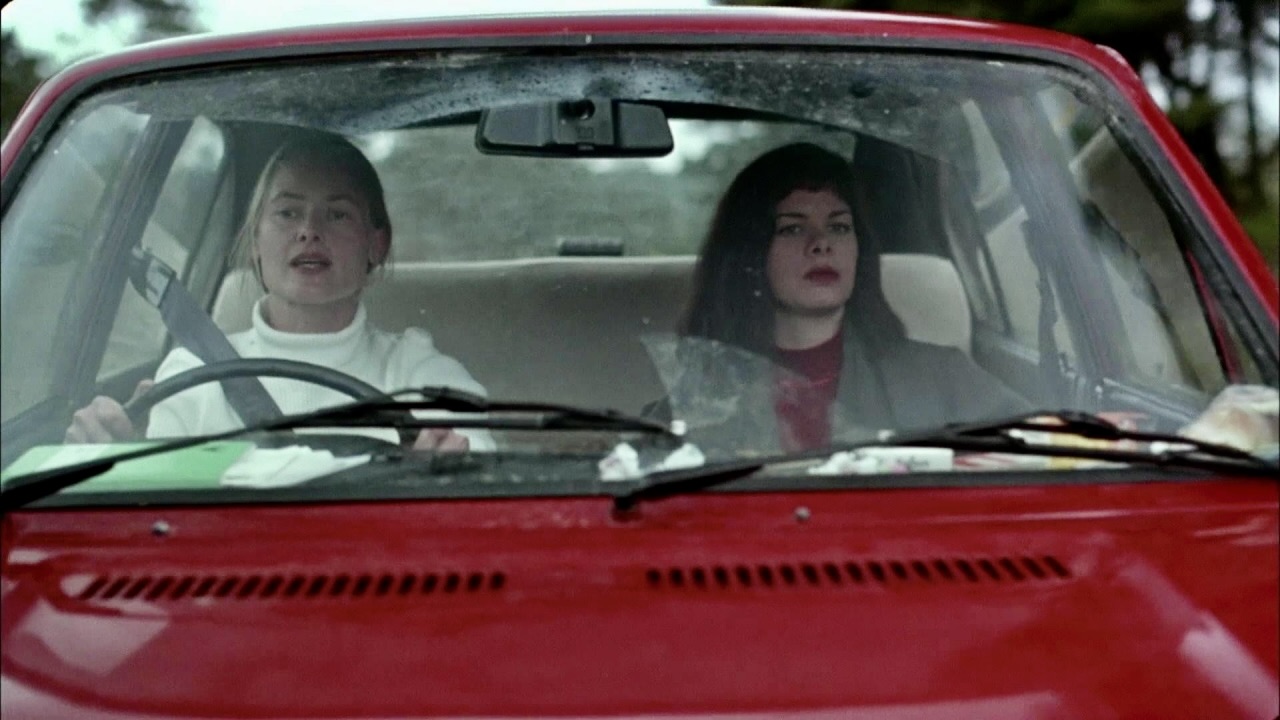
Crush is best described as a character study about the balance of power in a relationship, whether it is a friendship or a rivalry or sexual in nature and it revolves around three women. The film opens with Tina (Donogh Rees), a journalist and book critic, and her longtime friend Lane (Marcia Gay Harden), driving to Rotorua, a popular hot springs attraction in New Zealand, to interview author Colin Iseman (William Zappa). The two women joke and laugh and enjoy a playful intimacy but there is also some noticeable tension.
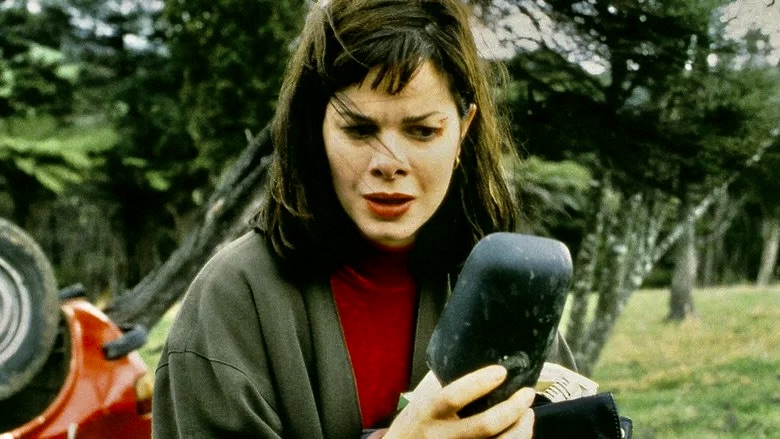
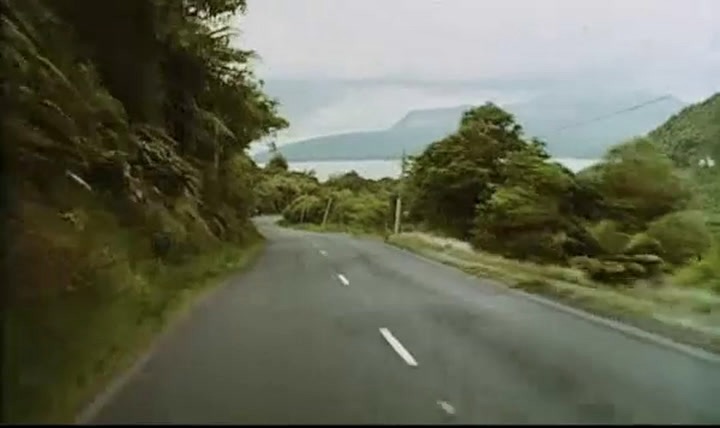
During their trip, Lane takes over the driving duties but starts speeding down the rural backroad as if she’s in a road race. When she is momentarily distracted by a female mannequin at a mailbox, she misses a curve in the road and flips the car over. Tina is pinned beneath the wreckage and looks dead but Lane manages to crawl out with only superficial injuries and wander away in a daze. An ambulance comes to take Tina to the emergency room as Lane proceeds to Colin’s home.
The author, who works full time at a fish hatchery, is not home but his fifteen-year-old daughter Angela (Caitlin Bossley) is there mowing the lawn when Lane arrives. Angela becomes fascinated with this mysterious stranger who can be flattering and amusing one minute and then turn sullen and antagonistic. For a while, it seems like Lane is grooming the tomboyish Angela to be her protegee but once Colin enters the picture, Lane turns on her seductive charms and initiates an affair with him.
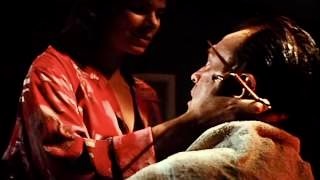
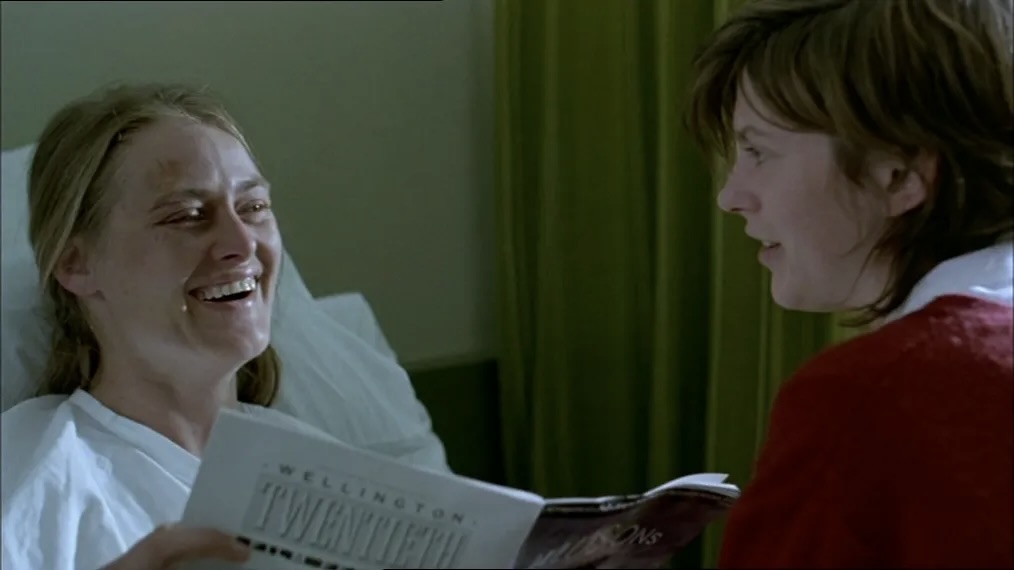
Feeling discarded by her new friend and jealous of the attention Lane lavishes on her father, Angela decides to go to the hospital and assist with Tina’s slow recuperation from the car wreck. After emerging from a coma, Tina has to relearn how to talk, walk and use her body again and Angela becomes her daily companion while also poisoning her mind against Lane, who never expresses any concern for her friend.
All of this leads to a dark place where Lane’s femme fatale persona becomes her undoing. Maclean creates the perfect ominous atmosphere with her evocative use of the region’s volcanic setting – bubbling pools of hot mud, jets of stream and geysers erupting out of the earth, all emerging from deep in the ground. And just like these natural surroundings, the main characters of Crush often reflect their primeval nature through volatile emotions that burst forth from deep within.
There is something authentic and original about the characters in Crush that defy easy identification or explanation. Motivations are never spelled out or telegraphed and there is a level of ambiguity that compels you to decipher the relationships between the characters. Were Tina and Lane lovers? Does Colin have a reason for resenting his daughter or wallowing in self-pity? Is Angela’s behavior any less reprehensible than Lane’s?
The screenplay by Maclean and Anne Kennedy is distinguished by its frank dialogue, dark humor and flippant cynicism. When Angela asks Lane what the doctor said about her friend’s recovery, her reply is “She has one foot in the grave and the other on a banana peel.” In another scene, where Angela visits Lane at her motel, the owner is hovering near their window, hoping to get a glimpse of Lane, who has already pegged him as a peeping tom.
Lane: What’s he doing?
Angela: Nothing.
Lane: That’s a boring answer.
Angela: He’s gardening.
Lane: Does he have a hard-on? (laughs)
Equally provocative are the conversations Lane has with Colin, especially during sex.
Lane: I wish I had a cock.
Colin: Why?
Lane: So I could do this to you (humping motion).
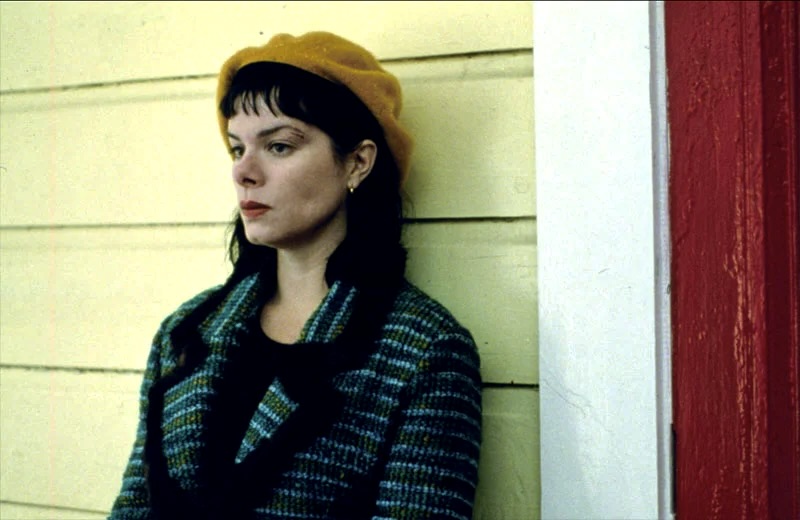
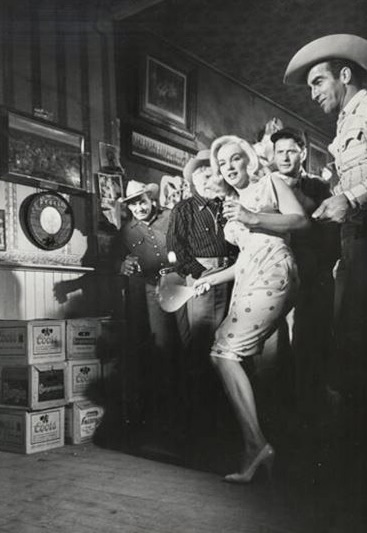
Is she teasing him or being resentful of his gender? We rarely know what Lane is thinking and sometimes she seems lost and confused but Marcia Gay Harden’s brilliant performance brings this predatory female to life. She also makes her laugh-out loud funny and vulnerable at odd moments. I especially love the scene where Lane puts on a Spanish-flavored jazz album and does a come-hither dance for Colin while twirling balls on ropes in both hands. It’s as sensuous as the iconic scene in The Misfits (1961) where Marilyn Monroe displays her paddleball skills.
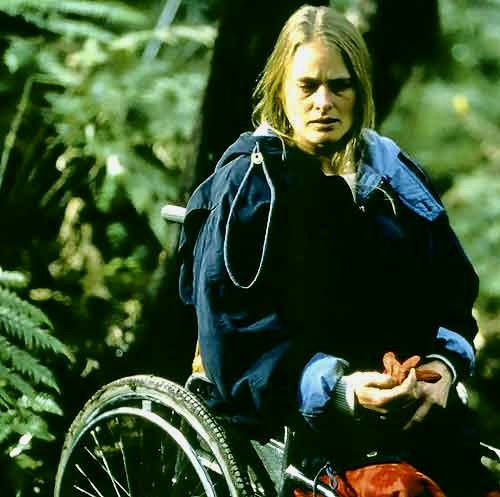
Donogh Rees is equally memorable as the injured, brain damaged Tina. The scenes of her slow recovery from the near fatal wreck are painfully real but she truly becomes a frightening visage when she remembers who is responsible for her current condition. The look of intense hatred in her eyes when she is embraced by Lane in their final scene is hard to forget. She also has a wild freak-out moment when her frustration and rage at being handicapped drives her to throw her hospital food on the floor while two nurses slip and fall trying to clean up the mess. Female anger and dysfunctional behavior flow through this movie like an underground river.
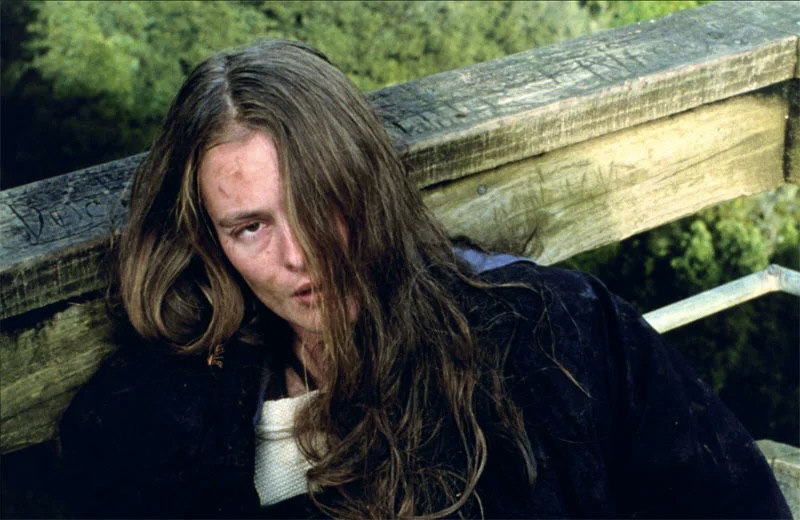
Not to be overlooked is Caitlin Bossley as Angela who captures the awkwardness and insecurities of being an unpopular teenage girl. Her fascination with the unpredictable Lane is all too believable but her slow descent into petty revenge is disturbing and brings Crush to an expected but still shocking climax. This is certainly no typical coming of age drama.

The male characters in Crush are not as well delineated or as intriguing but the emphasis is always on the three female protagonists. As Colin, William Zappa comes across like some intellectual sadsack who has lost his creative drive and is also an ineffectual father for his daughter. He becomes much more animated once he meets Lane but even he has reservations about her influence over Angela. The story might play out like an unusually twisted soap opera but its dark mood and wicked humor set it apart from any other film.
When Crush was released, it was well received in New Zealand and it was nominated for the Palm d’Or at the Cannes Film Festival. It was distributed by Strand Releasing in the U.S. but reviews were mixed and it quickly disappeared from theaters. The TimeOut reviewer wrote, “A study in deceit, manipulation, obsession and awakening awareness, Maclean’s film starts unsteadily – the narrative a mite too elliptical and enigmatic for its own good – but slowly resolves itself into a powerful if faintly overheated melodrama. Beautifully performed, however, and shot with a great deal of dramatic resonance in a bleak, dank New Zealand countryside full of glooping geysers and precarious footholds.” And Eye for Film noted, “With some excellent performances from three female leads, Crush should be a runaway success. Sadly, it veers off the highway and never achieves its full potential, even though it contains enough specimens of curious merit to be bottled and studied by ardent celluloid pathologists.”
I tend to agree more with Kevin Thomas’s review of the film in The Los Angeles Times. “Crush has so much wit and panache it’s important not to give too much away. In any event, it proceeds with such persuasive psychological validity that its every moment rings true…Crush, whose title can refer to Angela’s initial feelings for Lane as well as Christina’s fate in the accident, is highly sensual. Crush (Times-rated Mature for language and considerable sex) is a highly assured and sophisticated venture.”
Crush was released on DVD in Feb. 2005 by Strand Releasing and may still be available from some online sellers but this is a film that needs to be rediscovered and given a 4K UHD restoration by Criterion, Radiance or similar art film distributor.
Other links of interest:
https://pov.imv.au.dk/Issue_25/section_1/artc2A.html
https://www.pantograph-punch.com/posts/on-adapting-the-unadaptable-chatting-with-alison-maclean
http://www.shaviro.com/Stranded/09.html

