
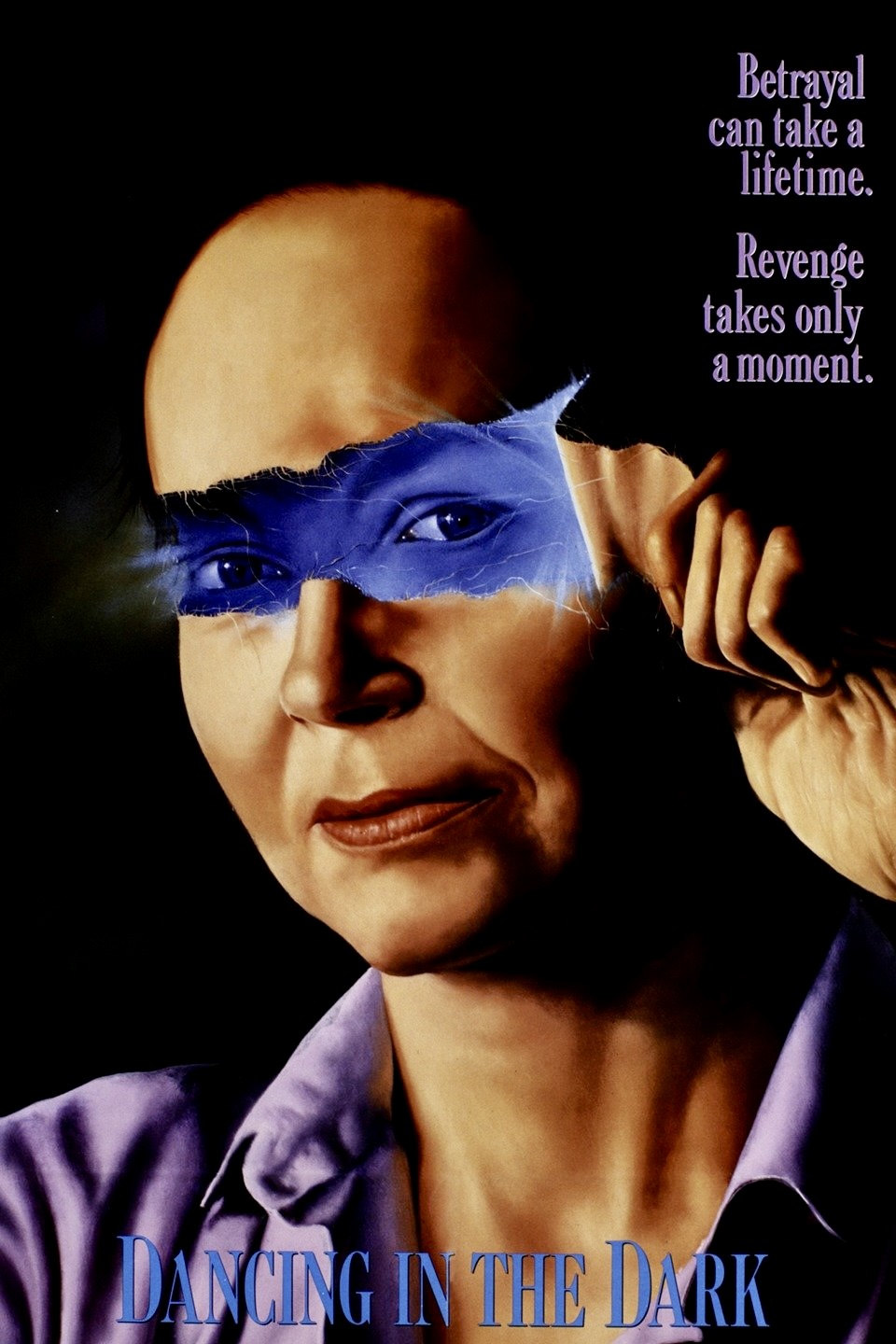
Edna has been married to Harry for 20 years and has devoted all of her time and energy to their marriage and home. Nobody asked her to do this but she willingly sacrificed her own interests and desires in order to achieve her vision of marital bliss. Every day when Harry goes to the office, Edna immerses herself in the rituals of being the perfect housewife…or her obsessive version of that. Dusting the furniture, washing the clothes, cooking gourmet meals, scrubbing the floors or cleaning window panes, Edna is too busy to ever socialize with friends or pursue any hobbies of her own but doesn’t seem to mind. Then cracks begin to appear in Edna’s perfectly ordered universe. Harry begins working late at the office more often and then a phone call from a friend informs her that Harry is having an affair with his secretary. What could be more predictable or cliched? Yet, Dancing in the Dark (1986), the film adaptation of Joan Barfoot’s acclaimed novel, isn’t a soap opera melodrama about a marriage destroyed by an affair. Instead, this is a chilling psychological portrait of a woman who has allowed her delusions about marriage and domestic bliss to turn her into a victim of her own making. Edna even admits in the opening moments of the film that her story is nothing more than a “simple, ordinary domestic failure.”
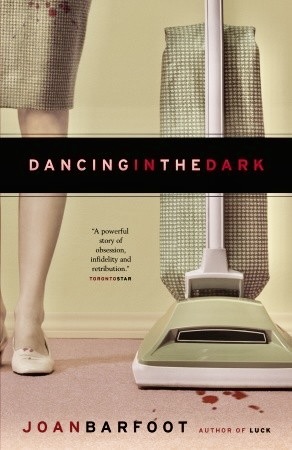
Closer in style in an edgy off-Broadway play or an experimental art house drama, Dancing in the Dark is unlikely to appeal to the average moviegoer with its heavily stylized approach. An anesthesized dreamlike quality pervades the film as Edna’s story is told from her point of view, most of it rendered as an interior monologue as she reflects on her life. “I longed for the obligations and demands of marriage. I felt I was being called to perfection…I’m sure I could have been perfect with more effort,” she admits as the narrative shifts back and forth between the past (Edna’s marriage to Harry) and the present, where Edna is a patient in a psychiatric ward.
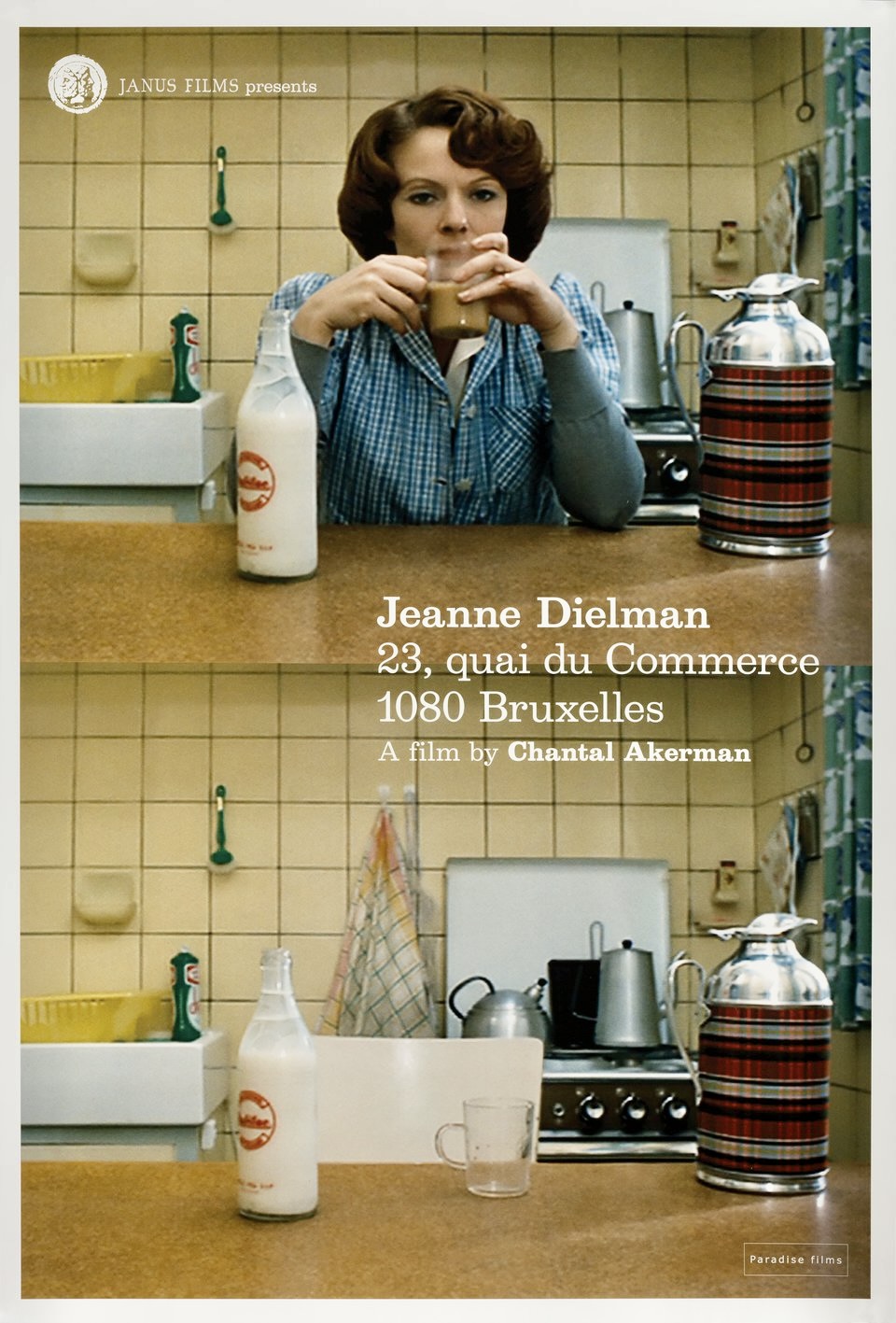
Dancing in the Dark shares some similarities to Chantal Akerman’s 1975 masterpiece Jeanne Dielman, 23 quai du Commerce, 1080 Bruxelles with its detailed observation of a female protagonist going about her mundane day-to-day routines until something snaps. The main difference, however, is that Jeanne Dielman remains a mysterious enigma (we never know what she is thinking) while Edna offers a running commentary on her state of mind. Occasionally the narrative segues into selected scenes from Edna and Harry’s humdrum life together or interactions between Edna and her hospital psychiatrist or various nurses.
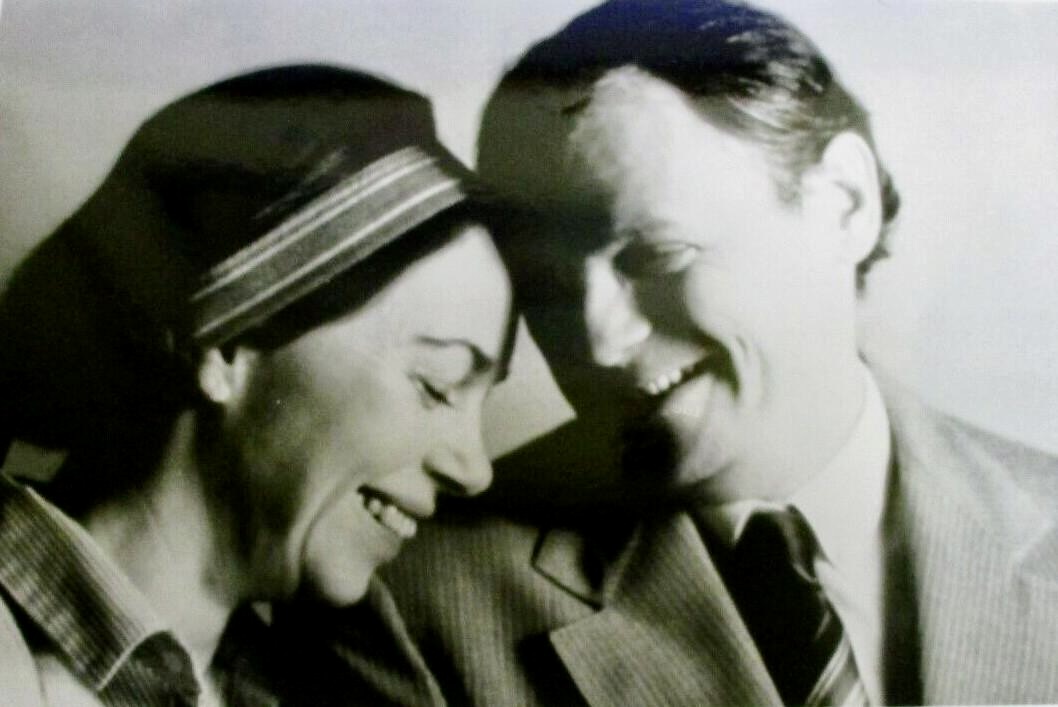
The movie, which marked the feature film directorial debut of Leon Marr, premiered at the Cannes Film Festival and also played the New York Film Festival. Many of the early reviews for Dancing in the Dark were unfavorable with U.S. critic Dave Kehr stating it “was like a second-rate film of the seventies” and U.K. reviewer Derek Malcolm calling the movie “terrible, embarrassingly sincere, and also embarrassingly inept.” Other critics felt the story was overly familiar and trite while some complained that Edna was a nonentity and incapable of commanding the viewer’s interest.
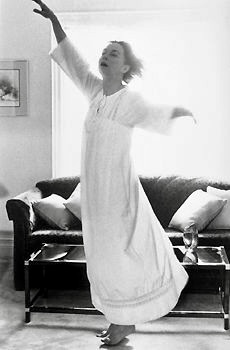
Clearly the film is a matter of taste because the reaction in Canada, where it was filmed and produced, was just the opposite. Dancing in the Dark not only garnered five nominations from the Genie Awards (Canada’s version of the Academy Awards) including Best Picture and Best Director, but it won for Best Actress (Martha Henry), Best Adapted Screenplay (Leon Marr) and Best Art Direction/Production Design (Lillian Sarafinchan). Martha Henry also won a Special Jury Citation at the Toronto International Film Festival and her performance is a fascinating tour-de-tour as she goes from being the epitome of a Stepford wife to one that begins to break down in subtle ways. The effectively claustrophobic art direction, especially the scenes set inside Edna’s sterile suburban home, helps enhance the film’s hypnotic visual approach (the cinematography is by Vic Sarin).

I haven’t read Joan Barfoot’s original novel so I don’t know if Edna’s life before her marriage to Harry was fleshed out but Edna is certainly a divisive character. She comes across as some kind of feminist prototype who buys into a media representation of domestic bliss and then revolts when reality intrudes. But this is not really a story about a woman who takes revenge on an unfaithful husband but a critique about women who try to live through others while denying their own desires and interests.
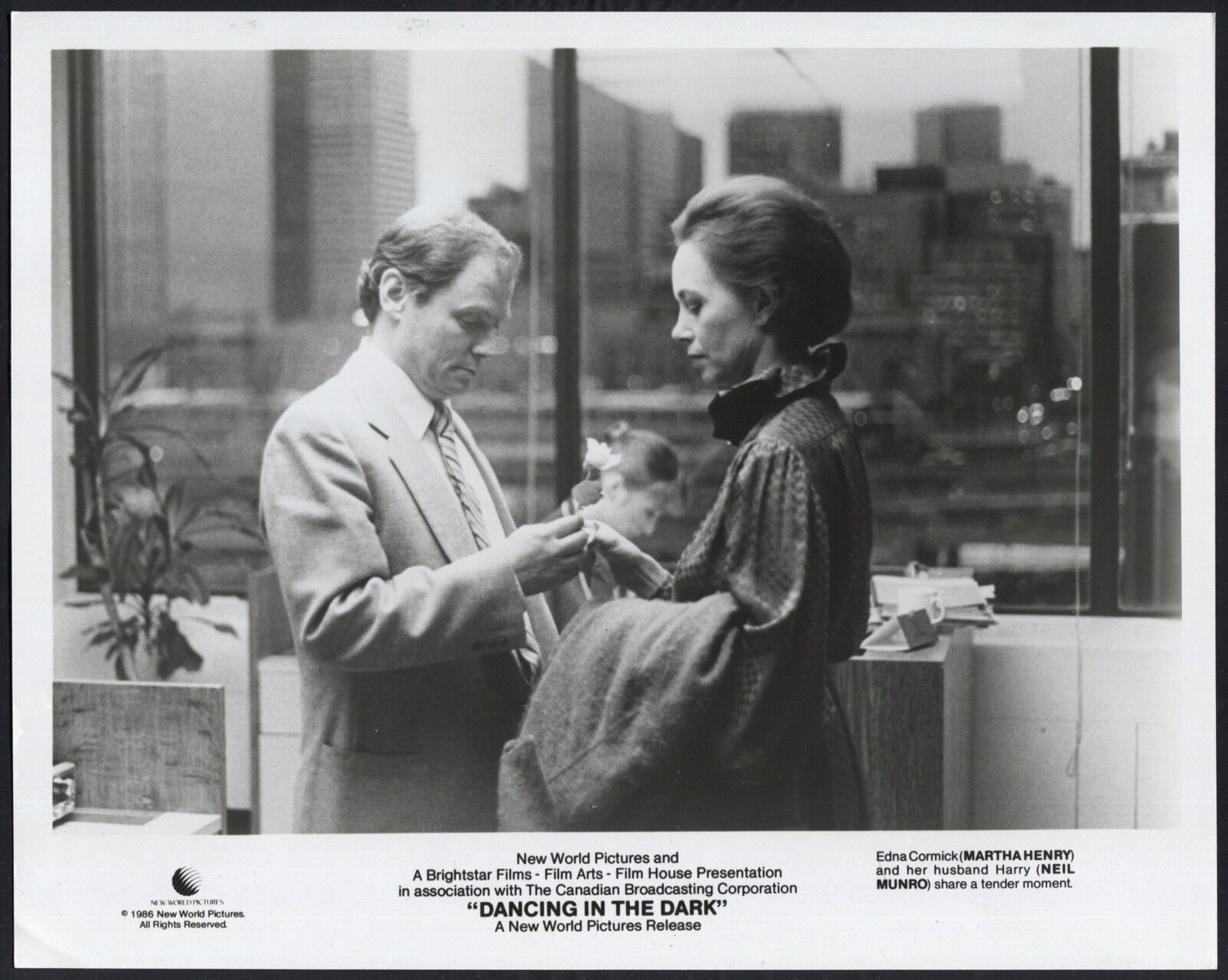
Yes, Harry (Neil Munro) may be boorish, self-centered, petty and competitive (“I love to win. It’s almost better than sex,” he says at one point) but he is not the villain. In fact, his decision to leave Edna for his secretary is completely understandable after witnessing the lack of real intimacy or human interaction between the married couple. Even Harry begins to wonder who the real Edna is during a dinner celebrating her 40th birthday. What does she do all day? Does she have any friends? What are her interests? Is she close to her family? Edna actually has no identity outside of being an adjunct to her husband and the only way to kill off the old Edna and discover her true self is….murder.
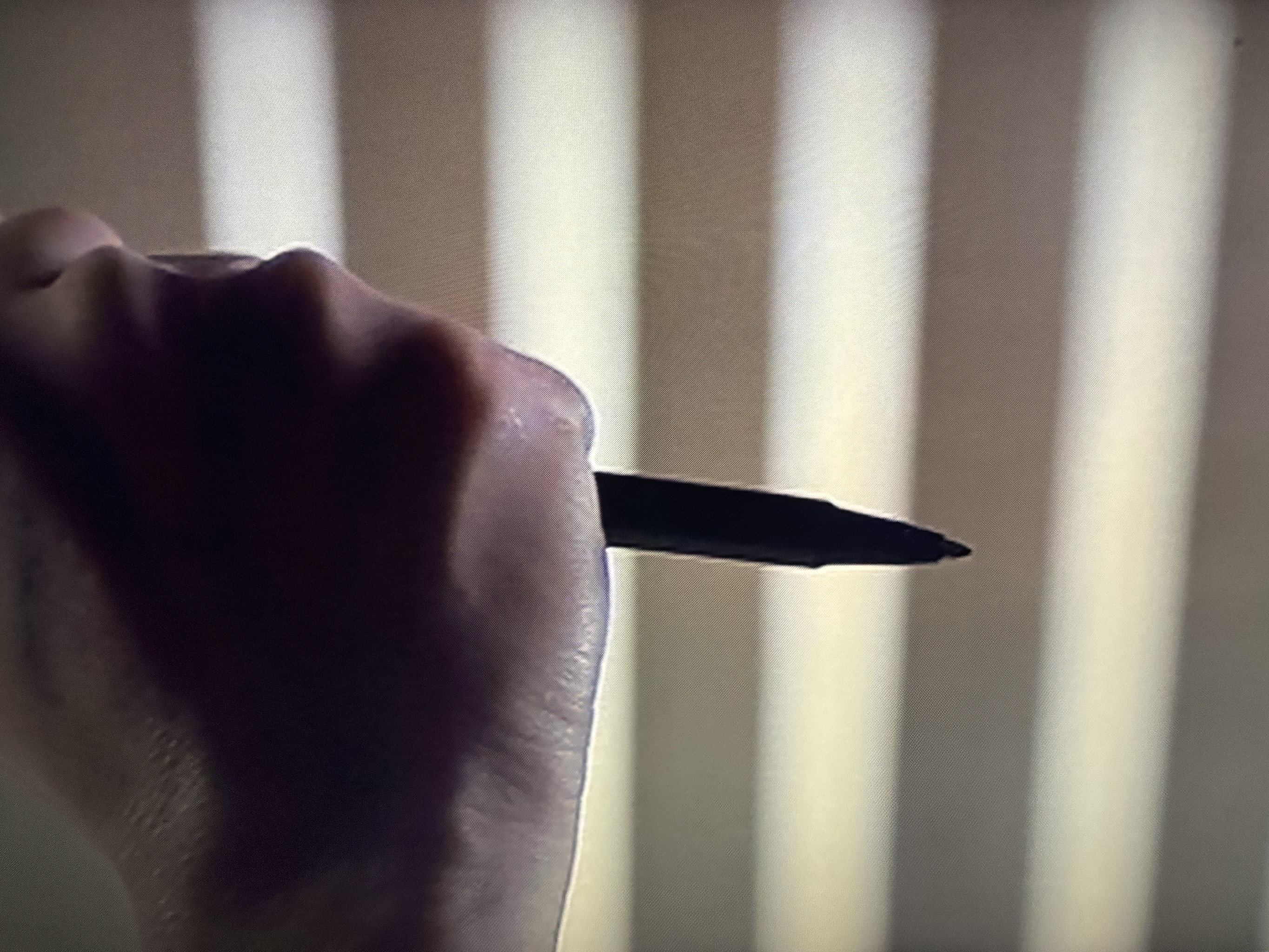
In preparing for the role of Edna, Martha Henry stated in an interview with Patricia Michael for Cinema Canada, “I think in my initial and surface reading, it looked as though it was the old cliche of the woman who stays home and just cleans the house and never gets out. And it became not that. I discovered that it was about any kind of relationship where somebody subjugates themselves to somebody else. It’s not necessarily the fault of the other person either. You do this to yourself, you allow yourself to become the other. And you do everything within your power to make sure that that happens. So that in fact, you do not have an existence of your own. There is no relationship insofar as you make yourself an adjunct of that person. This often happens in a marriage, but it’s not restricted to a marriage relationship. It can happen between any two people – best friends, a grown-up and a child, or a boss and a worker.”
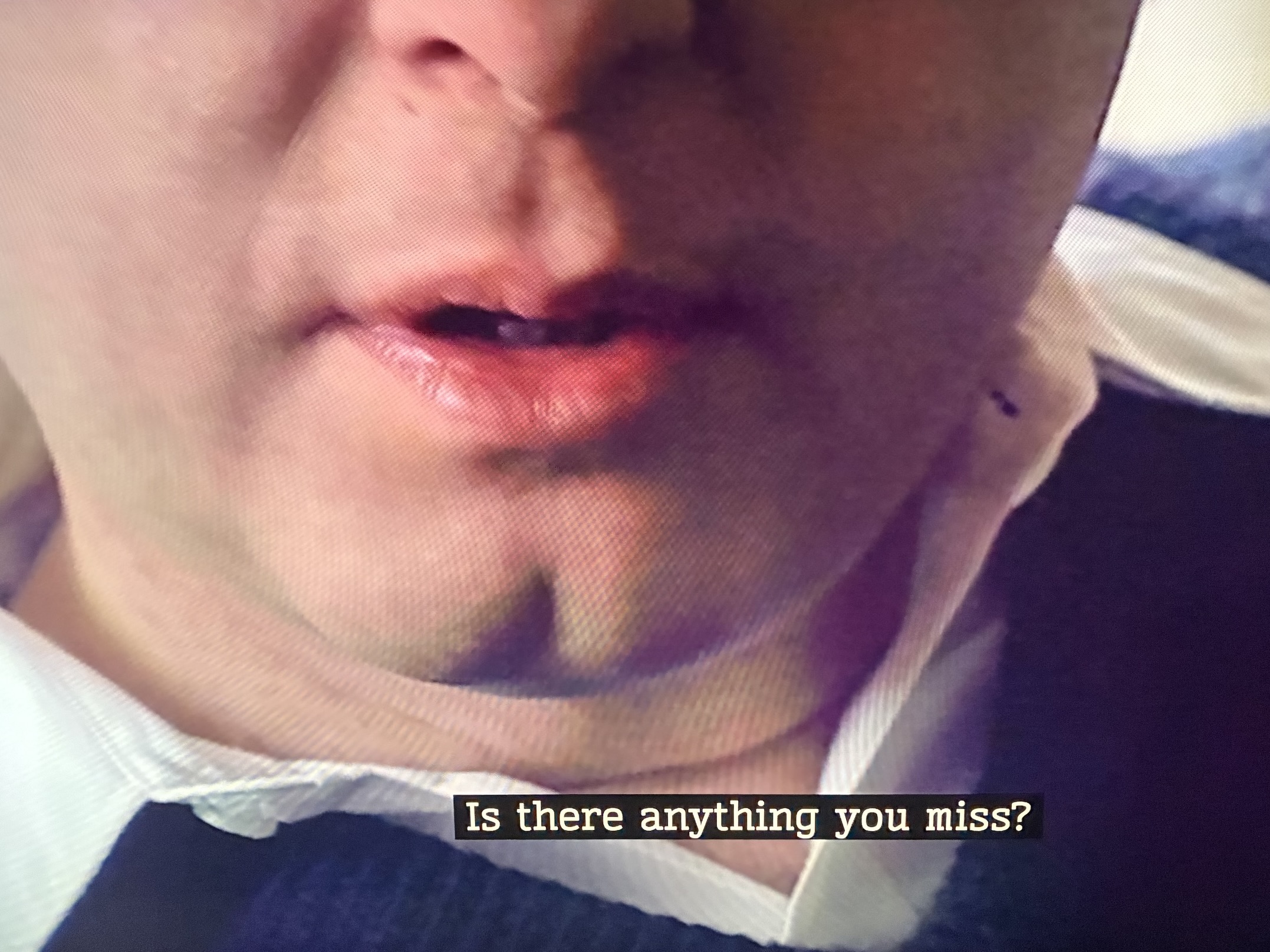
The actress is quite impressive in transforming Edna from an abstract concept to a flesh and blood character who is both pitiful and slightly creepy. The odd, self satisfied smile she displays while watching Harry eat his home cooked meals takes on a sinister edge as the movie progresses. And there are moments of dark humor, especially in the final sequence when Edna is on trial for murdering Harry and the judge asks her if she has anything to say in her defense. “I’d like to go home please. I didn’t get the cleaning done,” is her flippant response.
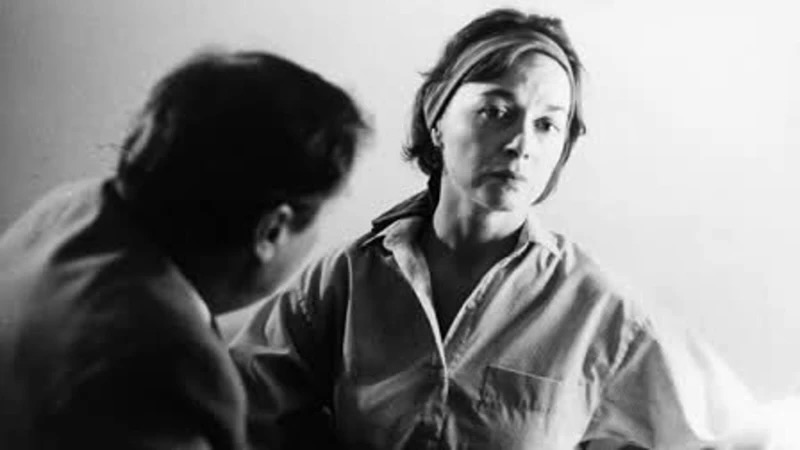
Dancing in the Dark is now seen as a key film in Canadian cinema from the 1980s and enjoys a much better reputation today. It was initially released on VHS by New World Pictures but it currently not available on any analog format. You can, however, stream it on digital platforms like Prime or Tubi.
Others links of interest:
https://thecanadianencyclopedia.ca/en/article/martha-henry
https://cinemacanada.athabascau.ca/index.php/cinema/article/download/3586/3624.pdf
https://www.cbc.ca/news/entertainment/neil-munro-canadian-actor-director-dies-at-62-1.824185
http://www.buriedinprint.com/joan-barfoots-dancing-in-the-dark-1982/


A movie about an unreliable narrator, that was misunderstood on its original release, sounds like perfect viewing for me. Thanks for bringing this one to light!