
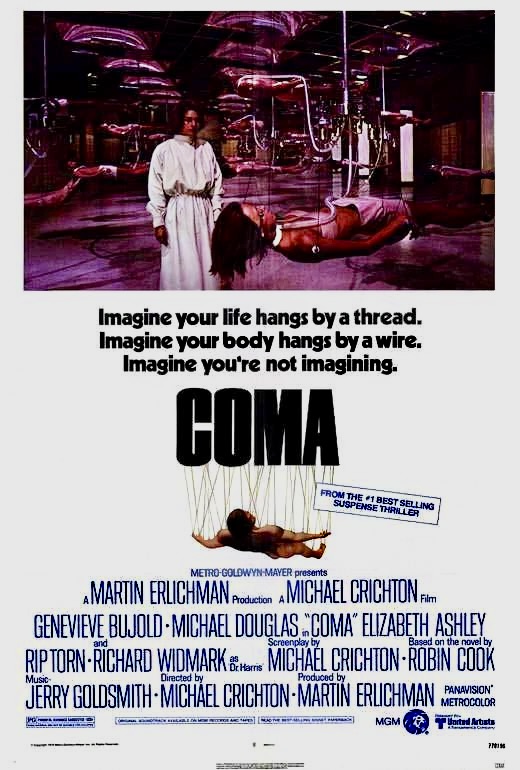
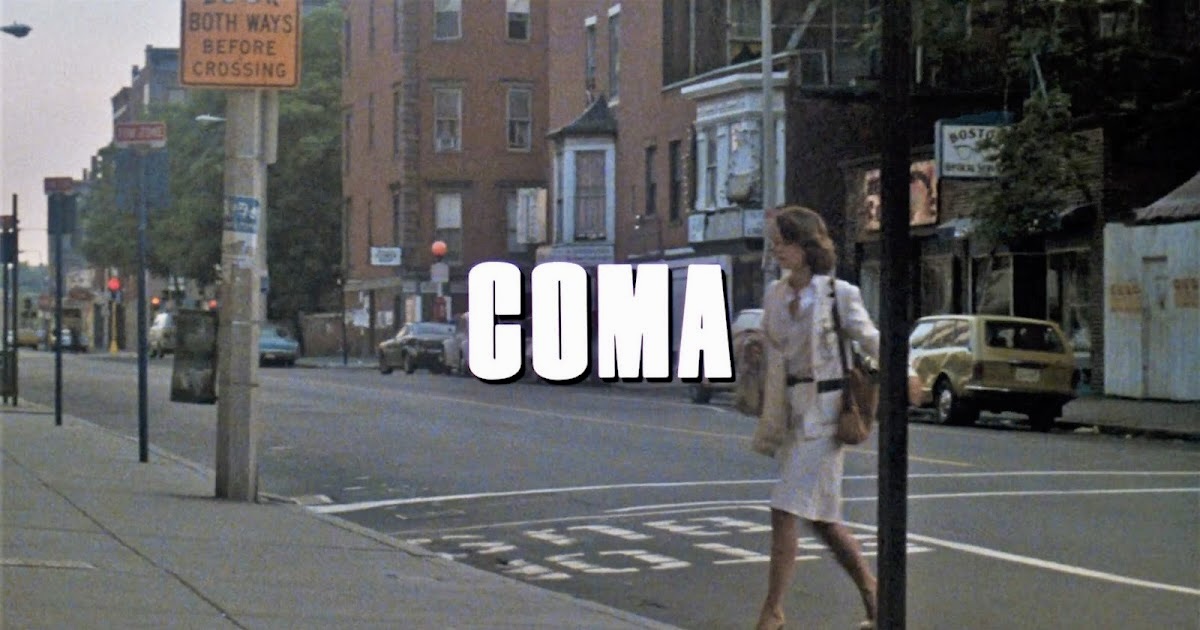
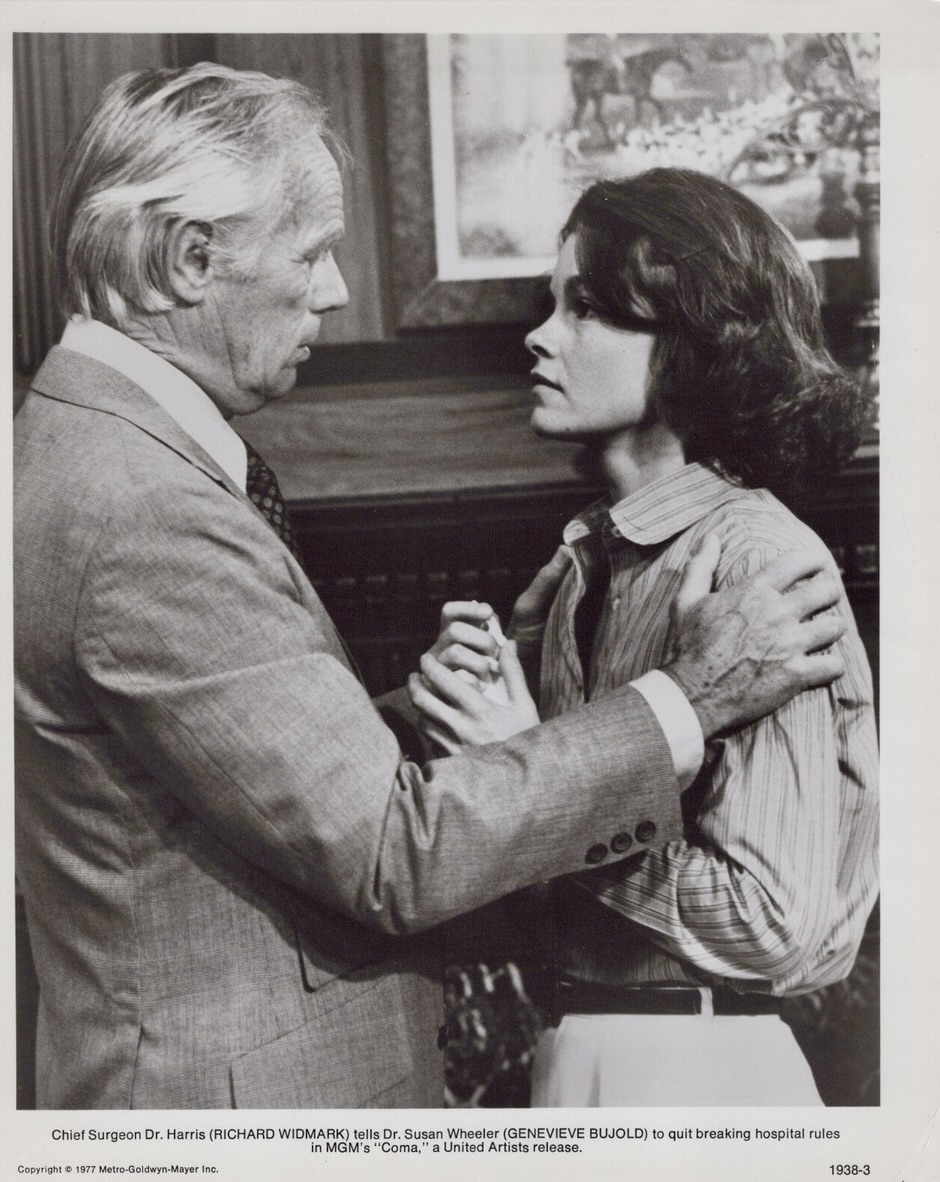
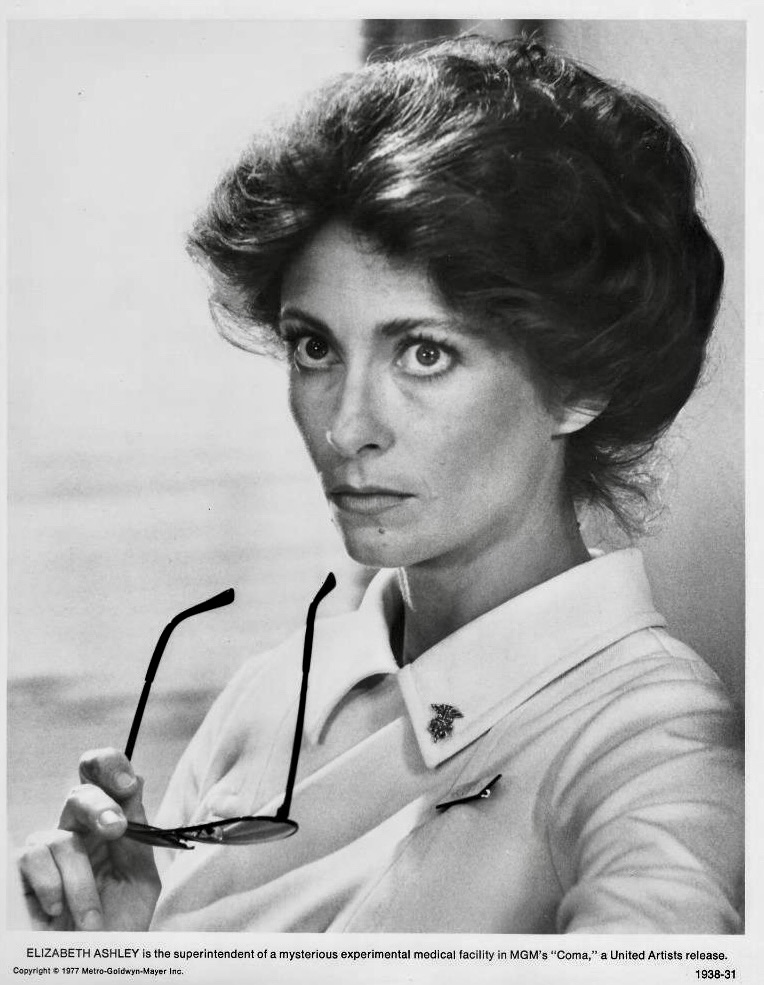
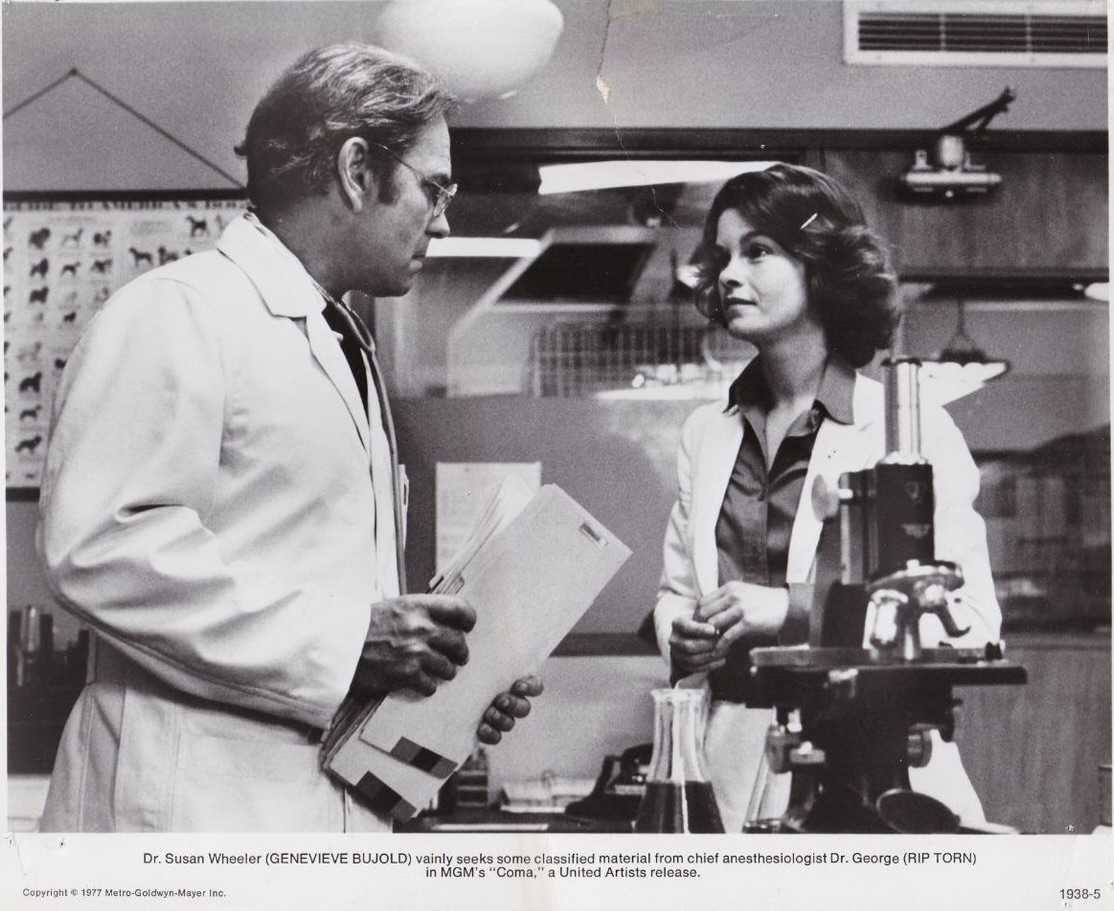
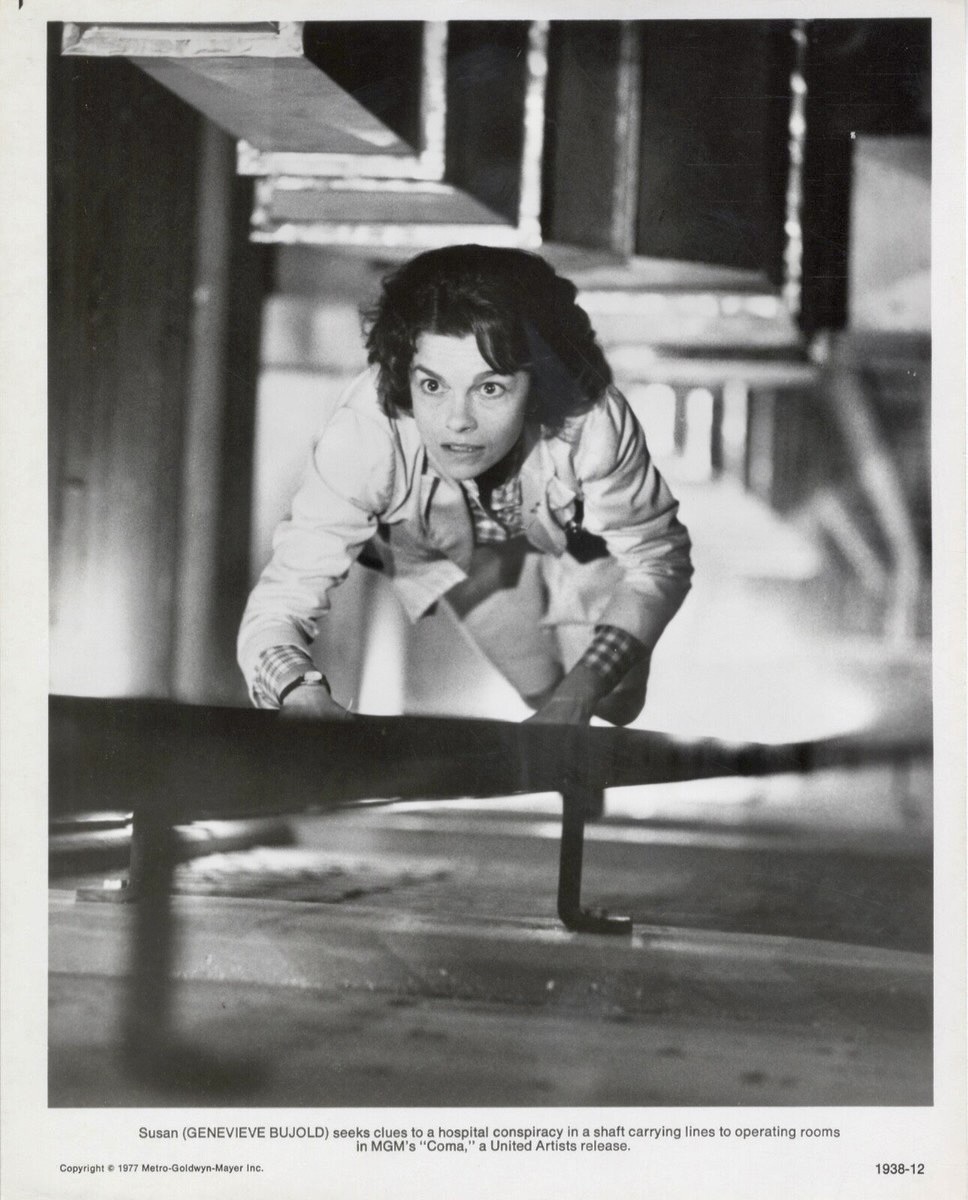
Something strange is happening at Boston Memorial Hospital. A surprising number of healthy patients, undergoing routine operations, are turning up as anesthesia-induced coma victims. When one of the brain-dead patients turns out to be the best friend of Dr. Susan Wheeler (Genevieve Bujold), the physician conducts her own investigation into the case, uncovering a sinister plot that implicates the hospital’s chief anesthesiologist (Richard Widmark) in a black market organ transplant operation. A clever hybrid combining the conspiracy thriller with a hospital soap opera, Coma (1978) plays like a contemporary Nancy Drew mystery with a distinctly feminist heroine, one who isn’t afraid to challenge the male chain of command at her job or risk her life in physically perilous situations (like a daring escape on the top of a speeding ambulance!). The film is also guaranteed to make you paranoid about hospitals and who isn’t already?
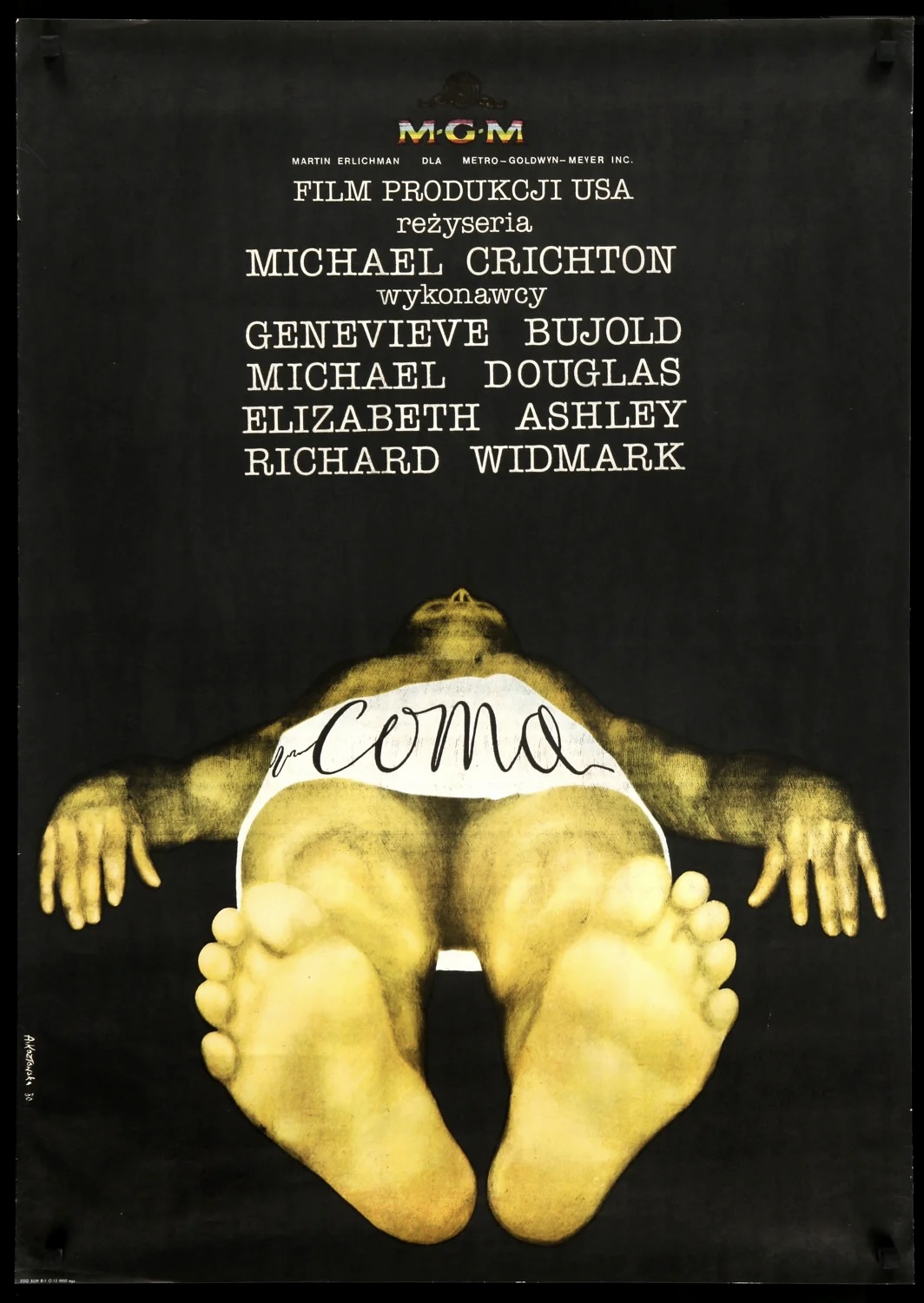
Based on the best-selling novel by Robin Cook, a former doctor, Coma was adapted for the screen and directed by Michael Crichton, who, like Cook, had a background in medicine. But after receiving his M.D. degree from the Harvard Medical School, he decided to become a full-time writer of fiction. As a student, Crichton had already published several novels under an alias, John Lange, but it wasn’t until he started using his own name on novels like The Andromeda Strain and The Terminal Man that Crichton emerged as a best-selling author. In 1972, he made his directorial debut with the TV movie Binary (based on his own novel) and followed it up with Westworld (1973), his first Hollywood feature and a cult science fiction favorite.
Coma was his third film as a director and, in an interview with Ralph Appelbaum for Millimeter magazine, Crichton described what attracted him to the project: “This is a story that contains many elements of reality: the fear people have of surgery, the fear of dying at the hands of your doctor, phobias about hospitals. Those are very real fears, and so to exaggerate them would not be much fun. My idea was to put the picture together in such a way that the fears are put in a safe prospective, and can be enjoyed as scares, without awakening deeper and more real anxieties.”
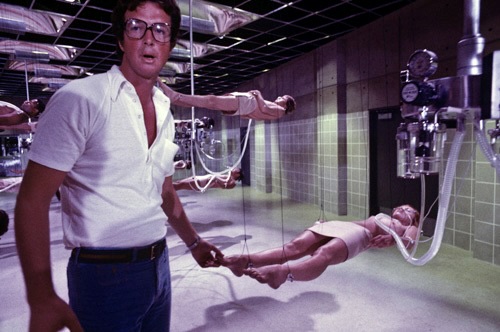
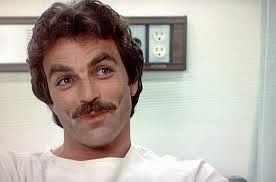
Filmed on locations in Massachusetts including Boston City Hospital plus the University of Southern California’s dissection room, Coma is justly famous for several chilling sequences but the one that stays with most people is the eerie scene at the Jefferson Institute where comatose patients hang suspended by wires in a sterile holding room. According to Crichton in the Millimeter interview, “It was technically very complicated because the people could only hang for six minutes…You see, the suspension was actually only from the hips and neck. But because you had to act like you were suspended by wires everywhere, a great strain was put on the back…We had special tables built that were on jacks – like car jacks – and people would sit on these tables in between shots; and then they would be hung, and the tables would be rolled down and moved out…I think we used sixteen real people and fifteen dummies…But most of what the camera sees is real people.” One of the suspended bodies is Tom Selleck, who would later work with Crichton (but this time as the leading actor) in the sci-fi fantasy, Runaway (1984). Look quick and you’ll also see Ed Harris as a pathology student in his big screen debut.
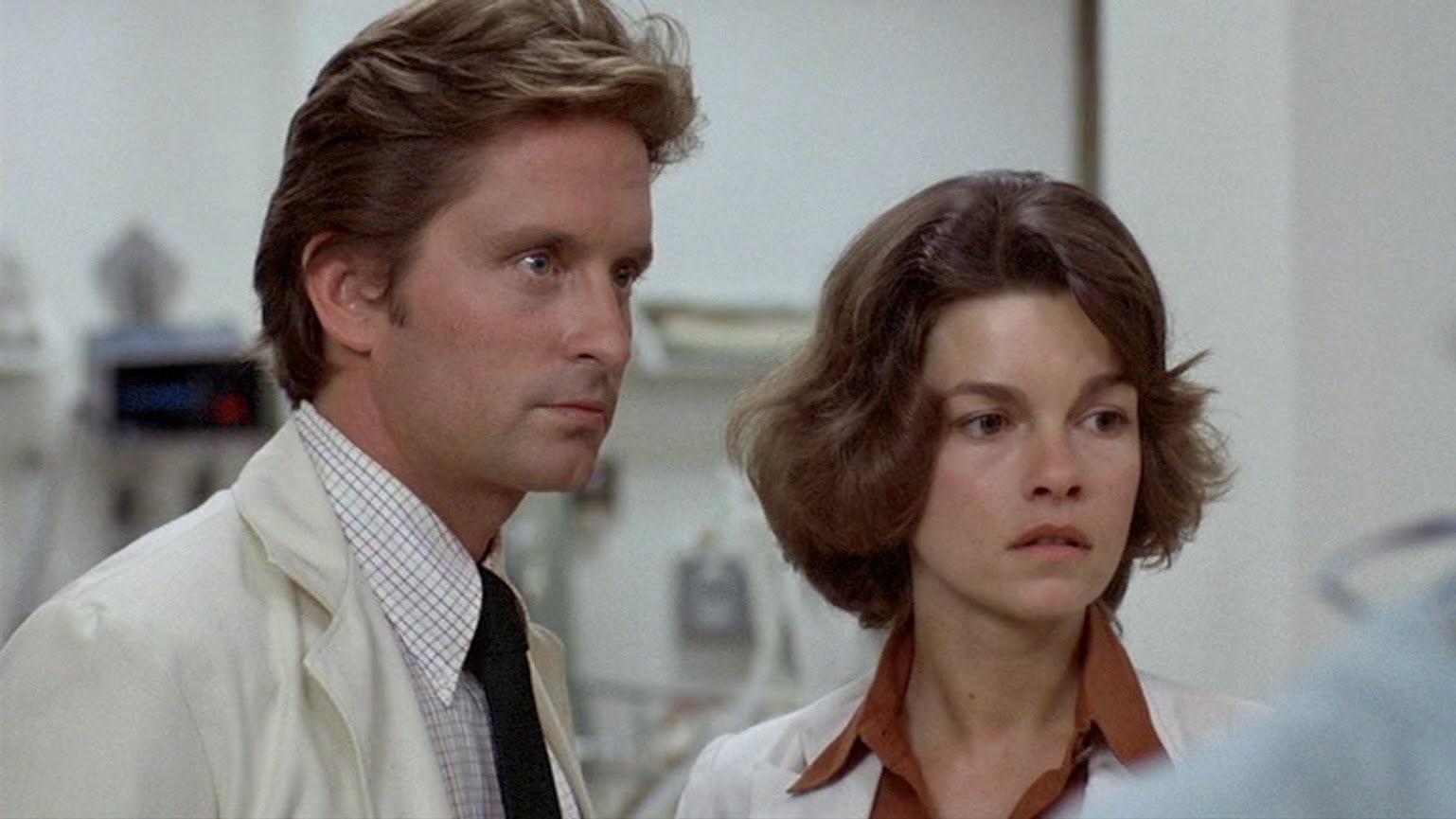
Another actor in the Coma cast who was just on the verge of fame was Michael Douglas who would go on to make a much stronger impression the following year in The China Syndrome (1979) and eventually achieved superstar status in the mid-eighties with the release of Romancing the Stone (1984), Fatal Attraction (1987) and Wall Street (1987). Douglas would later state in interviews that Coma was “the first time I’ve been offered a project with a good story laid out well, a good cast, and a good director.” And here’s an odd bit of trivia; Crichton once wrote several novels under the pseudonym “Michael Douglas,” a combination of his first name and his brother’s.
When Coma opened commercially, it proved to be a box office success (the film ranked number 19 among the top 20 box office hits of 1978) and garnered Genevieve Bujold some of the best notices of her career. Andrew Sarris, in his Village Voice review, wrote “For once, Genevieve Bujold is perfectly cast…The movie is gothic from the word go, and, fortunately, Bujold, as a dominating female protagonist, is spunky and zesty enough to make the whole enterprise work as harmless, escapist entertainment.”
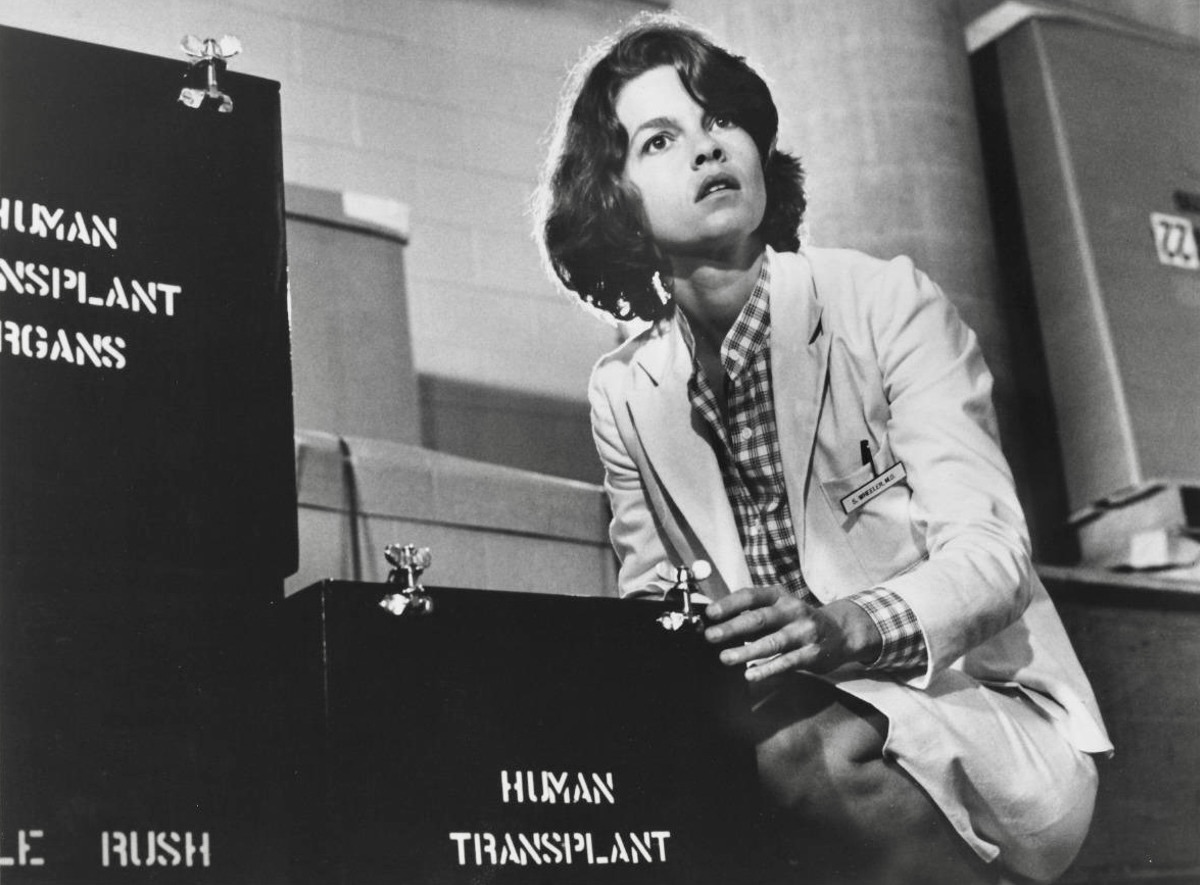
Not all of the critics were complimentary towards the film such as The New York Times, which panned it, writing, “The aftereffect of ‘Coma’ is a catlike yawn, benign and bored….’Coma’ is the kind of movie that turns real-life actors into robot-like functions of the story.” Pauline Kael of The New Yorker also complained, though she admired Bujold, writing, “Coma is so cleanly made, with such an impersonal, detached feeling that it looks untouched by human hands. Even the actors seem disinfected of any traces of personality. But not Bujold. There’s no way to sanitize this actress…she snuggles deep inside the shallow material. Thin-skinned, touchy, she seems almost to sniff out fakery. And as she goes from one dangerous situation to the next, the narrative trap tightens; you fear for her safety and the suspense gets you in the stomach and maybe the chest, too.”
There was some negative publicity generated against MGM when the film received a high-profile lawsuit filed against the producers of Coma by Los Angeles writer Ted Berkic who claimed his 1967 book, Reincarnation, Inc., was used without his knowledge. (Berkic’s copyright claim was later dismissed by the judge in the case). But the most negative reactions created by the film were directed against hospitals, not the filmmakers. As a result, some hospitals removed the number 8 from any operating rooms (as dire things happen in number 8 in the movie) but medical personal also noted that organ donations declined by 50 to 60 percent in some cities in 1978. Jaws had a similar effect in 1975; many people avoided swimming in the ocean due to that film and its effective ad campaign.
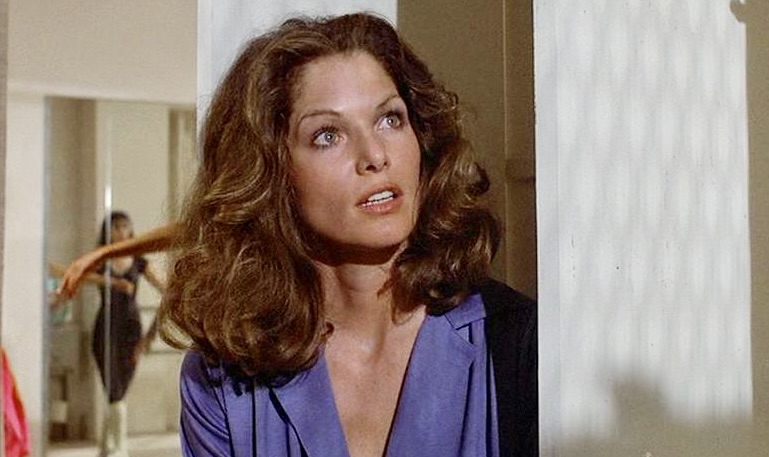
In 2012 Coma was remade as a TV mini-series, executive produced by Ridley Scott and his brother Tony with Mikael Solamon directing. Despite an impressive all-star cast which included Lauren Ambrose, Steven Pasquale, Geena Davis, James Woods, Joe Morton, Richard Dreyfuss, Ellen Burstyn and James Rebhorn, critics complained that the series departed too much from the original novel and the narrative became meandering instead of suspenseful.
The 1978 version of Coma has been available on various formats over the years but fans of the movie will probably prefer the Blu-ray special edition released by Shout Factory! In August 2023 which includes an audio commentary by film critic Lee Gambin and novelist Aaron Dries and other extras.
*This is a revised and updated version of an article that originally appeared on the Turner Classic Movies website.
Other Links of interest:
https://www.filmcomment.com/tcm-diary-coma
https://www.readersdigest.ca/culture/genevieve-bujold-true-romance

