
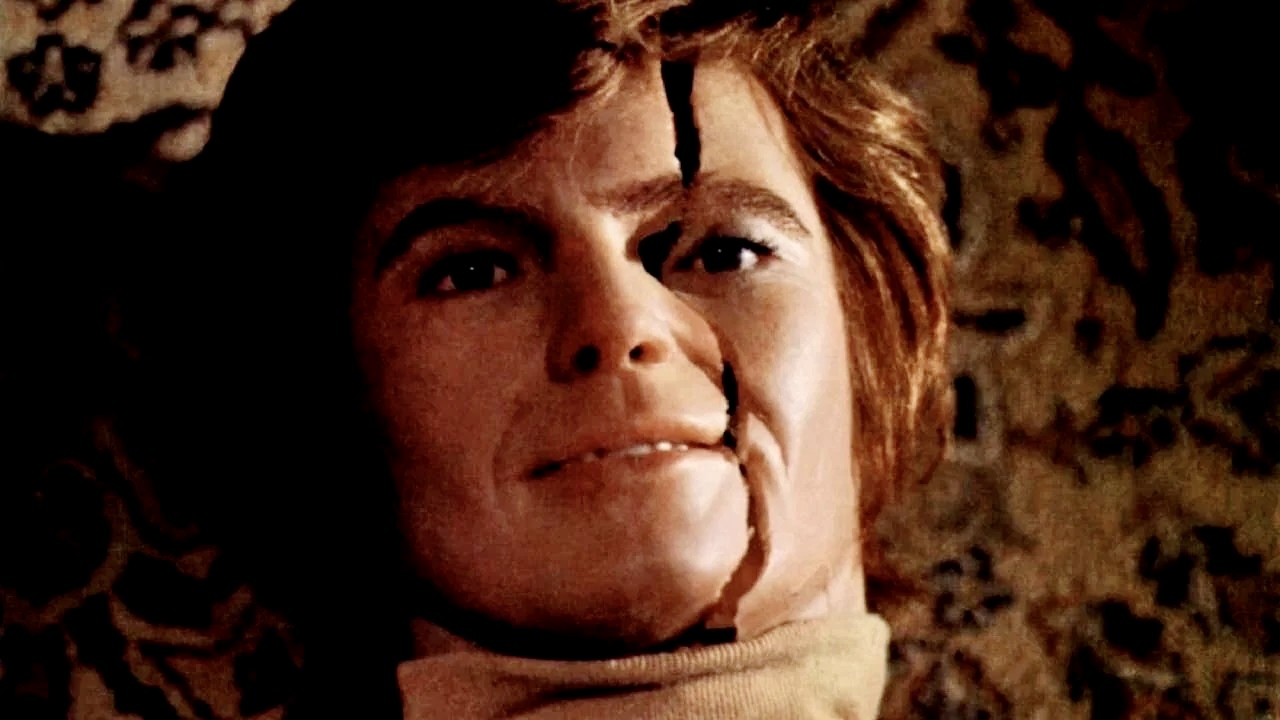
A young man named Juan is released from a mental asylum after a long confinement. He is on parole and placed under the guardianship of his aunt but is he cured or still a danger to society? One thing is clear. Juan has no intention of going back to the sanatorium or following the rules of his release. In fact, he has a plan which involves an elaborate revenge on his aunt, three female cousins and anyone else he holds responsible for his confinement. The question of whether Juan is truly insane or just pretending to be is the question that drives the narrative of La Campana del Infierno (English title: A Bell from Hell aka The Bells, 1973), a Spanish psychodrama which is often categorized as a horror film due to its gothic atmosphere, disturbing imagery and sinister plot twists.
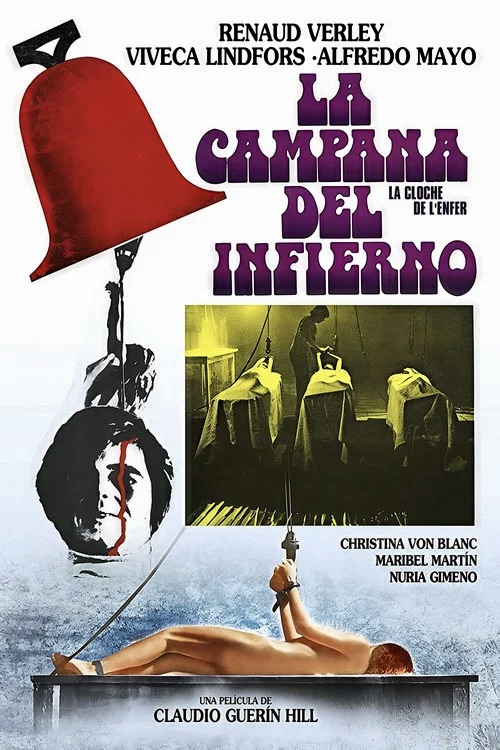
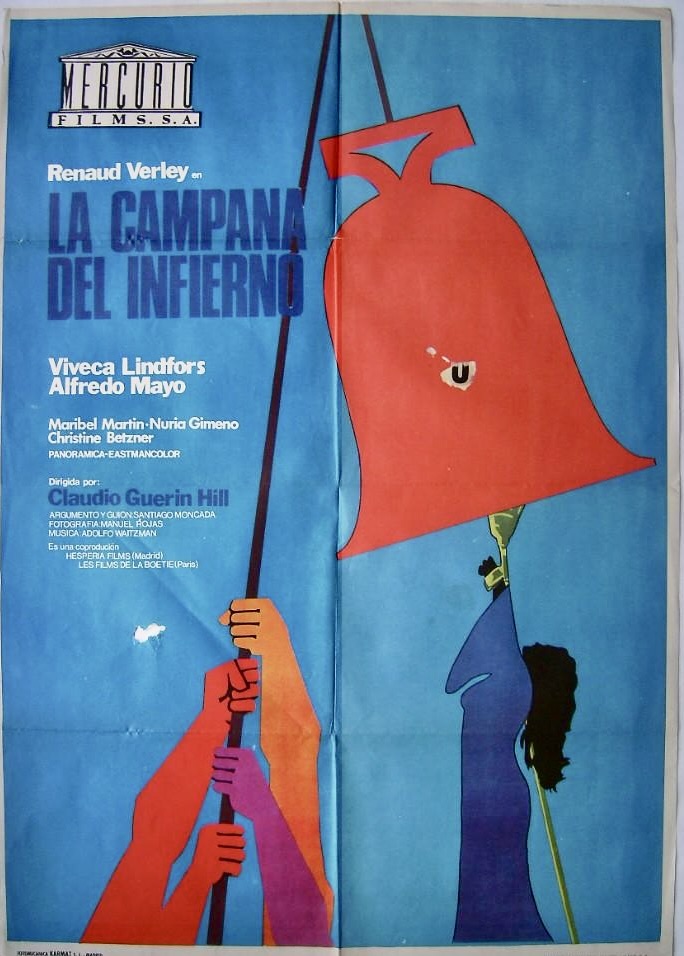
Directed by Claudio Guerin Hill, A Bell from Hell is in the grand tradition of other great works of art from such famous Spanish surrealists as Luis Bunuel, Salvador Dali and Joan Miro. It is also a reason why the film is often a polarizing experience for some horror aficionados. The film proceeds with the illogic of a fever dream. Strange incidents and relationships are presented without explanations or little context and the narrative structure is often fragmentary yet there is a method to the madness. Stick with it and you will begin to see the pieces fall into place as the story arrives at its macabre yet haunting climax.
Although Juan (Renaud Verley) appears to be the victim of an inheritance scam initiated by his aunt Marta (Viveca Lindfors) and the family doctor with the possible participation of his three cousins, he is not a particularly sympathetic protagonist. He can be outwardly charming and carefree but his smile is transparent and his true intentions are often revealed in jest or ominous threats. He feels he was falsely incarcerated at the asylum by his aunt/legal guardian for being mentally disturbed but it was also a ruse to gain control of his inheritance. He may be right but his plan to take control of his own life again is as creepy and unpredictable as that of a serial killer.
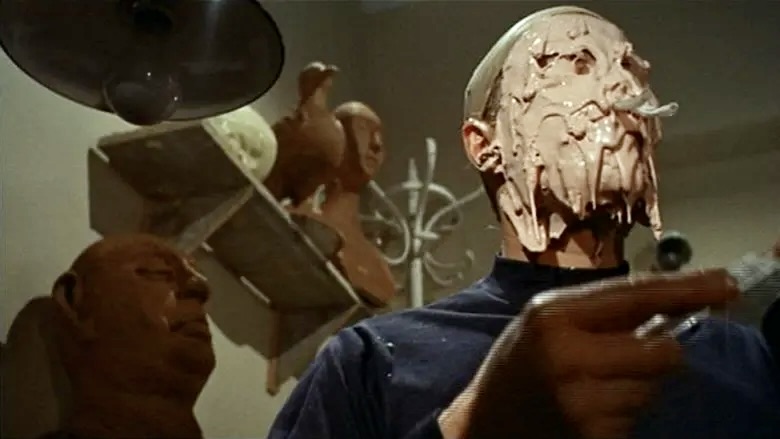
He is seen making a plaster cast of his own face. He also has a life size replica of his body delivered to his dusty, abandoned family home and redecorates the place with unsettling photographs and unusual art objects. He even populates the house with pet birds, a monkey and an aquarium plus the basement is renovated to look like the processing room of a slaughterhouse where he worked briefly (Warning: there are graphic scenes of a working abattoir early in the film where the lead actor (Verley) is clearly participating in the slaughter of a cow).
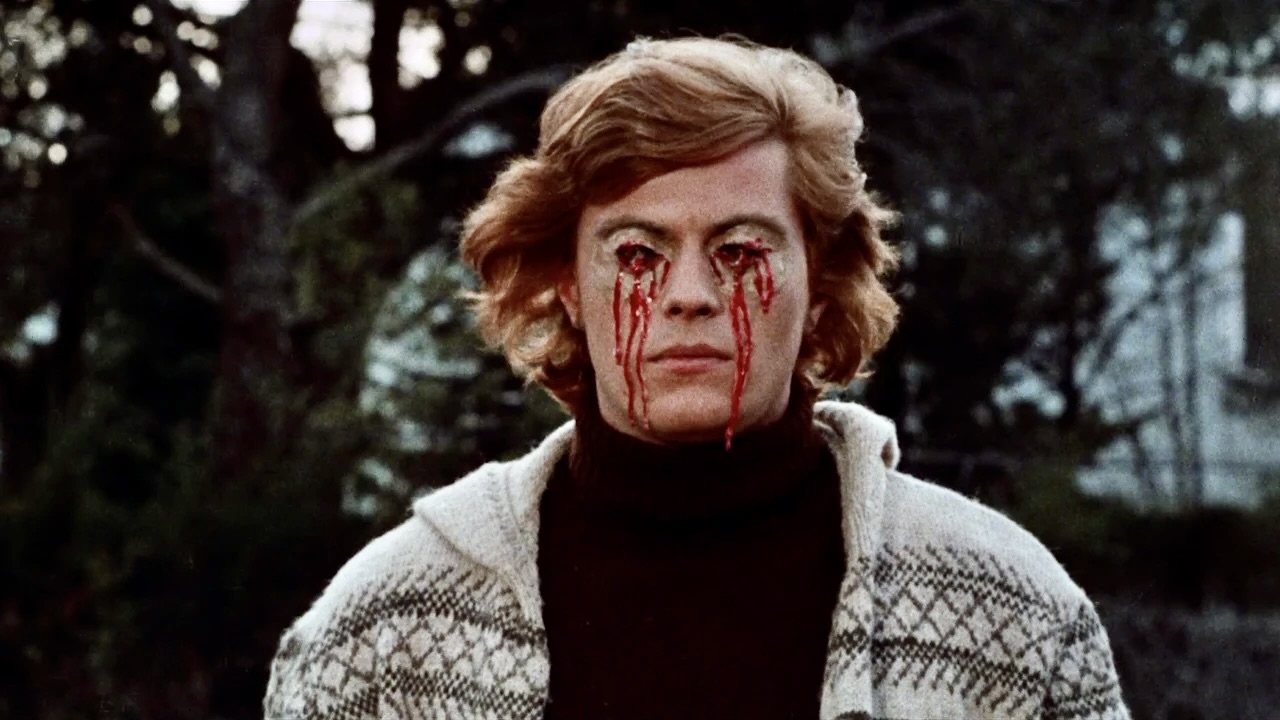
Despite all of this, Juan is clearly the underdog and A Bell from Bell could be interpreted as an allegory for Spain under the rule of General Franco with aunt Marta and her partners-in-crime representations of a corrupt and powerful regime and Juan as their oppressed victim. Certainly some of the imagery seems inspired by the films of Luis Bunuel but there are other influences as well. Saki’s short story “The Open Window” is quoted in a darkly humorous sequence involving the arrival of Juan’s three cousins as ghost-like specters in the fog. And there are references, intentional or not, to Edgar Allan Poe’s “The Cask of Amontillado (Juan is walled up alive behind a wall) and possibly Michael Powell’s 1960 psycho thriller Peeping Tom due to Juan’s voyeuristic obsession with photographs and home movies from a traumatic past.
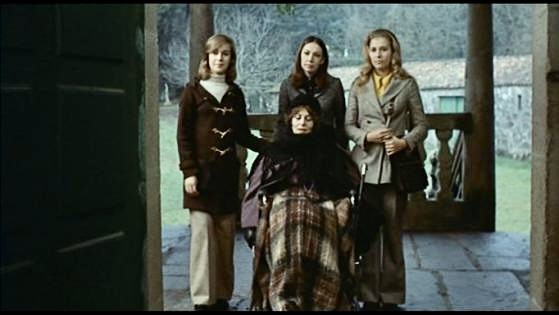
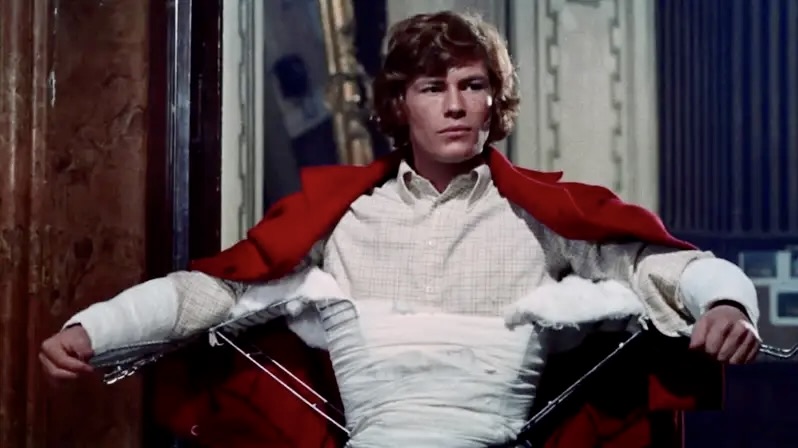
The real power of A Bell from Hell resides in its visually imaginative and perverse set pieces. Among the highlights is a scene where Juan visits a male-centric social club wearing a bizarre upper body contraption for his two injured arms. His mission is to confront and humiliate Don Pedro (Alfredo Mayo), a morally dubious neighbor who married his former girlfriend and tried to sexually molest the daughter of an elderly shepherd. Juan convinces Don Pedro to accompany him to the bathroom and help him urinate and the sequence plays out as a perverse take on male power games.
Equally unforgettable is the dinner party Juan arranges for his aunt and her three daughters, Teresa (Nuria Gimeno), Maria (Christina von Blanc) and Esther (Maribel Martin) as birds fly wildly around the room and over their meal. Much more depraved and sadistic is the revenge Juan takes on his three cousins – he strips them naked, binds them, tapes their mouths shut, and suspends them from a pulley system as if they are lambs awaiting a slaughter. And the final sequence where Don Pedro is lured to Juan’s supposedly deserted house and is terrorized by sights and sounds orchestrated by the protagonist from beyond the grave is truly hallucinatory.
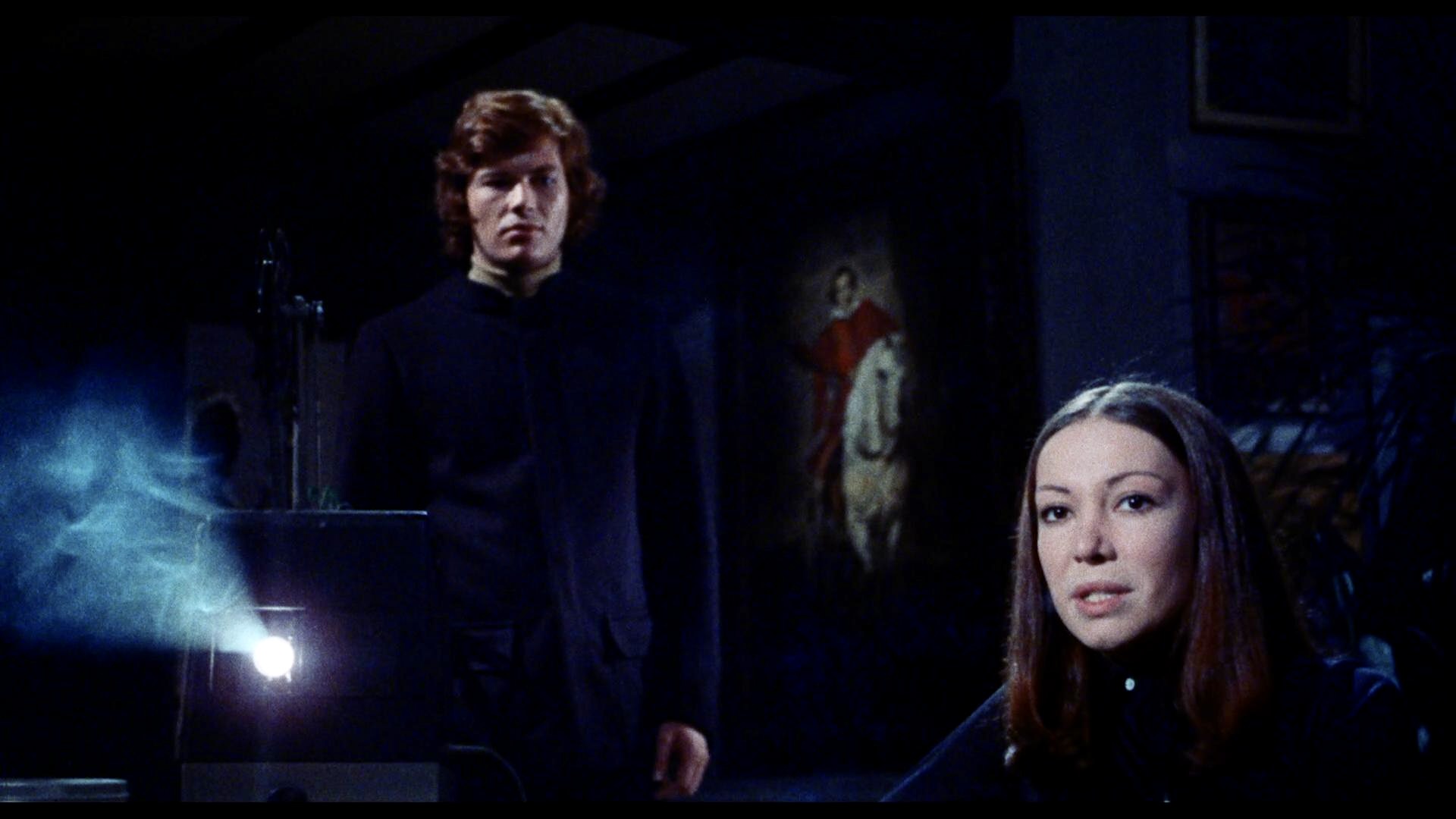
What is surprising about A Bell from Hell is that the movie managed to get pass the Spanish censors who were still exercising rigid standards over the country’s cinema per the direction of General Franco (he didn’t die until November 1975). Although it is rumored that some female nudity was excised from the film, what remains is still subversive and shocking for its era. It remains one of the most unique and transgressive horror films to emerge from Spain during the early seventies along with Eloy de la Iglesia’s Cannibal Man aka Apartment on the 13th Floor (1972), Vicente Aranda’s The Blood Splattered Bride (1972) and Jorge Grau’s The Legend of Blood Castle aka The Female Butcher (1973).
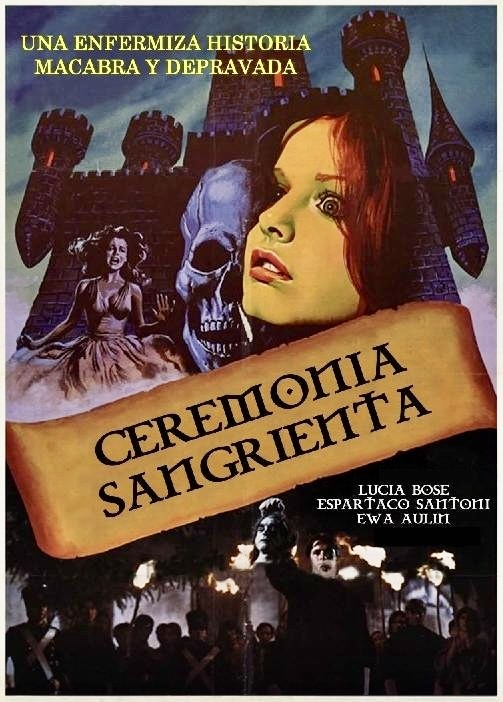
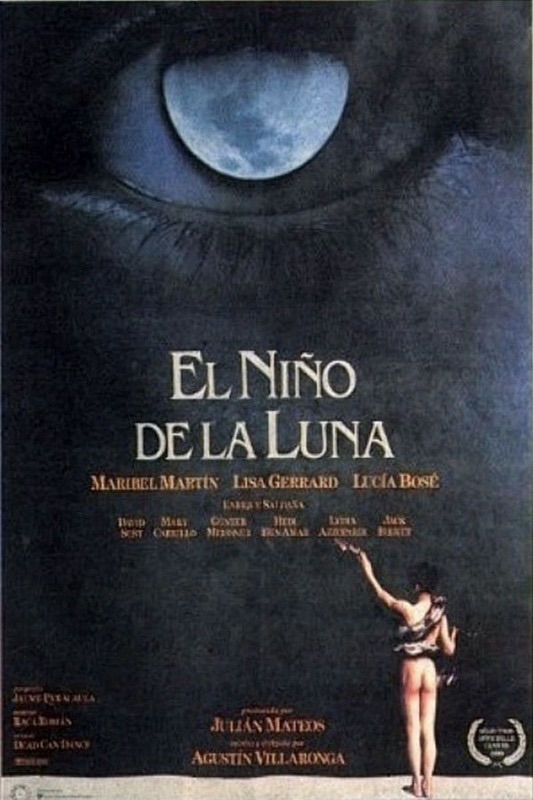
A few of the cast members from A Bell from Hell may be familiar to fans of international cinema. Renaud Verley, in the role of the ambiguous protagonist, is a French actor who had memorable supporting roles in The Damned (1969), Luchino Visconti’s portrait of a fascist family during WW2, and Cran d’arret (English title: Safety Catch, 1970), a French mystery thriller from director Yves Boisset. Maribel Martin as Esther, the youngest of the three cousins, is best known for her roles in Spanish horror classics like The House That Screamed (1969) and The Blood Splattered Bride (as the virginal bride turned vampiress) and cult items such as Agusti Villaronga’s fantasy El Nino de la Luna (English title: Moon Child, 1989). The latter remains her final film to date.
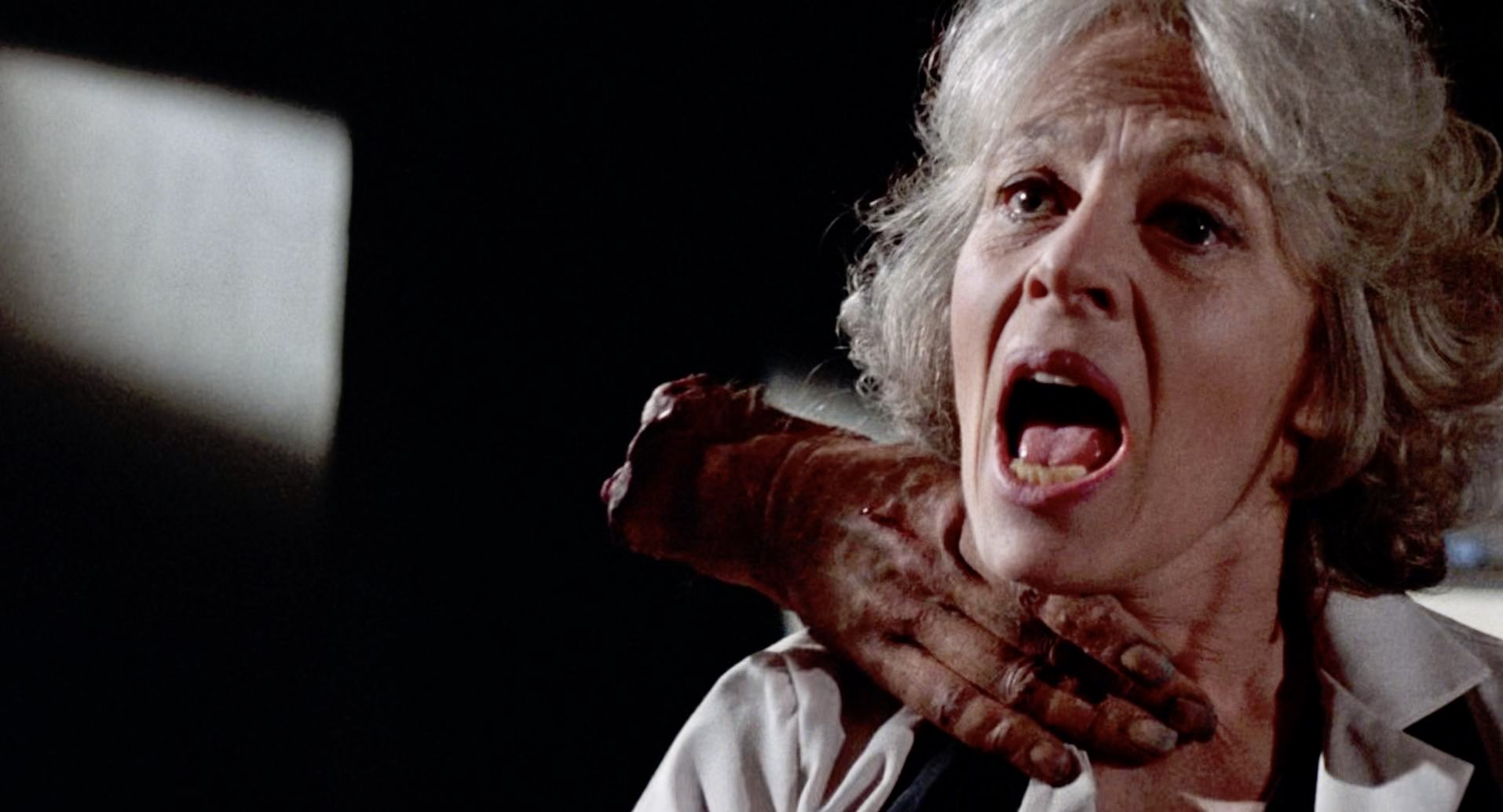
The most famous performer from A Bell from Hell, however, is Viveca Lindfors as the controlling family matriarch. She might be the true mental case in the story but she always keeps you guessing and you might even feel sympathy for her when Juan subjects her to a deadly attack by honey bees (she miraculously survives but her face remains swollen and hideously distorted). The Swedish actress, who was once married to director Don Siegel, worked in a variety of genres but made her mark in horror/sci-fi cinema with memorable roles in Joseph Losey’s These Are the Damned (1962), Pedro Oleo’s paranoid thriller The House Without Borders (1972), The Hand (1981), Creepshow (1982), the slasher horror flick Silent Madness (1984), The Exorcist III (1990) and Roland Emmerich’s science fiction adventure Stargate (1994).
A Bell from Hell was Claudio Guerin Hill’s second and final feature film as a director. He died on the last day of shooting by falling from the church tower featured in the movie. It is not known if his death was an accident or suicide but the film was completed by the well-regarded Spanish director Juan Antonio Bardem, whose 1954 noir Death of a Cyclist is considered a masterpiece and won the FIPRESCI prize (an award given by a jury of international film critics) at the Cannes Film Festival.

For years A Bell from Hell was only available in terrible looking transfers with muffled audio, overly dark and muddy looking visuals and incorrect screen aspect ratios. This may account for some of the negative reviews the movie has received from non-fans. Pathfinder Home Entertainment released a vastly improved DVD transfer of it in 2005 with 16×9 anamorphic framing and an informative commentary track by film expert Chris D. The disc also offered Spanish, French and English language options but no subtitles for the Spanish and French versions.
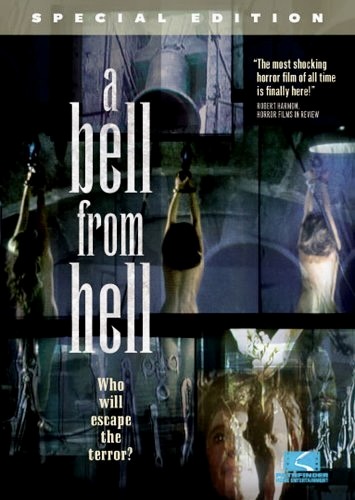
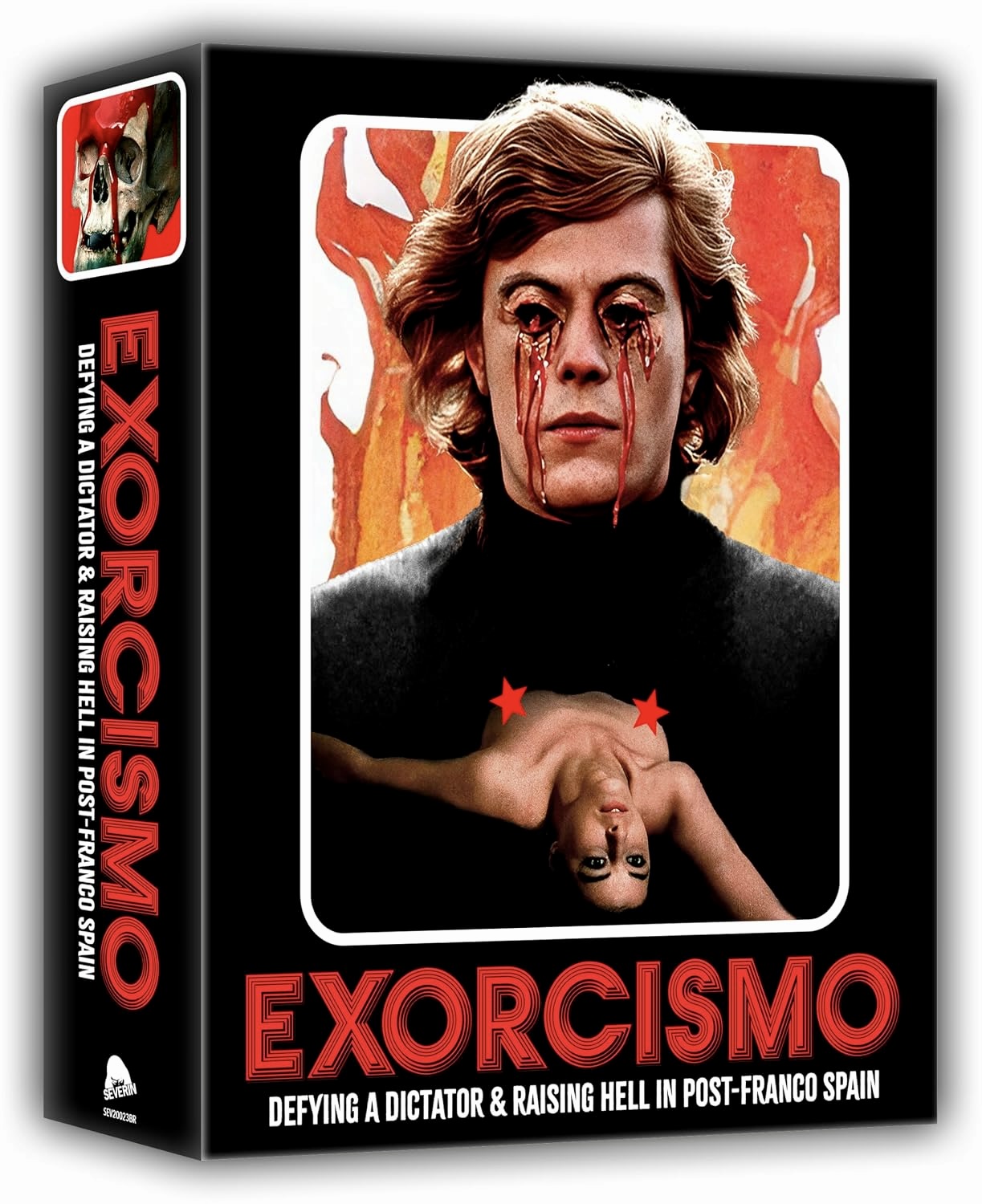
The good news is that A Bell from Hell is now available in its original unedited form on Blu-Ray from Severin Films. It is part of their 10-disc, 19-feature film box set, Exorcismo: The Transgressive Legacy of Clasificada “S,” released in February 2026. The film runs 91 minutes 31 seconds and features English and Spanish language options (with English subtitles) and a host of extra features including two new audio commentaries and Claudio Guerin Hill’s 1965 student film Luciano. The only down side is that A Bell from Hell is not sold separately as a single disc Blu-Ray.
Other links of interest:
https://skbl.se/en/article/VivecaLindfors
https://variety.com/1995/scene/people-news/viveca-lindfors-99129001

