
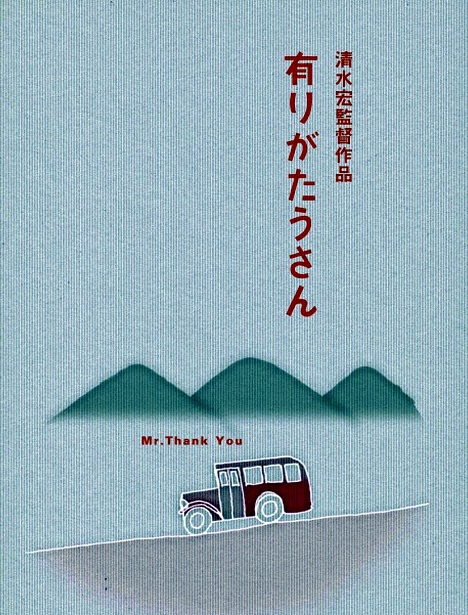
Virtually unknown in the U.S. until recent years and largely neglected in his own country, director Hiroshi Shimizu was a unique figure in Japanese cinema for his insistence on shooting his movies in the open air in real locations and for often working without a script, improvising scenes and dialogue during production. Few directors, if any, were doing this during the silent and early sound era in Japan and unlike his more internationally famous peers like Akira Kurosawa,Yasujiro Ozu and Kenji Mizoguchi, Shimizu specialized in contemporary human stories about people living on the margins of society such as orphaned children or transient workers moving from place to place. Although he made more than 150 movies between 1923 and 1959, many of them have been lost but of the ones that survive, Arigato-san (English title, Mr. Thank You, 1936) is a great introduction to his work during the sound era.
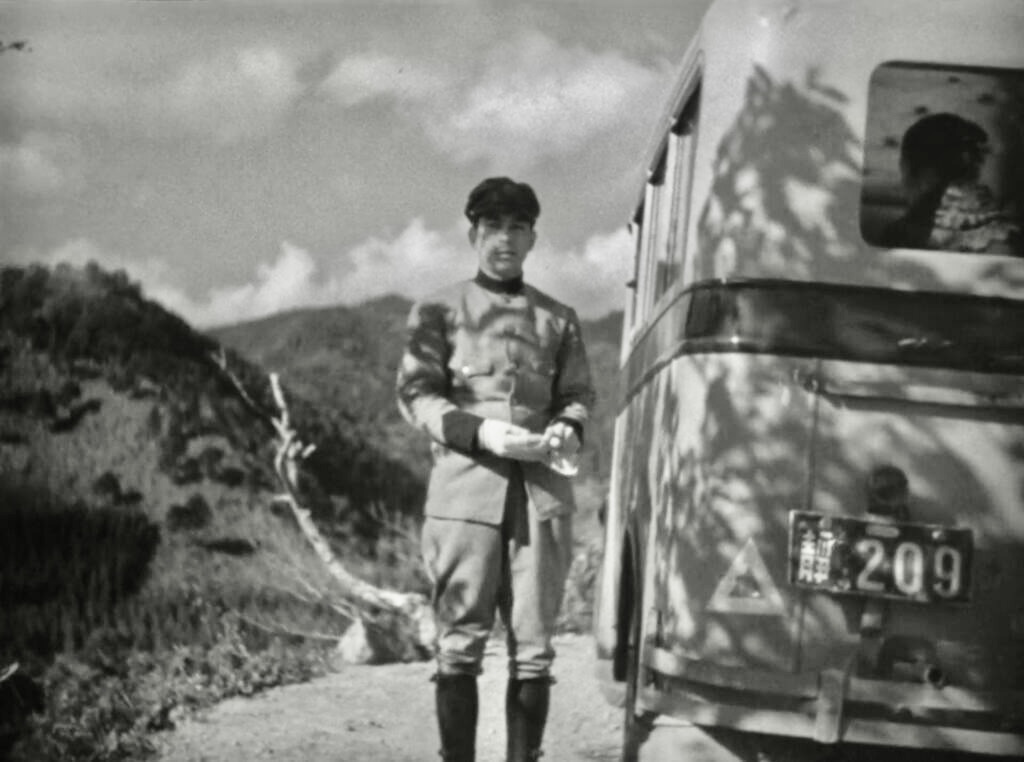
The title refers to a young, considerate bus driver with the nickname of Mr. Thank You (Ken Uehara) because he is constantly voicing his appreciation for those travelers on the road who move out of the way to let him pass by. One reason he is more popular than other drivers on his route is because he often offers help and favors to the less fortunate people he encounters. He willingly carries messages to relatives of families in other villages, promises to provide fresh flowers and water for a departed father’s gravesite on his route and even offers to buy a recent popular record in the big city for a village girl; none of these tasks are part of his job but he derives immense satisfaction from doing it.
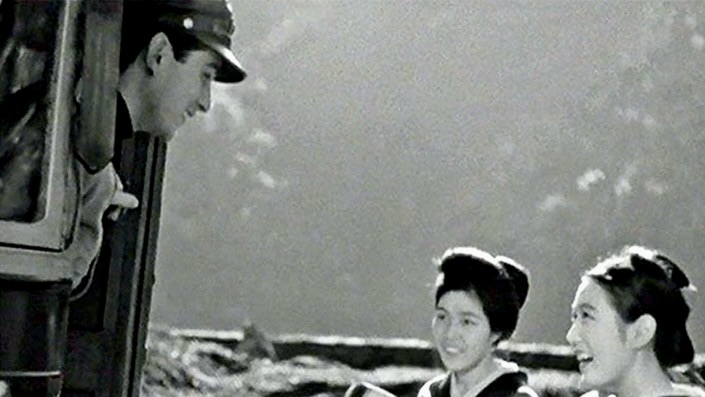
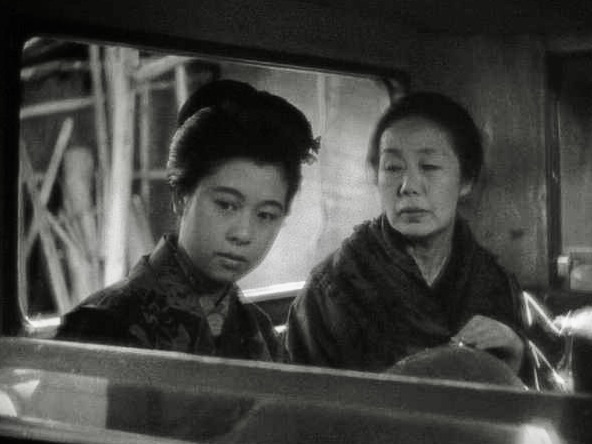
When Shimuzi’s film opens, Mr. Thank You (no one in the film is identified by their real name) is driving his bus from the mountain town of Izu to Tokyo and his constantly changing passenger list represents a cross section of people struggling to survive in Depression-era Japan. Among the riders are a possibly dishonest businessman who is given the nickname Mr. Mustache for obvious reasons, a sassy, outspoken young woman with strong opinions (Michiko Kuwano) unlike the other women on the bus, and a mother (Kaoru Futaba) accompanying her 17-year-old daughter (Mayumi Tsukiji) to the city where she will sold into prostitution to help the family’s financial situation. The tone of Shimuzi’s film is lighthearted and upbeat with a jaunty music score but underneath the surface gaiety there are glimpses of financial difficulties, cultural differences and personal tragedy among his passengers that become obvious during the journey.
Much of Mr. Thank You is anecdotal and episodic but it has the feel of a genuine road trip with the camera alternating between the view of the road and surrounding landscape through the bus driver’s windshield and what we see through the rear window of departing passengers fading into the distance or poor villagers on the road who can’t afford a bus ticket. There is humor too in the interactions between the passengers, especially between the entitled, judgmental Mr. Mustache and the girl across the aisle from him who sees through his pompous behavior and calls him on it. But it is the desperate state of Japan in 1936 that underlines everything – discussions of unemployment and the necessity of moving elsewhere to find work are prevalent. So is the realization that so many young women who were unmarried in villages were forced into prostitution in the big city so they could help support their families.
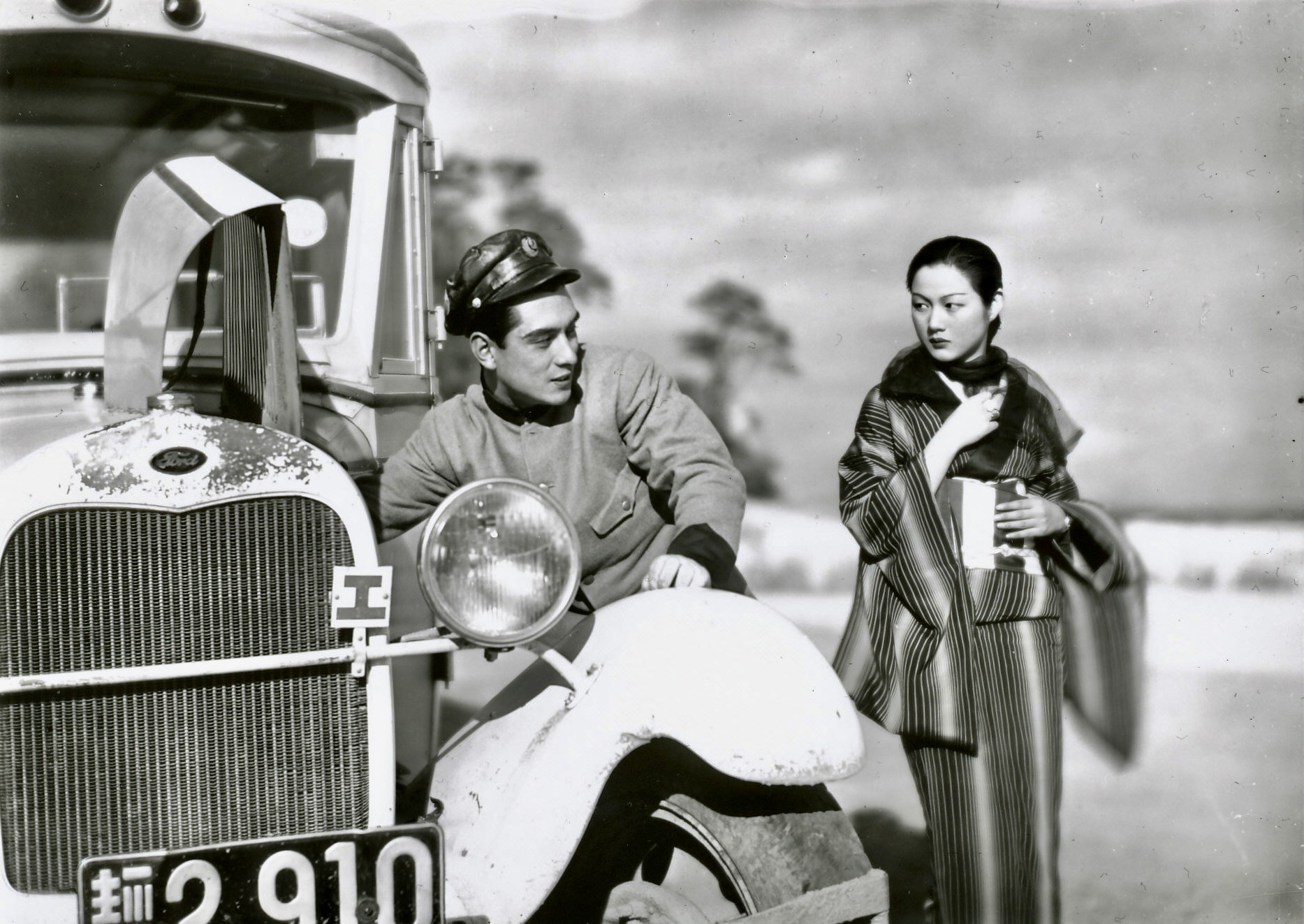
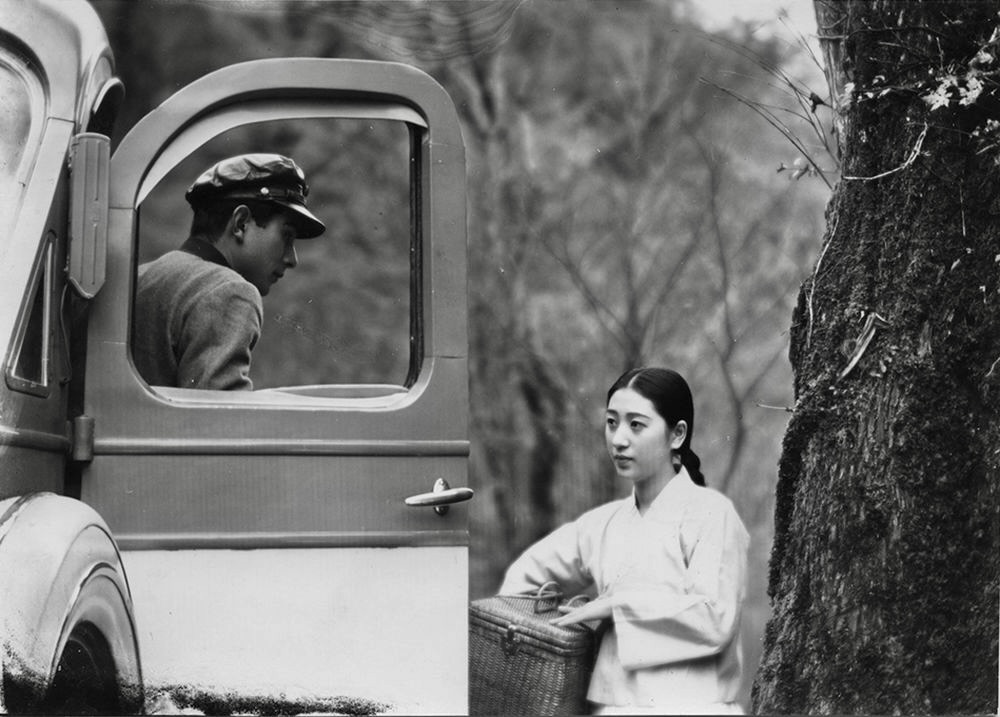
In one scene, Shimizu even addresses one of Japan’s most alienated minority groups – itinerant workers from Korea. Mr. Thank You stops to talk to a young woman who is being relocated from her current job as a road worker to a more harsh climate in the mountains where a tunnel is being built. That outsiders like Korean workers are even acknowledged in a Japanese film from a major studio (Shockiku) is testament to Shimizu’s compassionate approach to his characters but it is handled with subtlety and an absence of melodrama. Regarding this sequence, Alexander Jacoby noted in his essay on Shimizu for Senses of Cinema, “…the fact that this team of Korean labourers have been working on the very roads along which Mr. Thankyou’s bus has been driving makes the scene doubly subversive. The bus journey is made possible only by the exploitation of immigrant workers, and, by implication, every Japanese character, including the nice hero, is complicit in their oppression.”
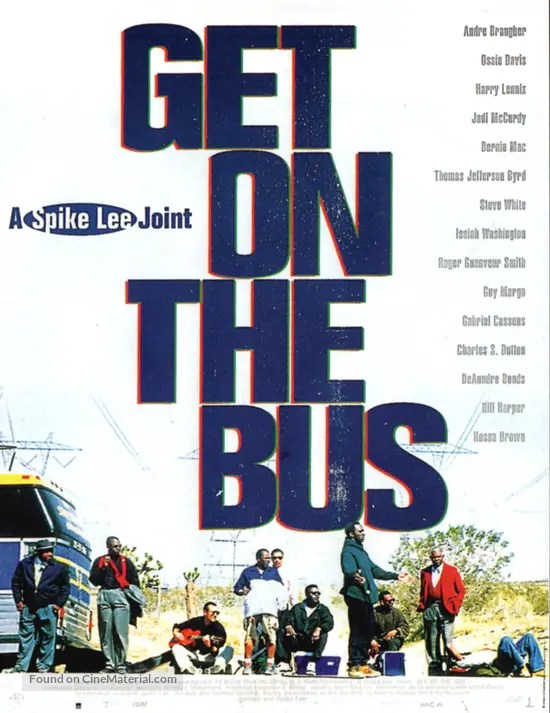
Mr. Thank You,which is based on a story by Nobel Prize-winning author Kawbata Yasunari, would be an ideal candidate for any film series about bus rides and road trips. I can imagine it pairing up quite nicely with movies like It Happened One Night (1934), Frank Capra’s delightful screwball road trip, The Wayward Bus (1957), an adaptation of the John Steinbeck novel about a group of disparate passengers traveling through California’s Salinas Valley, H-8…(1958), a disaster film from Yugoslavia about the fateful collision between a bus and a truck, The Big Bus (1976), a comedy about a nuclear-powered bus driving cross-country from New York to Colorado and Spike Lee’s Get on the Bus (1996) which depicts a group of African-American men traveling to D.C. to take part in the Million Man March.
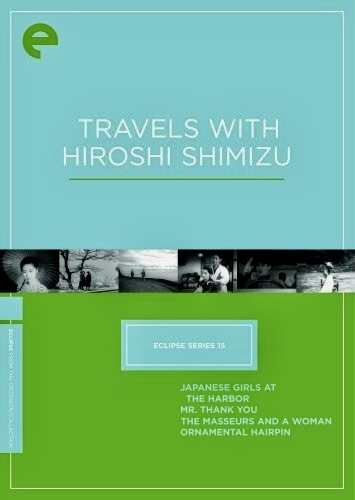
Thanks to The Criterion Collection’s Eclipse series, Mr. Thank You and three other features by Hiroshi Shimizu – Japanese Girls at the Harbor (1933), The Masseurs and a Woman (1938) and Ornamental Hairpin (1941) – were made available to U.S. film lovers in March 2009 in a DVD collection entitled Travels with Hiroshi Shimizu. Since then, Shimizu has slowly earned a new generation of admirers such as Jaspar Sharp of Midnight Eye, who wrote, “A throwback to the days when the words “arigato” (thank you) meant something more sincere than a mere reflex action, Mr. Thank You’s appeal to our more nostalgic side is undeniable. The characters are interesting, the dramatic approach compelling, and the style still seems innovative. But there’s a serious undercurrent beneath the almost whimsical approach to the drama, a tangible sense of sadness and regret at the direction Japan was heading. It is perhaps no surprise that during the war Shimizu’s works fell out of favour with the establishment. After the production of Sayon’s Bell (Sayon no Kane, 1943), shot and set in Japanese-occupied Taiwan, he was ousted from Shochiku studios and for the next two decades either produced his work through smaller companies, such as his own Hachinosu Eiga (Beehive Films) or the newly founded Shintoho studios.”
Other links of interest:
https://reverseshot.org/features/3223/hiroshi_shimizu
https://www.screenslate.com/articles/hiroshi-shimizu-notes-itinerant-director
http://www.midnighteye.com/reviews/mr-thank-you/

