
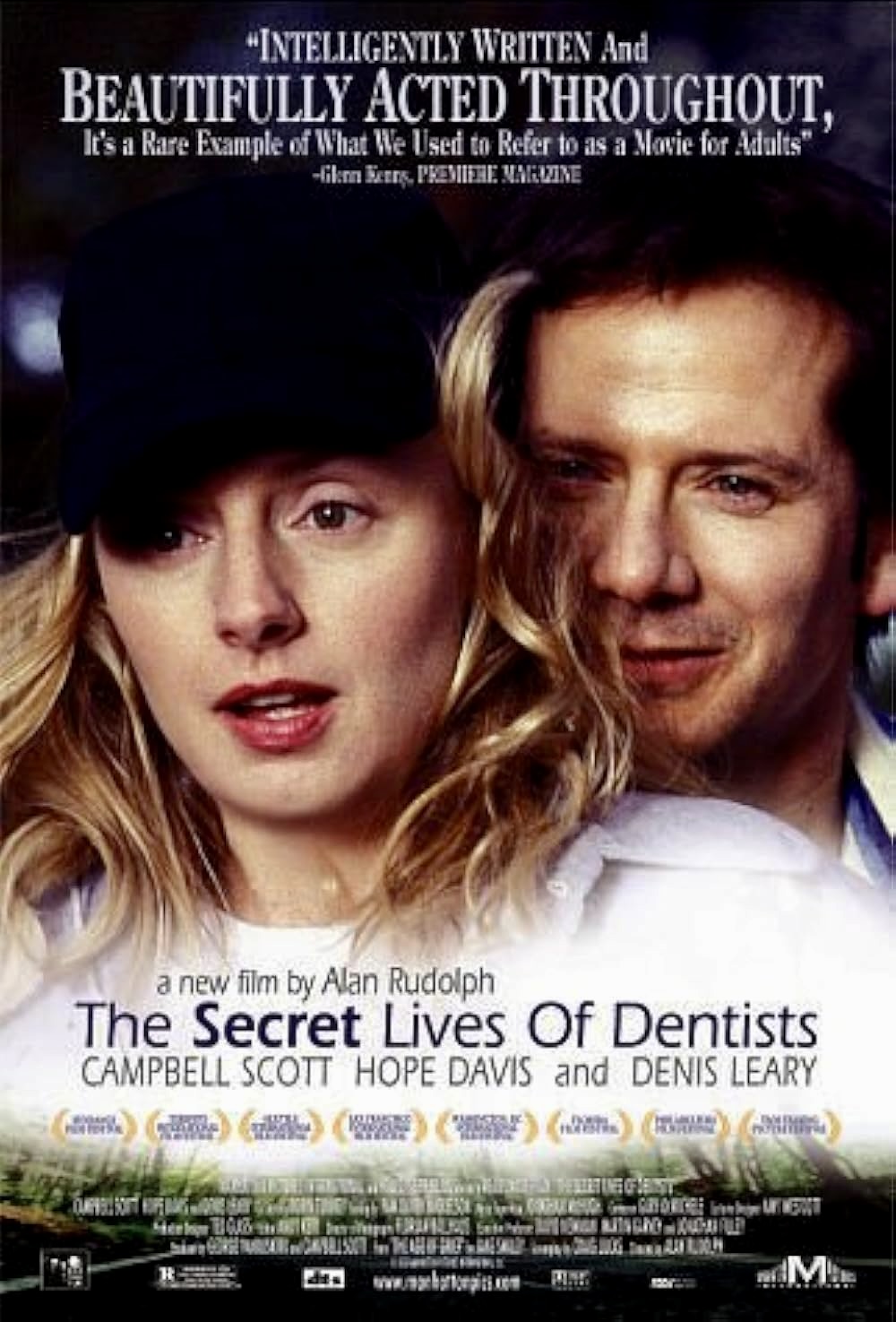
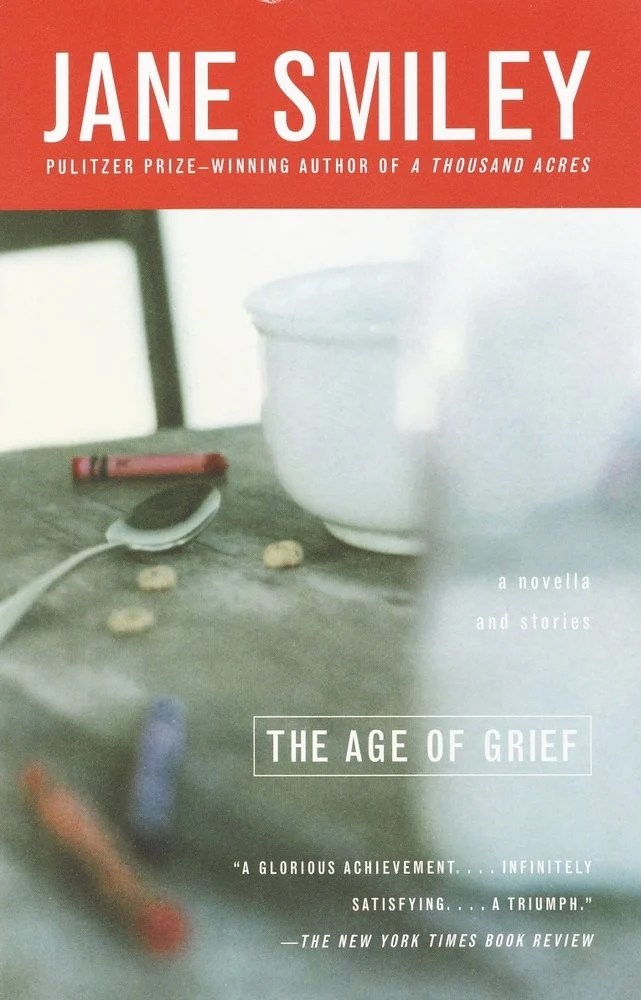
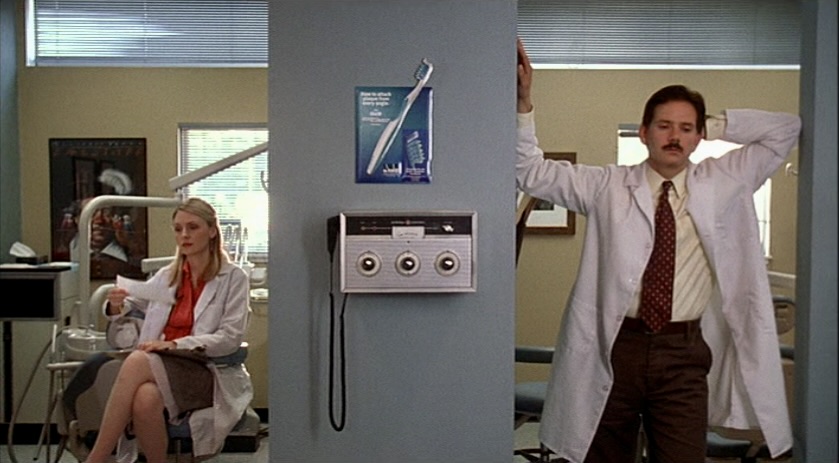
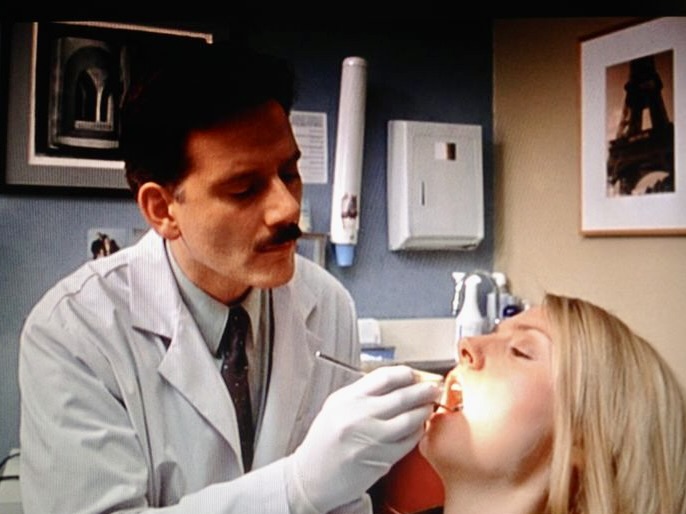
There was a brief time during the summer of 2002 when I felt that indie director Alan Rudolph was about to have a career resurgence with The Secret Lives of Dentists. Based on a novella by Pulitzer Prize-winning author Jane Smiley entitled The Age of Grief, which was a collection of short stories under the same title, the film depicts the daily lives of a married couple with three young daughters. David (Campbell Scott) and Dana (Hope Davis) are dentists and share a family practice together. They have been married for eleven years and appear to have achieved a workable and satisfying balance between their professional and private lives. Then something happens that plants a seed of doubt in David’s mind about his wife’s fidelity and he begins to agonize over confronting Dana about it or pretending it didn’t happen. The truth becomes elusive and their relationship becomes increasingly strained.
Rudolph’s film is an offbeat mixture of comedy and drama with a touch of fantasy and most film critics praised the effort. The Los Angeles Times called it “A stylish work from an accomplished, sophisticated filmmaker that bristles with intelligence and gleams with Scott’s and Davis’ multifaceted, astutely judged portrayals.” The Washington Post labeled it a “smart, quiet movie that imperceptibly takes its viewers by their throats and doesn’t let go,” while The Wall Street Journal stated, “This portrait of a failing marriage is one of the summer’s great discoveries, and a marvel of mercurial intimacy.” When The Secret Lives of Dentists went into wide release, however, audiences stayed away and the film quickly vanished from screens. As a result, Alan Rudolph wouldn’t direct another movie for 15 years and that one – Ray and Helen (2017) – might be his last (the director is now 84).
Revisiting The Secret Lives of Dentists after 24 years I can now see why the film was not a hit with mainstream audiences. Its subtle, intimate look at a marriage entering troubled waters could be uncomfortable viewing for couples with similar issues and and the sometimes caustic wit mixed with painful soul-searching doesn’t lead to a warm and fuzzy feel-good resolution like most commercially successful comedy-dramas of that era. Rudolph’s film also lacked big name Hollywood stars or a marketing campaign that could successfully convey the movie’s unique tone and approach to this portrait of marital tension and intrigue.
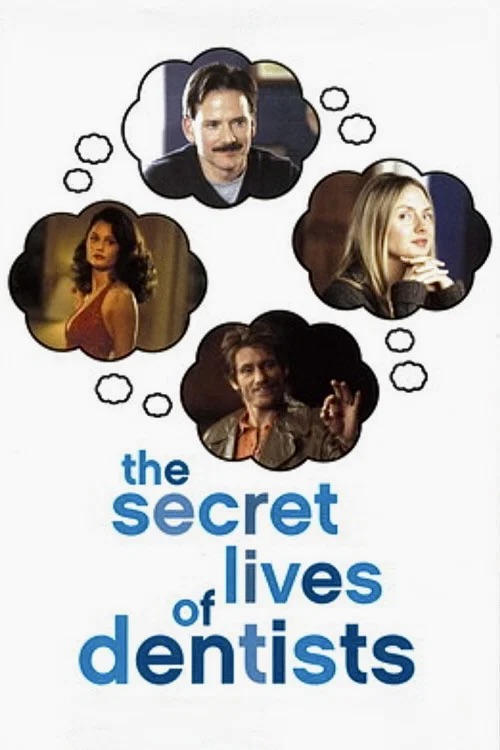
What is especially impressive is the fact that Rudolph, working with screenwriter Craig Lucas, remains fairly faithful to Smiley’s melancholy story with the exception of transforming one of the characters, a patient named Slater (Denis Leary), into David’s more macho alter ego or possibly a figment of his imagination. This change also allows the director to inject a welcome amount of dark humor and lighthearted mischief into what could have been a much more somber and cerebral character study. And, like the novella, The Secret Lives of Dentists is narrated by David (Campbell Scott), so we see the story unfold through his eyes.
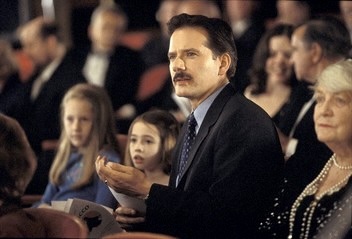
The incident that has a profound effect on David’s sense of himself and his marriage occurs at a theater where his wife is able to indulge her love of opera in her spare time. She is currently performing in the chorus of Verdi’s opera Nabucco and David attends the premiere with two of his daughters. When he goes backstage to congratulate her, he sees an unfamiliar man embrace his wife in the dressing room and she responses warmly. Did he imagine this or did it really happen?
David’s shock and confusion over this experience forces him to review his life with Dana from their college years through their courtship, marriage and child-rearing. It suddenly becomes quite clear to David that he has taken their surface stability for granted and that Dana may be on the verge of leaving him. The thought terrifies him but the idea of confronting her over a possible affair is worse “because if she tells me she loves him, we have to do something about it.”
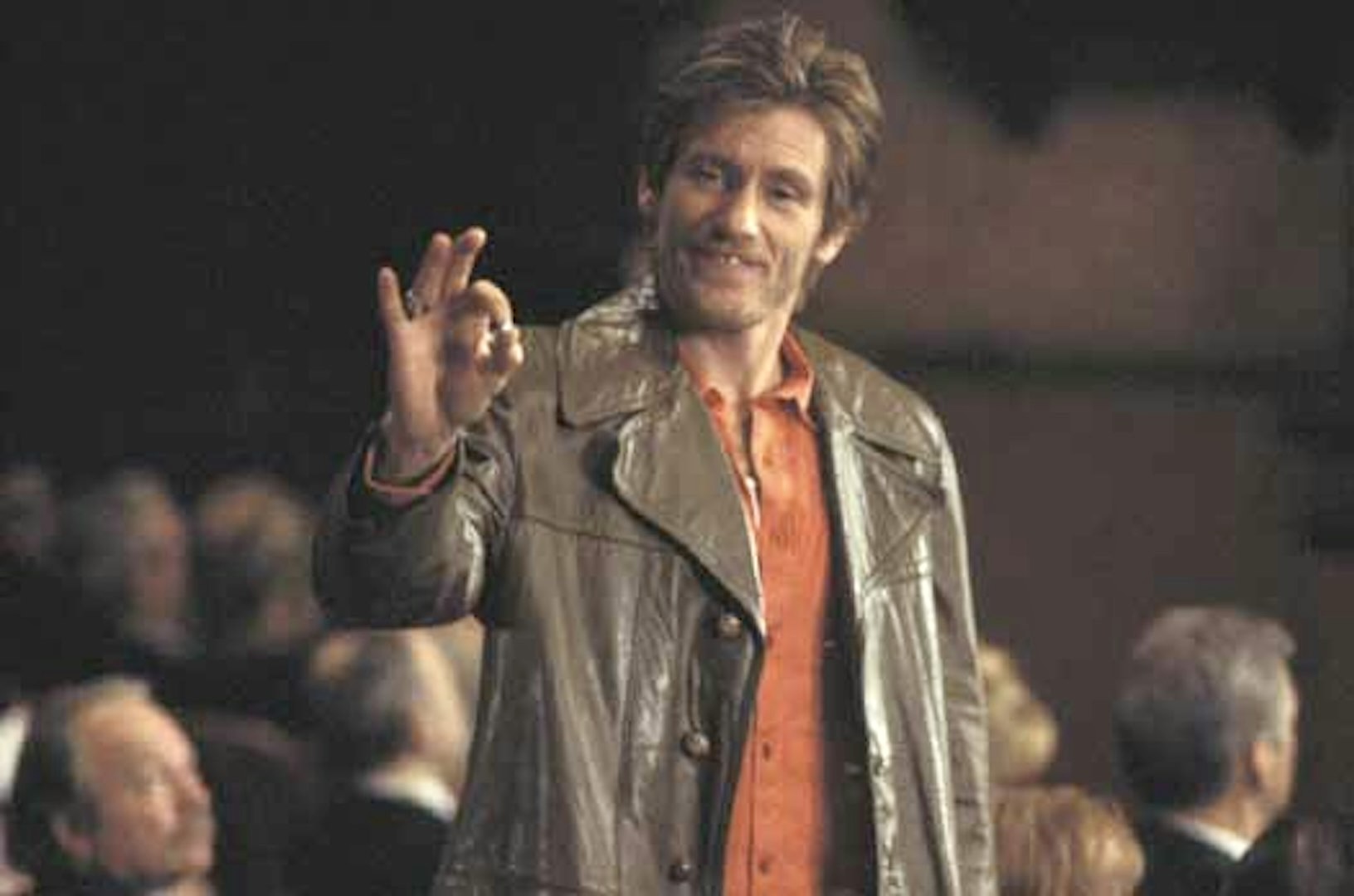
At this point in the story, Slater, an embittered and recently divorced patient of David’s, materializes as a negative, sexist confidant that only David can see and hear. It’s as if he is playing Iago to David’s Othello and all of his advice is meant to liberate David from his messy marriage so he can be single and miserable like Slater.
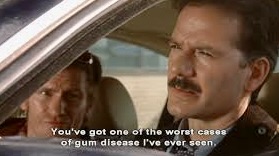
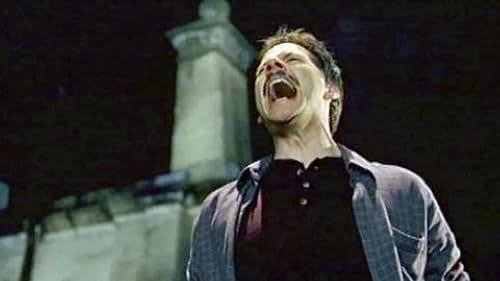
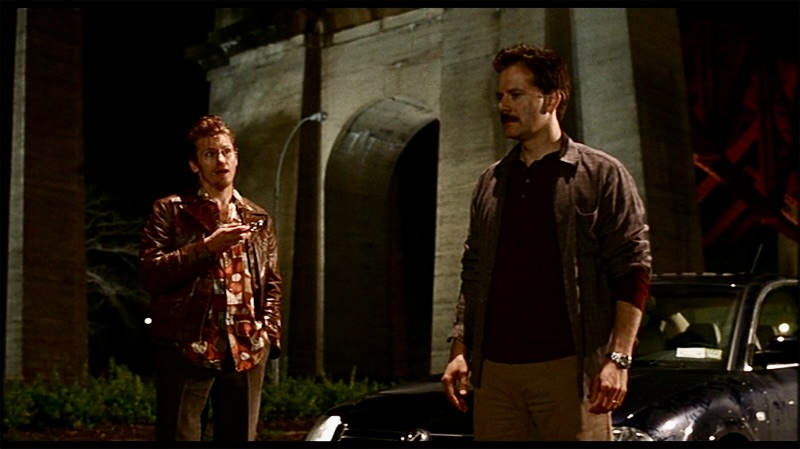
You never know when Slater is going to pop up but his irreverent, snarky sense of humor often addresses the kinds of problems that arise in any marriage including child rearing. Observing Dana and David’s three rambunctious daughters Lizzie (Gianna Beleno), Stephanie (Lydia Jordan) and Leah (Cassidy Hinkle), he declares, “Those children are monsters. They should be struck. May I hit them?” And when David has an emotional breakdown in his bedroom, Slater suddenly slides out from under the bed and says in disgust, “Crying! You know what? I’m sorry you’re you!” Leary is a gleefully malicious delight in the film and you can never anticipate his next move, whether it’s throwing a plate of food against the wall or serving David a roasted squirrel from one of his hunting trips.
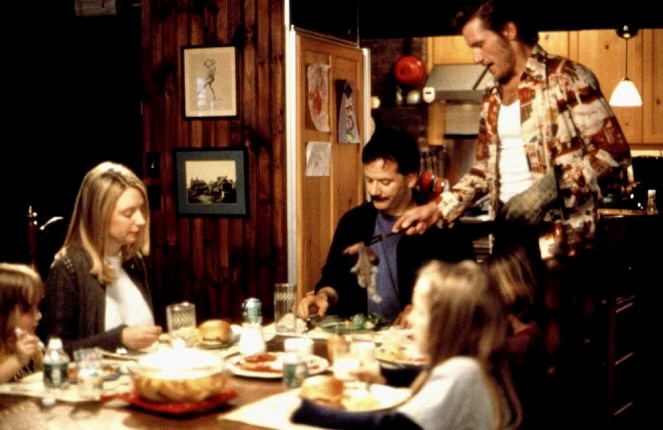
One of the more fascinating aspects of The Secret Lives of Dentists is the depiction of David. As Andrew Sarris noted in his review of the film, “No matter what the humiliation, David wants to keep his marriage intact, technically at least. This degree of timorousness in a male protagonist is rare-if not unheard of-in an American movie.” Indeed, David goes from being the cuckolded husband to the hero of the story when he becomes the cook, cleaner and caregiver to his family when they are all struck down with the flu during a five day period. That ordeal helps pave the way for Dana and David to reassess their relationship and move forward with their lives. No one ever said marriage was easy and The Secret Lives of Dentists proves that it is hard work, even for so-called normal married couples with careers.
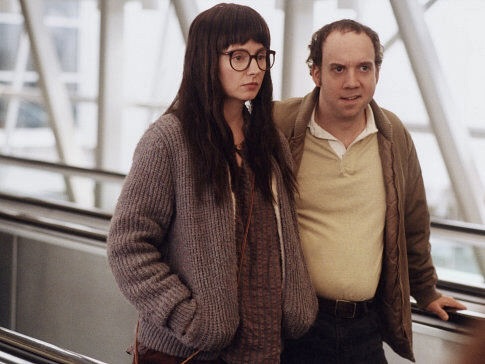
Campbell Scott and Hope Davis might not have been that familiar to moviegoers at the time The Secret Lives of Dentists was released but it is hard to imagine better casting than this. Both are sensational in their roles and the two had actually worked together previously in the indie comedy The Daytrippers (1996) and Stanley Tucci’s second directorial effort The Imposters (1998). Even though neither actor has appeared in a film that elevated them to star status, movie buffs are quite familiar with the consistent excellence of their work.
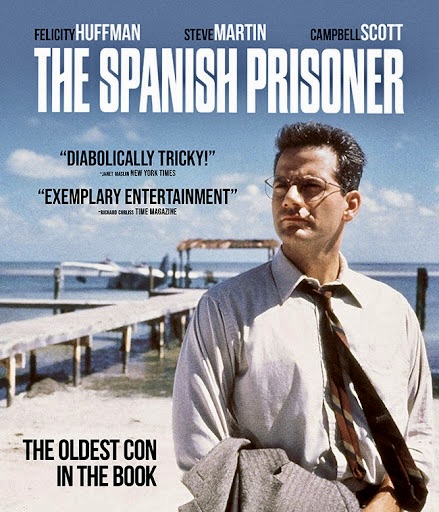
Scott had previously appeared in Alan Rudolph’s Mrs. Parker and the Vicious Circle (1994), co-directed and starred in the indie hit Big Night (1996), and was particularly memorable as the potential victim of an elaborate deception in The Spanish Prisoner (1997), David Mamet’s twisty thriller. As for Ms. Davis, she was on a roll in 2002; she had just appeared in Alexander Payne’s About Schmidt as Jack Nicholson’s estranged daughter and went on to appear in American Splendor (2003), the cult hit about comic book icon Harvey Pekar.
Even if The Secret Lives of Dentists was ignored by most moviegoers, the film received numerous accolades and awards. The National Board of Review gave the movie a Special Recognition award for “excellence in filmmaking” and the New York Film Critics Circle selected Hope Davis as Best Actress and Craig Lucas as Best Screenwriter for that year. Both Davis and Lucas were also nominees in the National Society of Film Critics Awards.
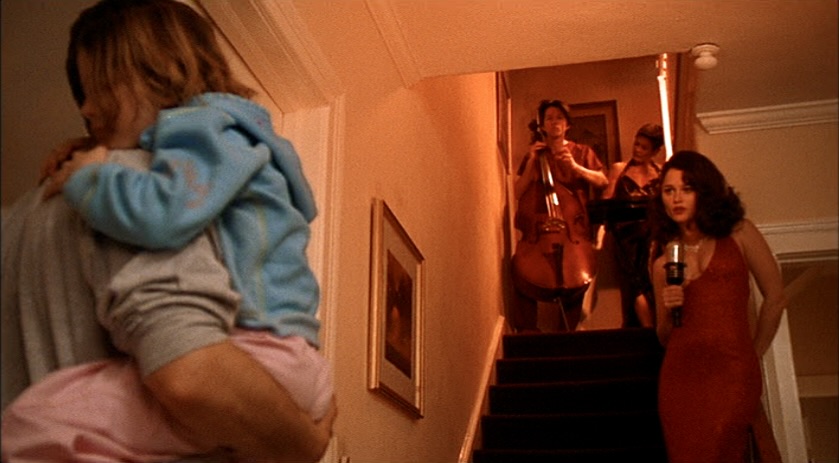
In one of the more perceptive reviews of the film, Jeremiah Kipp of Slant wrote, “Alan Rudolph treats everyday suburban anxieties with great empathy, not cynicism. In these scenes from a suburban marriage, he pulls off a fascinating high-wire act. Like daydreams, the film’s surrealist fantasies weave their way through the characters’ naturalistic realities, and the resulting emotional sessions are closer to the way humans think, feel, and behave than most films immersed in so-called realism…What with its sumptuous cinematography (by Florian Ballhaus) and vibrant score (by Gary Demichele), the ever-shifting curiosity of Rudolph’s image constantly swirling its way through a fully realized suburban mise-en-scène, and the perceptive close-ups of actors and their yearning eyes, Secret Lives by default becomes the most fascinating cinematic experience I’ve seen this year. It’s bold and cautious, sexy and chilly. These are the paradoxes of our lives.”
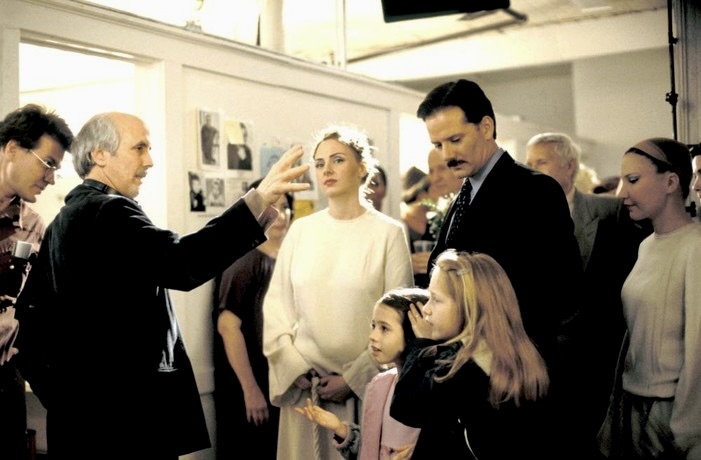
There were a handful of critics who had mixed feelings about The Secret Lives of Dentists such as Roger Ebert who took issue with Denis Leary’s character: “To introduce Slater’s imaginary presence is a risk, and a reach, and I suppose deserves credit, especially since Leary plays the character about as well as he can probably be played. But I wanted less, in a way…There are real feelings here, which go deep and are truly felt, and the whole Slater apparatus is only a distraction.”
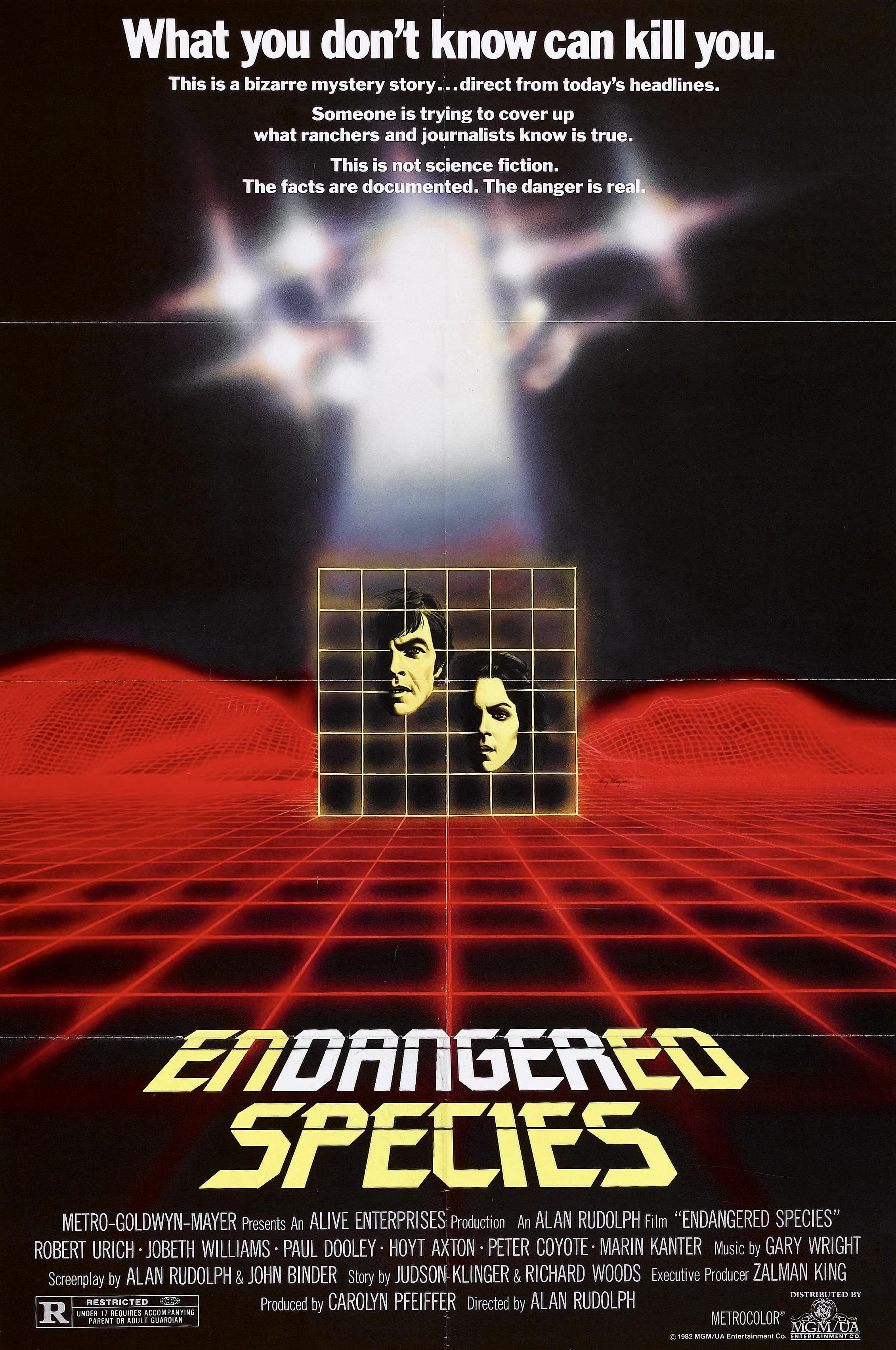
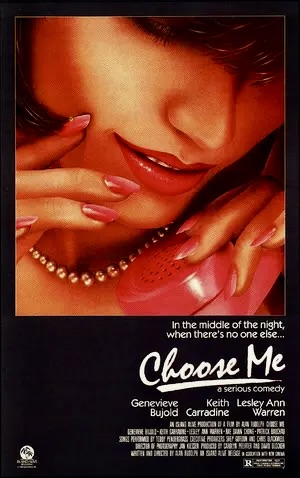
The truth is that Alan Rudolph has always had admirers and detractors among the leading critics and he has never had a major hit movie that could have changed the uneven trajectory of his career. Still, his filmography is a wonderfully eclectic mix of director-for-hire projects (the Meatloaf rock ‘n’ roll comedy Roadie [1980] and the sci-fi mystery Endangered Species [1982]), literary biopics like The Moderns (1988) and Mrs. Parker and the Vicious Circle (1994) and contemporary relationship portraits such as Remember My Name (1978) and Choose Me (1984), both of which are much more admired now than they were during their original release (The Criterion Collection recently added Choose Me to their library in March 2025).
Fans of the director also know that he has exquisite and offbeat musical tastes that are always reflected in the film scores for his films. Remember My Name featured the songs of blues/jazz singer/songwriter Alberta Hunter, Songwriter (1984) was distinguished by the presence and music of Kris Kristofferson and Willie Nelson, Trouble in Mind (1985) featured the music of Marianne Faithful and R&B saxophonist Louis Jordan, and The Secret Lives of Dentists has one of Rudolph’s best playlists: “Lilac Wine” by Jeff Buckley, “Lung Shadows” and “This is the Night” by The The, “I Found a Reason” by Cat Power and “Lost Souls” by Doves. Rudolph has also collaborated with Oscar nominated film composer Mark Isham on nine of his films.
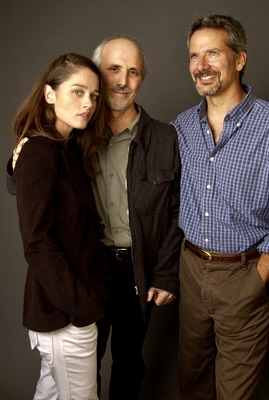
In regards to Rudolph’s long hiatus from filmmaking, the director said in an interview on the website Una Tumba Para El Ojo: “I pretty much worked all the time until after Secret Lives of Dentistsin 2002. Then I took all the normal intervals between films at once and didn’t work for fifteen years. I taught myself to paint, wrote some of my best stuff, but didn’t try to launch any of it. Unless you have some financing for me they will probably stay in my drawer. Everything in the movie industry outside my creative perspective was always different and somewhat hostile. But it never bothered me. Whatever anyone else was doing never much affected what I did. No denying my meter was stuck on uncommercial and the way ahead was always steep. My most inventive and accomplished work like Trixie and Breakfast Of Champions were the most rejected. It all hurt somewhere, I’m sure, but not down deep where it counts most. As brilliant novelist Tom Robbins says, it’s not a career but a careen.”
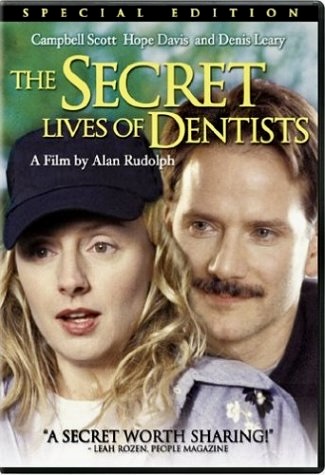
The Secret Lives of Dentists was released by Sony Pictures Home Entertainment in a special edition DVD in January 2004 and was reissued by them in December 2014 but I’d love to see it receive The Criterion Collection treatment one of these days.
Other links of interest:
https://www.filmink.com.au/unsung-auteurs-alan-rudolph/
 Cinema Sojourns