
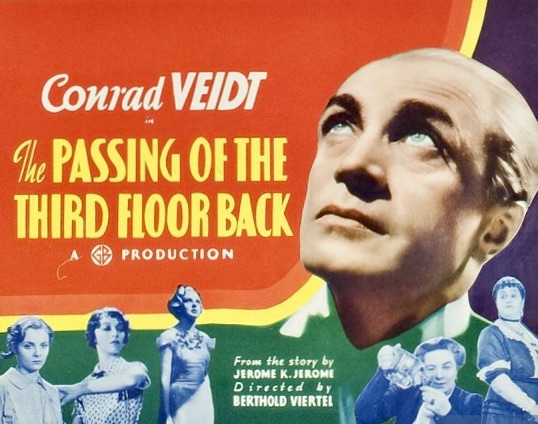
A mysterious stranger arrives at a boarding house in London and inquires about the advertised room to let. The landlady has some reservations about him but his good manners, personal charisma and willingness to pay his rent in advance convinces her he will be a respectable lodger. How many times have we seen movies that open with the same scenario where the new boarder turns out to be a suspicious character and possibly mentally unhinged? Alfred Hitchcock’s The Lodger (1927), Man in the Attic (1953), Roman Polanski’s The Tenant (1976) and The Minus Man (1999) are some of the more famous examples of this. The 1935 British film, The Passing of the Third Floor Back, however, gives us a protagonist who could be some kind of savior in disguise, a spiritual being who has come to help the unhappy and misanthropic boarders. Is he an angel, a Christ figure or maybe a figment of someone’s imagination?

On the surface, The Passing of the Third Floor Back looks like an outdated, stage bound relic with its claustrophobic boarding house setting and somewhat cliched character types but it proves to be surprisingly relevant to present times as the story develops into a study of opposing ideologies, values and morality. Mrs. Sharpe (Mary Clare), the judgmental and materialistic landlady, can barely keep her operation in working order with such problematic tenants, most of whom are struggling financially. At the bottom of the social order is Stasia (Rene Ray), a servant girl who is constantly derided for her petty criminal background. Major Tomkin (John Turnbull) and his wife (Cathleen Nesbitt) are trying to improve their social status by marrying their daughter Vivian (Anna Lee) off to Mr. Wright (Frank Cellier), a wealthy slumlord. Chris (Ronald Ward), an unemployed architect, loves Vivian but can’t afford to marry her and becomes embittered. Miss Kite (Beatrix Lehmann) is facing a lonely future as a spinster and directs her self-hatred at everyone while Mrs. de Hooley (Sara Allgood) is the local busybody who spends her time spying on the others and spreading gossip. Mr. Larkcom (Jack Livesey), a talented pianist who has given up his dreams of a professional career, might be the most benign member of this group but he is leading an unfulfilled life like most of them.
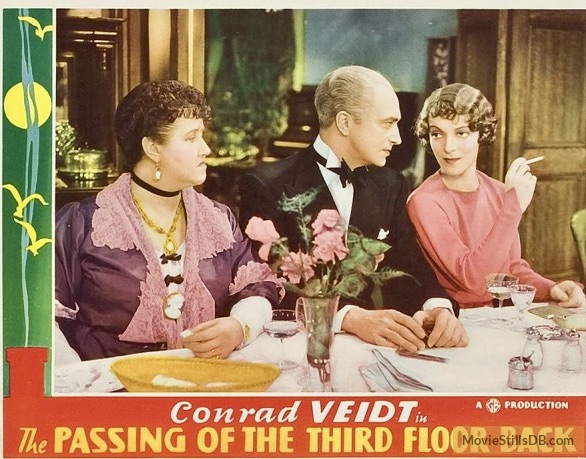
When the Stranger arrives at the boarding house, his presence and powers of extraordinary perception has a transformative effect on all of the boarders with the exception of Mr. Wright, who perceives him as a threat to the established order. A turning point arrives when the Stranger pays for the entire household to join him on a river cruise. During the trip, Stasia falls overboard and is saved from drowning by Miss Kite. This experience becomes a bonding experience for the boarders but Wright decides to destroy the communal good will by pitting everyone against each other over personal issues. The result is a clash between Wright and the Stranger that ends in death but the circumstances surrounding it remain as unexpected as the Stranger’s initial arrival at the residence.
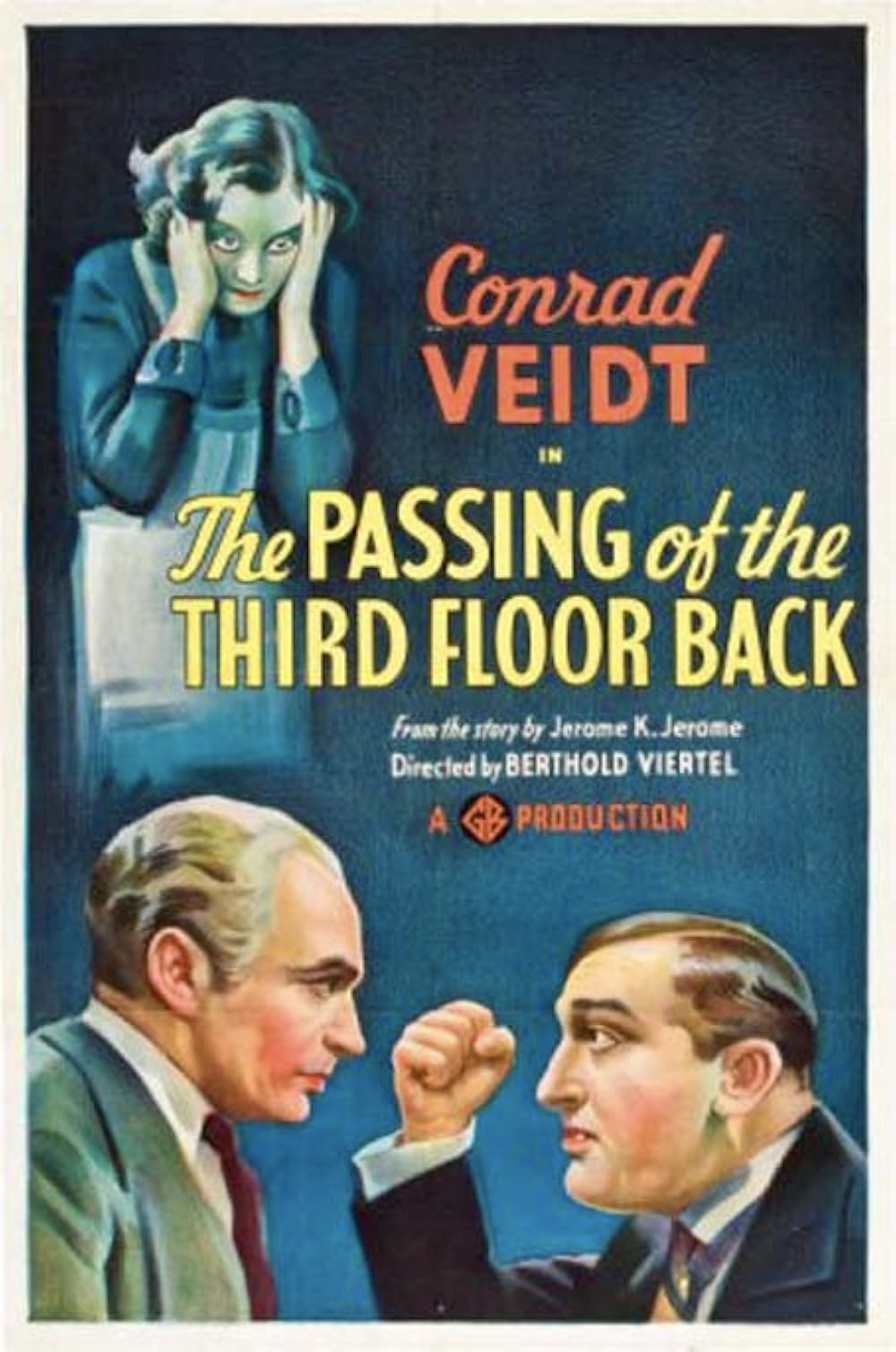
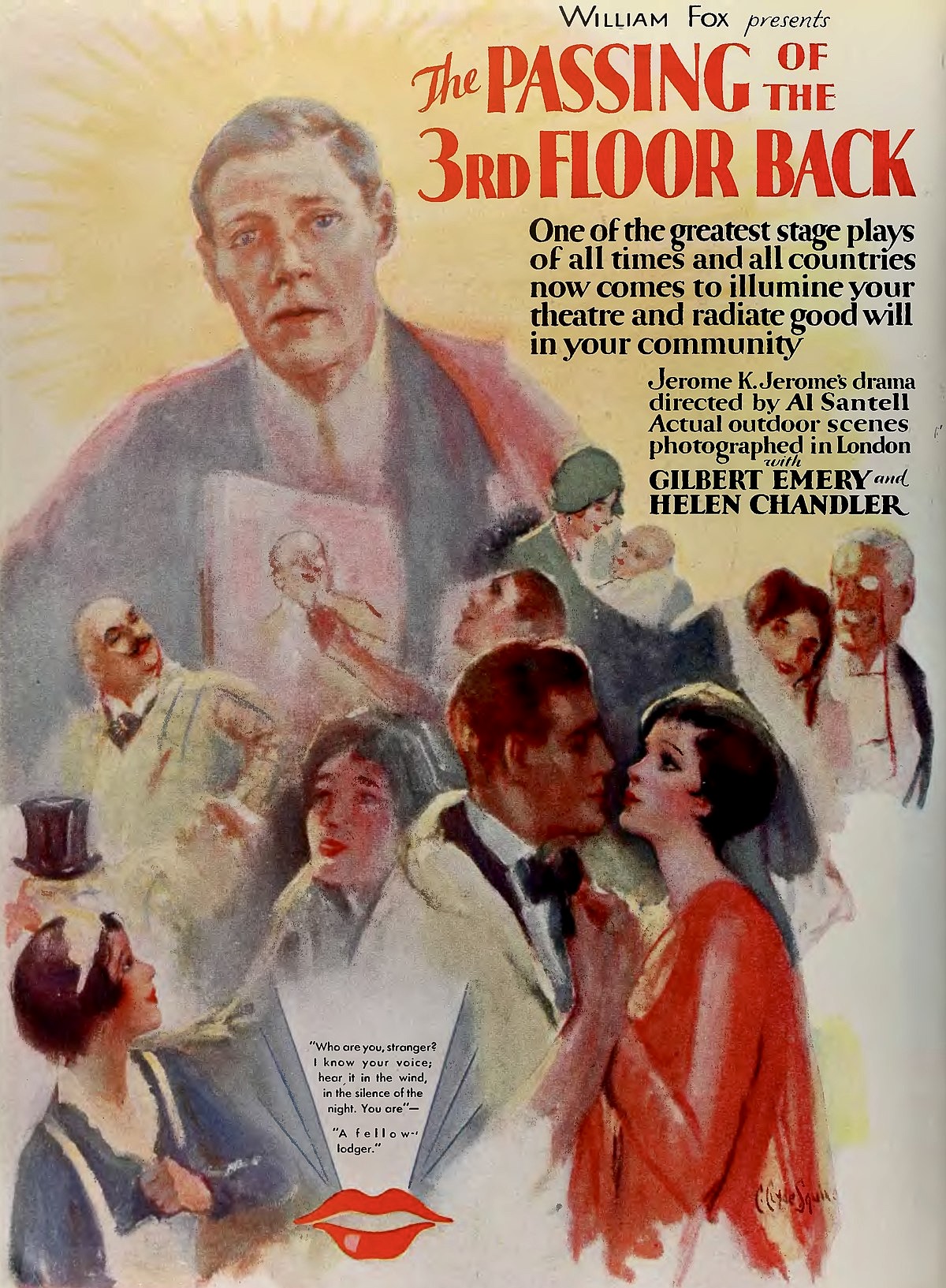
Some film reference books classify The Passing of the Third Floor Back as a fantasy with supernatural shadings but it seems much closer to a religious allegory. Based on a 1908 play by Jerome K. Jerome, it was extremely popular with audiences of its era and was first adapted for the screen by Herbert Brenon in 1918. It starred Sir Johnston Forbes-Robinson, a Shakespearean actor who had appeared in the stage play, as the mysterious stranger (he remains nameless in all versions of Jerome’s story). Brenon’s film retained the religious overtones of the play and its uplifting, feel-good ending but the 1935 remake by director Berthold Viertel is much darker and more realistic in its depiction of human behavior.
Part of this is due to an intelligent, literate screenplay by Michael Hogan and Alma Reville (wife of Alfred Hitchcock), which emphasized certain negative aspects of British society such as class discrimination and xenophobia combined with the worst aspects of human behavior. The Stranger is also more of an enigma and his motives are only revealed over the course of the narrative. In the title role, German actor Conrad Veidt brings a quiet intensity to the role that is almost unsettling, especially when he stares into the eyes of his fellow boarders. He clearly possesses otherworldly powers but he uses them to bring comfort and direction to the lives of people who need that but maybe don’t deserve it.

Thanks to the strong performances of the ensemble cast, The Passing on the Third Floor Back becomes a compelling drama that transcends its theatrical origins. Instead of a simplistic morality tale of good versus evil, Viertel’s film version is grounded in real world concerns that remain timely, especially in its portrayal of Wright, a ruthless opportunist and manipulator of people.
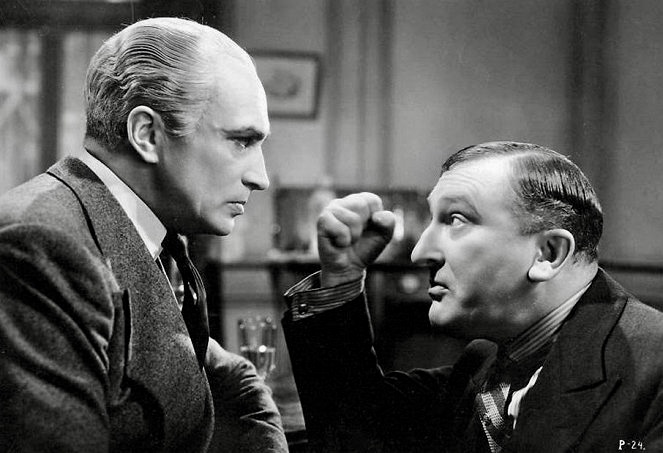
During a confrontation during the river cruise, Wright approaches the Stranger and says, “You’ve done your stuff very nicely, haven’t you?”
Stranger: “You mean give them a good time?”
Wright: “You know what I mean.”
Stranger: “Perhaps I do. It’s not easy for them to find themselves. Their illusions are so strong.”
Wright: “You mean the realities. They can’t see them now. It’s all lovely and rosy, star and moonshine. You’ve got them all gooey and dripping with sentiment. That’s alright. Wait till the morning. Wait till they have to face a few cold facts in the light of day. I’ll give you your best tonight. My turn in the morning.”
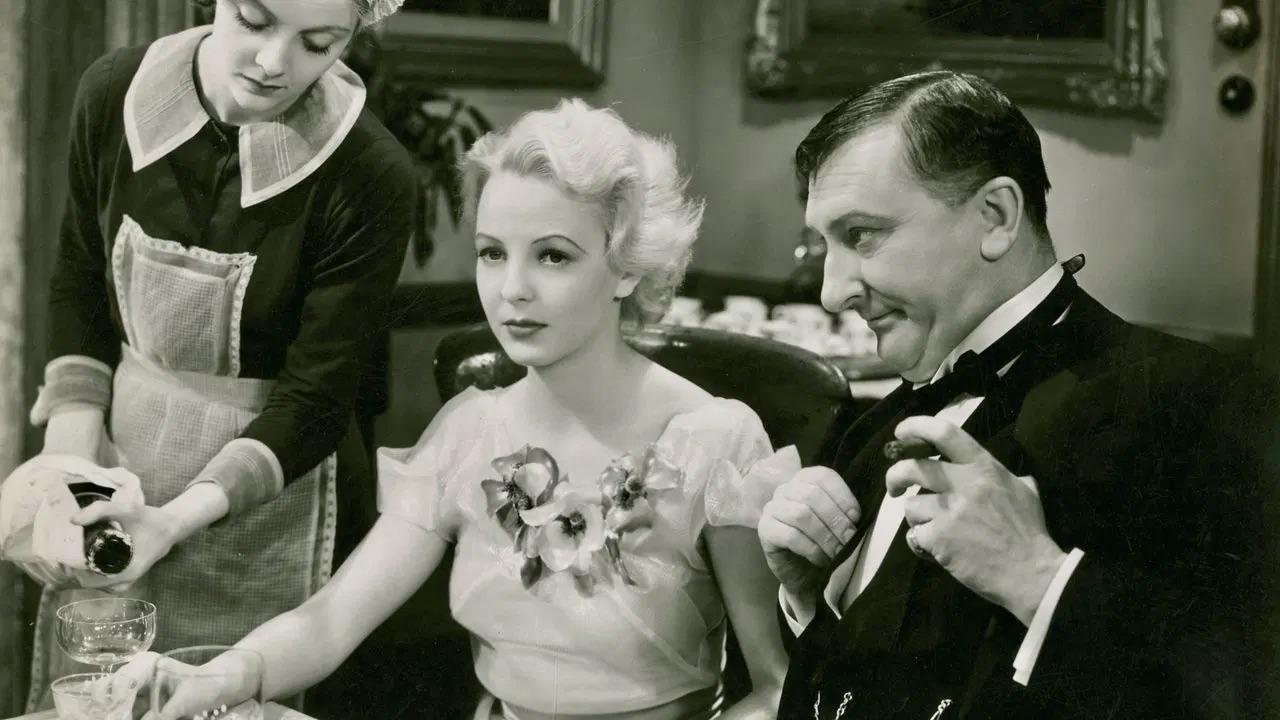
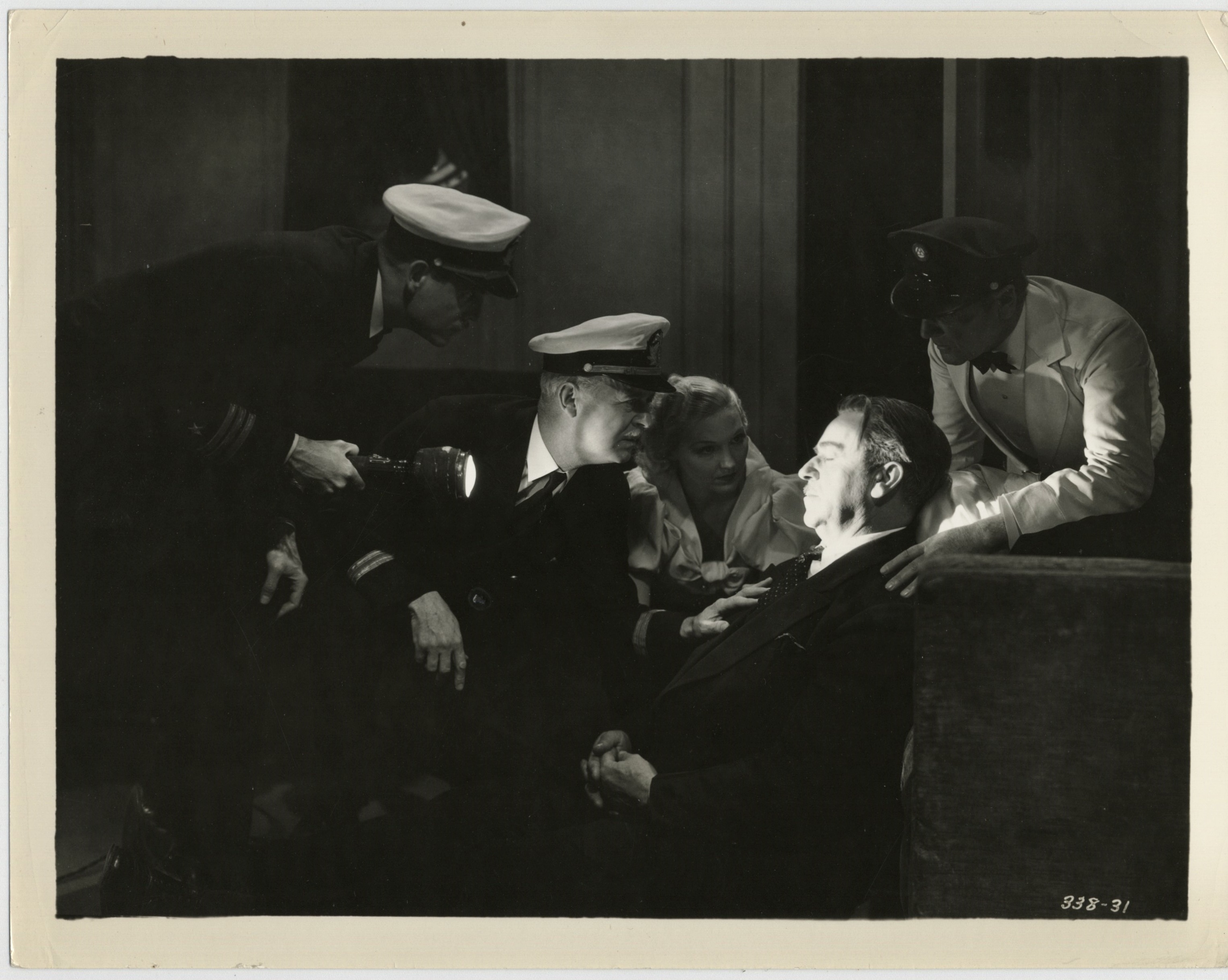
After this exchange, Wright undoes all of the Stranger’s positive influence by undermining each boarder. He demands immediate repayment of a loan to Major Tomkin, who can’t manage it. He withdraws a job offer to Chris and tempts Stasia with money in exchange for sex. And, as Mrs. Sharpe’s wealthiest and most dependable boarder, he tells her he is moving to a new address. [Spoiler] Then he is attacked in his room and dies, leading everyone to suspect the Stranger. But when the police investigate, they discover the assailant was the local street organ grinder who was trying to steal a ring from Wright and fell to his death from the upstairs window. The final shot in the film shows Stasia bidding goodbye to the Stranger, who turns out to be the guardian angel she had prayed for at the beginning.
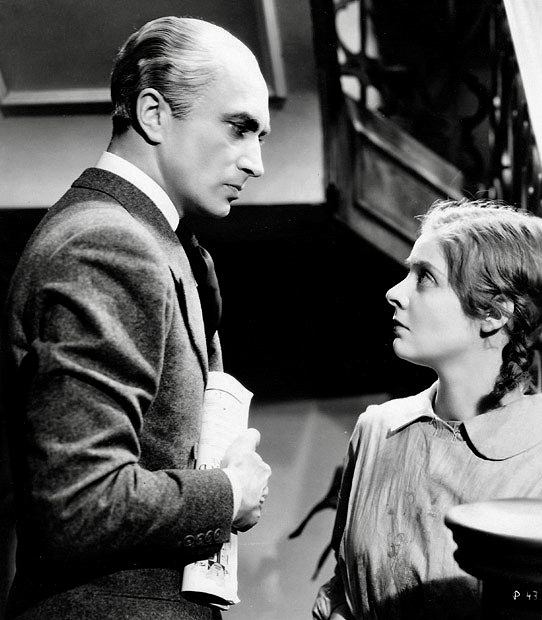
The majority of reviews of the film in 1935 were positive with Frank S. Nugent of The New York Times writing, “..in telling this fable, the producers have been fortunate in their possession of a cast which etched character clearly, yet did not so blindly follow the allegorical pattern to become caricature. In the days when Sir Johnston Forbes-Robertson was playing the role of the stranger, the play probably was considered his. Now, even with Conrad Veidt’s sensitive and restrained performance, The Passing of the Third Floor Back is not a one-man show.” Monthly Film Bulletin stated that “Some of the lighting and photography is excellent and full of atmosphere, and there is a powerfully composed scene between Conrad Veidt and Frank Cellier – Good pleading with Evil – which is especially good.” And Variety commented that “Conrad Veidt cuts an impressive figure as the Stranger as he suddenly appears out of the night to take the room on the third floor back in a London rooming house where hatred, chicanery, pettiness, cruelty, frustrated ambition, etc. run rife. His efforts to straighten out those tangled lives and the curious crosscurrents of human behavior that confront him account for heaps of adroitly pitched emotion.”
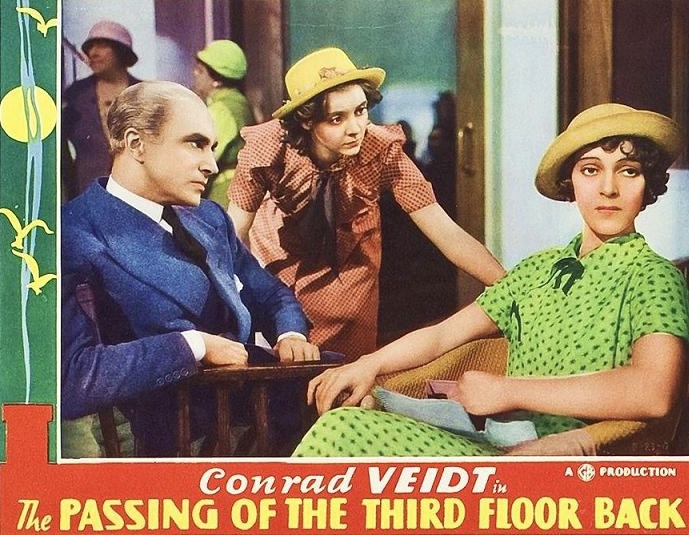
Even novelist/film critic Graham Greene, who could be quite severe and merciless in his reviews, admired The Passing of the Third Floor Back and complimented director Viertel on minimizing “the pious note” of the original play. In fact, his only complaint was the fact that the 1935 version did not balance out the harsh realism of the film with enough optimism before the fade out.
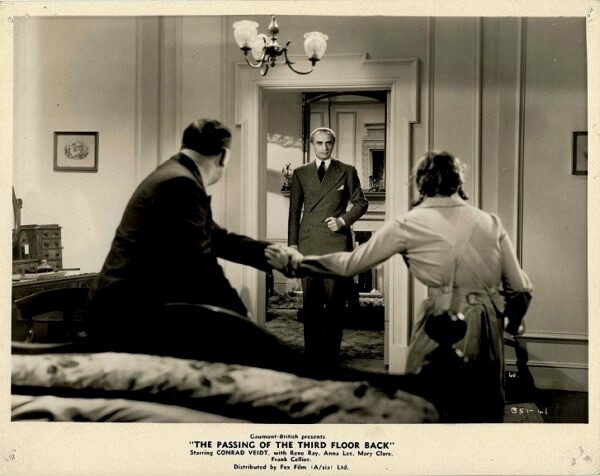
I find this to be true as well. The transition of the boarders’ behavior from misanthropic and despairing to hopeful and upbeat is never entirely convincing because they all revert to their true form the day after the cruise. In the end, human beings are imperfect creatures and no guardian angel can save us from ourselves but The Passing of the Third Floor still offers food for thought and the idea of how a simple act of kindness can be a powerful thing. If it became a common practice, it could save the world from itself.
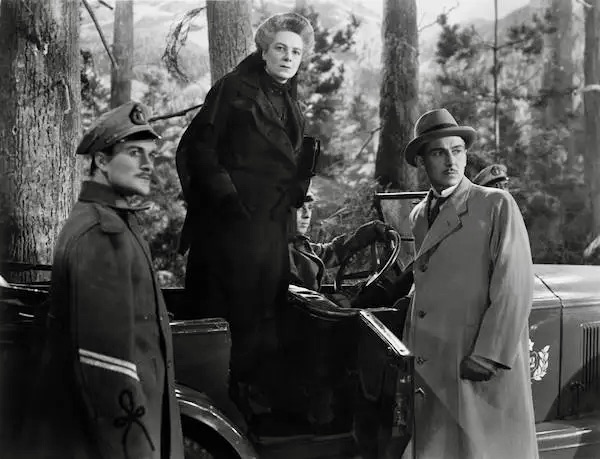
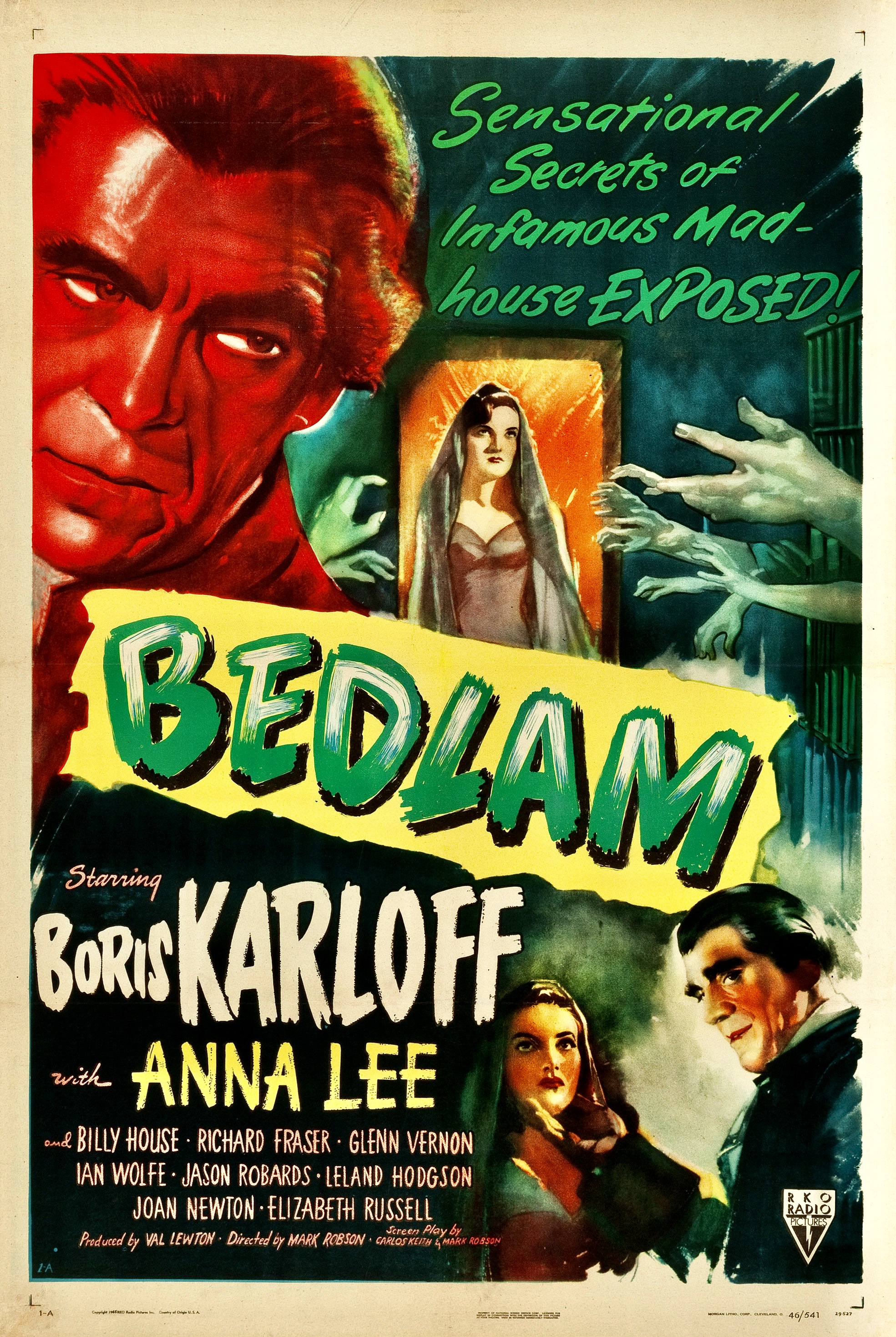
Fans of British cinema will certainly recognize many of the actors featured in the film such as Mary Clare, who has appeared in Alfred Hitchcock’s Young and Innocent (1937) and The Lady Vanishes (1938), while Frank Cellier was the sheriff pursuing Robert Donat in Hitchcock’s The 39 Steps (1935). Anna Lee has had a long and distinguished career, appearing as the imperiled heroine of the Val Lewton period thriller Bedlam (1946), numerous John Ford features (Fort Apache, The Long Hurrah, The Horse Soldiers, etc.) plus a long stint on the TV series General Hospital.
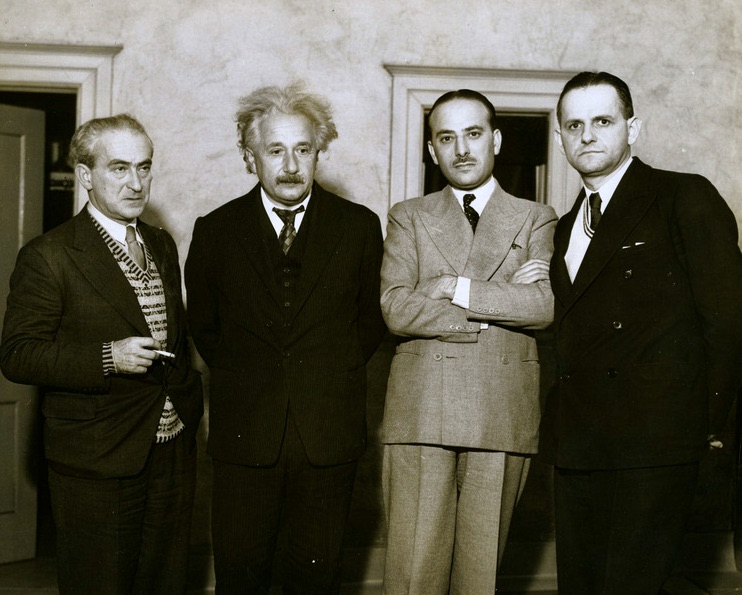
The Passing of the Third Floor Back was the penultimate film for Austrian director Berthold Viertel who emigrated to the U.S. in 1928 and worked in Hollywood for several years, directing early talkies like The Magnificent Lie (1931) with Ruth Chatterton and The Wiser Sex featuring Claudette Colbert and Melvyn Douglas. He had planned to return to Europe in 1932 but decided it against because of the political turmoil. Still, he hated the studio system and his lack of creative control over projects and eventually retired from filmmaking after making a few British films (he died in Vienna, Austria in 1953 at age 68).
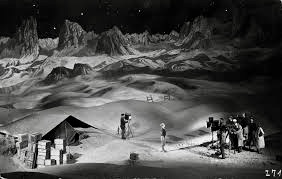
Conrad Veidt (The Cabinet of Dr. Caligari, The Hands of Orlac, etc.), the star of The Passing of the Third Floor Back, fled Nazi Germany in 1933 for England where he appeared in some films for director Michael Powell, including The Thief of Bagdad (1940), before emigrating to the U.S. in 1941, where he appeared in Casablanca (1943) and other Hollywood productions, often playing villainous Germans. It should also be noted that Curt Courant, the German cinematographer for The Passing of the Third Floor Back, had a long and distinguished career lensing such major films as Fritz Lang’s Woman in the Moon (1929), Alfred Hitchcock’s The Man Who Knew Too Much (1934) and Jean Renoir’s La Bete Humaine aka The Human Beast (1938).
The Passing of the Third Floor Back has been available on VHS and DVD over the years and is currently streaming on Youtube in a less than pristine print and deserves a digital restoration at this point.
Other links of interest:
http://www.screenonline.org.uk/people/id/462519/index.html
https://www.thefamouspeople.com/profiles/conrad-veidt-45451.php
https://www.encyclopedia.com/religion/encyclopedias-almanacs-transcripts-and-maps/viertel-berthold
https://www.televisionacademy.com/features/news/anna-lee-91-general-hospital-actress
 Cinema Sojourns