
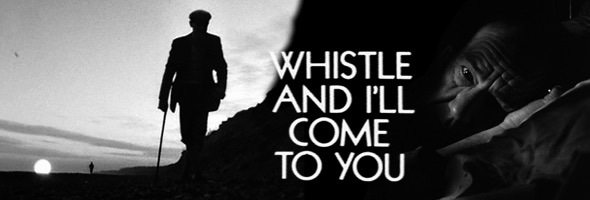
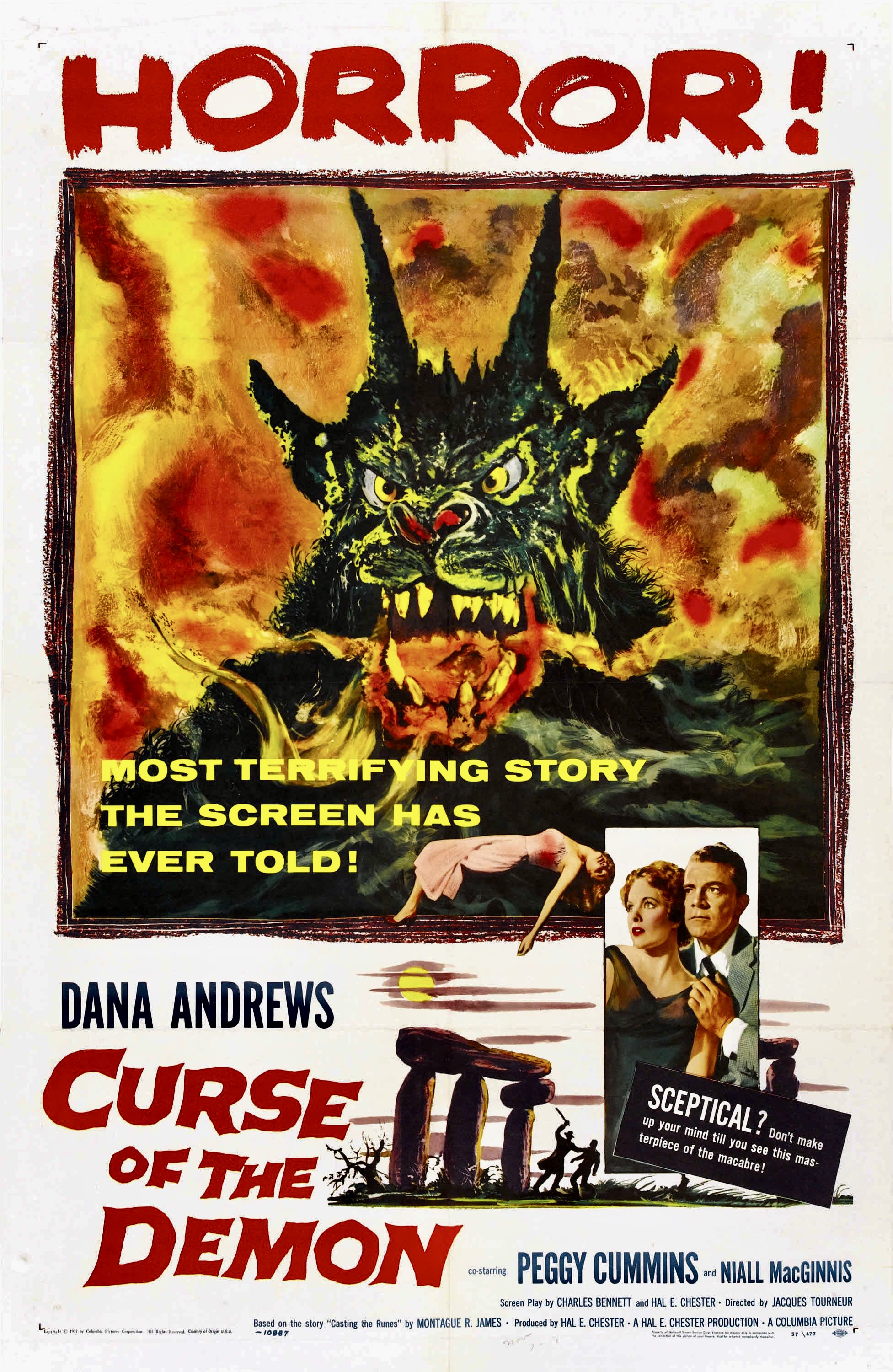
Montague Rhodes James, better known as M.R. James (1862-1936), was a celebrated author and medievalist scholar from the U.K. who is best known today for his many ghost stories. Horror film buffs in the U.S. were first exposed to his work when director Jacques Tourneur adapted his short story “Casting the Runes” for the 1957 film Curse of the Demon (it was titled Night of the Demon in the U.K.). To date, that still reminds the most famous M.R. James theatrical feature but that doesn’t mean the author’s work hasn’t been adapted in other memorable renditions, most of them as made-for-television productions from England. One of the most famous is James’s short story, “Oh, Whistle, and I’ll Come to You, My Lad” from 1904, which has been filmed twice by the BBC, one in 1968 entitled Whistle and I’ll Come to You starring Michael Horden and a remake from 2010 with the same title that featured John Hurt.
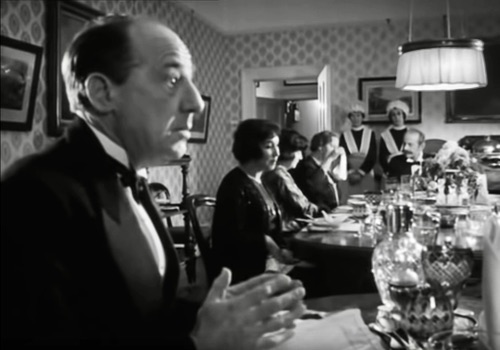
Of the two versions, the 1968 adaptation is the more faithful of the two and a great place to begin for James novices. The movie (a compact 42 minutes), directed, produced and adapted by Jonathan Miller, opens as Professor Parkin (Michael Horden) embarks for a seaside resort as a break from his studies. Fussy and slightly eccentric, Parkin has spent most of his life in academia with more time devoted to books than people which accounts for his awkward social skills. He would almost be a lonely, pitiable figure if not for his assumed intellectual superiority to others.
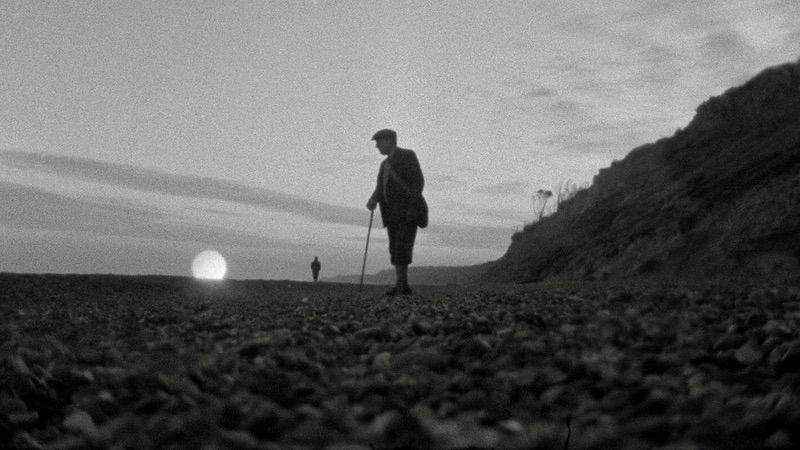
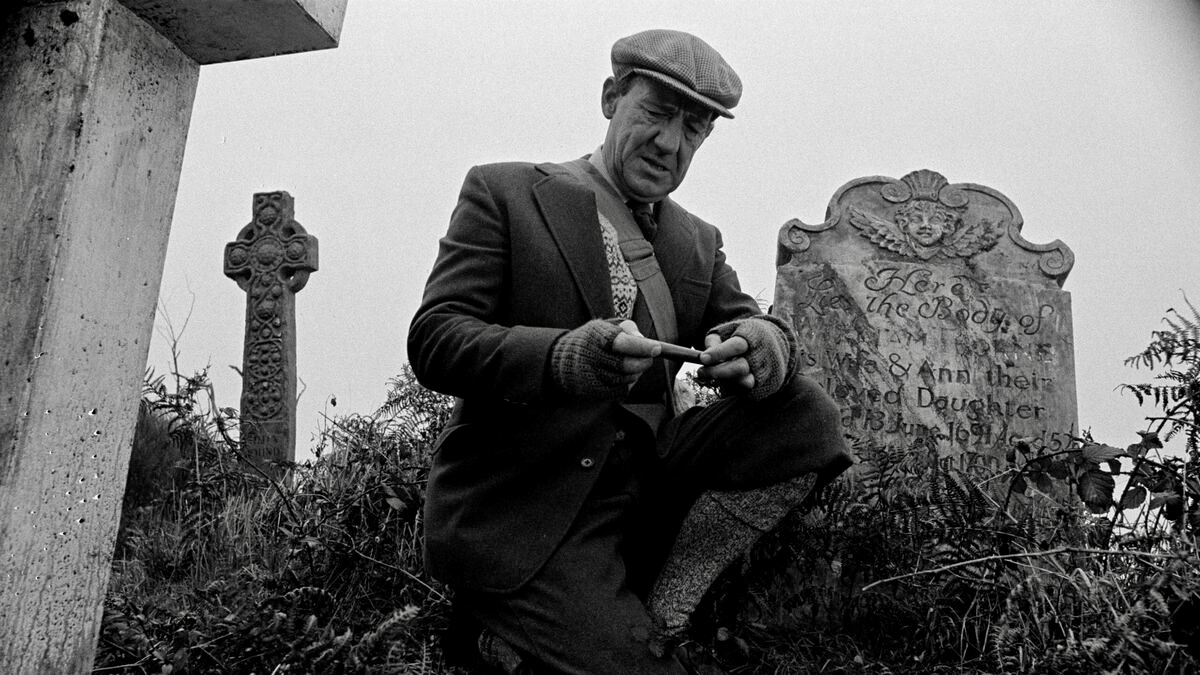
During his exploration of the shoreline, Parkin comes across some ancient gravestones and, while poking around in the weeds, discovers what appears to be a whistle. “Finders keepers,” he says smugly as he pockets it. Later in his hotel room he translates the Latin inscription on the whistle as “who is this, who is coming?” He cleans the instrument and even blows on it, a decision he will come to regret.
Over the course of a few days, Parkin becomes convinced something is stalking him. It began the very first day when he found the whistle and saw a distant figure on the beach watching him. Then he begins to hear things in the wind at night. When the maids at the hotel ask him which bed he is using during his stay, he is disturbed to realize that both beds in his room have been slept in. Parkin doesn’t recall switching beds during the night but he soon comes to realize he is not alone in his room.
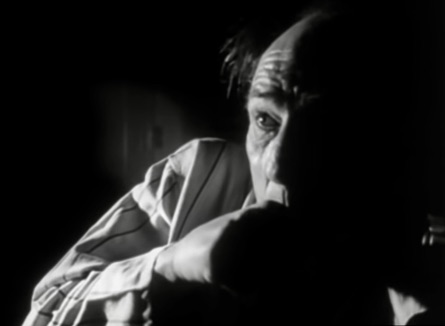
Whistle and I’ll Come to You builds to a frightening final night at the inn where Parkin is finally confronted with a ghostly specter but the creepiness is conveyed mostly through unsettling sound effects, lighting and the most subtle of special effects. Miller’s adaptation takes the less-is-more approach of RKO producer Val Lewton, whose classic supernatural thrillers of the WW2 era like Cat People (1942), I Walked with a Zombie (1943) and Isle of the Dead (1945) were master classes in how to create a sense of dread and horror by suggesting, rather than showing, what is terrifying the protagonists. The moody black and white cinematography by Dick Bush (The Blood on Satan’s Claw, Mahler) and the deserted, wintery setting of a beach resort in off-season are also assets in making Miller’s 1968 adaptation a memorable ghost story.

In 2010, Andy De Emmony directed a color remake of Whistle and I’ll Come to You from a screenplay by Neil Cross, which takes quite a few liberties with the original story. In this version, Professor Parkin (John Hurt) is married and, when the movie opens, he is admitting his wife (Gemma Jones) to a rest home for dementia patients. He has spent the last few years caring for her at home but she now needs full time attention. He bemoans the fact that she is no longer present in mind or body and is more like an empty shell. Parkin decides to take a few days off and return to a seaside resort where he and his wife spent time shortly after getting married. The trip is partly to pay tribute to the wife he knew and is now gone but the vacation soon lapses into something sinister.
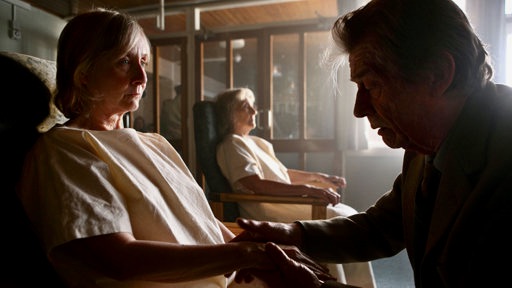
It begins when he is cutting some sea oat clippings to bring back to his wife as a memento of happier days at the shore. He discovers a ring with a strange inscription in the sand and takes it back to his hotel room for further study. The rest of the movie is fairly faithful to James’s original story with Parkin hearing strange scratching sounds in the bedroom wall at night. The sounds become more intense and escalate into loud bangings on the bedroom door as if someone is trying frantically to get inside. (This part of the movie recalls the scary sound design of Robert Wise’s 1963 classic The Haunting). Parkin even sees the presence of something outside the door as a clawlike hand extends into the room under the door frame.

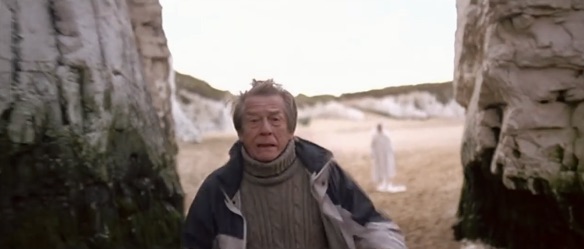
The ghostly figure stalking Parkin – something wrapped up in a white shroud – is also more explicit than the 1968 version and appears to suggest than Parkin is being haunted by his wife’s spirit from afar, not something conjured up by a haunted ring. In a nightmare – or is it? – she crawls toward Parkin shouting, “I’m still here!”
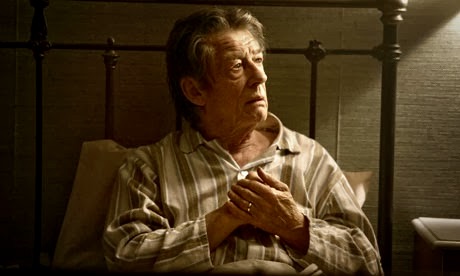
De Emmony deserves credit for trying to do something different with James’s original story but it is less effective as a ghost story. Instead, it is a forlorn portrait of a man who is grieving over a wife who is a shadow of her former self. Hurt is also a more sympathetic character than Horden’s dismissive academic and doesn’t seem to deserve the nocturnal frights he experiences. The film is nonetheless a haunting experience and greatly aided by the atmospheric location work (filmed in Botany Bay and Kingsgate Bay in Kent, England).
What seems strange is that no other theatrical features have been adapted from James’s short stories. Just imagine what a contemporary filmmaker could do with “The Treasure of Abbot Thomas,” “Number 13”, “Rats,” or “The Haunted Dolls’ House,” which are among James’ finest ghost stories. Yet, there seems to be no shortage of films being made from the work of H.P. Lovecraft (who was active during James’s lifetime) as witnessed by such recent Lovecraft movie adaptations as The Old Ones (2024), Suitable Flesh (2023) with Heather Graham and Robert Stanley’s take on Color Out of Space (2019) starring Nicholas Cage and Joely Richardson. Meanwhile, M.R. James is still mostly known for Curse of the Demon, which was made more than 65 years ago. Here is a ghost story writer just waiting to be rediscovered.
Both versions of Whistle and I’ll Come to You are included in the DVD box set The Complete Ghost Stories of M.R. James from Shock Entertainment in 2012, which also includes excellent BBC adaptations of The Ash Tree, A Warning to the Curious and Lost Hearts. You might still be able to find this region B DVD collection from online sellers but you will need an all-region player to view it.

Other links of interest:
https://www.stutteringhelp.org/content/remembering-jonathan-miller
https://www.pbs.org/newshour/arts/director-filmmaker-and-comedian-jonathan-miller-dies-at-85
 Cinema Sojourns