
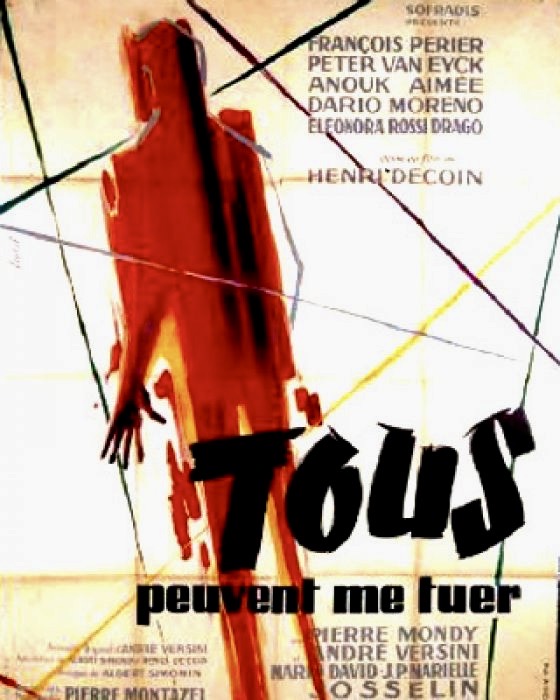
When a movie refuses to fit snugly into a specific genre, that could be a sign that the filmmakers were either unable to capture the desired approach and tone or that the story/screenplay dictated a less conventional approach to the narrative. I suspect that the latter reason is why Tous Peuvent Me Tuer (English title, Everyone Wants to Kill Me, 1957), directed by Henri Decoin, is hard to place into any specific film category. If you were to watch the movie with the sound turned off, you would probably classify it as a brooding French noir. Yet, if you add in the music score and the animated performances, it comes across as an almost lighthearted crime caper flick. Add to this a segue into prison melodrama which soon becomes a whodunit murder mystery. And just to keep things off balance, stir in a romance, some comic relief and a wrap-up that positions the entire affair as a morality play.
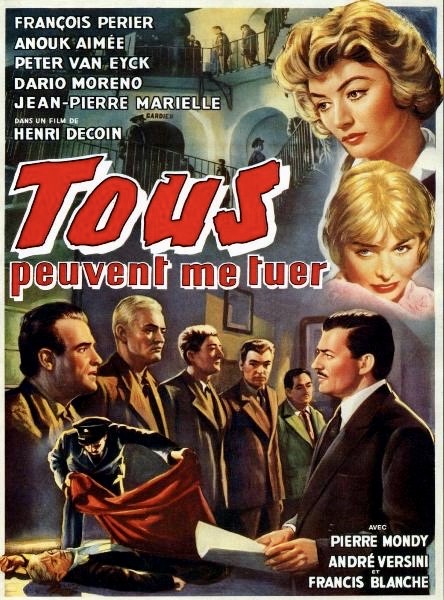
However you want to classify it, Everyone Wants to Kill Me is an entertaining, fast-paced and shape-shifting genre thriller with a stellar international cast, atmospheric black and white widescreen cinematography (filmed in Dyaliscope) by Pierre Montazel and enough twists and turns to keep the viewer guessing, even if the director doesn’t always play fair in terms of providing crucial information.
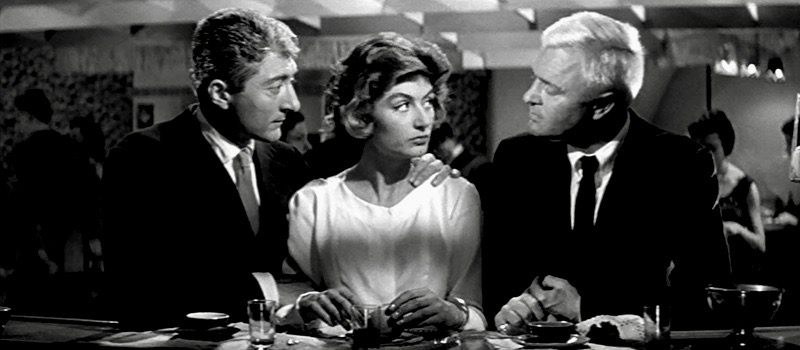
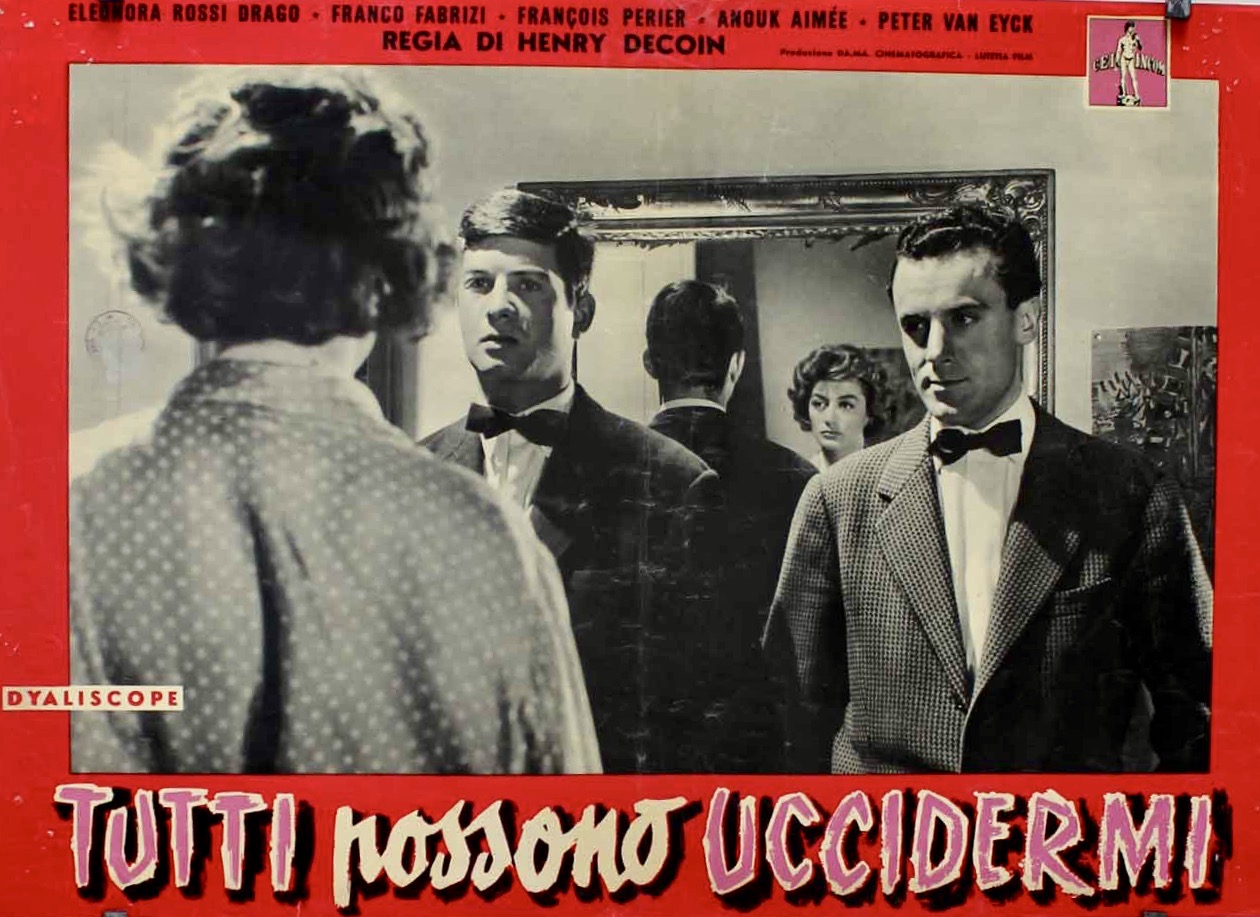
Here is the initial set-up. Tony (Andre Versini) is a two-bit street hustler and dubious salesman who desires the finer things in life and doesn’t intend to work hard for them. He hooks up with Cyril (Peter van Eyck), a slick career criminal, who has a masterplan to steal a fortune in jewels from a wealthy heiress with the additional assistance of three more accomplices – Luigi (Dario Moreno), a bartender, Karl (Franco Fabrizi), a night watchman, and Gaston (Pierre-Louis), a schoolteacher.
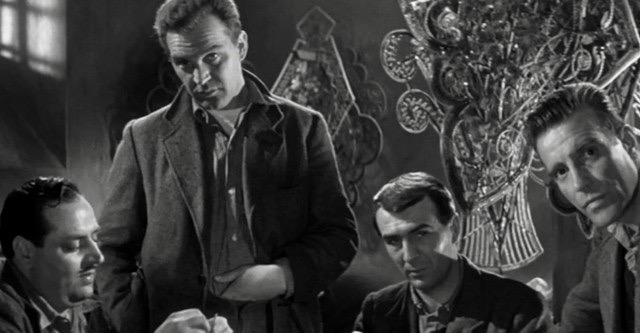
Part of Tony’s desire to get rich quick is to impress his respectable girlfriend Isabella (Anouk Aimee) but also to win the approval of her mother so the couple can marry. He also wants to get rich quick and Cyril’s scheme works like a charm. After the robbery, Cyril locks the suitcase full of jewels in the base of a weed covered statue and has Luigi leave the key to the lock with a fellow bartender at his favorite nightspot. The gang of thieves then rush to a nearby Pastis (an anise-flavored aperitif) distillery where they break into the tasting room and make it look like they had a drunken party there. Why? Because they want to establish an alibi so they won’t be suspected and arrested for the jewel robbery.
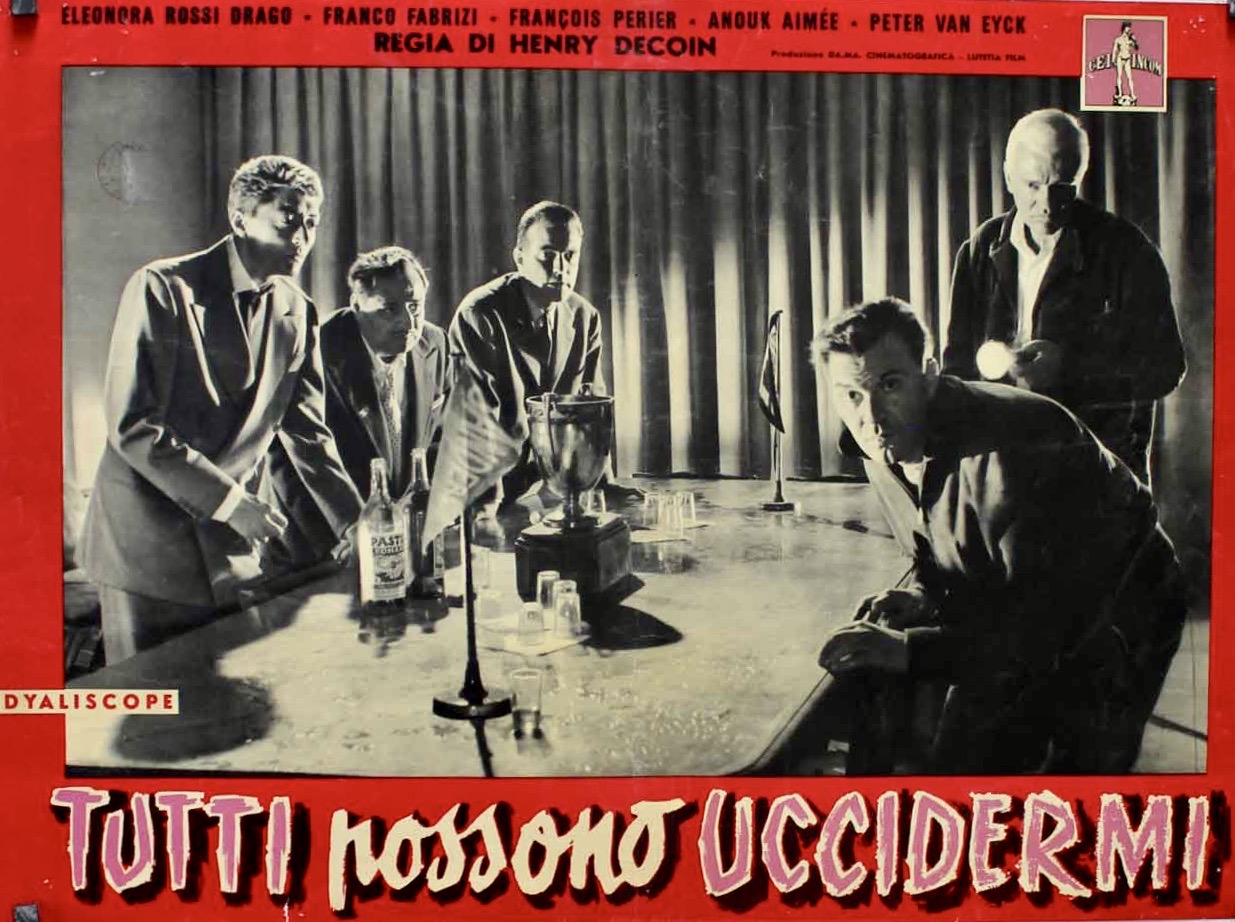
As he predicted, Cyril and his accomplices are arrested for breaking and entering the Pastis distillery and are sentenced to one year in jail plus a fine. That was the plan all along and it certainly beats getting fingered for the other crime which could have netted them 20 or more years in prison.
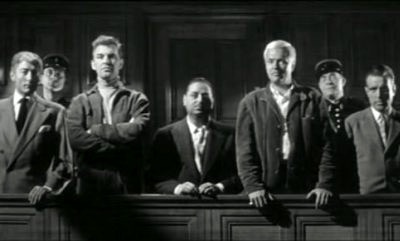
[Spoilers ahead!] Life in the big house goes quickly and without incident until Karl dies in a mysterious fall which is ruled a suicide. Then Gaston is found hanging from a metal wire noose, which is also ruled a suicide. Tony doesn’t buy any of this and begins to fear for his own life. Paul (Francois Perier), the prison warden, also suspects foul play and orders the guards and the jailhouse snitch Fernard (Pierre Dudan) to secretly investigate and spy on the surviving gang members in order to determine a possible motive for the murders.
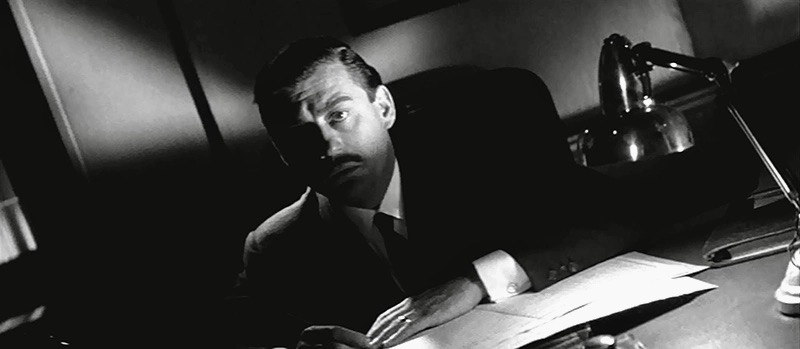
Decoin has fun playing with and subverting the expected course of action for such a scenario and some viewers will have a problem with this. For one thing, the prison murders are never shown nor are there any characters introduced who might be likely suspects other than the remaining jewel thieves. Equally unexpected is the warden’s response to the deadly situation. He is much more upset by the bad publicity the prison is receiving and how it reflects on his own reputation than actually getting to the bottom of a baffling murder mystery. In fact, the scenes with the warden venting his frustrations on his flunkies is played for satire with a touch of gallows humor added. How else to explain scenes like the one where the warden’s clueless wife Odette (Eleonara Rossi Drago) interrupts his rant about the suspicious death of Karl to model her new shoes for him? Perhaps it was Decoin’s unusual depiction of the warden and his milieu that prompted him to add this disclaimer at the film’s opening: “The prison scenes in the following film are pure fiction so they should not be considered representative of scenes that may have happened in a penitentiary establishment.”
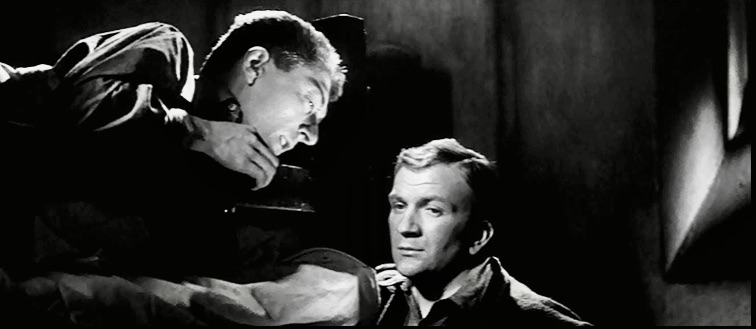
There are amusing subplots as well including one where Emile (Pierre Mondy), a hardened criminal, helps a bumbling guard improve his grammar and writing skills so he can get a job promotion. Of course, Emile has a deadly ulterior motive for his services.
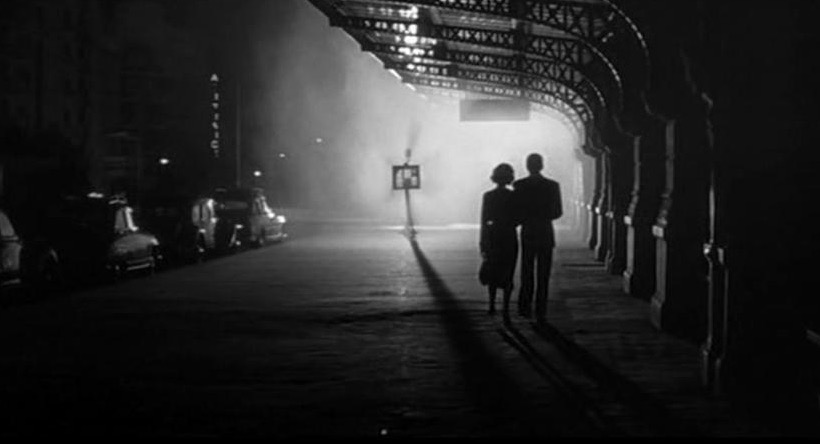
When the killer of three gang members is finally unveiled, it comes out of left field but it leads to a happy ending with Tony as the last man standing. Released from prison, he turns over a new leaf with Isabelle and they walk off into the misty night together but not before giving the location of the stolen jewels to the police (the suitcase is in baggage claim at the train station).
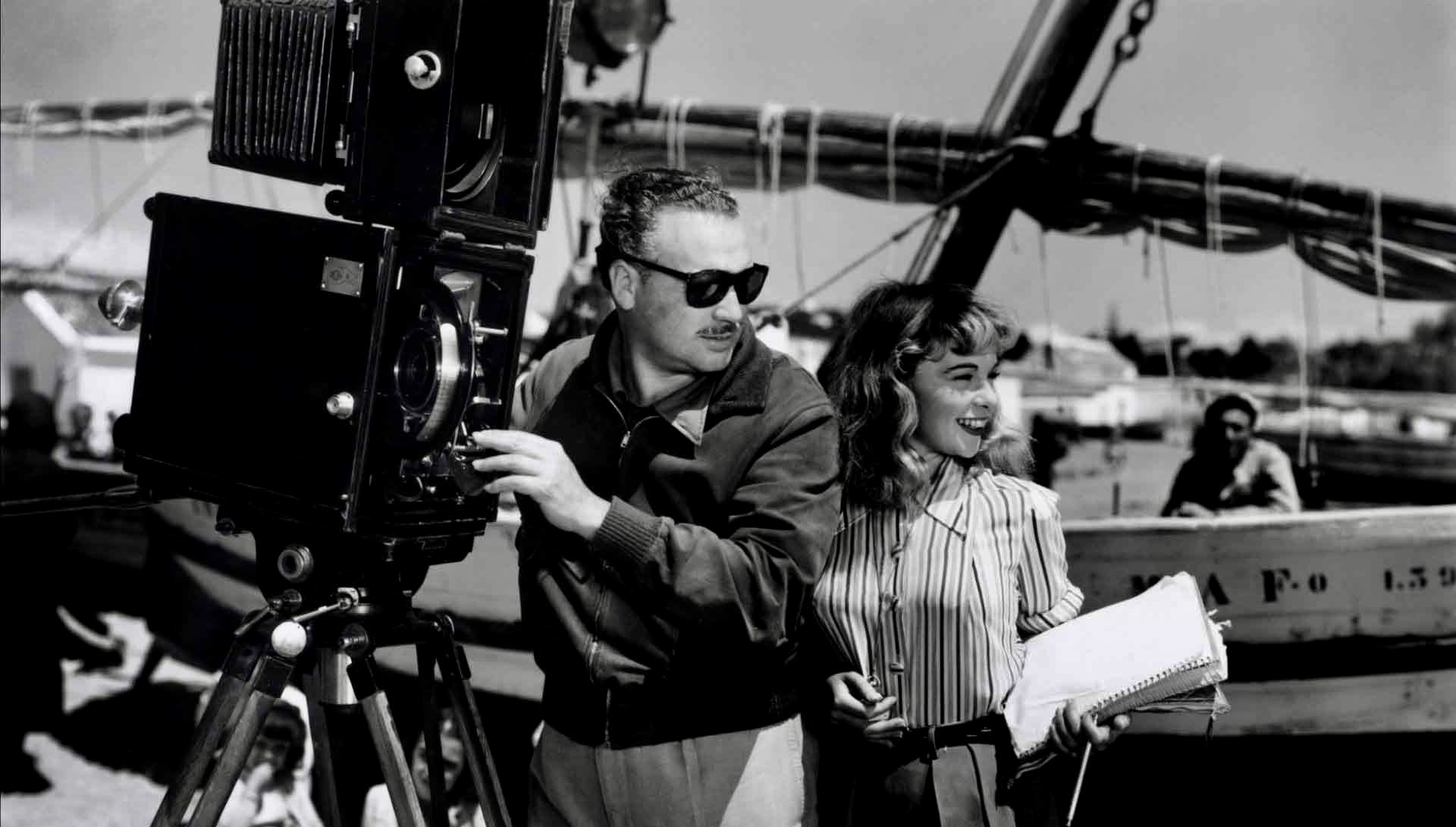
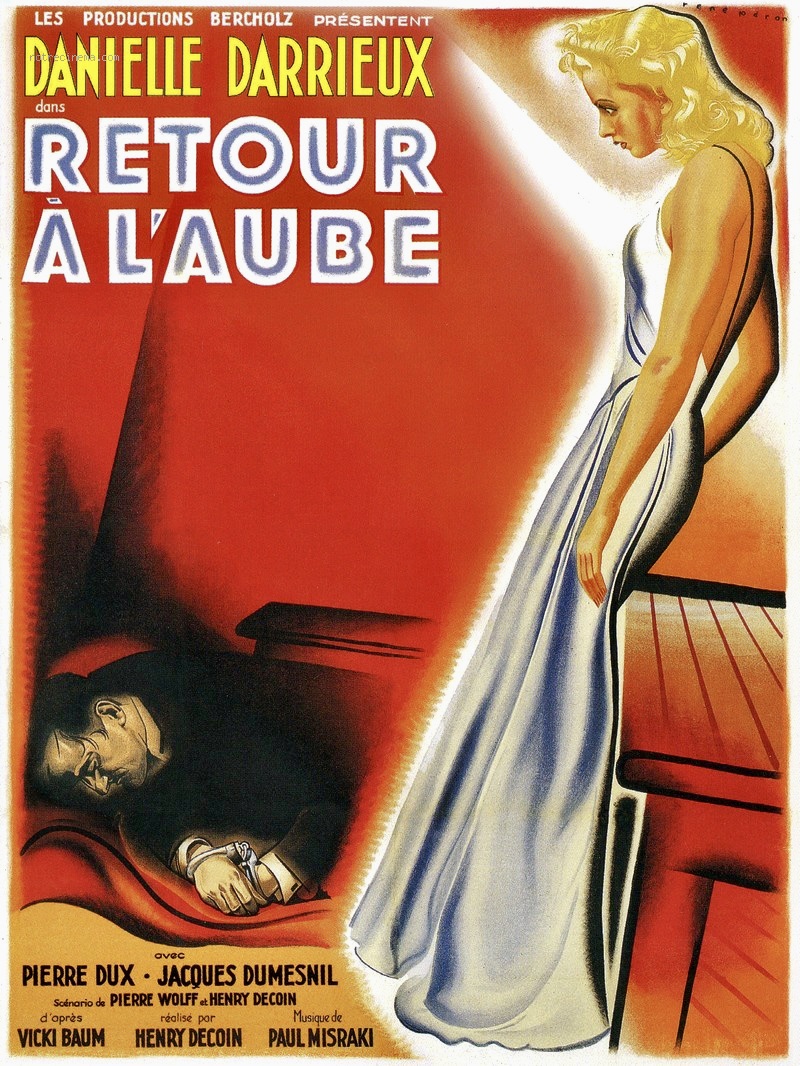
Henri Decoin is relatively unknown in the U.S. but he enjoyed a prolific career in the French film industry for more than thirty years. A former athlete and pilot during WWII, he worked as a sports writer and author before entering the business as a screenwriter and assistant director in the early 1930s. His directorial career began to flourish after 1935 when he married actress Danielle Darrieux (The Earrings of Madame De…, 1953) and together they made several popular romantic dramas and comedies together such as Retour a I’aube (She Returned at Dawn, 1938) and Premier Rendez-vous (Her First Affair, 1941).
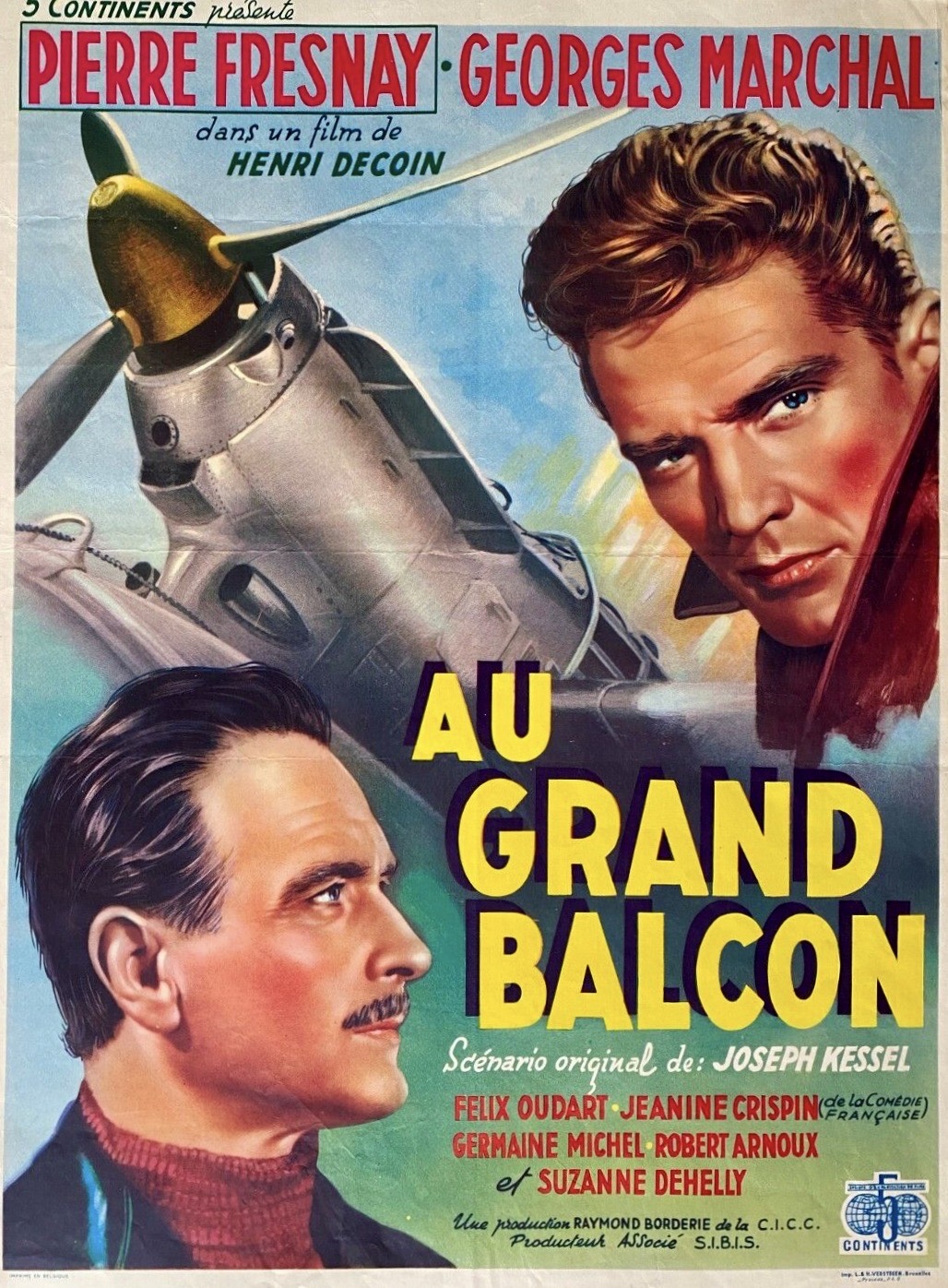
French film critics began to take favorable notice of Decoin after his 1942 crime drama Les Inconnus dans la Maison, which was based on a screenplay by mystery writer Georges Simenon and Henri-Georges Clouzot and featured Gallic icon Raimu in one of his best late career performances. Other critically acclaimed high points in Decoin’s career include the comedy drama Les Amants du Pont Saint-Jean (1947) starring Michel Simon and the aviation adventure Au Grand Balcon (1949), which shared some similarities to Howard Hawks’ Only Angels Have Wings (1939).
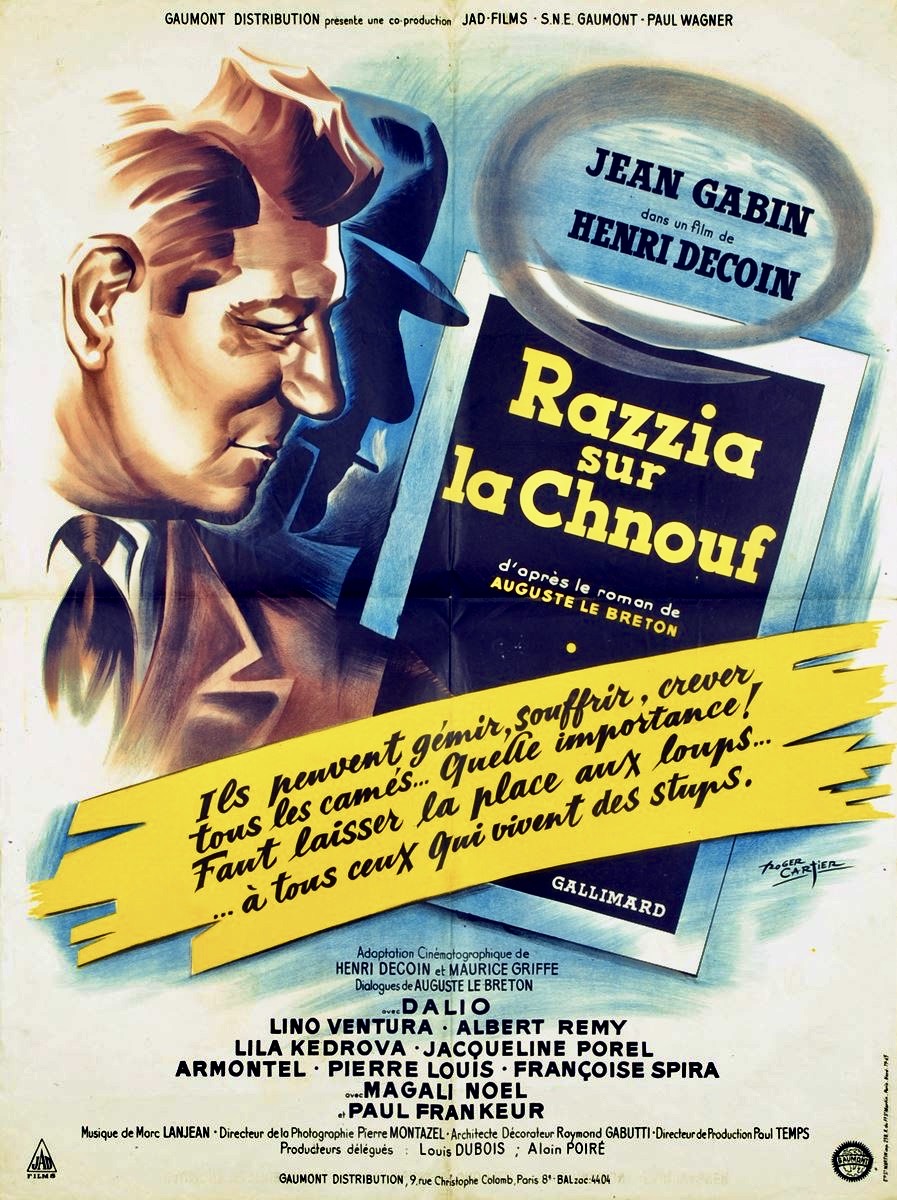
Decoin is probably best known for a handful of first rate film noir thriller and crime dramas such as La Verite sur Bebe Donge (1952), Les Intrigantes (The Scheming Woman, 1954) with Jeanne Moreau as a femme Fatale, and Razzia sur la Chnouf (1955), an excellent gangster/cop caper starring Jean Gabin, Marcel Dalio and Lino Ventura. Unfortunately, the quality of his work became more uneven from the late fifties through 1964 when he stopped making movies but Everybody Wants to Kill Me is one of the more enjoyable efforts from his final years.
The impressive cast includes German actor Peter van Eyck in typical villain mode as a double-dealing rogue who gets his much-deserved comeuppance in the final reel. Andre Vesini is also effective as the hapless, wide-eyed Tony, who gets more than he bargained for in the scheme of things. But the most intriguing performances are from two minor characters – Pierre Mondy as Emile, the cunning prison barber, and Pierre Dudan as Fernand, the resident stool pigeon. Dudan, in particular, has an intimidating screen presence and oozes menace and treachery in his few short scenes. Also look for Jean-Claude Brialy (Le Beau Serge, A Woman is a Woman) in one of his first credited screen appearances as a detective on the case.
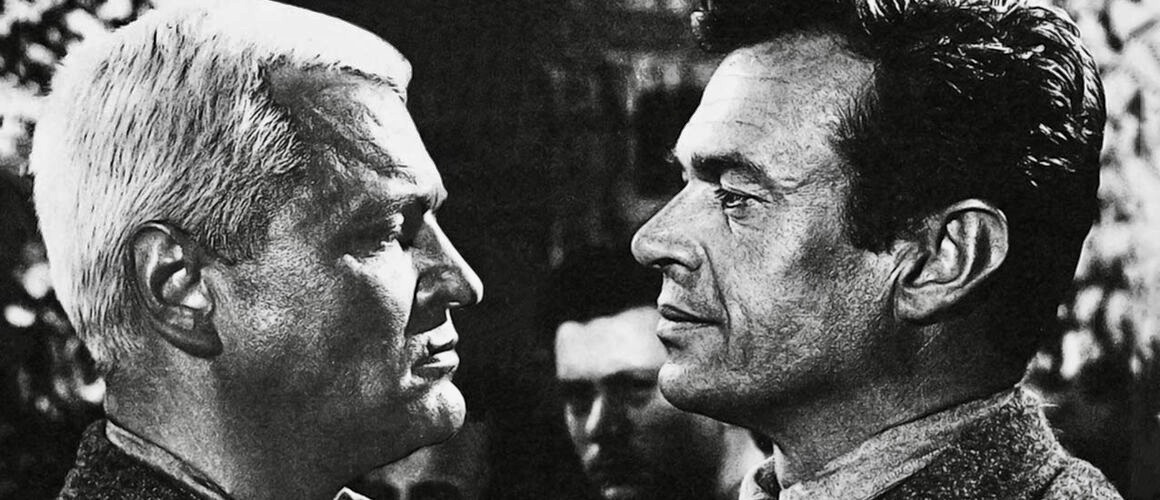
Strangely enough, the top billed star of the film – Francois Perier as the warden – appears to be acting in a different movie. His irritable, hyperactive bureaucrat is often played for comedy in a manner similar to Herbert Lom’s frustrated police inspector in the Pink Panther films.
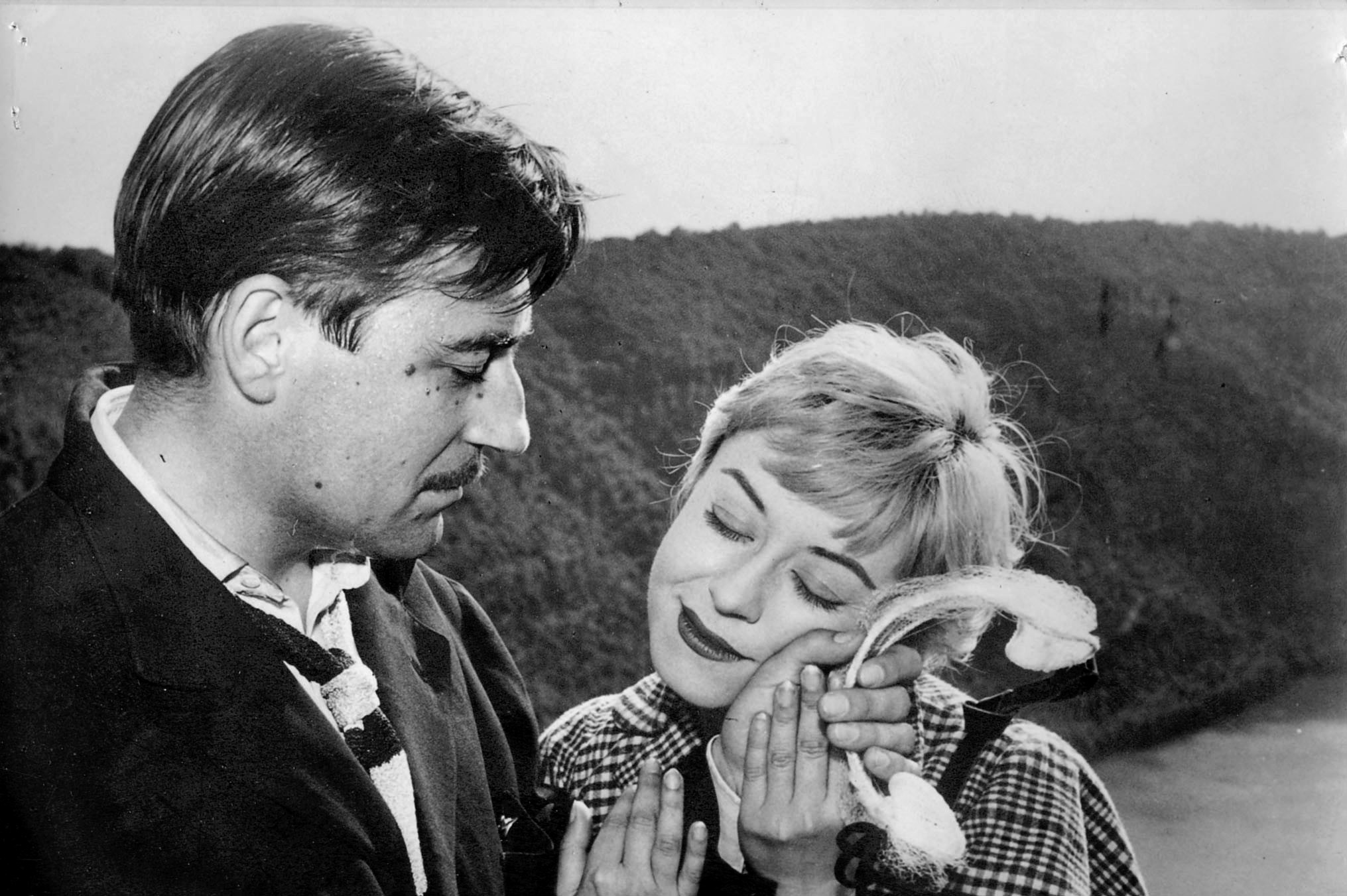
Regardless of what you think of Perier’s performance in this, he has worked with some of the greatest directors in European cinema of the 20th century and has demonstrated an impressive range over his career, appearing most famously as the deceptively shy boyfriend of Giulietta Masina’s prostitute in Federico Fellini’s Nights of Cabiria (1957), the film he made just prior to Everyone Wants to Kill Me. Other key roles include Marcel Carne’s Hotel du Nord (1938), Claude Autant-Lara’s Sylvie and the Phantom (1946), Jean Cocteau’s Orpheus (1950), Rene Clement’s 1956 film adaptation of Emile Zola’s novel Gervaise, Mario Monicelli’s The Organizer (1963), Jean-Pierre Melville’s Le Samourai (1967) and Costa-Gavras’s Oscar winning political thriller Z (1969).
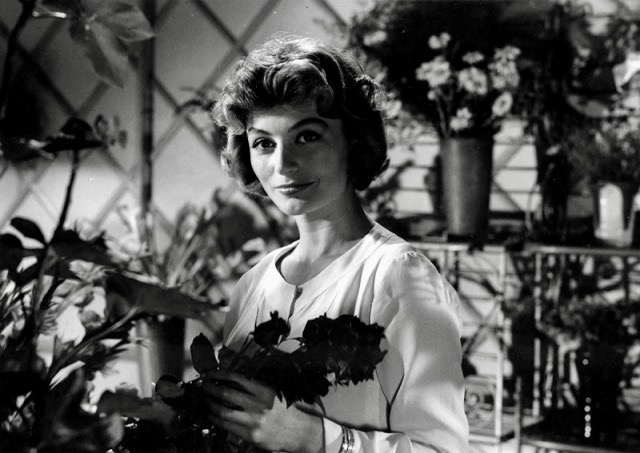
As for the featured actresses in Everybody Wants to Kill Me, Eleonora Rossi Drago gets scant screen time as the warden’s frivolous wife but Anouk Aimee has a bigger if mostly decorative role as the worried girlfriend of Tony. She looks lovely, of course, but she was still toward the beginning of her career and a few years away from the roles that helped launch her career such as Fellini’s La Dolce Vita (1960), Jacques Demy’s Lola (1961) and her biggest triumph, A Man and a Woman (1966), directed by Claude Lelouch.
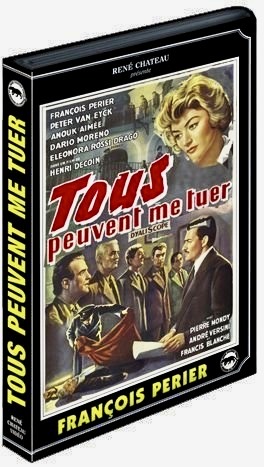
Everyone Wants to Kill Me – a line of dialogue spoken by Tony when he thinks he is the next victim – is not currently available in the U.S. in any format. You might be able to still find a French import DVD of the film (without English subtitles) from online sellers but this seems like an ideal pickup for Kino Lorber, who have released a lot of French genre films on Blu-ray in recent years including their excellent 2-disc French Noir Collection, which includes Back to the Wall (1958), Witness in the City (1959) and Speaking of Murder (1957).
Other links of interest:
http://www.frenchfilms.org/biography/henri-decoin.html
https://www.festival-cannes.com/en/2018/the-day-henri-decoin-brought-hollywood-to-france/
https://www.theguardian.com/news/2002/jul/01/guardianobituaries.filmnews
https://www.bestmoviesbyfarr.com/articles/anouk-aimee-movies/2017/12
 Cinema Sojourns