
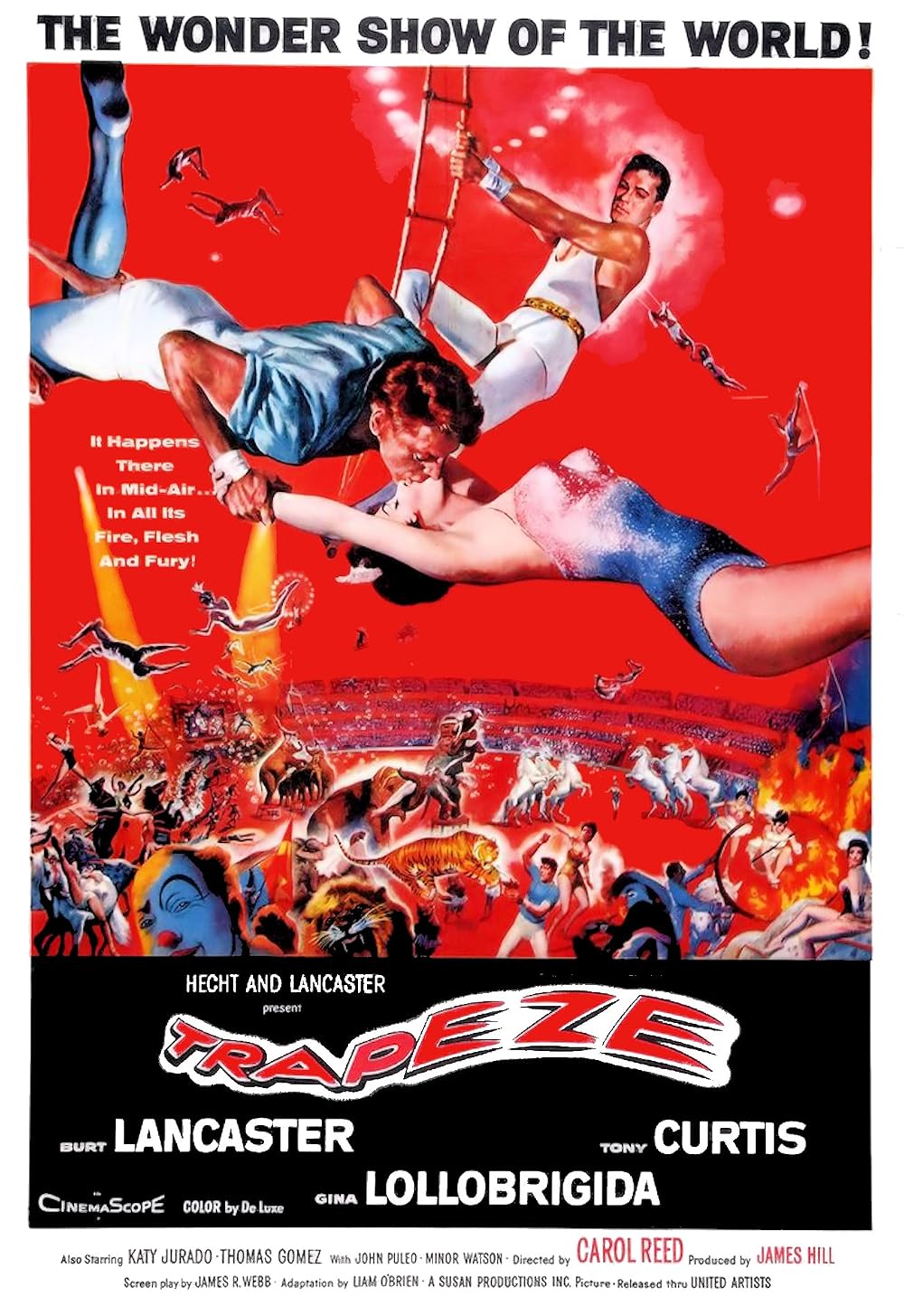
The days when famous large scale traveling circuses like the Ringling Brothers and Barnum & Bailey toured the country are long past but they live on in the movies. Among the many films in that specific genre are Cecil B. DeMille’s The Greatest Show on Earth (1952), Polly of the Circus (1932), Carnival Story (1954), The Big Circus (1959), The Flying Fontaines (1959), Circus World (1964) and the Canfinflas comedy El Circo (1943) from Mexico. One of my favorites though is Trapeze (1956), which came from an unlikely director, Carol Reed, who had previously directed such acclaimed features as Odd Man Out (1947) and The Third Man (1949).
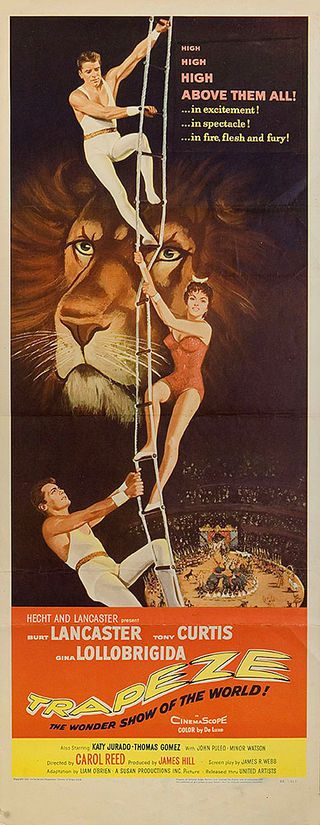
Trapeze was based on the novel, The Killing Frost, by Max Catto and filmed entirely in Paris and at the nearby Billancourt studios. Produced by Lancaster’s own production company (Hecht-Hill-Lancaster), which liked to balance commercial ventures like Apache (1954) with more challenging projects like Marty (1955) and Sweet Smell of Success (1957), Trapeze fulfilled a lifetime dream of Lancaster’s – to make a film about the circus. After all, Lancaster had once toured carnivals and nightclubs as an acrobatic act with his partner and childhood friend, Nick Cravat. They would later appear in two films together – The Flame and the Arrow (1950) and The Crimson Pirate (1952) – where they performed their own stunts.
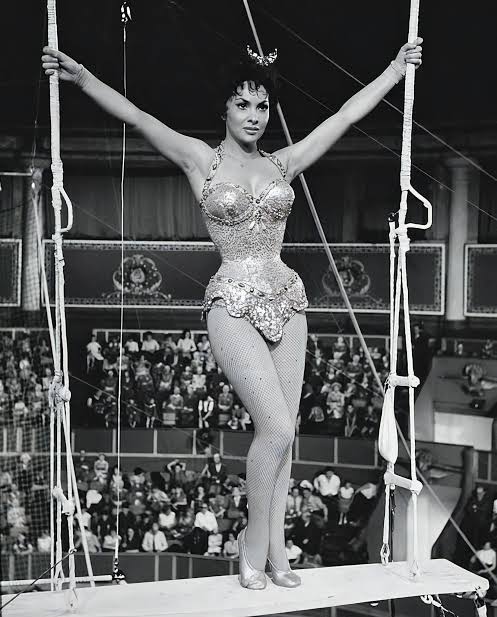
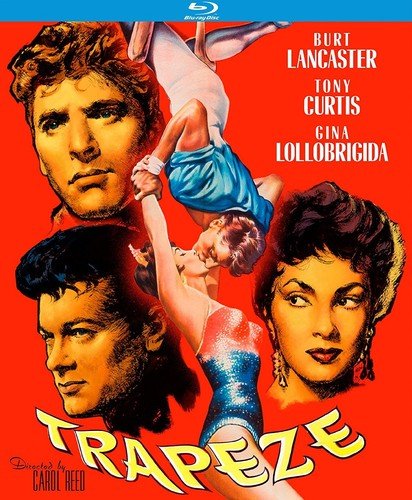
Internationally famous as the first continental sex symbol to emerge from post-war European cinema, Gina Lollobrigida was not only glamorous and seductive but an accomplished actress as well, and Trapeze (1956) is probably the best demonstration of her various attributes. Cast as Lola, a scheming acrobat who comes between Mike, a famous trapeze star (Burt Lancaster), and Tino, his assistant-in-training (Tony Curtis), she practically steals the film from her co-stars, who were both in their physical prime and at the height of their popularity. Most of the plot revolves around Mike and Tino preparing their death-defying triple flip aerial stunt for the Bouglione Circus in the hopes that their act will get signed by the famous Ringling Brothers for a huge fee. But will Lola sabotage their plans?
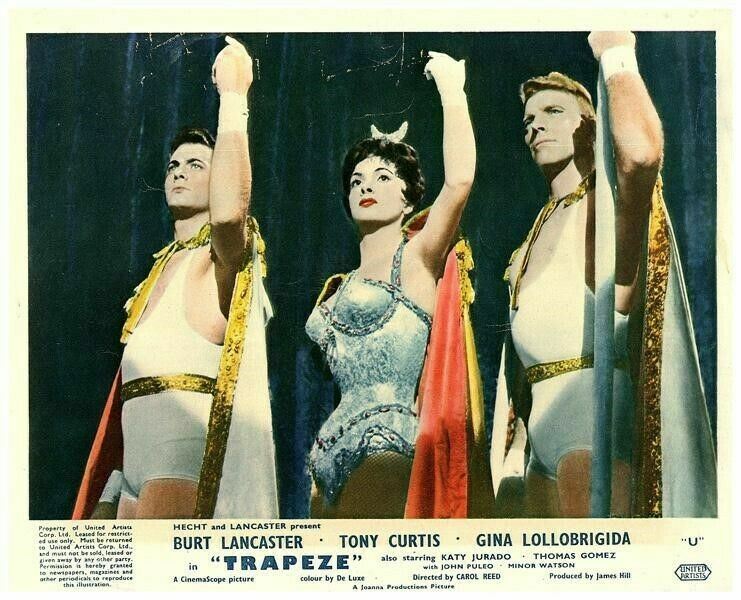
In order to make the high-wire sequences in Trapeze appear authentic, Lancaster hired Eddie Ward from the Ringling Brothers Circus as his technical consultant. Ward worked closely with Lollobrigida and Curtis in order to reduce their need for doubles in shots, but he also was used as a stand-in for Lancaster in some of the more dangerous stunts such as the famous triple flip which provides the dramatic centerpiece of Trapeze.
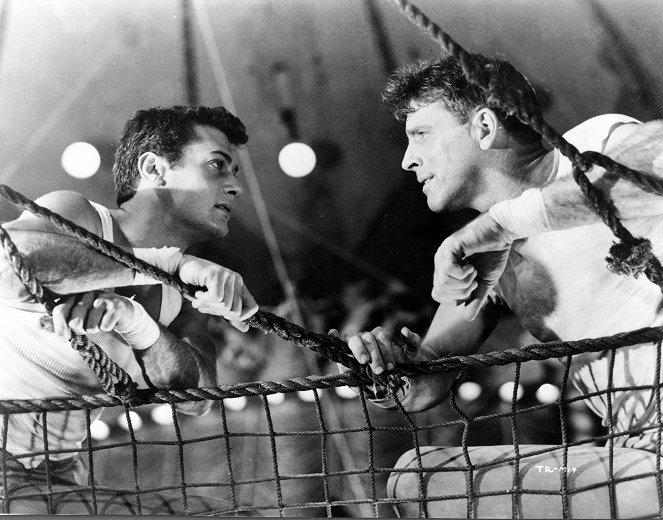
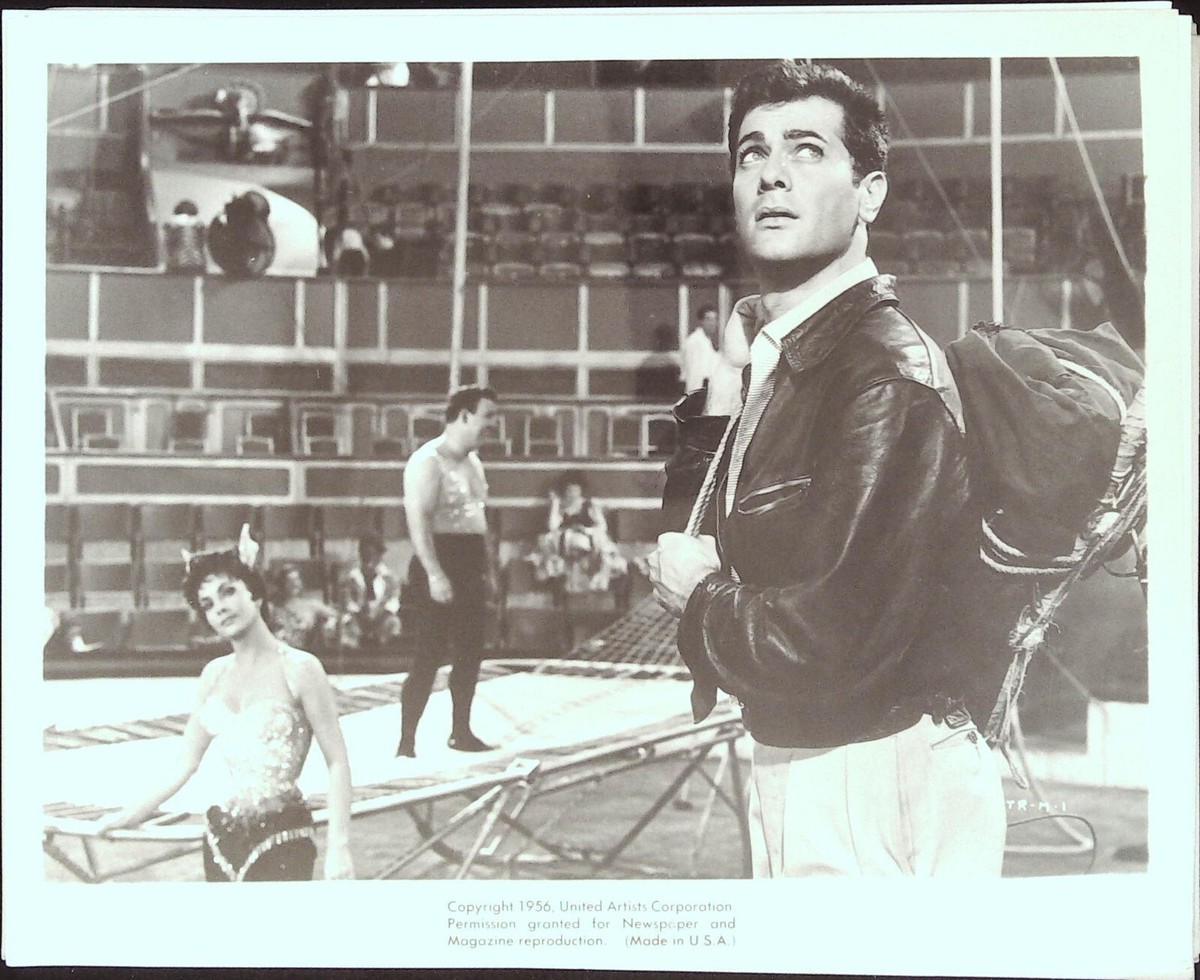
In Tony Curtis: The Autobiography, co-written with Barry Paris, the actor recalled that “some of the aerial stunts were so dangerous, even the doubles had doubles. But I did a lot of the ground tumbling, and some of the flying too. Burt and I did everything we could to make it easier in the cutting. I did a good chunk of the early bar work in the film, and that was really Burt and me walking on our hands. Robert Krasker, the photographer, was brilliant. As if there weren’t enough problems, he was working with a whole new color system on the film….We’d start shooting at noon and work until 8:00 with no lunch break. Sometimes we’d start at 5:00 p.m. and work till 2:00 or 3:00 in the morning. In one of the scenes I was waiting outside a bar for Burt to finish drinking and come out. [Director] Carol Reed insisted the street always be wet down so it would reflect the light and give a nightlike look.”
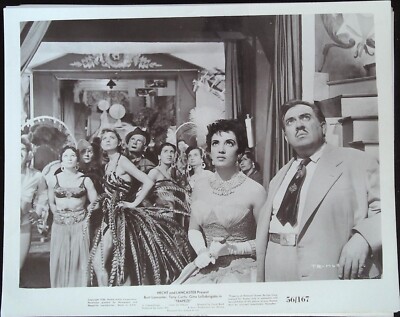
Janet Leigh, who was married to Curtis at the time, was a frequent visitor to the set and recalled the filming in her autobiography, There Really Was a Hollywood: “Much of Trapeze was filmed at the Cirque d’Hiver, the permanent winter circus. My first impression was of the smell, but after a while, I didn’t notice. The second was the cacophony of many languages. Dialogue directors were needed in English, French and Italian; assistant directors qualified in German and others as well. The circus families represented most of the countries of Europe, and the crew was also a mixture. The animals seemed fiercer than in American circuses. A new lion tamer was in training – the last one had recently been chewed to death! Yikes!”
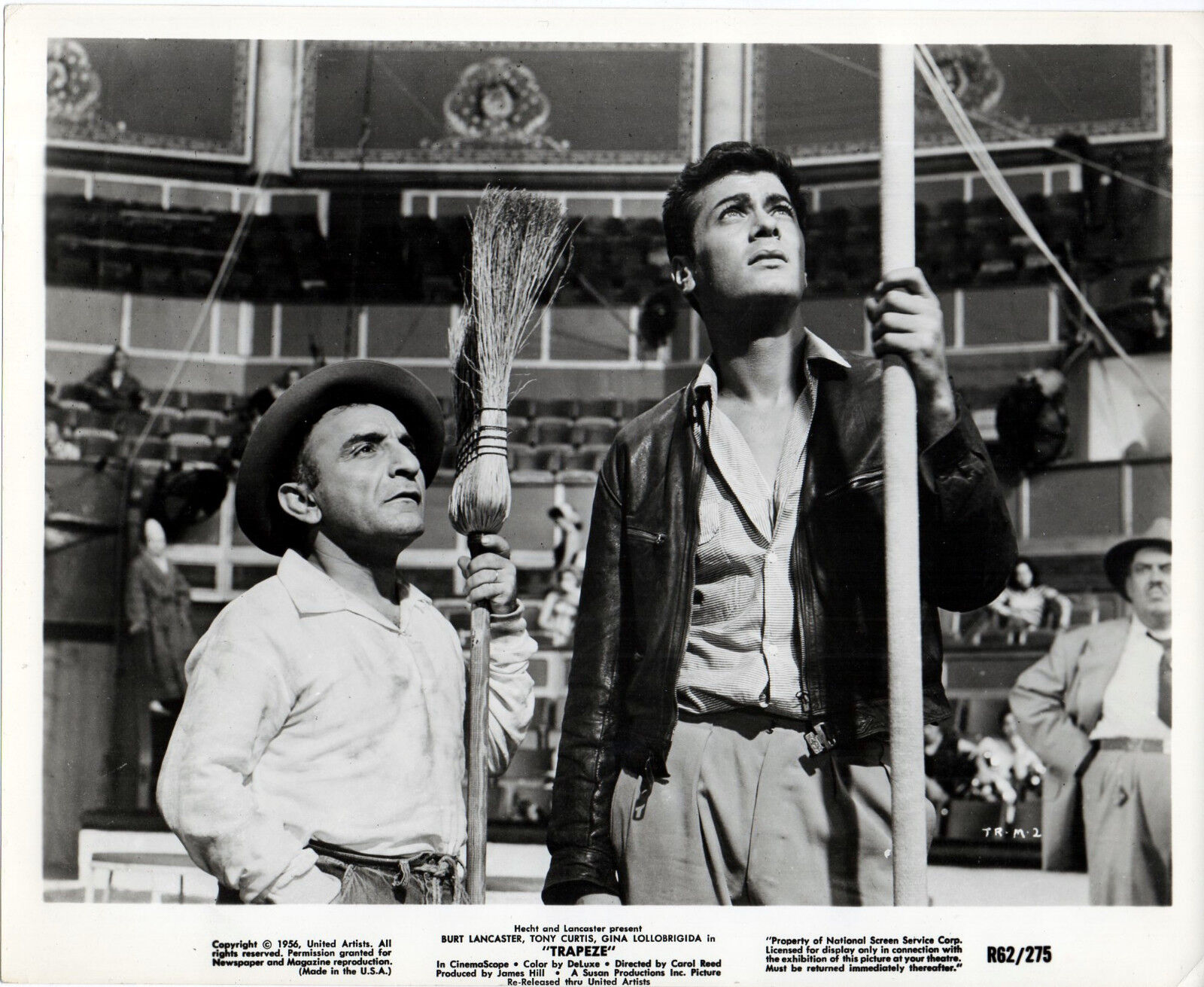
Trapeze turned out to be a huge commercial hit for Lancaster’s company, but some critics felt the film was a step down for Carol Reed, who was entering a difficult period in his career. His follow-up films, The Key (1958) and Our Man in Havana (1959) were not commercial successes and he was fired from the turbulent 1962 remake of Mutiny on the Bounty with Marlon Brando and replaced by Lewis Milestone. After two more box office disappointments – The Running Man (1963) and The Agony and the Ecstasy (1965) – Reed bounced back with the 1968 musical Oliver!, which was nominated for nominated for twelve Oscars and won six, including Best Film and Best Director.
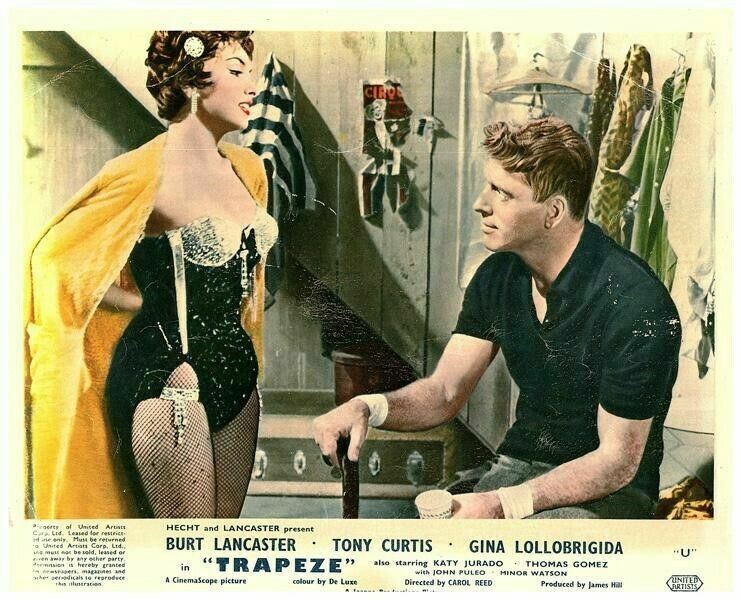
One thing most critics seemed to agree regarding Trapeze was Gina Lollobrigida’s immensely appealing performance as Lola. As Curtis recalled in his autobiography, “she was a charming woman, never any trouble, always on time. Carol Reed had a crush on her, and I think Gina encouraged it. If the director or the cameraman had a crush on you, you knew you were going to be all right in the movie. She flirted with all of us, which was consistent with her character in the film. But she had a lovely husband and family, and when the picture was over, and Janet and I went to Rome, Gina gave us a beautiful ancient stone carving, the head of a ram, which I still have and cherish.”
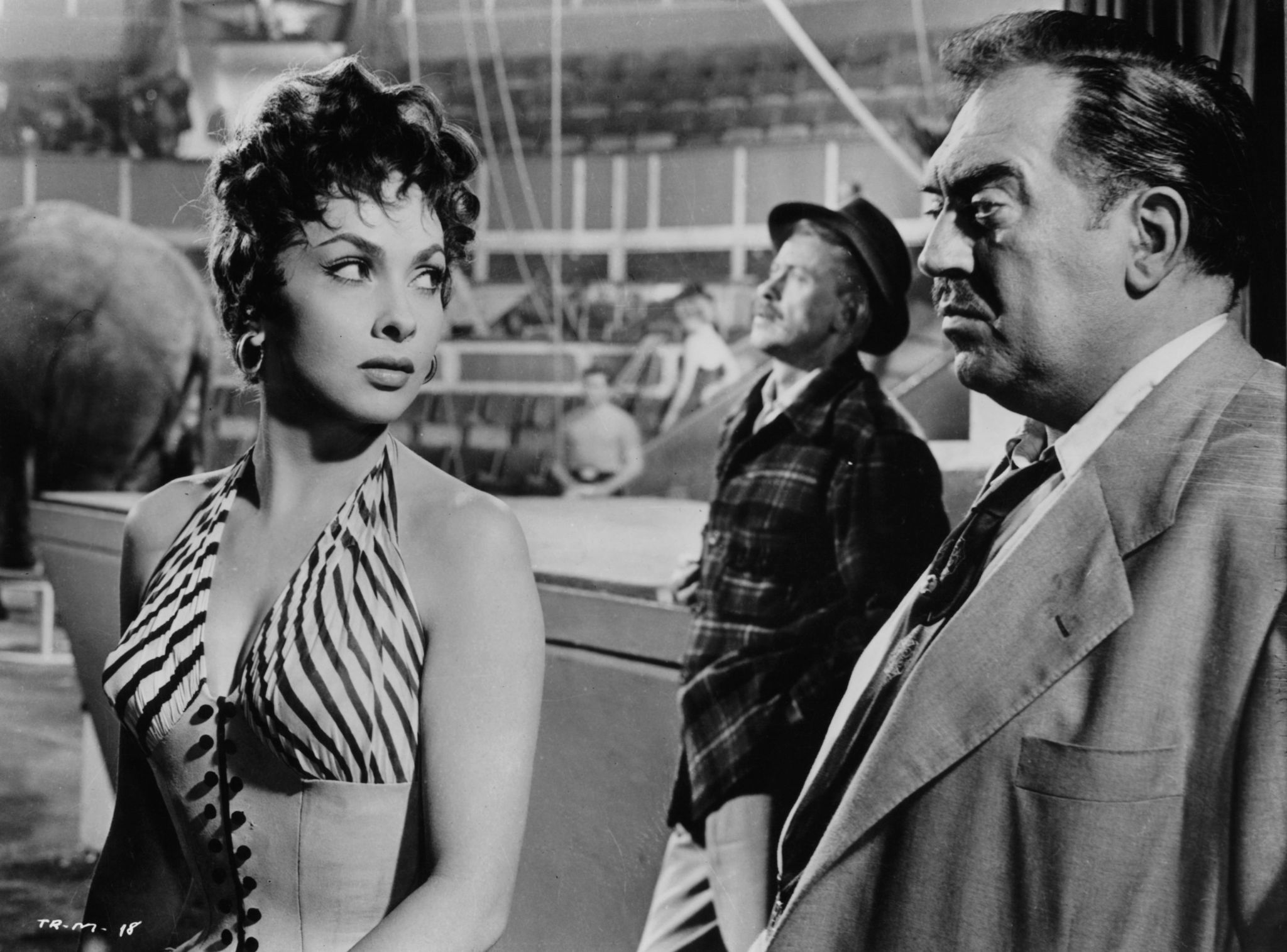
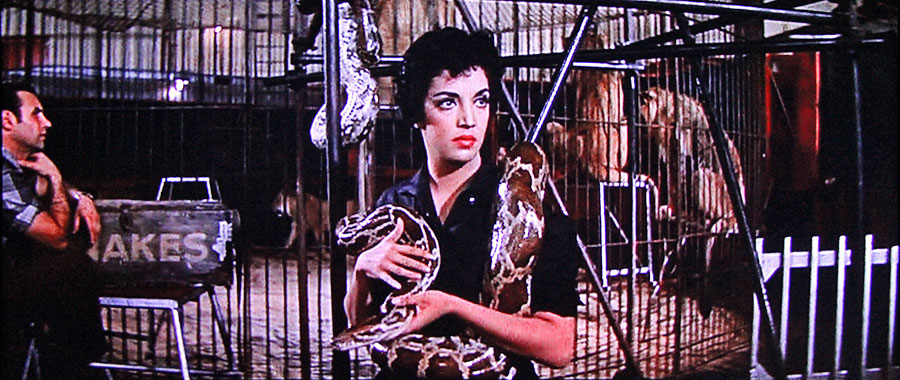
Trapeze was snubbed in the 1956 Oscar race but Carol Reed was nominated for “Outstanding Directorial Achievement in Motion Pictures” by the Directors Guild of America. The film was also distinguished by a stellar supporting cast including Katy Jurado, Thomas Gomez, Minor Watson and Sidney James plus the widescreen color cinematography of Milton Krasker (The Third Man, El Cid), a memorable music score by Malcolm Arnold (the Oscar-winning composer for David Lean’s The Bridge on the River Kwai) and awe-inspiring high wire work by Lancaster and various stunt doubles. According to AFI notes, the stuntwoman for Gina Lollobrigida “died after suffering a broken back from a forty-foot fall during the film’s production.”
Trapeze has been released on various formats over the years but the Blu-ray edition released by Kino Lorber in September 2018 is probably the best option for fans of the movie.
*This is a revised and expanded version of an article that originally appeared on the Turner Classic Movies website.
Other links of interest:
http://www.screenonline.org.uk/people/id/459891/index.html
https://theyshootpictures.com/reedcarol.htm
https://cirque-cnac.bnf.fr/en/imaginary/circus-cinema
https://mubi.com/en/notebook/posts/body-politics-burt-lancaster-and-the-swimmer
https://circusmania.blogspot.com/2026/04/the-making-of-trapeze-starring-burt.html

