
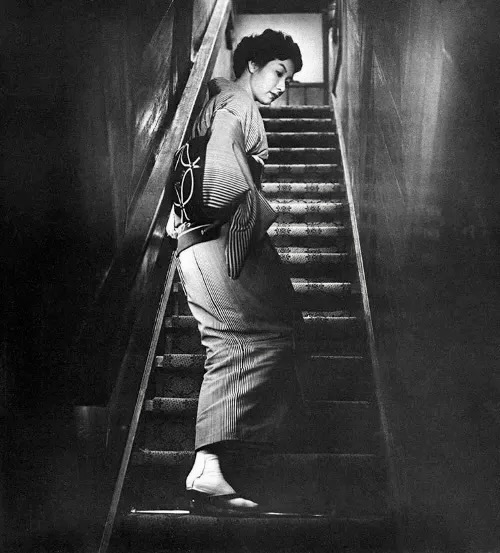
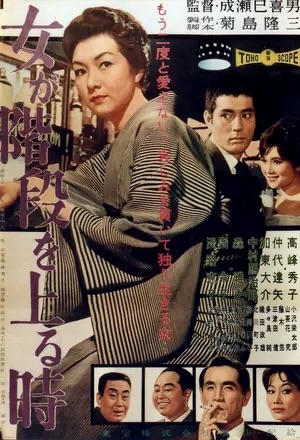
Most fans of Japanese cinema know that the Ginza district of Tokyo is often featured as a setting in films with its vibrant nightlife, intimate bars and fashionable shops, particularly in contemporary movies. Although the district dates back to the Edo period in the 16th century, the area has seen major changes over the years including a devastating fire in 1872 and widespread damage from aerial attacks during WWII. Yet, it always seemed to reinvent itself after every major setback and, by the end of the 1950s, it had become a prosperous symbol of Japan’s post-war recovery with its mix of upscale shoppers, modern buildings and cultural hotspots. It is against this colorful backdrop that Mikio Naruse’s Onna ga Kaidan wo Agaru Toki (English title: When a Woman Ascends the Stairs, 1960) takes place and the central focus is Keiko Yashiro (Hideko Takamine), one of the most popular bar hostesses in the Ginza sector.
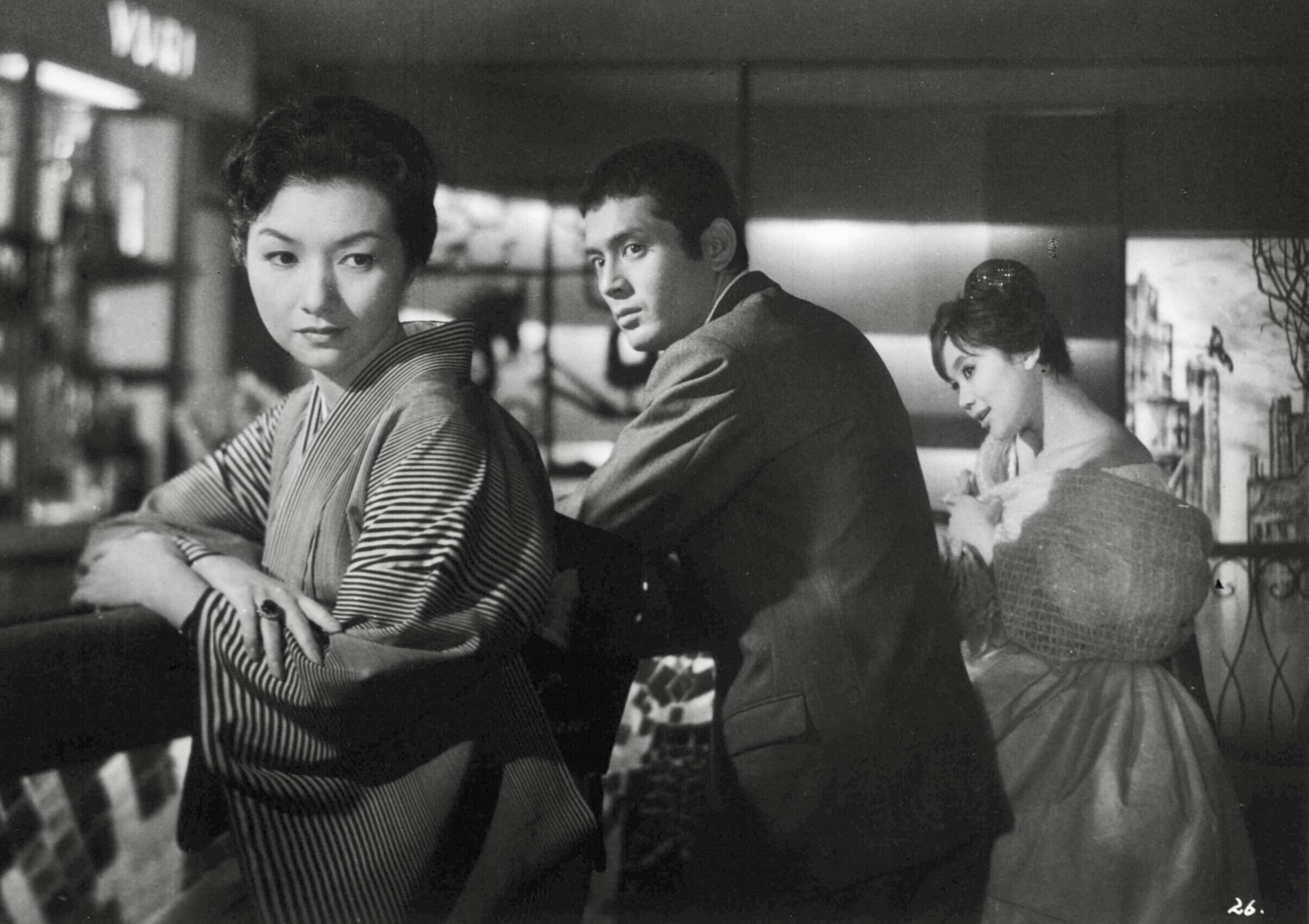
Naruse’s engrossing character study is a bit of a departure from the other 1950s dramas he directed prior to this, most of which depicted the problems of the lower middle class in such films as Floating Clouds (1955), A Wife’s Heart (1956) and Summer Clouds (1958). Unlike the unglamorous domestic settings of these previous melodramas, When a Woman Ascends the Stairs unfolds almost entirely in the bustling nocturnal world of Tokyo’s Ginza neighborhood where Keiko works at the Lilac Bar and lives (in a stylish modern apartment). The one exception is a sequence where she briefly lives at home with her financially dependent mother and brother during an illness. The contrast between her modest family home and her city residence is more representative of her profession than her actual income. This is because a much in-demand bar hostess needs to present an illusion of prosperity and luxury to attract the high rolling customers she needs as regular patrons. As a result, Keiko has to spend most of her income on fancy kimonos, expensive perfumes and other tools of the trade to maintain her high profile reputation. And the competition is fierce with more than 16,000 bar hostesses hustling for survival in Tokyo.
What is unique about When a Woman Ascends the Stairs is its lively, upbeat tone accompanied by Toshiro Mayuzumi’s jazz score which shares some similarities to the music of The Modern Jazz Quartet with its distinctive use of the vibraphone. The film is also narrated by Keiko, which allows the viewer to know her private thoughts but also to eavesdrop on behind the scenes conversations with Keiko’s co-workers when men aren’t around. Like most of Naruse’s films featuring female protagonists, the director has great empathy for the modern Japanese woman who is constantly relegated to second class status in a man’s world.
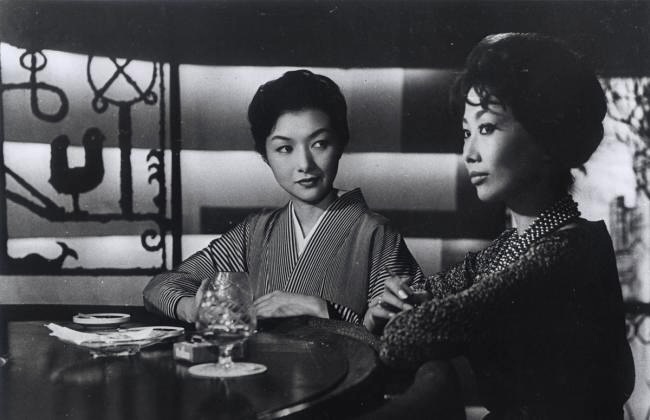
At the beginning of Naruse’s film, we learn that Keiko’s mainstay, The Lilac Bar, is losing customers to a new nightspot managed by Yuri (Keiko Awaji), a younger woman who was formerly an employee of Hideko. As she approaches her 30th birthday, Keiko beings to question her life and profession and weigh the few options she has left. She was previously married but her husband died young and she gravitated toward work as a bar hostess because it paid better than most jobs for single working women…certainly better than a factory worker, secretary or nurse in postwar Japan.
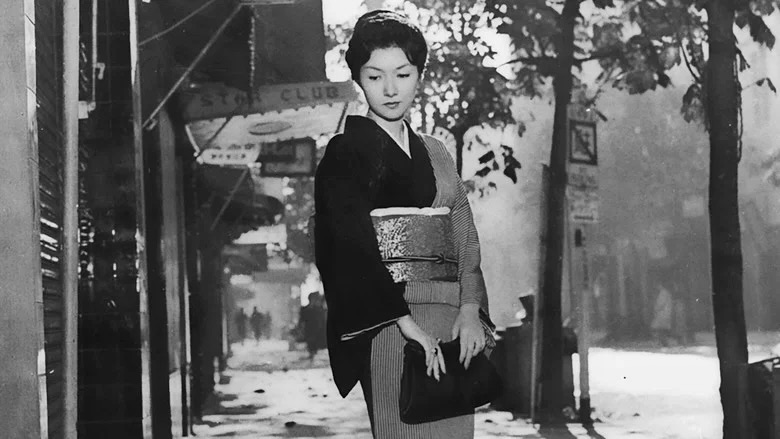
The one thing that distinguishes Keiko from other rival bar hostesses is her fierce independence. She does not have a lover or a “sponsor” who financially supports her in return for favors. And even though most bar hostesses are no different than geisha girls in terms of providing service and entertainment for men, Keiko stands out from the pack because of her virtuous nature. She doesn’t have sexual relations with any of her male customers despite her philosophy: “In our business we have to treat every man like a lover. You can’t love just one man.”
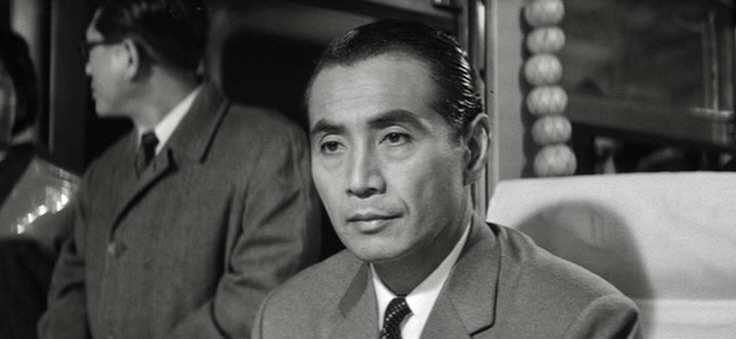
Still, Keiko sees the writing on the wall and knows that it is time to quit her current position at The Bar Carton and open her own business. But the trick is how to accomplish this. Can she raise the required funds from her wealthiest customers without sexual entanglements?
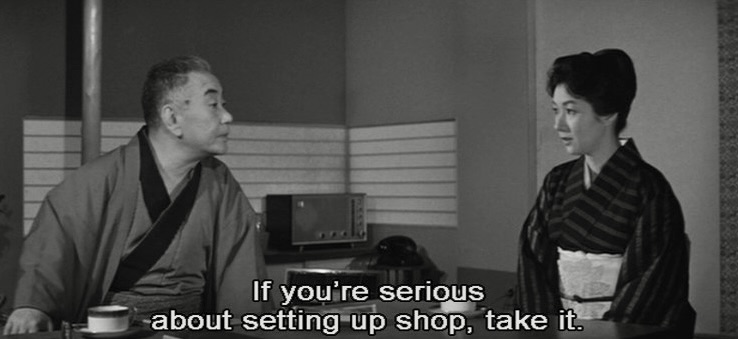
The remainder of When a Woman Ascends the Stairs depicts Keiko trying to juggle the business offers of three admirers – Minobe (Eitare Ozawa), Goda (Ganjiro Nakamura) and Fujisaki (Masayuki Mori) – which come with certain conditions. Of the three, Keiko feels genuine love for bank manager Fujisaki but he makes it clear he would never leave his wife for her. Then, Keiko receives an unexpected marriage proposal from Sekine (Daisuke Kato), a chubby, kindhearted factory owner. This presents a new dilemma: should she trade her dream of owning her own bar for financial security and a future with a man she doesn’t love?
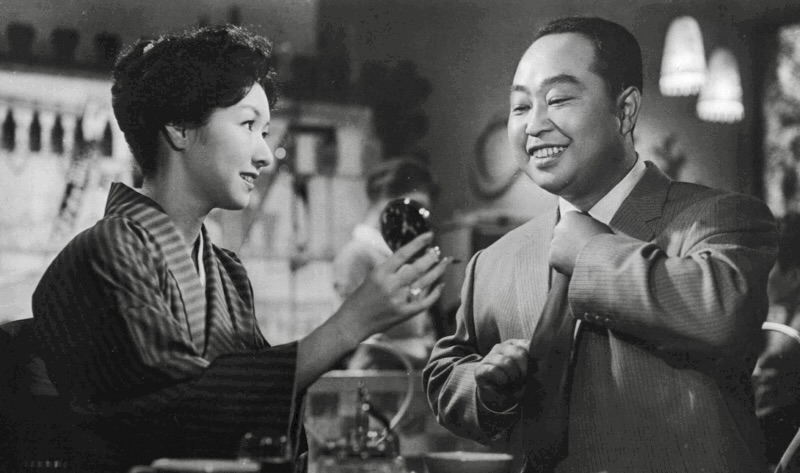
Ironically, the one person who would make an ideal business partner for Keiko is Kenichi (Tatsuya Nakadai), the club bartender who hides his true feelings for her. Keiko even consults a fortune teller about her fate but is advised to wait a few years before making a decision: “You’d be roving a boat against the current. Time solves everything. Wait patiently.”
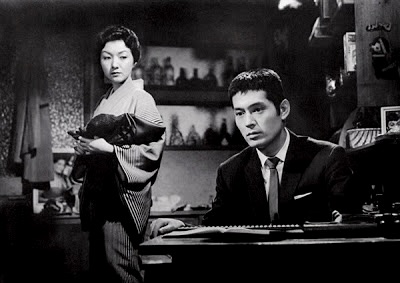
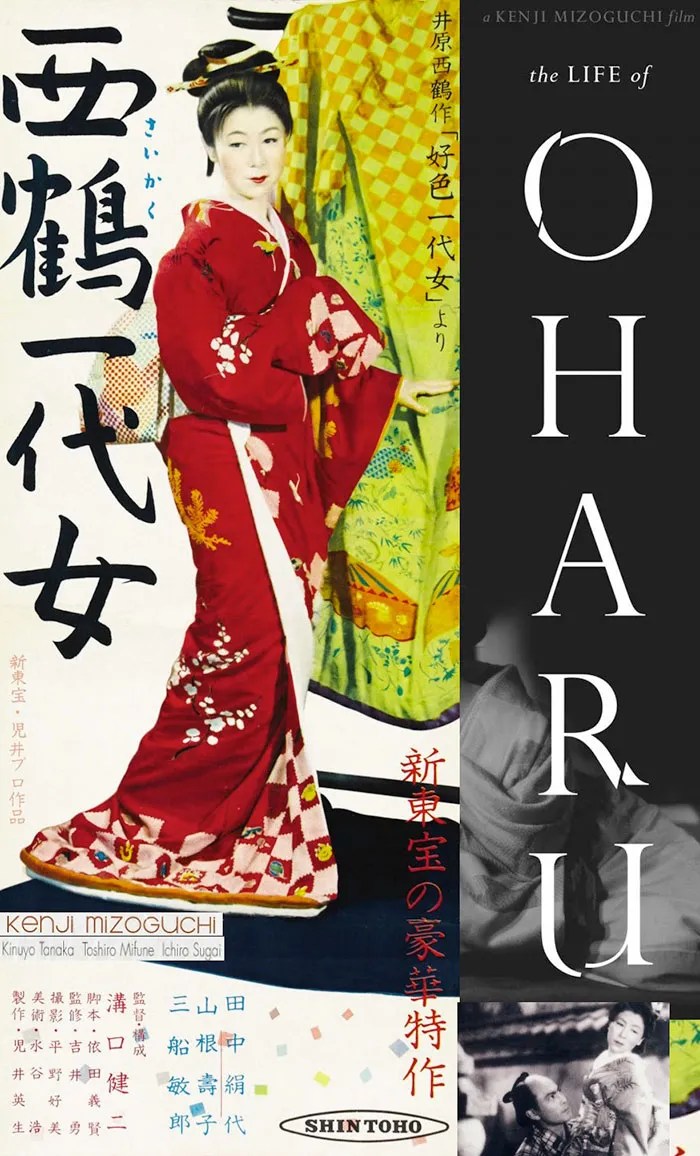
Unfortunately, nothing works out as expected. When a Woman Ascends the Stairs may not end in total tragedy but it has a sobering realism for its era. For women like Keiko, the price to pay for being a bar hostess is one of quiet resignation and deferred dreams. The final shot of her ascending the stairs to the Bar Carton becomes a metaphor for her daily struggle to find her place in a patriarchal society. The film is certainly one of Naruse’s most moving films about the plight of Japanese women and his empathy for women is always front and center in his best work from Wife! Be Like a Rose! (1935) to Mother (1952) to Scattered Clouds (1967). Yet, for some reason, it is Yasujiro Ozu (An Autumn Afternoon, 1962) and Kenji Mizoguchi (The Life of Oharu, 1952), who are better known to U.S. moviegoers for their masterful dramas about female protagonists.
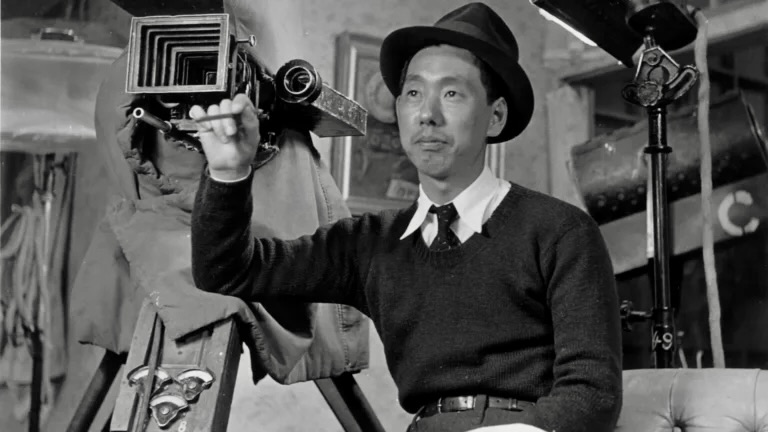
In program notes for a Mikio Naruse exhibition at MoMA, film scholar Audie Bock made a strong case for why Naruse is such an important figure in Japanese cinema, stating, “the determined characters of the Naruse film never give up. A stubborn dedication to their own self-respect in the face of overwhelming crassness, vulgarity, and exploitation, from even those who should be most sensitive and protective toward the individual, lends Naruse’s heroines a distinctive nobility…Emotionalism and lyricism were a part of Naruse’s richly detailed pictorial style, in spite of his basic defiant vision. He worked for forty-seven years within the studio system, yet refused to compromise on his exposure of life’s falsehoods. His characters learn; there are no happy endings, but there are enlightened defeats.”
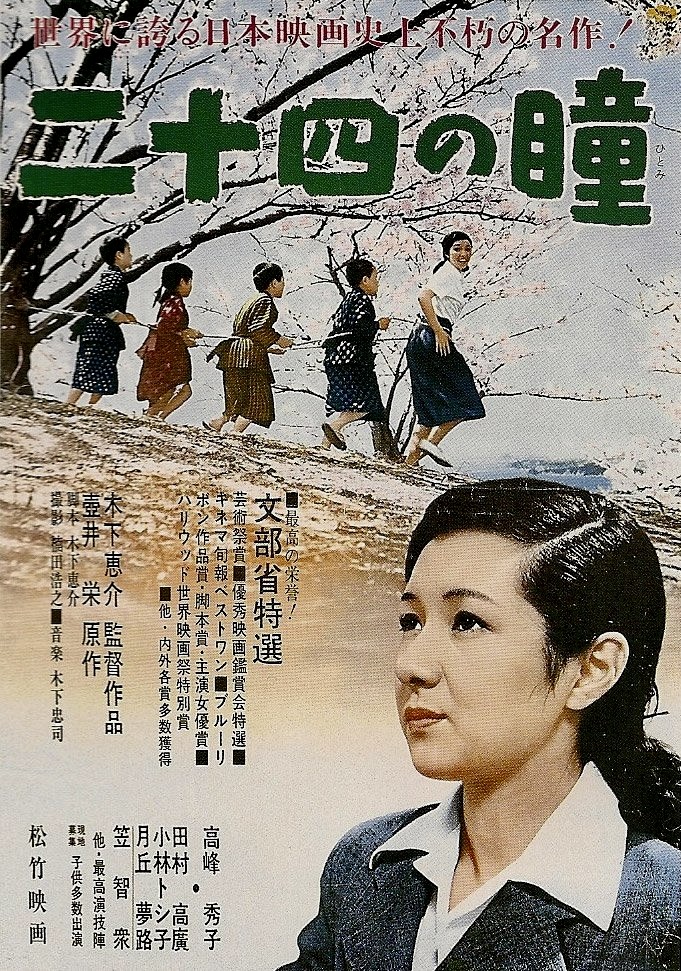
Often considered a late period masterpiece in Naruse’s filmography, When a Woman Ascends the Stairs is especially memorable for Hideko Takamine’s soulful performance as Keiko. She was one of the director’s most famous collaborators, appearing in at least 17 of his films over the years, but she also gave critically acclaimed performances in the work of other iconic Japanese directors such as Yasujiro Ozu (Tokyo Chorus, 1931), Keisuke Kinoshita (Carmen Comes Home [1951], Twenty-Four Eyes [1955]) and Hiroshi Inagaki (The Rickshaw Man, 1958).
As for Tatsuya Nakadai as Keiko’s co-worker Kenichi, the actor was on the verge of breaking out of supporting roles and becoming a leading man in 1960. He had already appeared in the first two parts of the 1959 World War II trilogy The Human Condition (1959-1961) and would soon become Toshiro Mifune’s deadly rival in both Yojimbo (1961) and Sanjuro (1962). He finally emerged as a major star after appearing in Masaki Kobayashi’s Harakiri (1962) but his performance in When a Woman Ascends the Stairs is a rare example of Nakadai appearing in a contemporary romantic melodrama.
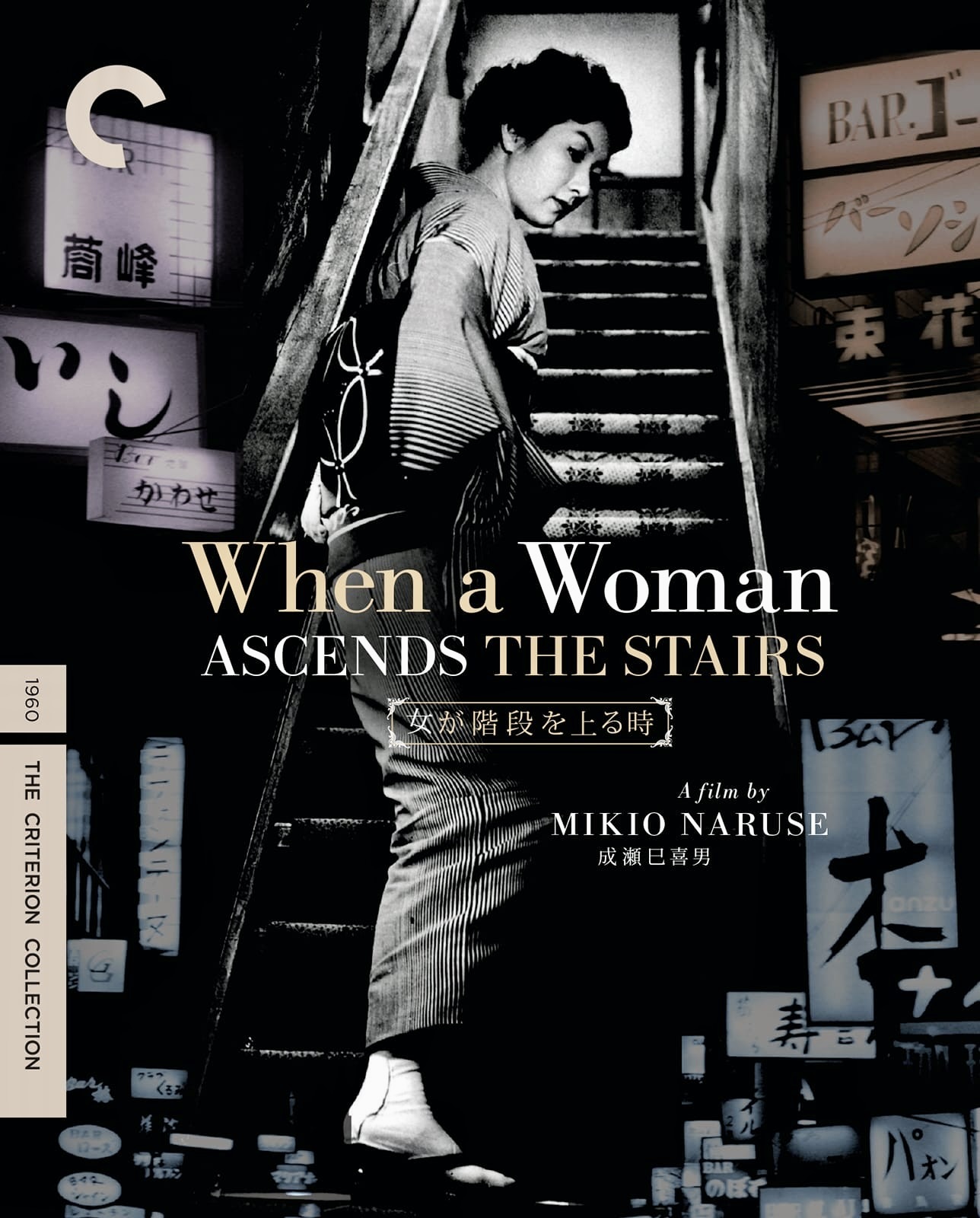
When a Woman Ascends the Stairs was released on DVD by The Criterion Collection in February 2007 and is still in print. The extra features include a book of essays, audio commentary by Japanese film scholar Donald Ritchie and an interview with the late Tatsuya Nakadai (1932-2025).
Other links of interest:
 Cinema Sojourns