
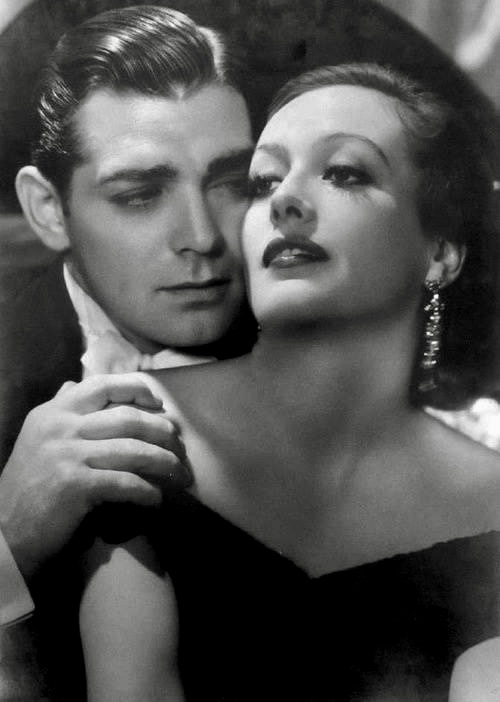
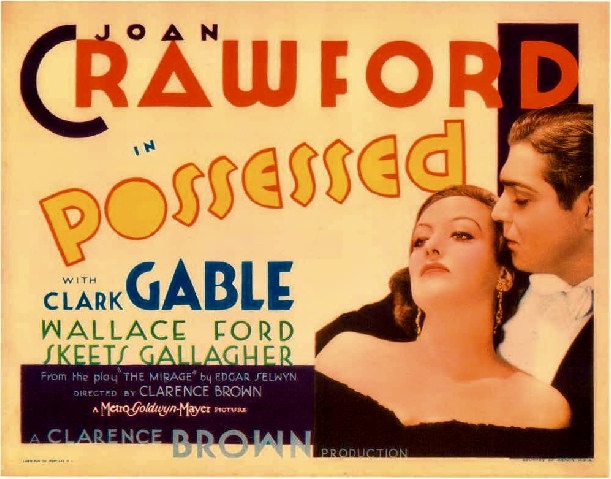
It was just the sort of rags-to-riches tale audiences craved during the Depression era. A working class woman with a shady past finds romance with a high society lawyer running for political office. There’s one major obstacle to their happiness though – he’s married. But Possessed (1931) is less about the road to a bright future for these star-crossed lovers than the on-screen sexual chemistry between the two stars – Joan Crawford and Clark Gable. It was their third film together but it was the first time the duo truly clicked with audiences as a screen couple.
They clicked off-screen as well, beginning a torrid love affair that became common knowledge on the MGM lot, despite the disapproval of studio mogul Louis B. Mayer. In a way, Clarence Brown, the director of Possessed was partly to blame, according to Joan Crawford in the biography, Clark Gable by Warren G. Harris, “He sensed the volcanic attraction between his stars and used that for all it was worth…In the picture Clark and I were supposed to be madly in love. When the scenes ended, the emotion didn’t.”

At the time Crawford and Gable were trapped in unhappy marriages. Joan and her husband Douglas Fairbanks, Jr. were constantly being depicted by the press as “Hollywood’s most idyllic couple.” In reality their relationship was tense and competitive due to career jealousies and Joan’s feelings of not being worthy whenever she was in the presence of her in-laws, Mary Pickford and Douglas Fairbanks, Sr. Gable, on the other hand, was married to Ria Langham, a wealthy Texas socialite who was 17 years his senior with little in common with him. Though Crawford and Gable were more perfectly matched, sharing similar backgrounds where poverty and unstable home lives were a constant for most of their adolescence, they both knew they were too much alike to seriously consider marriage.
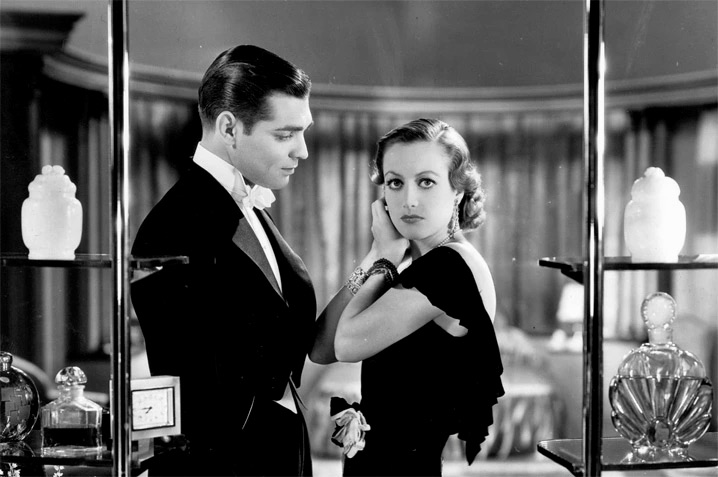
During the filming of Possessed, Crawford recalled in Long Live the King: A Biography of Clark Gable by Lyn Tornabene: “Occasionally we’d break away early, go for a quiet ride along the sea. And all day long we’d seek each other’s eyes. It was glorious and hopeless. There seemed nothing we would do about it. There was no chance for us..We talked of marriage, of course. But I dared not ruin the dream. I’d rather live with them unfulfilled than have them broken.”
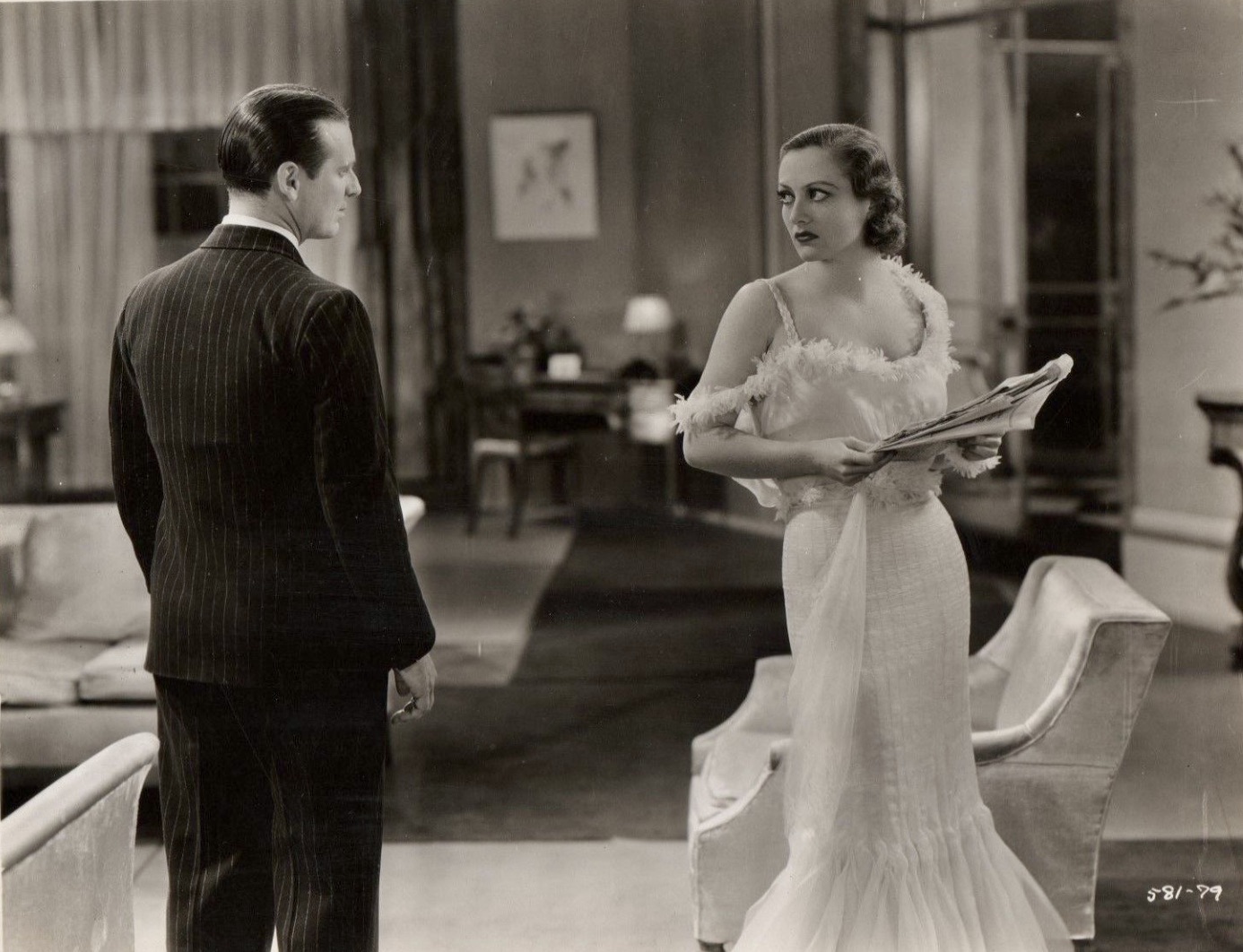
Mayer wanted to make certain that the Gable-Crawford affair didn’t become public knowledge and called Clark into his office, demanding that he end the affair. The actor complied, not wanting to incur Mayer’s wrath. Despite this, Crawford still requested Gable as her leading man in her next film, Letty Lynton (1932), but was told “absolutely not” by Mayer himself. Eventually, the affair ran its course but Gable and Crawford went on to become one of MGM’s most popular screen pairings, appearing in such hits as Dancing Lady (1933), Forsaking All Others (1934), Chained (1934), and Love on the Run (1936).
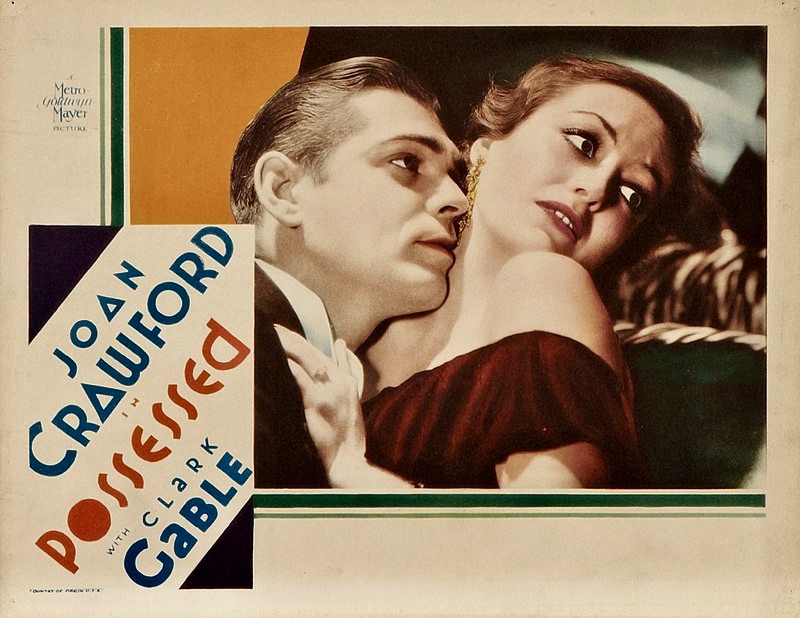
But their magnetic appeal as a screen couple first became apparent in Possessed with its potent blend of politics and sex. Not that the film was perfect – an unrealistic happy ending and Crawford’s rendition of “How Long Can It Last” delivered in three languages were low points – but Possessed, as stated in Bob Thomas’s biography Joan Crawford, “proved to be an important film in the progress of Joan’s professional life. It ended forever her period in movies as an empty-headed hedonist with a passion for dance. Now she moved to portrayals of girls on the rise from the lower classes, an apt metaphor with Americans submerged in the Depression.”
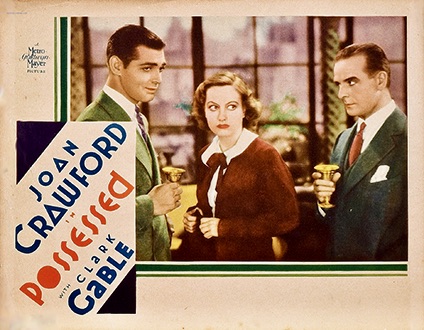
Possessed was based on Edgar Selwyn’s hit play The Mirage and the film adaptation was well received by film critics and audiences alike. Mordant Hall of The New York Times called it “a gratifying entertainment,” adding, “The familiar theme of a small-town factory girl who becomes the mistress of a wealthy New Yorker is set forth with new ideas which result in surprises, if not in a measure of suspense.” James R. Quick from Photoplay noted, ”It’s the best work Joan Crawford has done since Paid, and Gable – he’s everybody’s big moment. If Joan weren’t so good, he’d have the picture.”
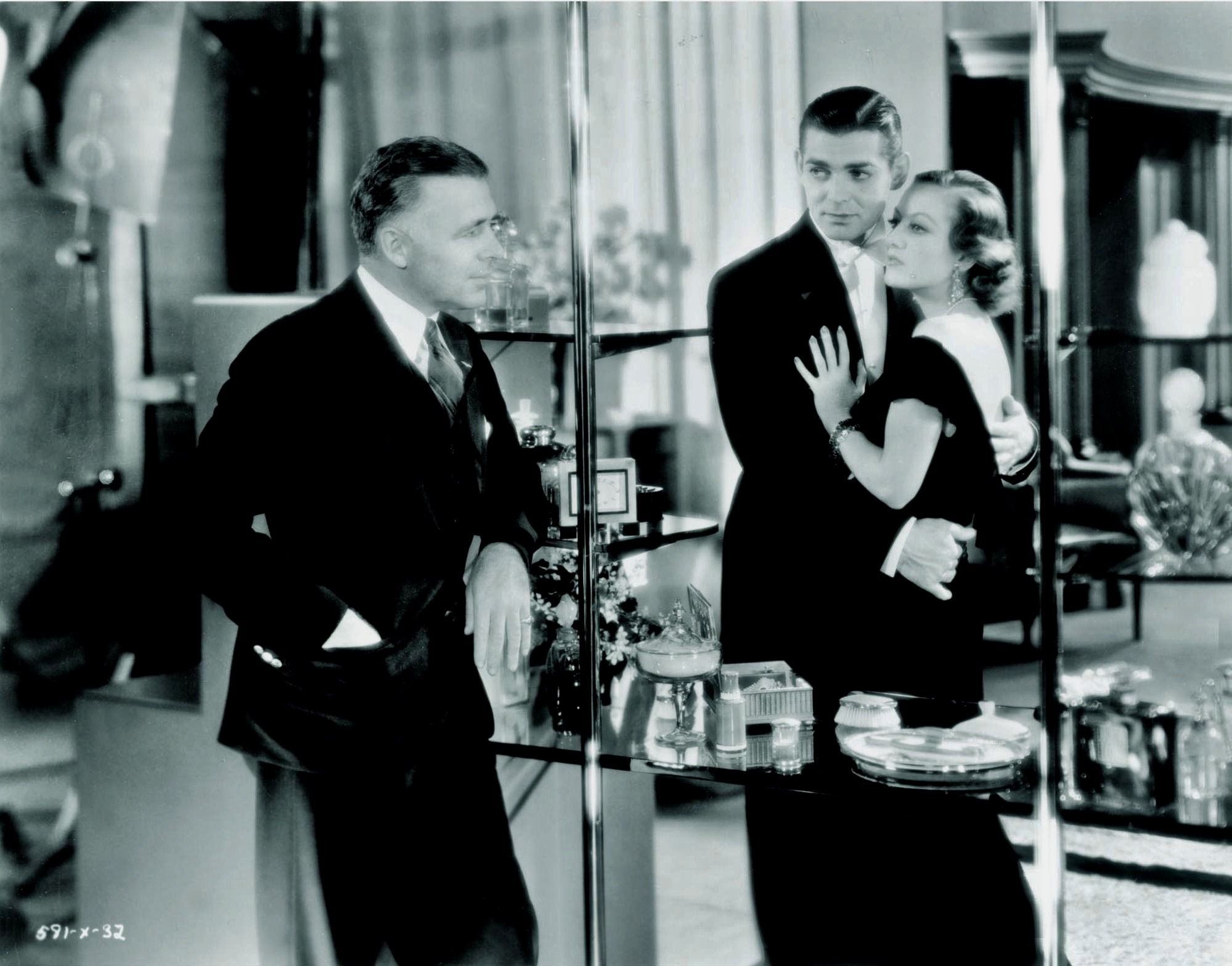
Although there were certainly more racy Pre-Code films than Possessed, this gritty little romantic drama still presented some problems for the Hollywood censors due to Crawford’s fallen woman character and some of the risqué dialogue. According to information from the American Film Institute, Colonel Jason Joy of the Hays Office complained to head censor Joseph I. Breen, “The philosophy of this one is wrong. For some reason we did not have the script and did not get in a crack before the picture was finished. This cannot happen again, and was the chief reason the Code was amended making submission of scripts mandatory rather than optional in the past.” So Possessed became the last motion picture approved by the Hays Office without a complete script submitted in advance of the production. The film also ran into trouble with British censors because of the unwed status of the main protagonists. As a result, certain scenes were reworked for the U.K. release with the approval of MGM production chief Irving Thalberg.
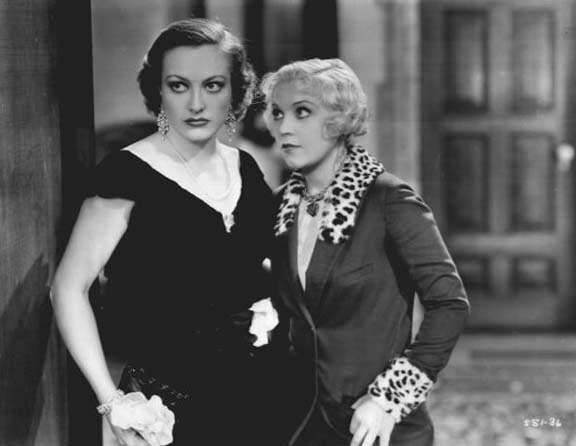
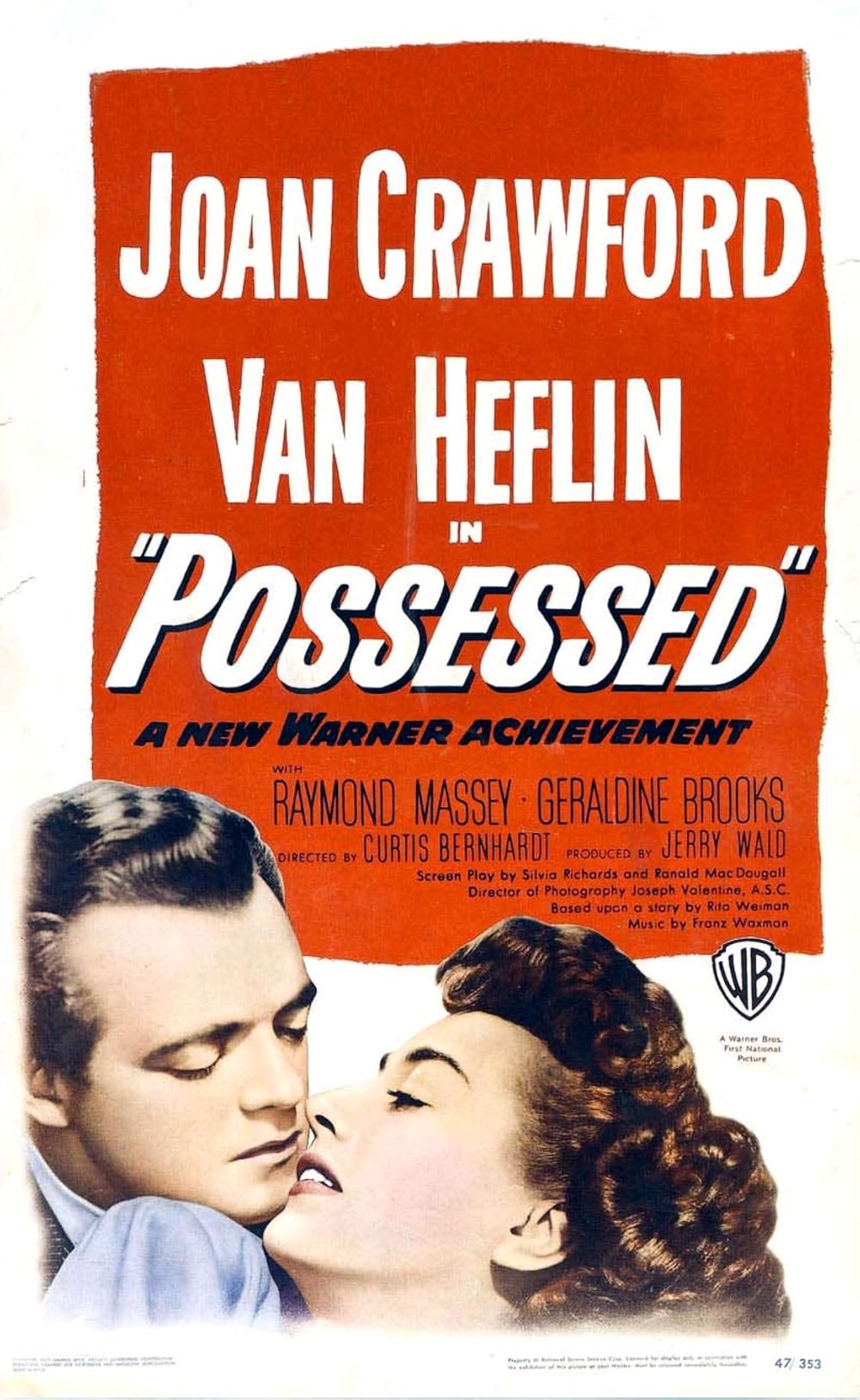
Crawford would follow Possessed with the all-star ensemble drama Grand Hotel (1932) and later in 1947 make another film with the title Possessed, which earned her a second Oscar nomination for Best Actress. Gable’s next film after this paired him with Marion Davies in Polly of the Circus (1932) but his biggest success yet would occur later the same year with Red Dust opposite Jean Harlow and Mary Astor. As for director Clarence Brown, he would go on to helm some of MGM’s most prestigious and award-winning films such as Anna Karenina (1935), The Human Comedy (1943), National Velvet (1944), The Yearling (1946) and Intruder in the Dust (1949).
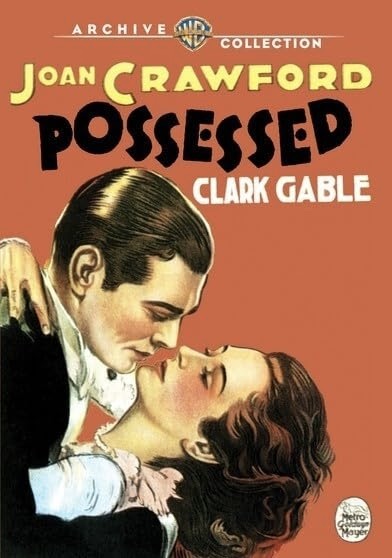
Possessed has been released on various formats in the past including a Warner Brothers Archive Collection DVD released in June 2009.
*This is a revised and expanded version of an article that originally appeared on the Turner Classic Movies website.
Other links of interest:
https://www.joseff-hollywood.com/news/2018/3/1/star-signature-spotlight-joan-crawford
 Cinema Sojourns