
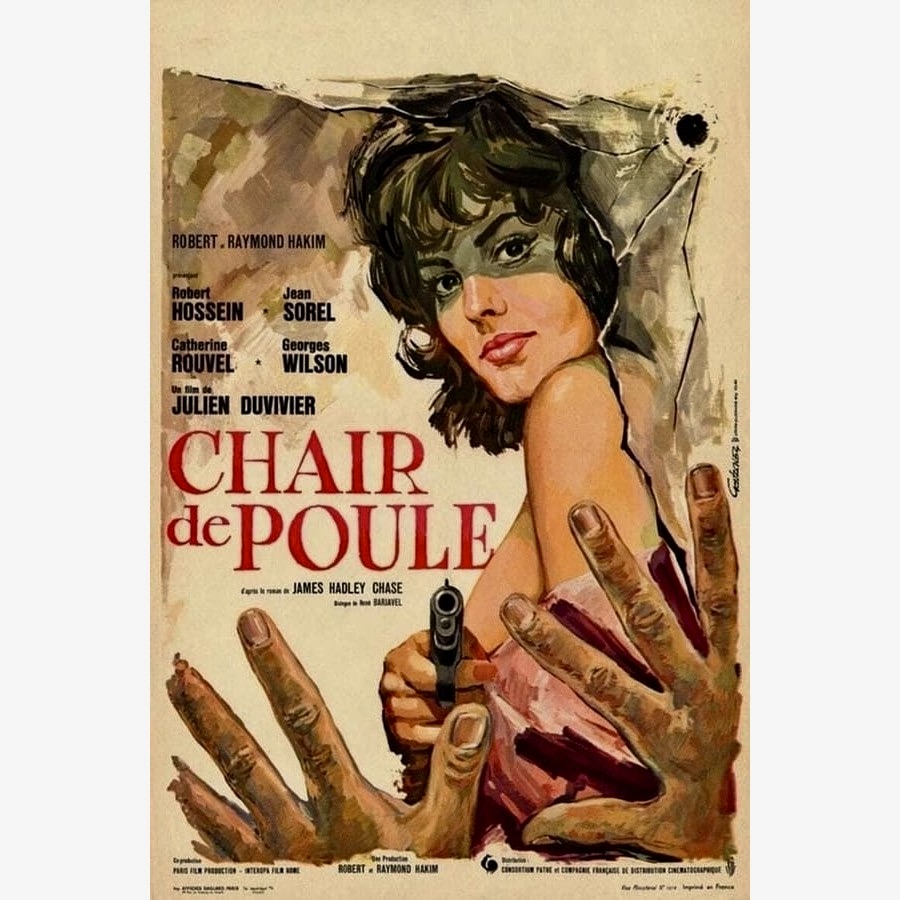
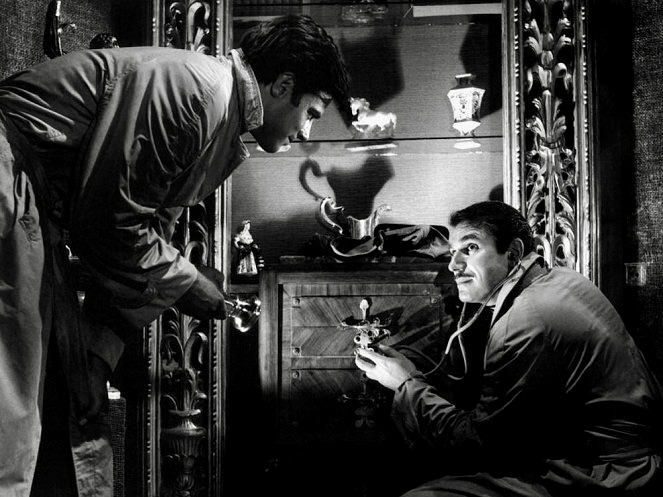
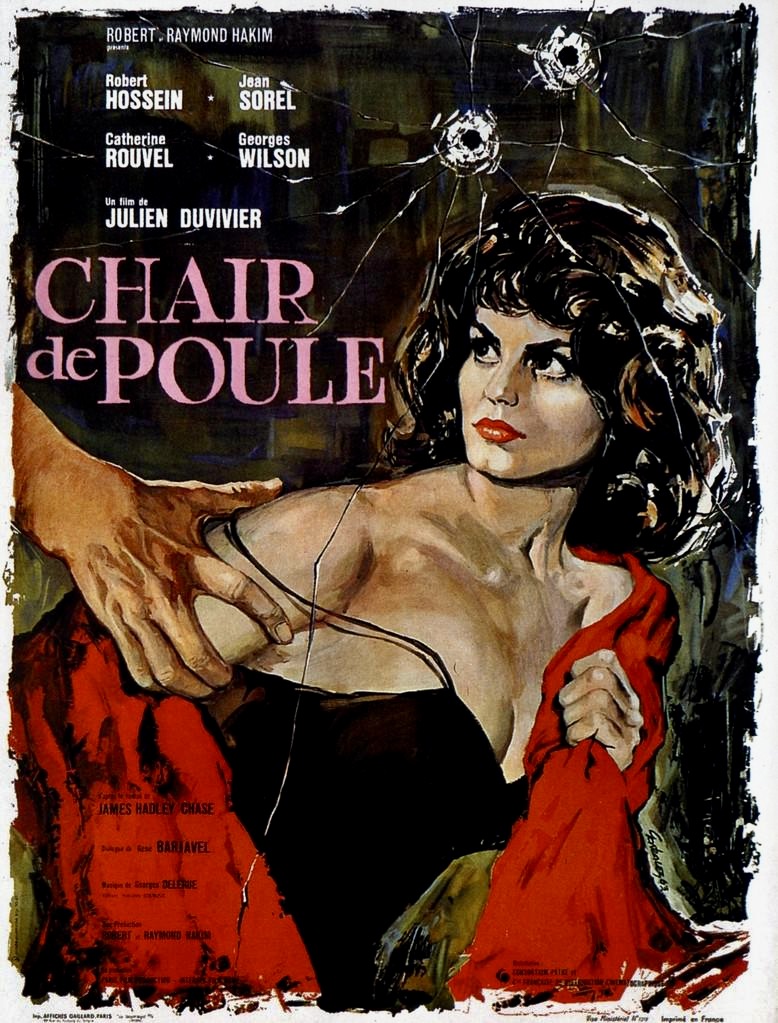
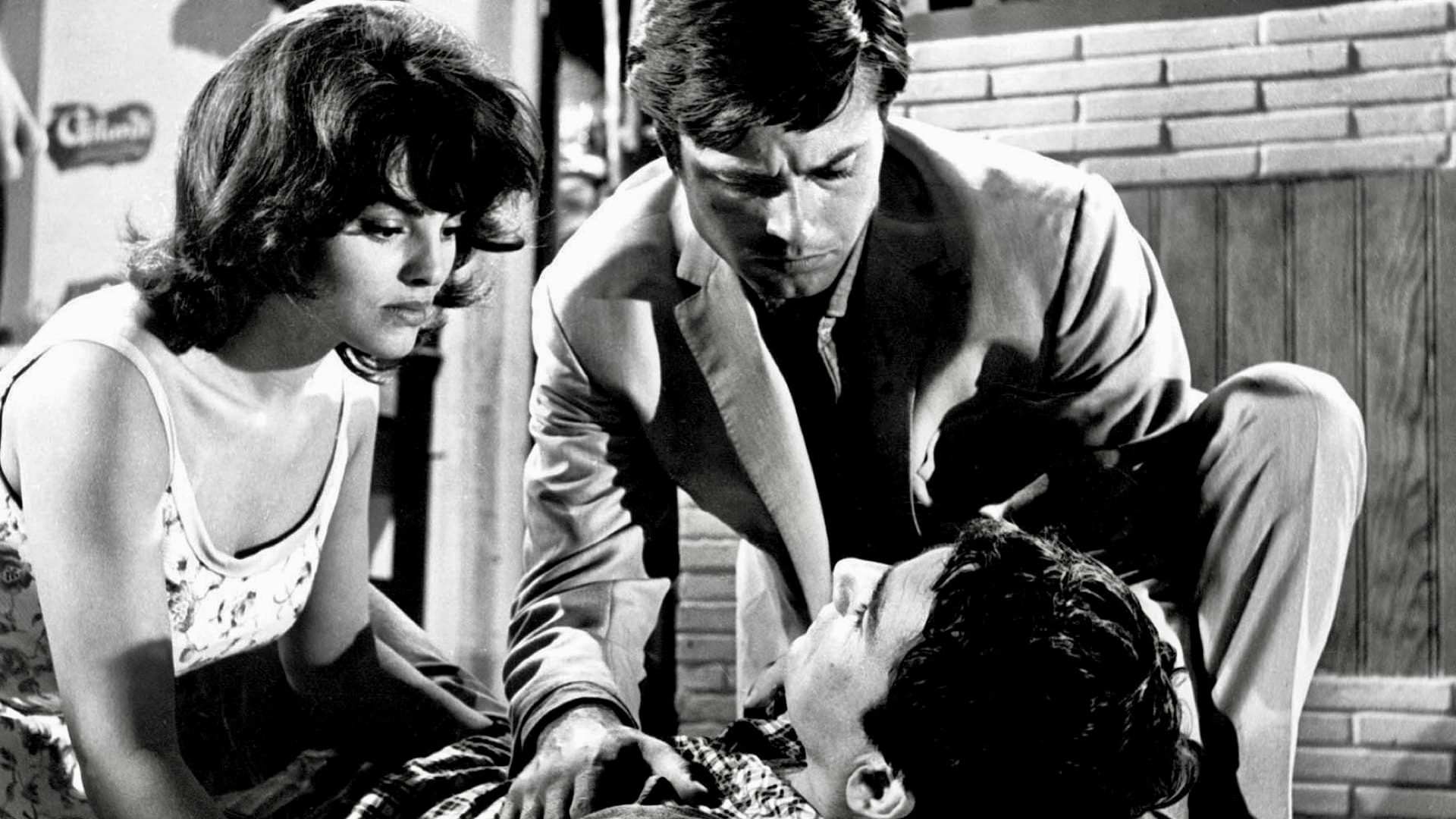
Daniel and Paul are professional locksmiths and good friends who work for the same company. When they mastermind the robbery of a client by breaking into a safe Daniel had previously repaired, the theft goes awry, with the client dying from a blow to the head. Paul escapes but Daniel is shot and injured by the police in the ensuing chase and sentenced to 20 years in prison. After a year in the stir, Daniel escapes by picking the jail cell lock (of course) and tries to elude the authorities in a desert-like region of Alpes-Maritimes in southeastern France. Under an assumed name, he manages to get hired on as an attendant at an isolated gas station run by Thomas and his sexy young wife Maria but Daniel soon realizes he has created a new prison for himself.
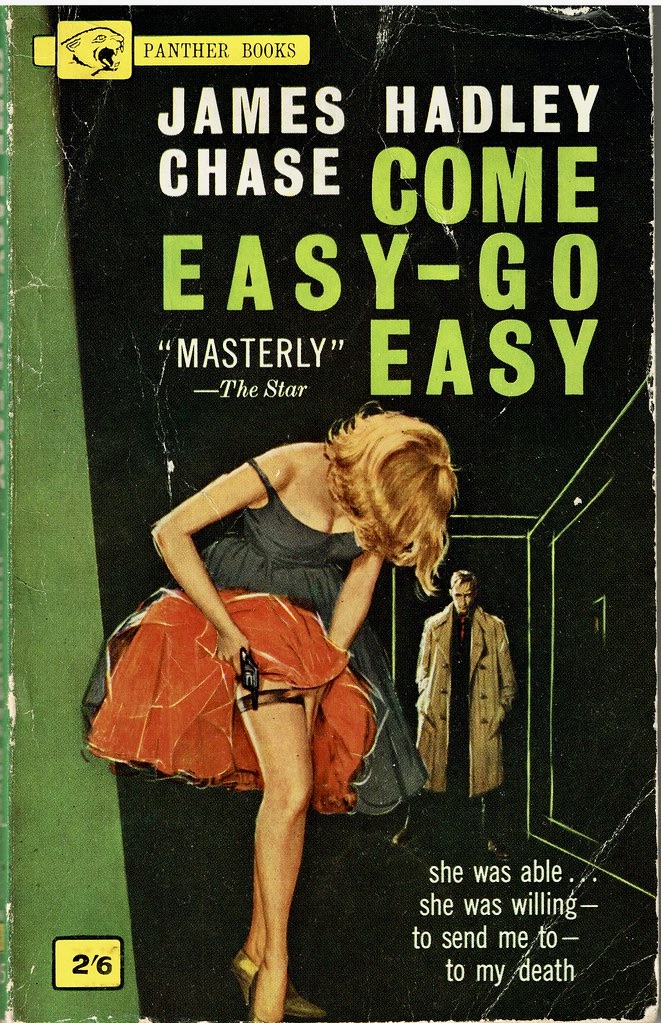
Based on the 1960 crime noir Easy Come, Easy Go by British author James Hadley Chase, Chair de Poule (English title: Highway Pick-Up, 1963) is the penultimate film of the legendary French director Julien Duvivier. If the basic premise sounds like it was inspired by The Postman Always Rings Twice, you wouldn’t be completely wrong. Chase (1906-1985), who used many pseudonyms during his career such as Raymond Marshall and Ambrose Grant, was actually motivated to become a writer after reading James M. Cain’s 1934 novel. Chase’s first novel, No Orchids for Miss Blandish (1939), was an overnight best seller and was adapted into a stage play and two film versions, one in 1948 and one in 1971, under the title The Grissom Gang, which was directed by Robert Aldrich.
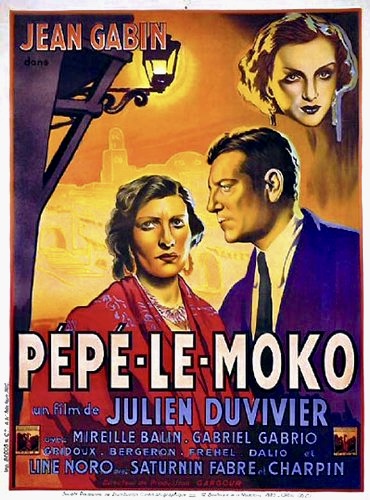
Highway Pick-Up unfolds in the manner of a classic truck stop noir not unlike The Postman Always Rings Twice but the unexpected twists and turns along the way also incorporate themes of betrayal, jealousy, greed and cold-blooded murder which are the prime ingredients of every pulp fiction. You can also see elements of Cain’s Double Indemnity and Jacques Tourneur’s classic 1947 noir thriller Out of the Past, but in the end, Duvivier’s film is closer in mood and style to the sort of pessimistic melodramas he helmed during the poetic realism phase of French cinema in the late 1930s and includes the director’s influential Pepe le Moko (1937) with Jean Gabin.
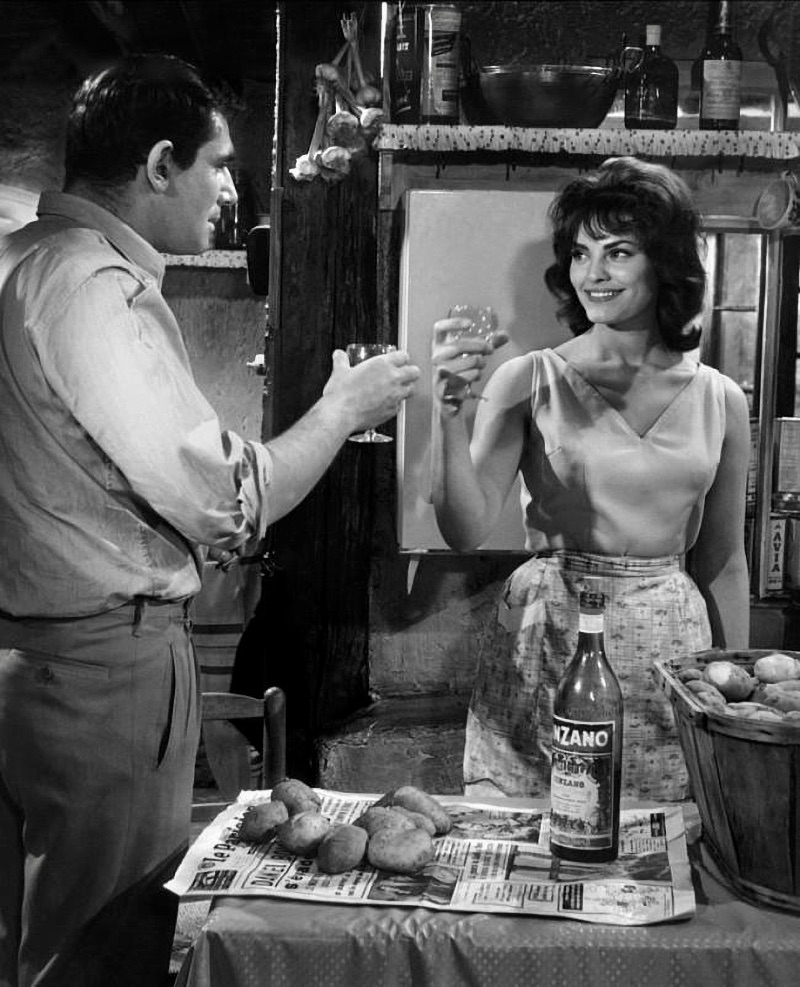
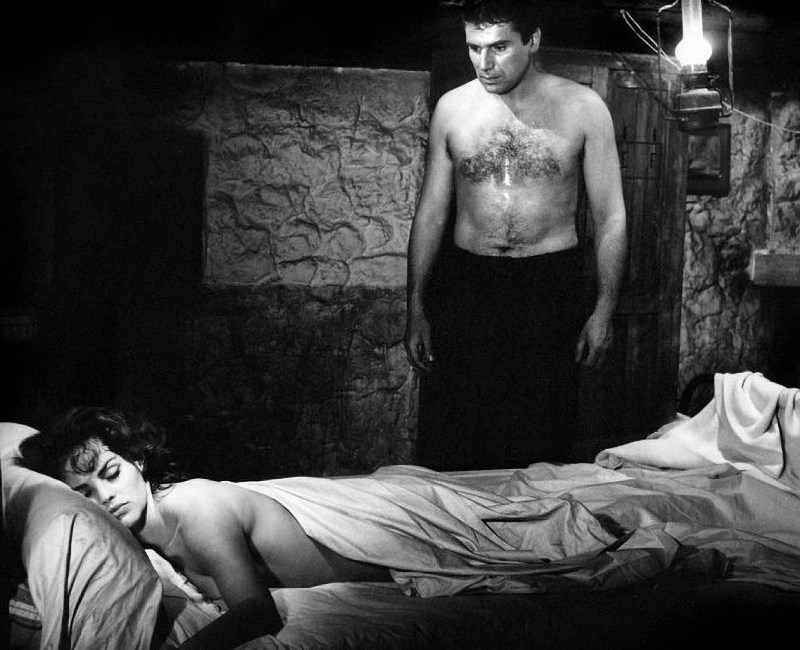
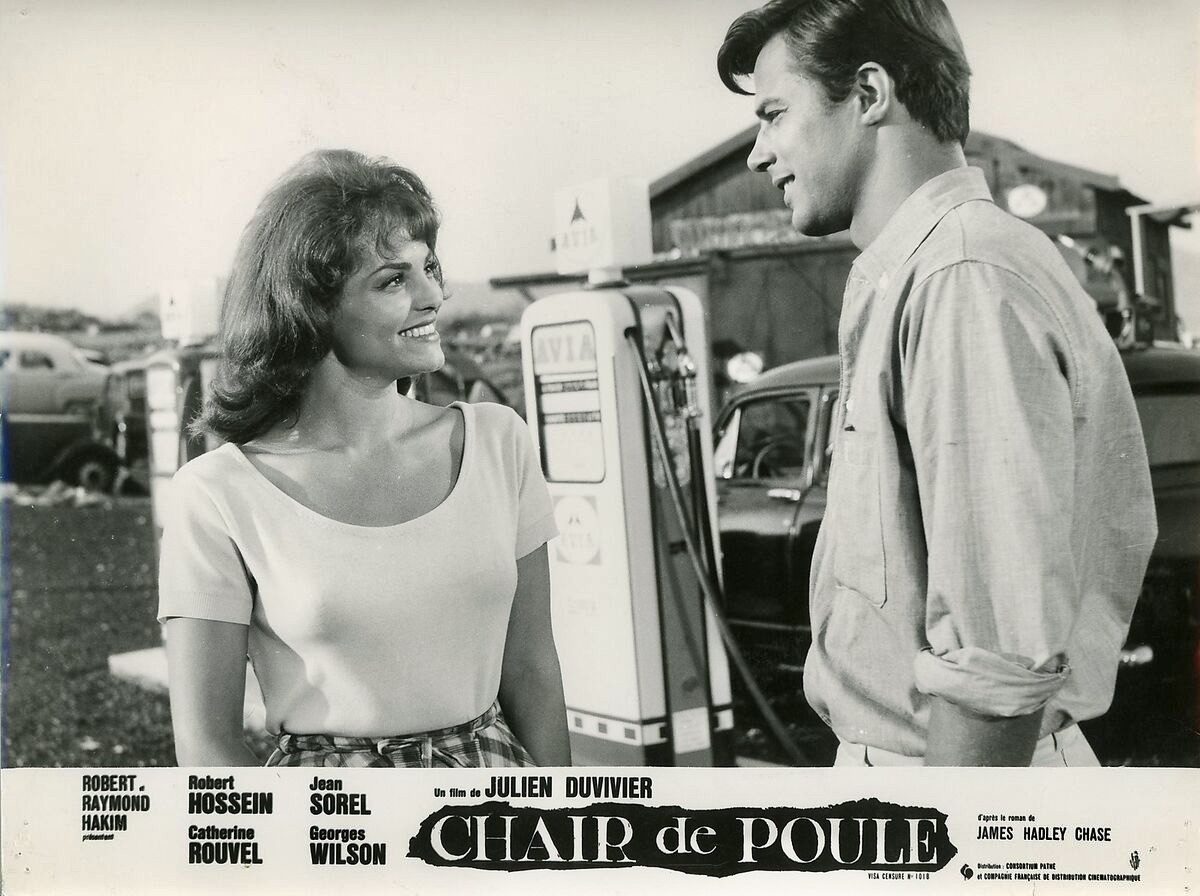
Daniel (played by Robert Hossein) is not your typical film noir protagonist. He has enjoyed a spotless record as a dependable working class denizen when he is persuaded by his co-worker Paul (Jean Sorel) to help him rob a client’s safe. That is his first mistake but Daniel will make several more in his slide into criminality through circumstances he has little control over. The interesting twist in Highway Pick-Up is that Daniel is not initially attracted to or even interested in Maria (Catherine Rouvel), the long-suffering but conniving wife of Thomas (Georges Wilson). He sees right through her gruff, hostile manner but she also immediately sizes him up as a man on the run…which is confirmed after she sees his photo in a newspaper story on “the Locksmith Killer” and his escape from jail. Maria begins blackmailing him in a scheme to steal her husband’s savings from his wall safe (if he doesn’t help, she’ll notify the local police about his true identity). At one point, Daniel says to her, “It’s a real pity you’re so rotten.”
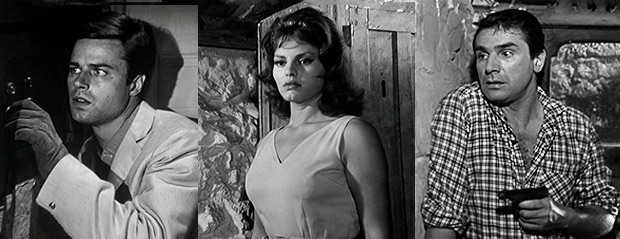
The truck stop/gas station where Daniel finds temporary employment is located on a desolate, arid mountain highway with nothing between it and the nearest village. The constant sound of crickets chirping permeates the soundtrack, establishing the location as about as cheerful as a graveyard..and pretty soon the dirt floor garage does serve as a burial place for one unlucky party.
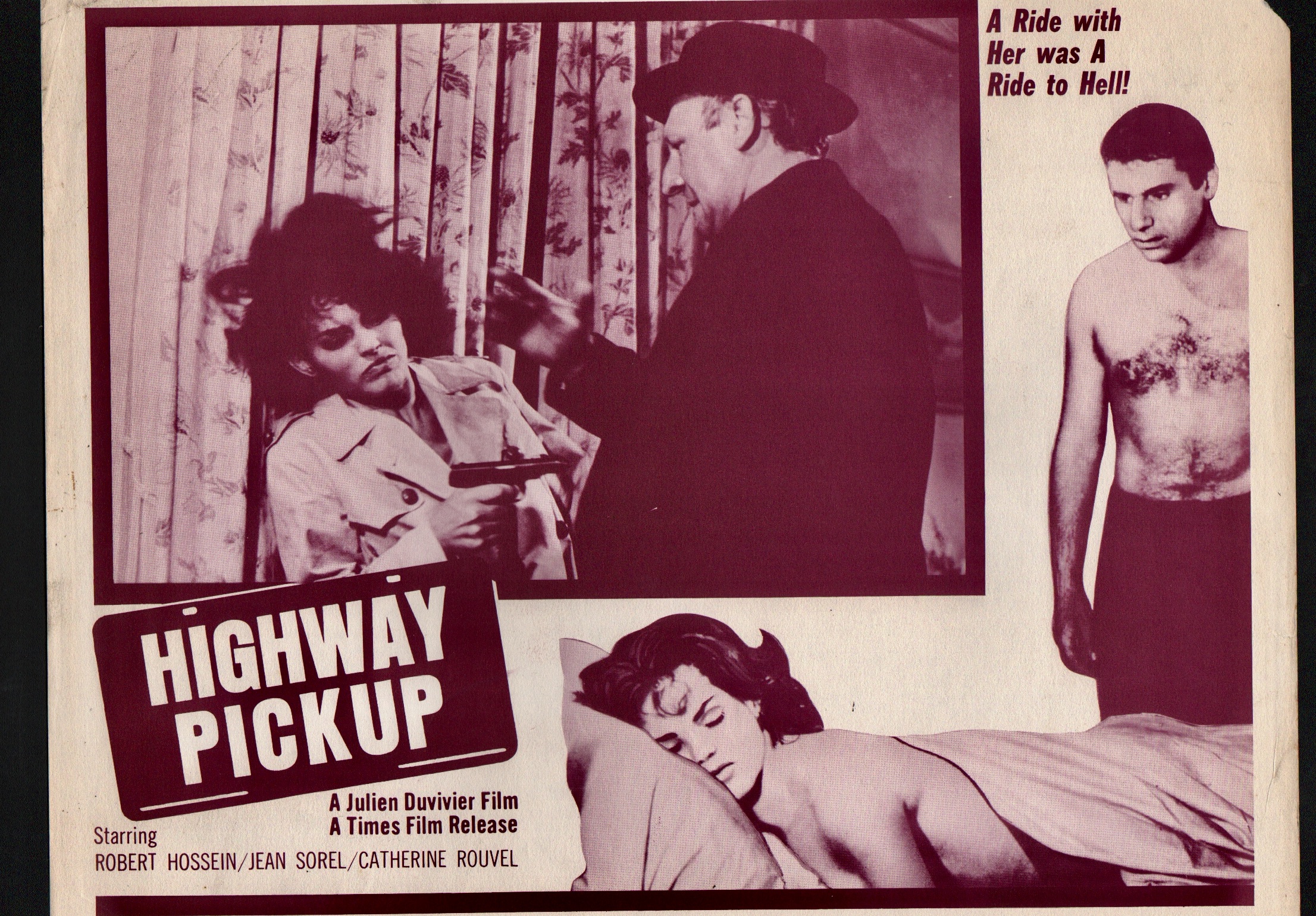
With the exception of Daniel, almost every character we encounter in Highway Pick-Up is unsympathetic, scheming, obnoxious or suspicious. Even Thomas, the seemingly generous gas station owner, is not much better than a slave owner in regards to his wife. He rescued her from a waitressing job (and a bad local reputation) by marrying her in exchange for sex whenever he wants it and to cook for him and perform endless chores around the truck stop. But much worse than him is his parasitic ex-in-law Roux (Lucien Raimbourg) and his oversized, rifle-toting son. There is also Paul, who shows up at the truck stop looking for Daniel, and his true intentions aren’t obvious at first.
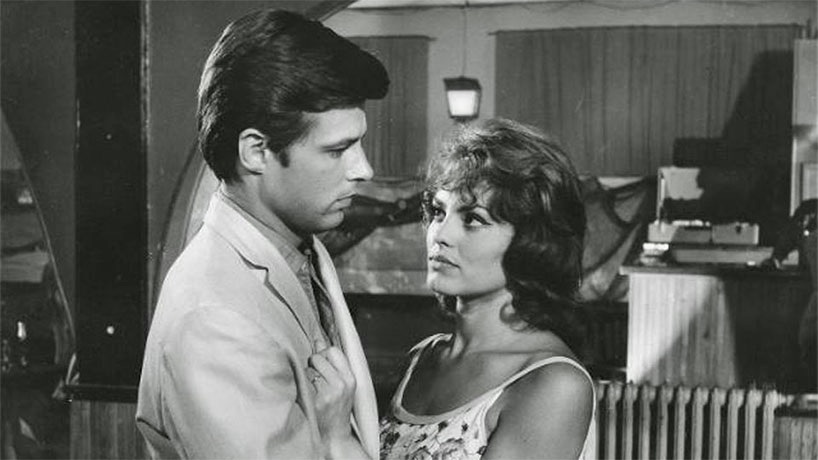
The entire narrative of Highway Pick-Up unfolds with a certain pleasing familiarity but just when you think it is turning into a predictable potboiler it introduces an unexpected development to keep you on your toes. Duvivier directs in a fast, lean manner, avoiding unnecessary exposition, and the performances by an ensemble cast are first rate, especially Jean Sorel, who seems to be most convincing when he is playing handsome but completely amoral predators. Nicole Berger (Shoot the Piano Player) as Paul’s apprehensive girlfriend in Paris and Jean-Jacques Delbo as a suspicious friend of Thomas also stand out in minor supporting roles.
The cinematography by Leonce-Henri Burel (Diary of a Country Priest, A Man Escaped) sets the appropriate tone from its rainy introductory scene to the sun baked truck stop setting to the fiery finale with a gleefully cackling Daniel and similarities to the climaxes of The Treasure of the Sierra Madre (1948) and The Killing (1956). Even the music score by Georges Delerue (Jules and Jim, That Man from Rio) establishes a melancholic mood with the opening theme song.
Yet, despite Highway Pick-Up’s virtues as a stylish genre entertainment, it was considered old fashioned and out of date by French moviegoers and critics at the time of its release. For one thing, the Nouvelle Vague had such a profound impact on the French film industry in the late 1950s than by 1963 Duvivier and some of his famous contemporaries like Marcel Carne (Port of Shadows, 1938) were considered dinosaurs. In fact, many of the Cahiers du Cinema critics accused Duvivier and other older directors of being unimaginative and stolid in their approach to cinema. Filmmaker Jean-Luc Godard was particularly hard on Duvivier, attacking his technique: ““Your camera movements are ugly because your subjects are bad, your casts act badly because your dialogue is worthless; in a word, you don’t know how to create cinema because you no longer even know what it is.”
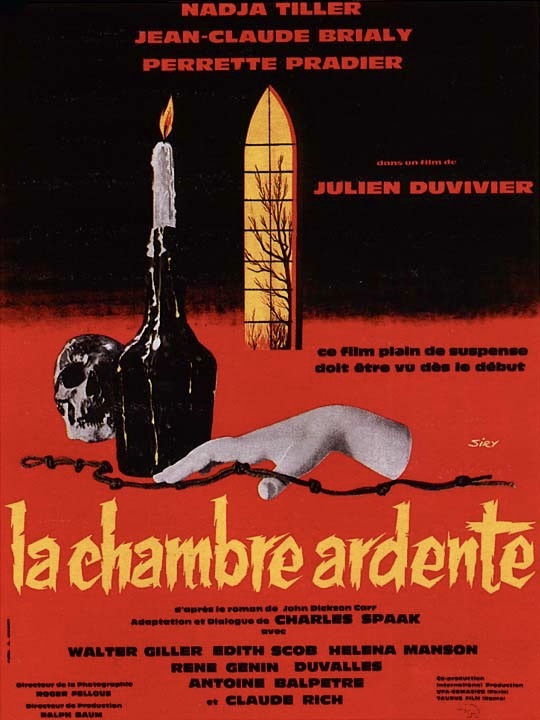
This might be why Highway Pick-Up is almost forgotten today but screenings of the film in recent years have revived interest in not only the movie but most of the other work Duvivier completed in his fifth and final decade in filmmaking in the 1960s. The director’s final theatrical film was Diaboliquement Votre (English title: Diabolically Yours, 1967), a crime thriller with Alain Delon, but also overlooked is Duvivier’s borderline horror drama La Chambre Ardente aka The Burning Court (1962) and the episodic sketch comedy The Devil and the Ten Commandments (1962).
Still, Duvivier’s reputation rests on the work he directed in the silent era up through the late 1930s. Poil de Carotte (1925) is considered one of his greatest achievements from the silent era (he would remake it in 1932 and considered it one of his favorite films) and he achieved international recognition and acclaim for such films as Maria Chapdelaine (1934), the 1936 remake of The Golem, Pepe le Moko and Un Carnet de Bal (both 1937).
Duvivier had a brief flirtation with Hollywood that began with the lavish MGM biopic The Great Waltz (1938), co-directed with Victor Fleming and starring Fernand Gravet as composer Johann Strauss. And he would attempt a few other major studio production projects between 1941 and 1944 including Tales of Manhattan for 20th-Century-Fox and Flesh and Fantasy for Universal. Nevertheless, he preferred working in Europe and returned to France in 1946 to make the noir masterpiece Panique. Although it was considered a failure at the time, it marked the beginning of a career comeback for Duvivier, who would direct some of his biggest commercial successes in the fifties such as The Little World of Don Camillo (1952) and Holiday for Henrietta (1953).
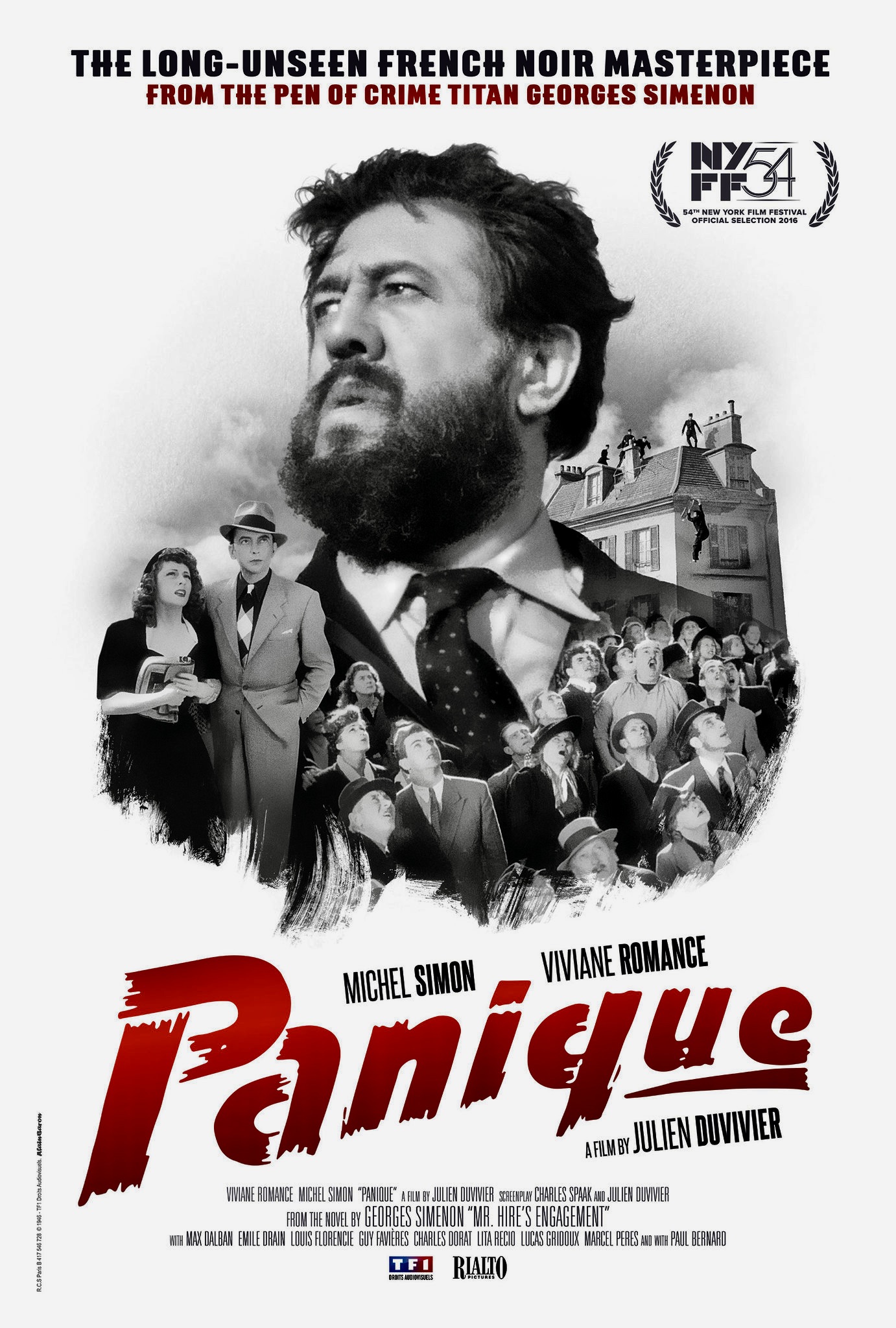
There was really no genre that Duvivier that couldn’t master and he dabbled in every one – religious epics, musicals, melodramas, comedies, thrillers, biopics and literary adaptations of famous novels by Emile Zola, Georges Simenon and Leo Tolstoy. This may be why some critics dismissed him as an impersonal filmmaker with nothing to say but others have re-evaluated his career and cinematic contributions like the film scholars Ralph Eue and Frederik Lang, who wrote, “Out of the ghost of poetic realism and from film to film, Duvivier developed an increasingly complex worldview in which abrupt violence can always erupt and that nevertheless often leaves a humanistic spark of hope. He was more fascinated by the abysses of human nature than its charms. One person alone can be good, but as a pack, they almost always become evil. Christian symbolism is often present, but Christianity offers no relief for salvation. Solidarity and friendship can make this possible, but just as often prove illusory.”
Most of the movies Duvivier directed in the 1960s remain difficult to see in authorized French language versions (with English subtitles) and Highway Pick-Up is no exception. You might be able to find an import DVD from online sellers but this is an overlooked gem that deserves a quality restoration from a distributor like Kino Lorber, which has remastered and released a number of forgotten French noirs in recent years such as Edouard Molinaro’s Back to the Wall (1958) and Witness in the City (1959).

Other links of interest:
http://www.filmsdefrance.com/biography/julien-duvivier.html
https://www.theyshootpictures.com/duvivierjulien.htm
https://orwell.ru/people/chase/jhc_en
https://www.screeningthepast.com/issue-39-sam-rohdie/julien-duvivier-love-unto-death/
 Cinema Sojourns