
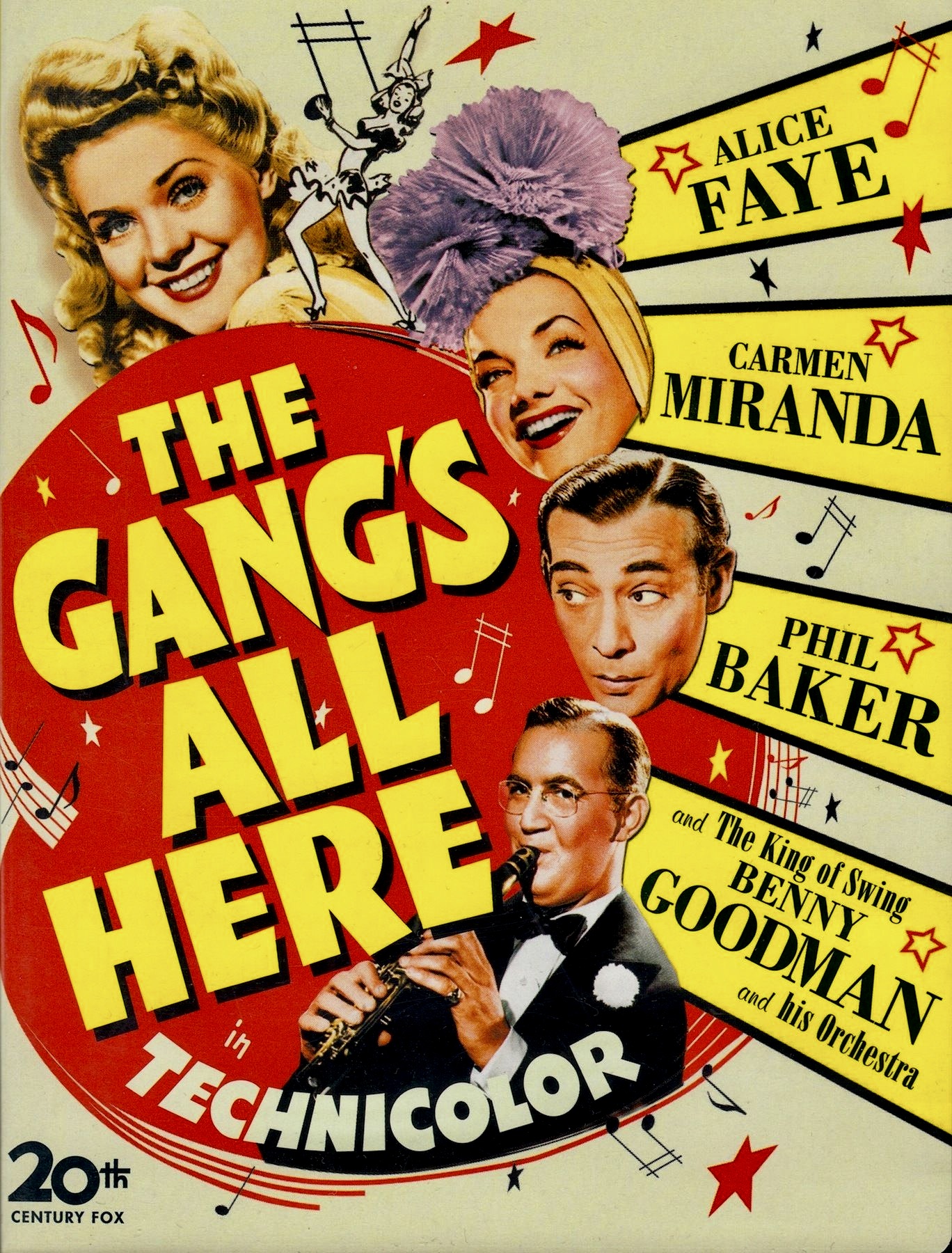
In the early 1970s midnight movies became a craze after the Elgin Theatre in New York discovered a surprise hit with Alejandro Jodorowsky’s El Topo (1970). Soon other theatres across the country launched their own midnight film series and movies like Night of the Living Dead (1968), Pink Flamingos (1972), The Harder They Come (1972) and Harold and Maude (1972) began to attract audiences that missed those movies during their limited initial release. Some of those early midnight movie choices were surprising and included Hollywood classics like Walt Disney’s Fantasia (1940), the rock ‘n’ roll satire The Girl Can’t Help It (1956) and the WW2 era musical The Gang’s All Here (1943). Yet, when you consider the fact that a lot of those early midnight movie screenings were attended by younger audiences, many high on pot or other substances, it starts to make sense. The Gang’s All Here, in particular, with its eye-popping dayglo Technicolor hues, surreal art direction and outlandish dance choreography is as psychedelic and mind-blowing as the “trip sequence” in Kubrick’s 2001: A Space Odyssey (1968).
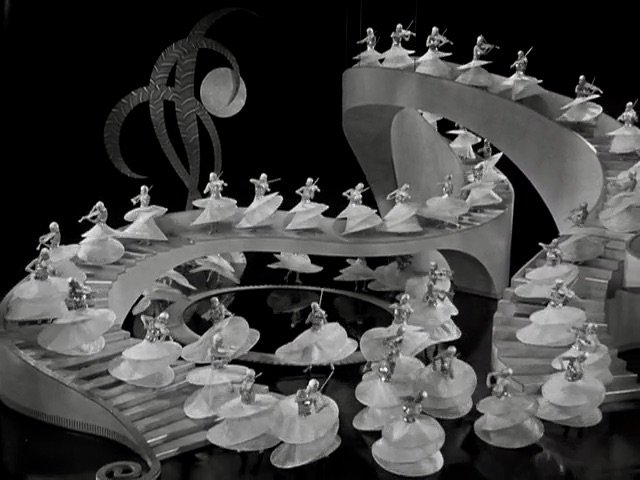
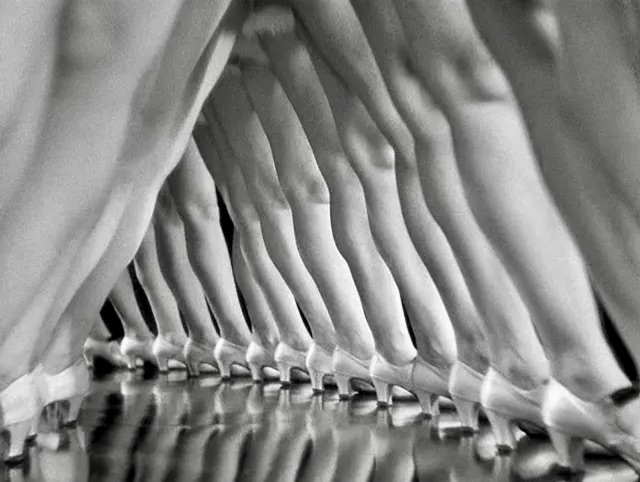
Busby Berkeley, the director of The Gang’s All Here, was already a Hollywood legend by this point in his career. Even if he had never made any other movies after his years at Warner Brothers, he would still be immortalized for the dance routines he created for such Depression-era musicals as 42nd Street (the “Shuffle Off to Buffalo” number and the risqué presentation of “Young and Healthy”), Gold Diggers of 1933 (the chorus girls and their illuminated electric violins from “The Shadow Waltz”) and Footlight Parade featuring the awe-inspiring “By a Waterfall” sequence. But even prior to his Warner Brothers’ career, Berkeley had made a name for himself at Samuel Goldwyn Studios, designing innovative dance numbers for Eddie Cantor musicals like the two-strip Technicolor Whoopee! (1930) and The Kid from Spain (1932).
After leaving Warner Brothers, Berkeley would enjoy a second career peak at MGM, where he helmed and choreographed such box office hits as Babes in Arms (1939), Strike Up the Band (1940) and Girl Crazy (1943), all starring the dynamic screen team of Mickey Rooney and Judy Garland. In fact, Berkeley had just finished Girl Crazy when he was tapped by 20th-Century-Fox to direct The Gang’s All Here, which reunited him with his former colleague Darryl F. Zanuck, the executive producer of 42nd Street at Warner Bros. What many people don’t realize is that Berkeley had no background in dance or choreography. He had actually learned his craft during WW1 as a second lieutenant in the artillery corps where he was charged with creating parade drills with a theatrical flair. He further honed his skills after the war by working in the theater and choreographing dance routines for stock companies, which eventually led to opportunities in Hollywood.
In some ways, The Gang’s All Here can be seen as the pinnacle of his career since it was the last movie in which he had total creative control but it also features some of the greatest choreographed musical numbers of his career. (His final directorial effort, MGM’s Take Me Out to the Ball Game (1949) looks underwhelming in comparison plus Berkeley was removed from the troubled production of Annie Get Your Gun a year later.)
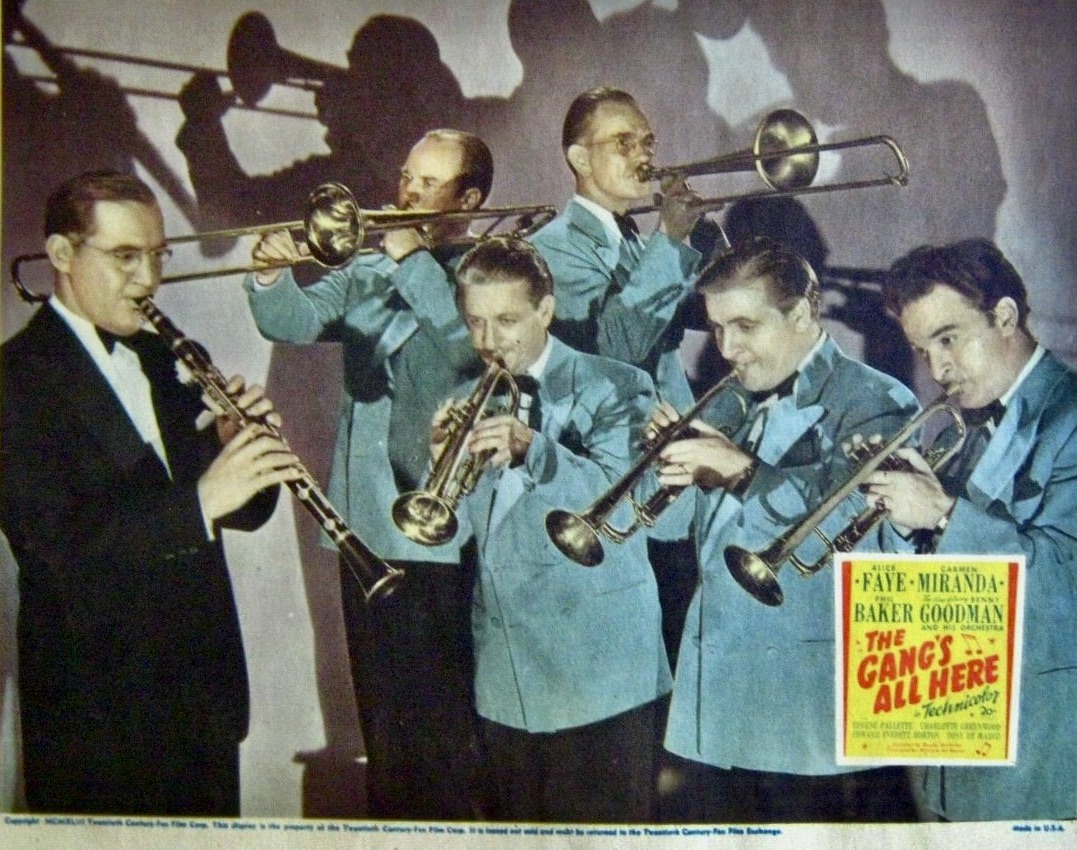
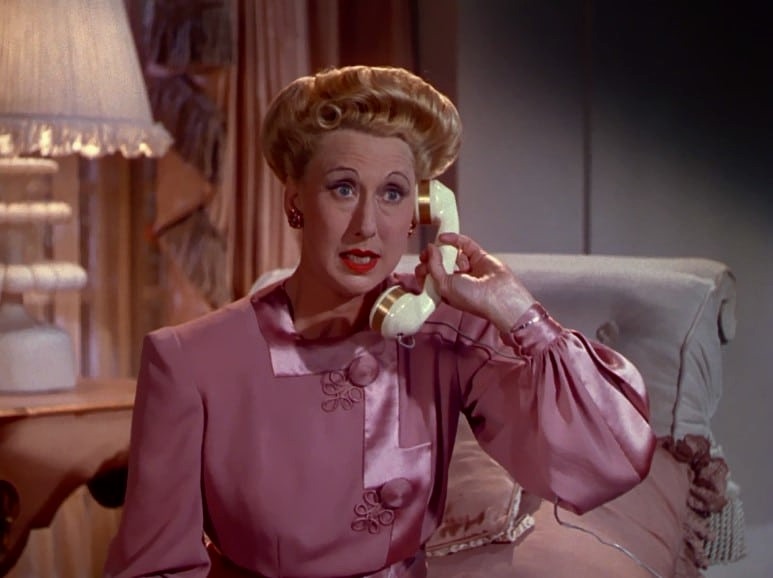
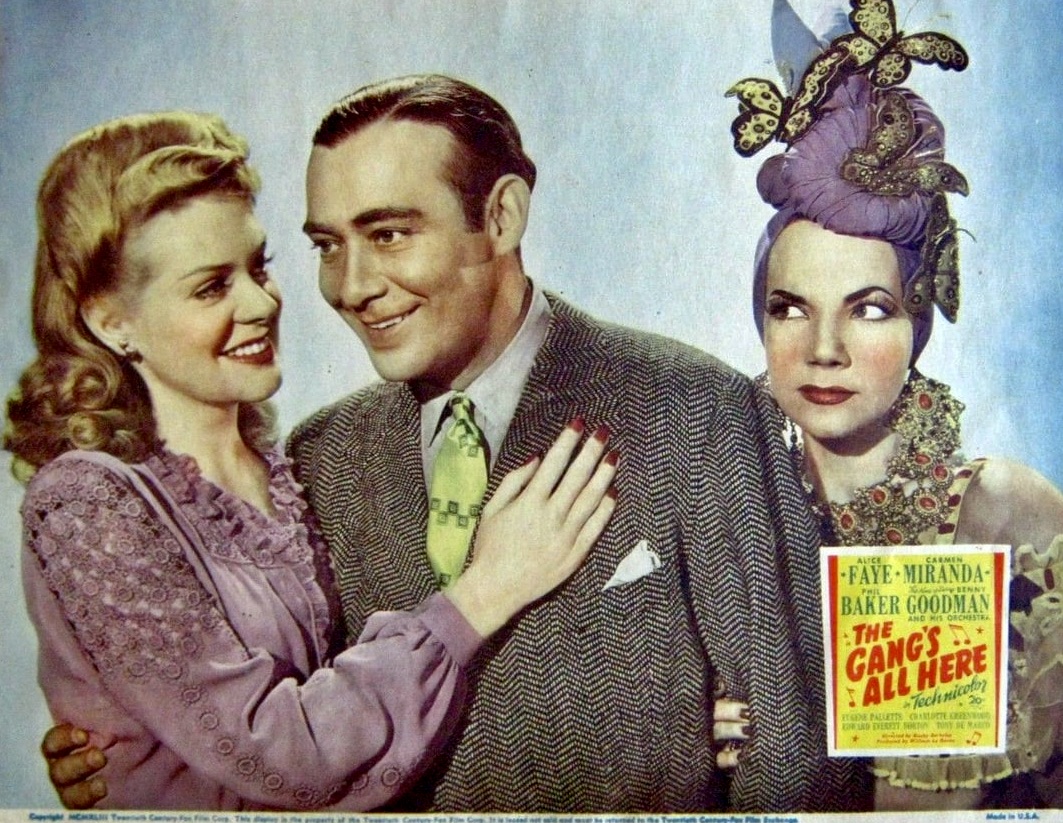
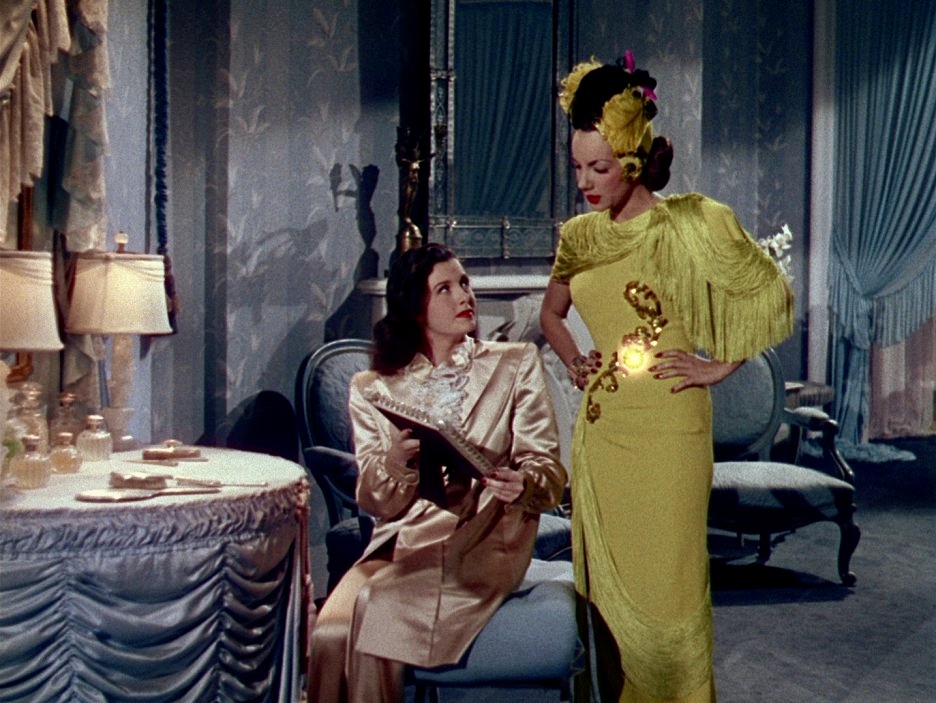
Like most Busby Berkeley musicals, the plot of The Gang’s All Here is perfunctory and inconsequential compared to the musical numbers, art direction and cinematography. Alice Faye plays Edie Allen, a singer at a New York City nightclub, who also works as a volunteer at the Broadway Canteen entertaining servicemen. It is there that she meets Andy (James Ellison), an army sergeant on his way to combat duty in the Pacific. He is immediately smitten even though he is engaged to be married to his high school sweetheart Vivian (Sheila Ryan). This leads to the usual romantic complications with comic relief provided by Andy’s father (Eugene Paulette), Vivian’s parents (Charlotte Greenwood & Edward Everett Horton) and Dorita (Carmen Miranda), a visiting singer from Brazil.
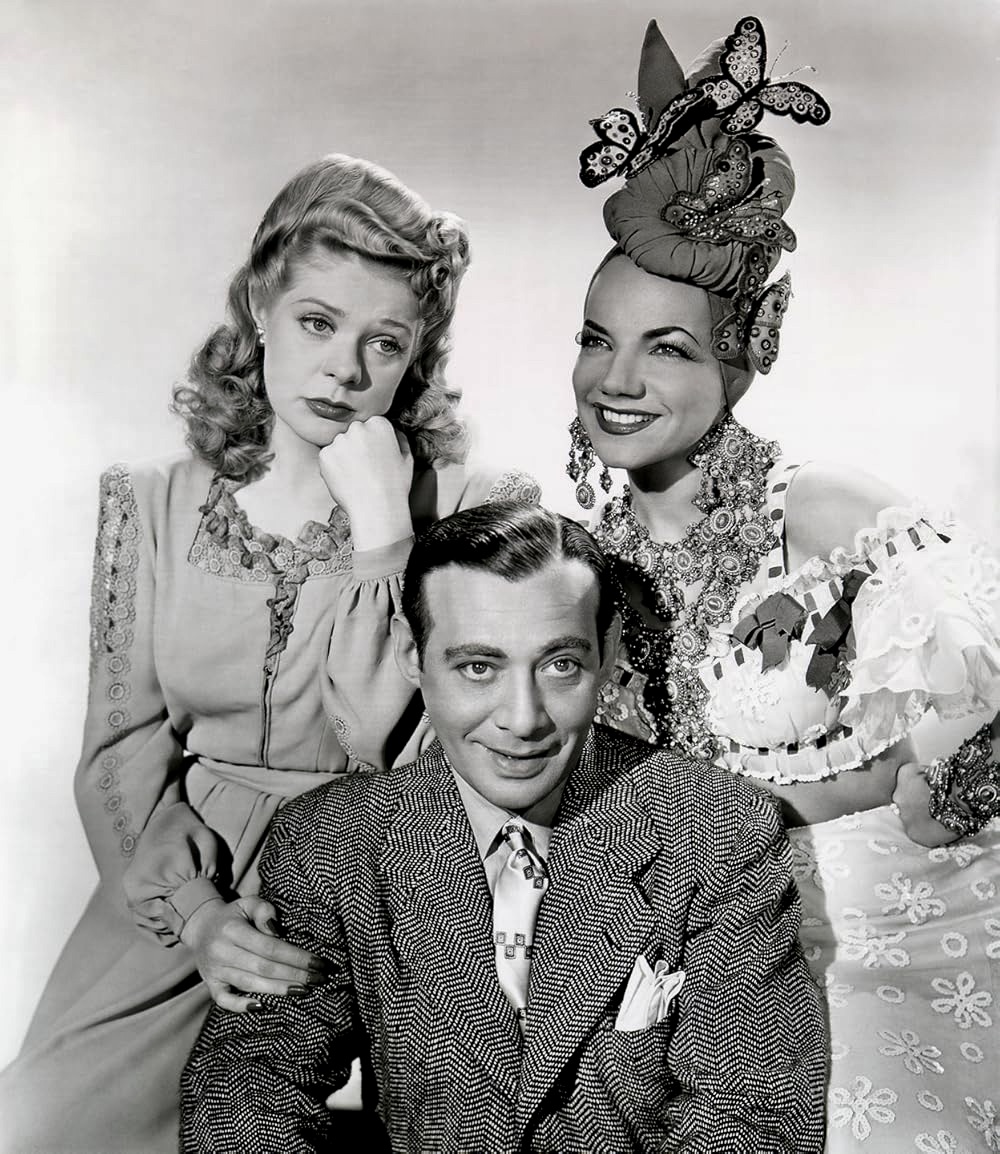
The whole shebang ends happily with Vivian preferring to launch a career as a professional dancer rather than marry out of obligation to her family’s wishes. Andy, of course, feels the same way and heads for the alter with Edie but all of this takes a back seat to the fantasy world in which Berkeley’s film takes place. For one thing, there is not one scene in The Gang’s All Here than uses an exterior or natural outdoor setting. Everything takes place in a studio designed set from a Broadway nightclub to a duet by the ocean to an elaborate garden party. This kind of artificiality could be claustrophobic but here it borders on the dreamlike and the heightened hues of Technicolor push it into the realm of a demented fairy tale.
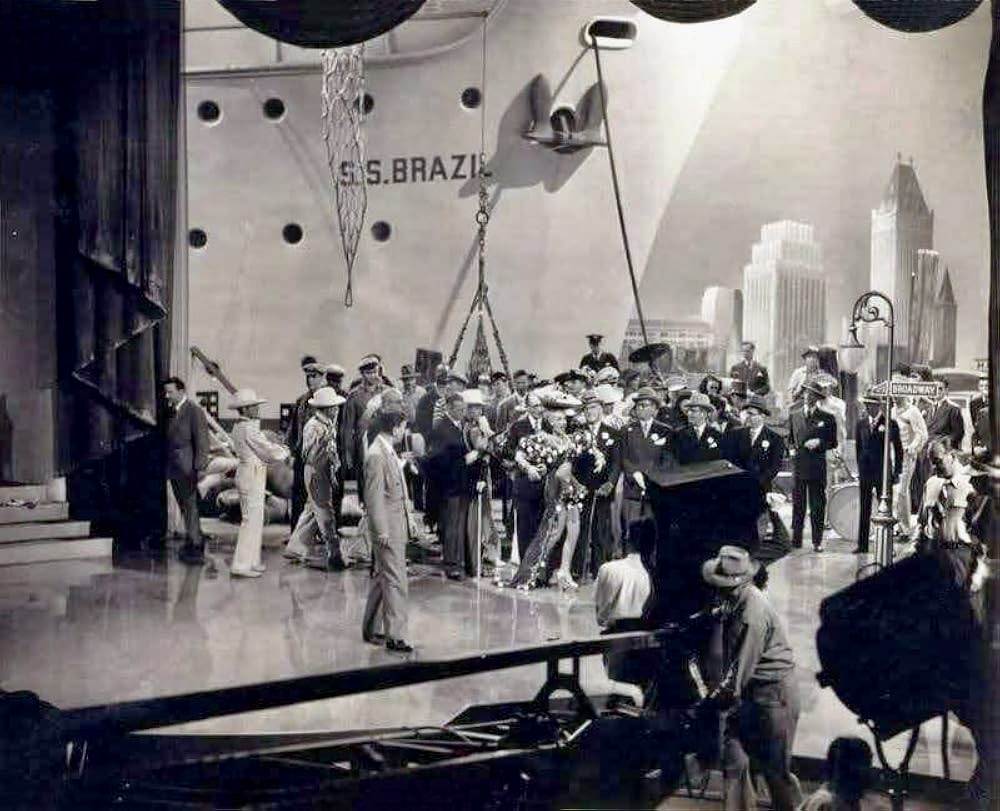
The opening musical number “Brazil,” which quickly segues into “You Discover You’re in New York,” is immediately disorienting on a visual level. It begins with the vocalist’s face partially obscured in shadow before revealing that he is singing from the depths of a cruise ship, the S.S. Brazil. As the camera pulls back to reveal passengers disembarking at the dock, we notice a fruit basket being lowered from the ship that turns out to be an enormous hat on the head of Carmen Miranda’s Dorita, who launches into one of her specialty numbers, which is sprinkled with amusing malapropisms. When the camera pulls back still further, the shipping dock is revealed to be part of the enormous stage set at the featured New York nightclub.
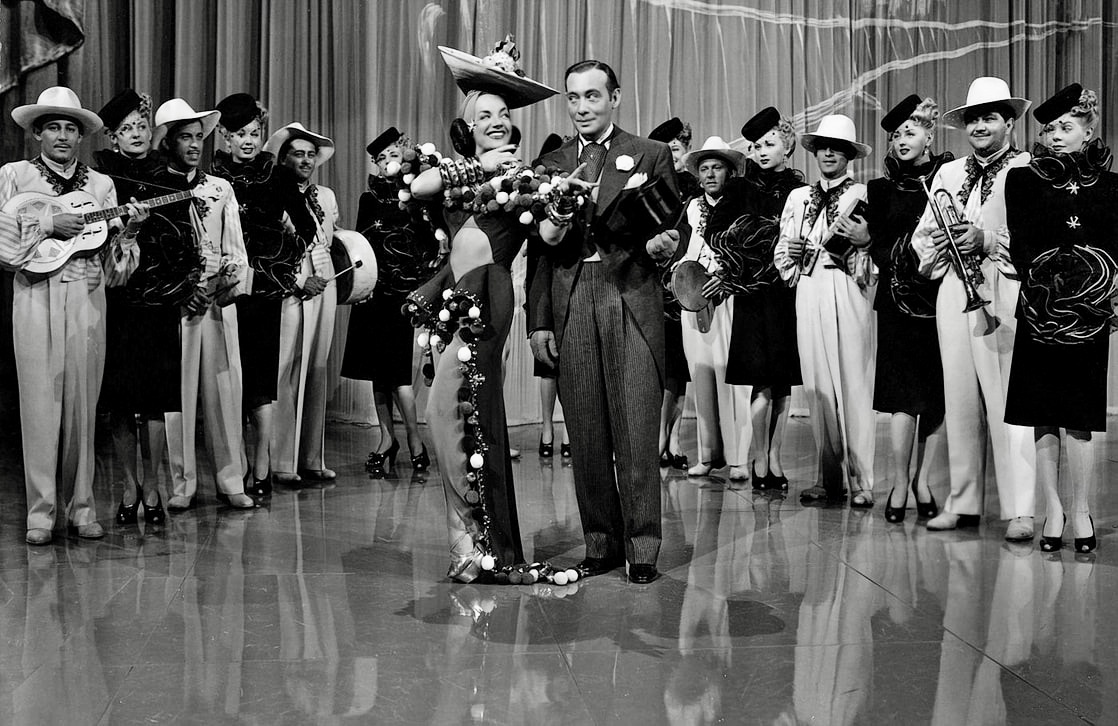
Berkeley makes no attempt to impose reality on any aspect of The Gang’s All Here and he even pokes fun at conventional tropes in musicals such as a romantic lead breaking into song as if it is ordinary behavior. Prior to the song “A Journey to a Star,” Edie (Faye) says to Andy (Ellison), “Hear the orchestra?” as the music cues up offscreen. “Yeah, where’s it coming from?” he questions. “Where’s your imagination?” she replies. The movie is full of playful “breaking the fourth wall” jokes that flatter the viewer’s self-awareness like Edie’s throwaway line, “Stop acting like Don Ameche, and get me a taxi.” (Faye and Ameche appeared in six musicals together).
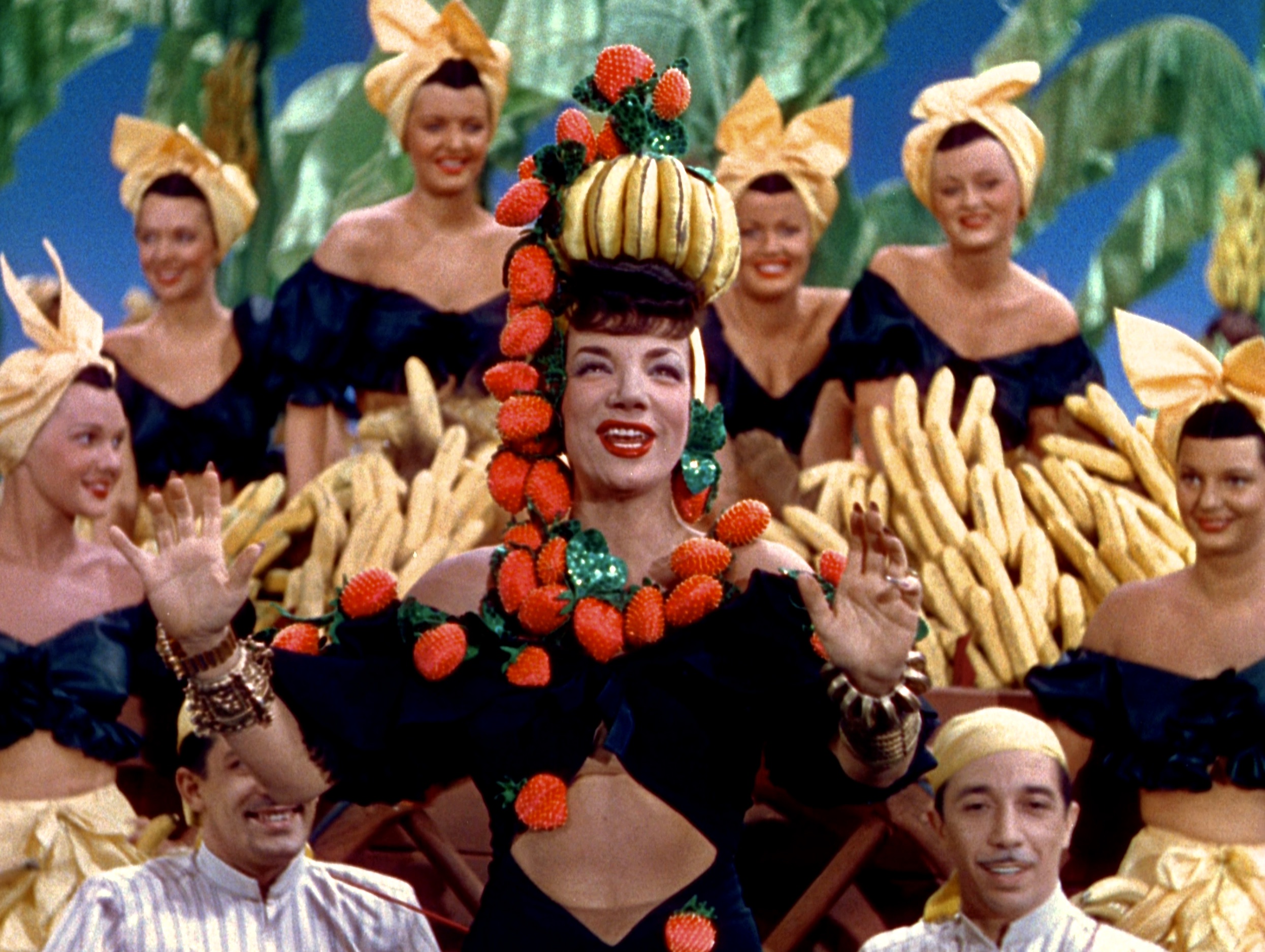
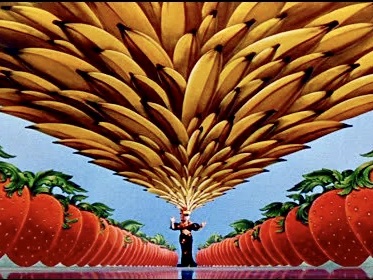
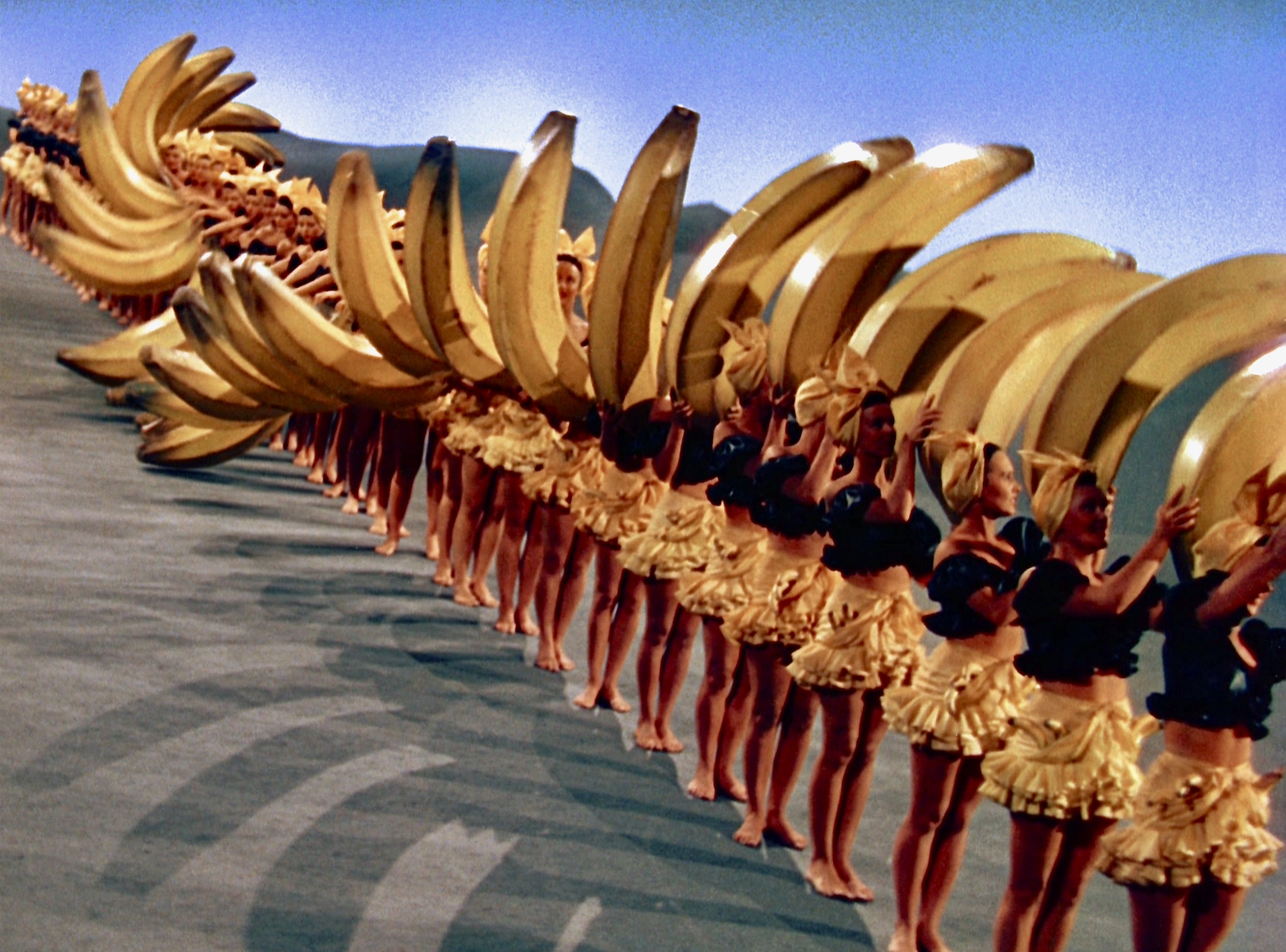
Good taste also wasn’t a concern for Berkeley who took phallic symbolism to King Kong heights in the film’s most outrageous number, “The Lady in the Tutti-Frutti Hat,” performed by Dorita. Complete with a fake tropical isle set featuring organ grinders with their monkeys and barefoot chorus girls brandishing gigantic bananas, the number is delightfully insane yet hypnotic in its relentlessness. The mutant bananas are not only used as a xylophone but also form arches, barriers, and ideal dance partners as they are choreographed in eccentric ways and captured by the constantly swooping and careening camerawork of Edward Cronjager, a seven-time Oscar nominated cinematographer (Cimarron, Beneath the 12-Mile Reef).
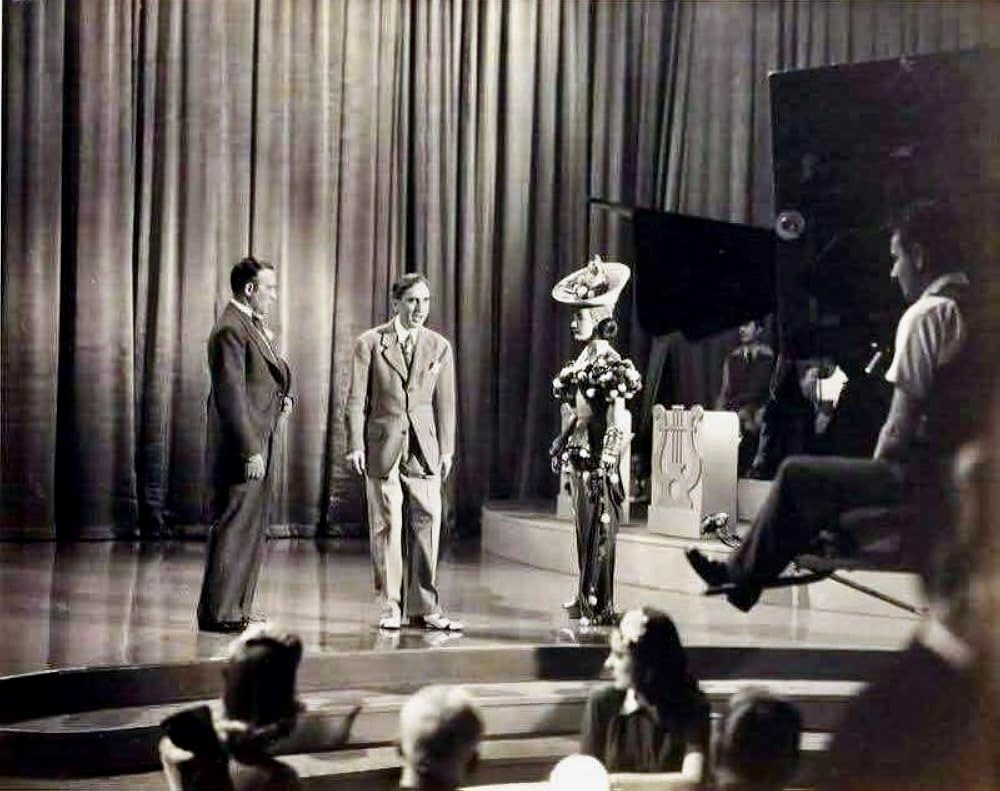
Apparently, Berkeley was so obsessive about the filming of The Gang’s All Here that he often rode shotgun on Cronjager’s camera mount, ordering the cinematographer to push in closer on the singer and dancers to the extent that they were in danger of being hit by the heavy equipment. At one point, Carmen Miranda erupted in anger, saying “Dat man ees crazy. What you theenk you are anyhow, a head hunter? If you want to keel me why you don’ use a gun?” In his own defense, Berkeley would later state, “We’ve got a camera that can go anywhere. Why not use it? Sure a theater audience couldn’t look down on a stage full of dancers, but that’s no sign it wouldn’t like to. If the camera can let ‘em why not?”
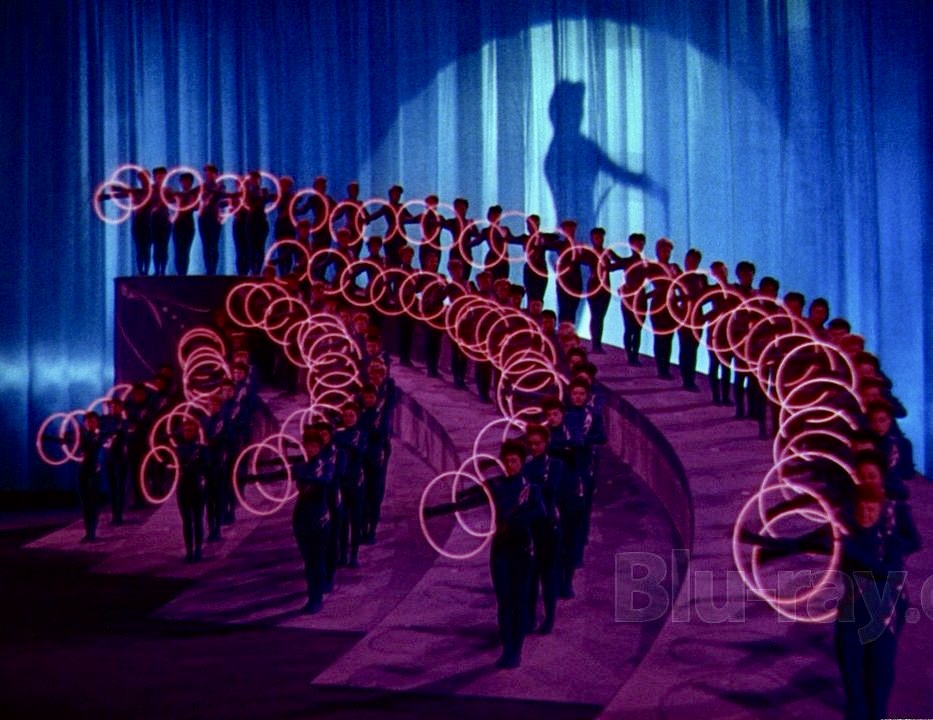
Another visual marvel of supreme nuttiness is “The Polka Dot Polka,” the grand finale of The Gang’s All Here and it might be even more bizarre than “The Lady in the Tutti Frutti Hat.” It begins with Edie singing to a stage full of dance couples, played by children with their voices dubbed by adults! and quickly morphs into a delirious hallucination where the severed heads of the main characters take turns flying into closeup view as they each get a lyric to perform. This was not the studio’s original plan for the last musical number. Originally the movie was supposed to end with a flag-waving patriotic sendoff featuring a military wedding with Edie and Andy dressed in red, white and blue. Berkeley didn’t think that was spectacularly enough so he convinced Zanuck to allow him the creative freedom to come up with something much more fantastical.
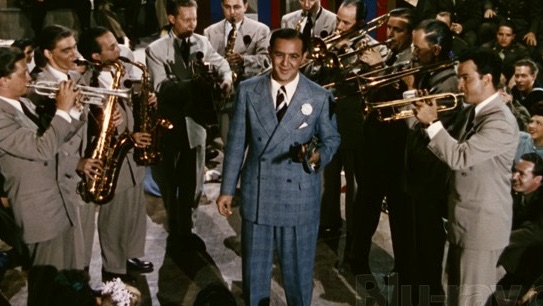
If there is a weak link in the film’s structure it is in the central romance between Alice Faye and James Ellison, due to the latter’s bland, uncharismatic presence. He comes off like a second rate Ralph Bellamy and would later find a more appropriate screen persona in B-movie westerns like Hostile Country (1950) and Dead Man’s Trail (1952). Still, the movie zips by so fast the viewer is constantly riveted by so many oddball touches and eccentricities such as Benny Goodman, performing and singing two feel good numbers, “Minnie’s in the Money” and “Paducah” (he’s not half bad as a vocalist – who knew?). Other highlights include Charlotte Greenwood doing her high kick specialty in a jitterbug number with an energetic partner who barely comes up to her chest level, the verbal sparring between the bullfrog-voiced Eugene Pallette and his prudish teetotaler pal Edward Everett Horton and Berkeley’s clever ways to condense narrative in a streamlined fashion such as the newspaper montage sequence in which we see Andy’s elevation to war hero in the span of about sixty seconds.
The Gang’s All Here was promoted as pure escapism for an America at war as well as an effort to support FDR’s “Good Neighbor” policy toward Central and South America. It is also interesting to note that while Carmen Miranda was promoted as a Brazilian bombshell and a popular fixture in Fox musicals of this era, she was actually born in Portugal.
When the movie opened, it was well received by critics although the New York Times reviewer noted, “Mr. Berkeley has some sly notions under his busby. One or two of his dance spectacles seem to stem straight from Freud and, if interpreted, might bring a rosy blush to several cheeks in the Hays office.”
Berkeley’s film did receive an Oscar nomination for Best Art Direction-Interior Decoration, color (James Basevi, Joseph C. Wright and Thomas Little) but lost to the 1943 remake of The Phantom of the Opera starring Claude Rains in the title role. It really wasn’t until the late sixties, early seventies that The Gang’s All Here began to enjoy a critical reevaluation thanks to film critics like Pauline Kael and Andrew Sarris. Kael wrote in The New Yorker, “Busby Berkeley’s own special brand of kaleidoscopic fantasy, turned into psychedelic surrealism by the electric red and greens of 20th-Century-Fox’s Technicolor. Those who consider Berkeley a master consider this his masterpiece. It is his maddest film: chorus girls dissolve into artichokes…Carmen Miranda appears in platform wedgies on an avenue of giant strawberries…and the “Polka Dot Polka” ballet…passes description.”
Sarris was equally amazed, writing, “It makes the screen glow. Nothing less than Busby Berkeley’s ‘Lola Montes,’ the ultimate expression of a very graceful talent at work. I joined whole-heartedly in the applause for the bananas number, the phallic outrageousness of which is even more startling today.”
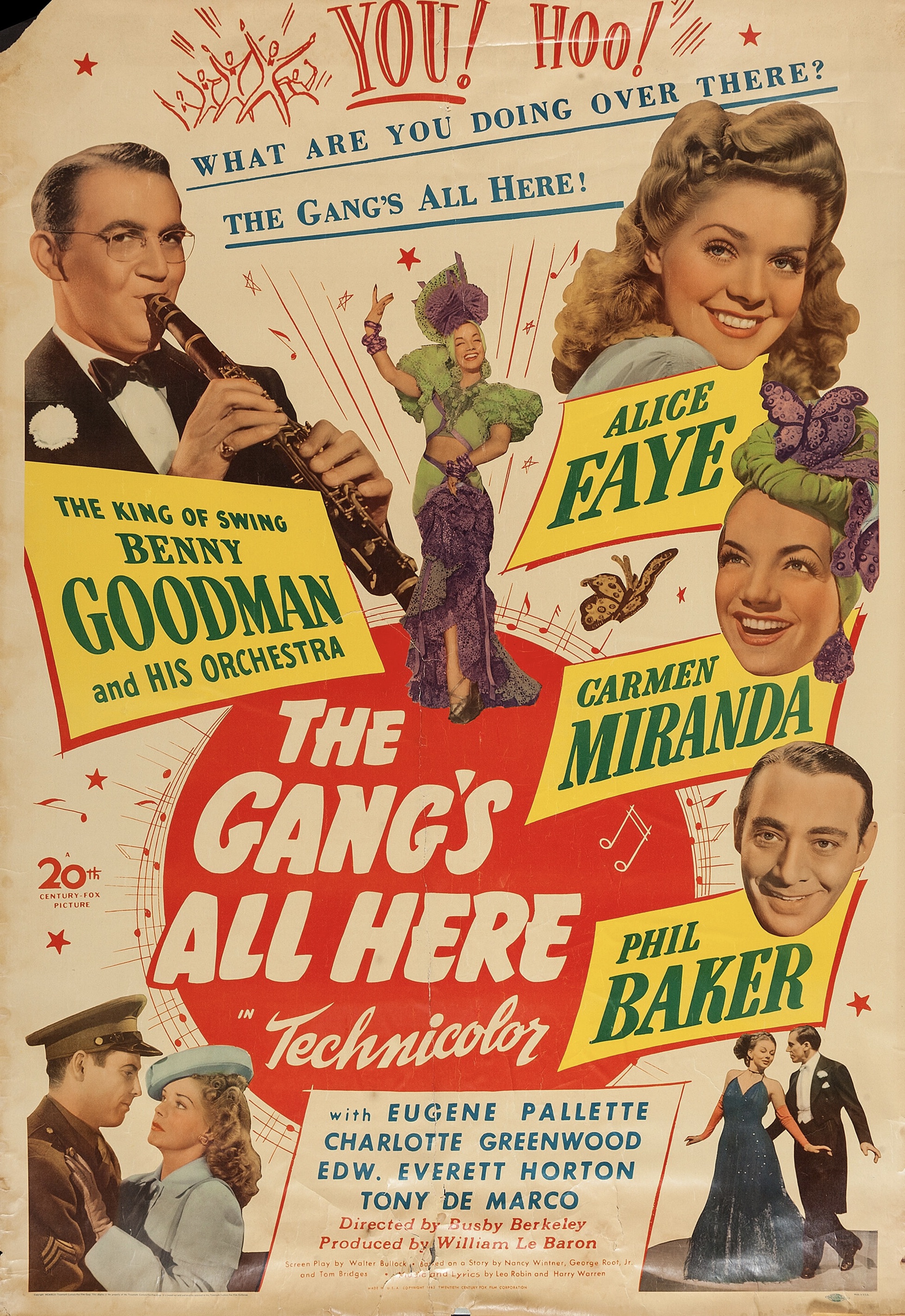
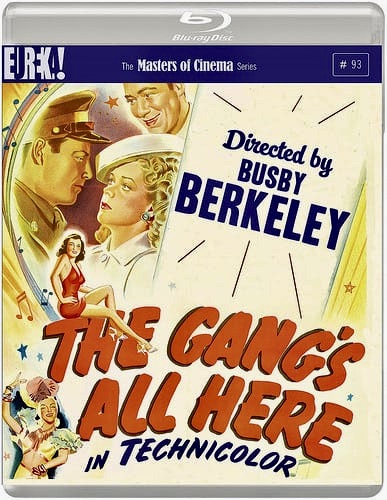
In 2014 The Gang’s All Here was selected for posterity by the National Film Preservation Board and it truly deserves that honor. Although the movie has been released on various formats over the years, I recommend the Blu-ray edition released by Eureka! The Masters of Cinema Series from the UK in 2014. The disc comes with a 56-page booklet and supplementary features such as a deleted scene, a documentary on Busby Berkeley and audio commentary tracks by film critics Glenn Kenny, Farran Smith Nehme and Ed Hulse (Be aware that you need an all-region player to view this edition).
Other links of interest:
https://mubi.com/en/notebook/posts/that-s-entertainment-close-up-on-the-gang-s-all-here
https://filmschoolrejects.com/beginners-guide-to-busby-berkeley/
https://www.alicefaye.com/bio.htm
 Cinema Sojourns