

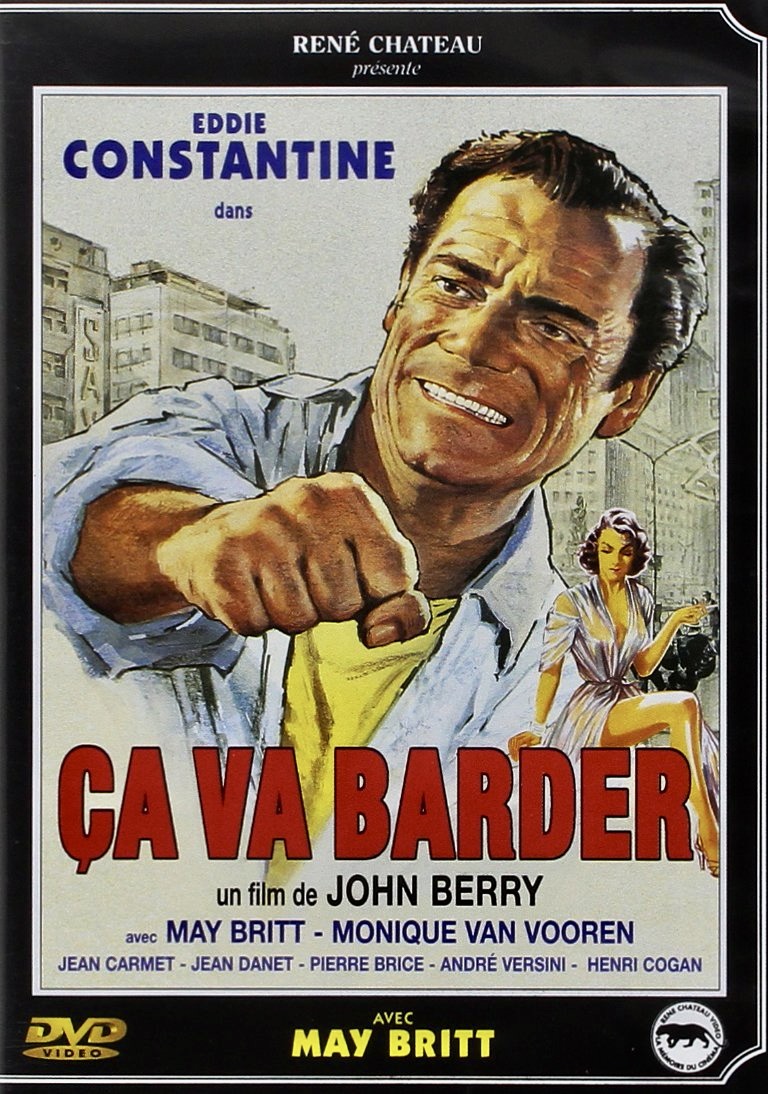
In 2016 the Cohen Media Group released My Journey Through French Cinema, written and directed by Bertrand Tavernier. It was not a traditional survey of French Cinema but a much more idiosyncratic and personal look at favorite films and directors from France in the eyes of Tavernier. In this way, it seemed inspired by Martin Scorsese’s 1999 documentary on Italian cinema, My Voyage to Italy, which shined a light on forgotten and underrated movies that deserved re-evaluation. Tavernier certainly covered some landmarks of French cinema in his overview but he also devoted time to specific directors like Jacques Becker and Jean-Pierre Melville while including favorite film composers and cinematographers as well. Some of Tavernier’s choice were fascinating obscurities and others were grade-B genre films that were so stylish and well-made that they served as superior examples of their craft such as Edmond T. Greville’s Le Diable Souffle aka Woman of Evil (1947) and Gilles Grangier’s Hi-Jack Highway aka Gas-Oil (1955). I was especially intrigued by film clips from the crime thriller Ca Va Barder (1955), which was directed by blacklisted American director John Berry (it was his first credited feature in France) and starred expatriate American actor Eddie Constantine as two-fisted itinerant adventurer Johnny Jordan. His rough and tumble character is as disruptive as a bull in a china shop.
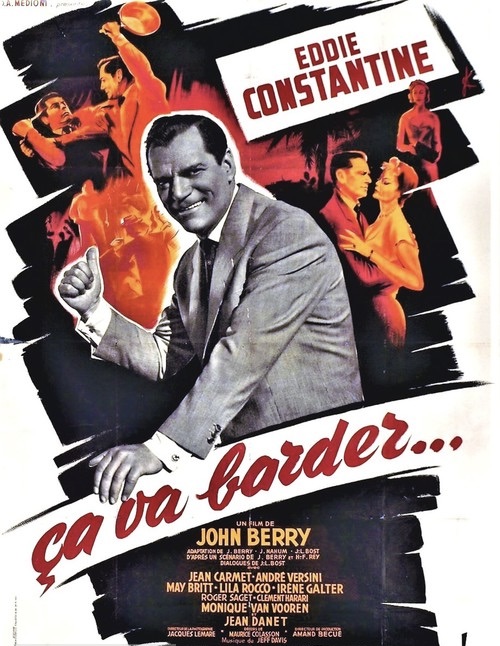
I managed to hunt down a copy of the film with English subtitles and found it to be an entertaining mixture of action adventure, romantic drama and knockabout comedy. All of it was shot in a glistening black and white film noir style by cinematographer Jacques Lemare, who specialized in moody Gallic melodramas like La Passante (1951) and L’etrange Monsieur Steve (1957). The atmospheric score by Jeff Davis was also an asset and even included two songs by Constantine, who originally got his start in Paris as a cabaret singer, thanks to the sponsorship of Edith Piaf. But the icing on the cake is Berry’s energetic, fast-paced direction and a top notch cast of superb French character actors like Jean Carmet and Jacques Marin and glamorous sex sirens May Britt and Monique van Vooren.
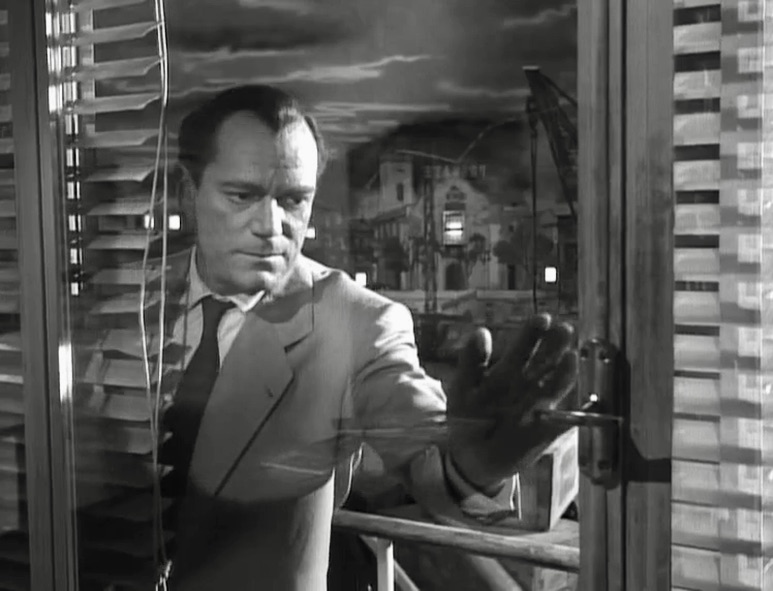
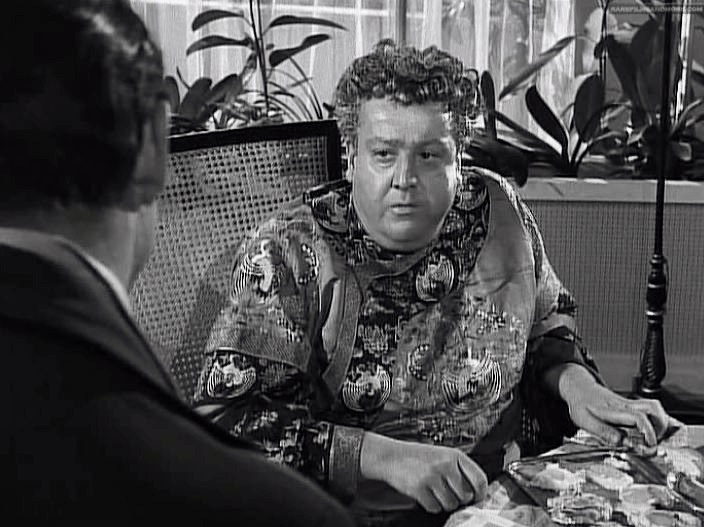
The plot of Ca Va Barder is needlessly convoluted but the basic premise finds opportunistic drifter Johnny Jordan going to work for Moreno (Roger Saget), an obese slob who fronts a black market smuggling operation out of Puerto Negro (a fictitious port that is represented in the film by scenic locations in the Alpes-Maritimes region of France). Johnny discovers that Moreno is setting him up to be the fall guy in an elaborate money-making scheme and tries to expose his gunrunning racket before that happens. But first he must contend with various thugs hired by Moreno and femme fatales like Flora (Lyla Rocco), who works as a cook/assistant for Moreno. And all the while he is being shadowed by a police inspector (Jacques Marin) and his men as a murder suspect.
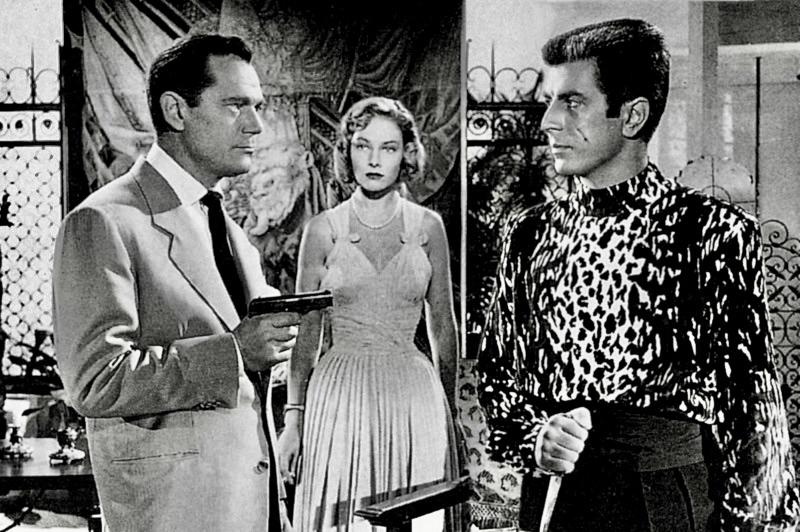
Johnny also discovers that Gina (May Britt), an ex-girlfriend, is in town and married to Diego (Jean Danet), the devious owner of a nightclub who has an expertise in knife-throwing. The Johnny-Gina relationship is antagonistic at first but it soon ripens into something more serious once Johnny realizes Gina is unaware of her husband’s criminal activities and needs rescuing.
The dialogue is often terse and hard-boiled in the best pulp fiction tradition like this first exchange between Johnny and Gina at the nightclub:
Johnny: You see? I’m back.
Gina: Drum roll. And all the women faint.
Johnny: I’m afraid I missed my entrance.
Gina: I know your routine. Try it somewhere else.
Johnny: Good idea. This place is sinister.
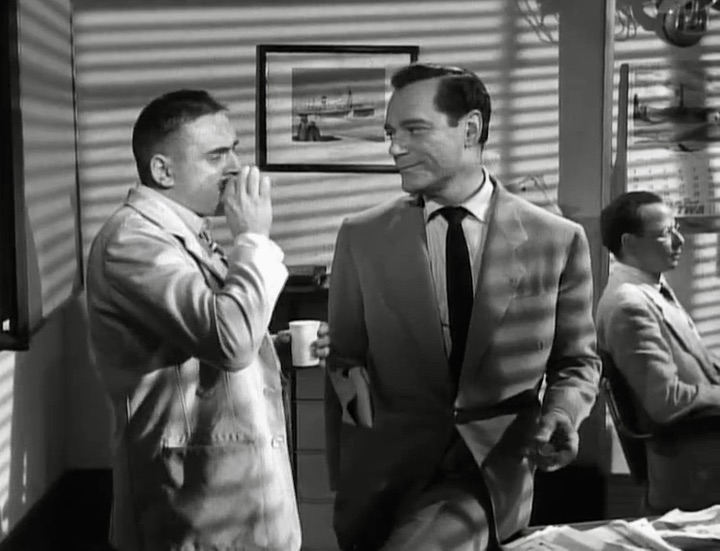
There is also plenty of macabre/sick humor in Ca Va Barder, especially in the treatment of Sammy (Clement Harari), an untrustworthy underworld contact, who winds up dead and being used as a prop in several scenes. And whenever Moreno shows up in a scene he is always gorging himself on food while complaining about dieting. There are also in-jokes as well such as the scene where Moreno says to Johnny, “You trying to be Lemmy Caution or what?,” a reference to the popular character Constantine played in more than ten action-adventure thrillers, the most famous being Jean-Luc Godard’s sci-fi mystery Alphaville (1965).
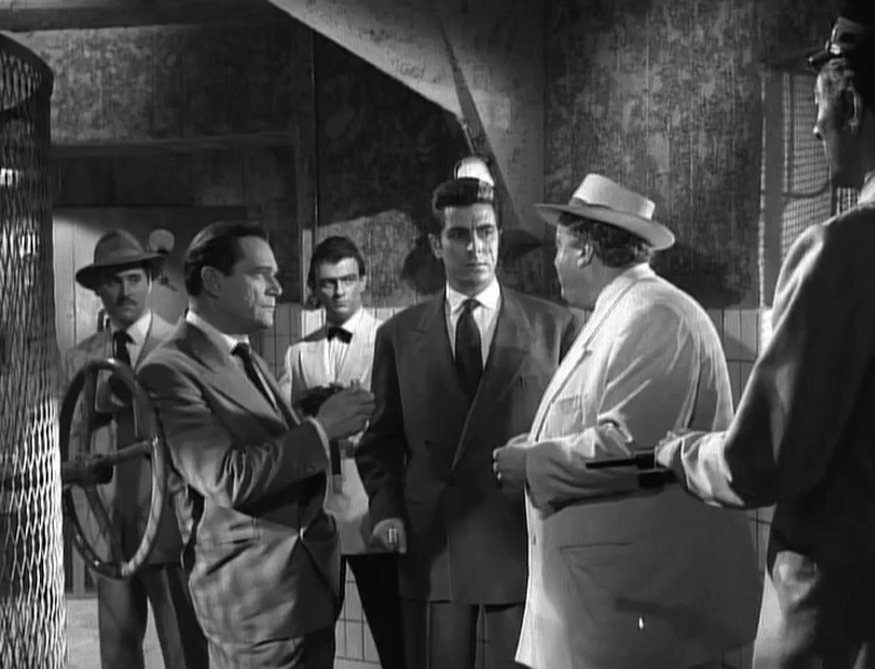
The only thing that might bother some crime genre purists is the fact that many of the fight scenes in Ca Va Barder are played for laughs, especially an elaborate barroom brawl between American sailors and a gigantic nightclub bouncer (American character actor Jess Hahn has a brief cameo). At least the climax atop a lighthouse with Diego attempting to throw Gina to her death is deadly serious and suspenseful.
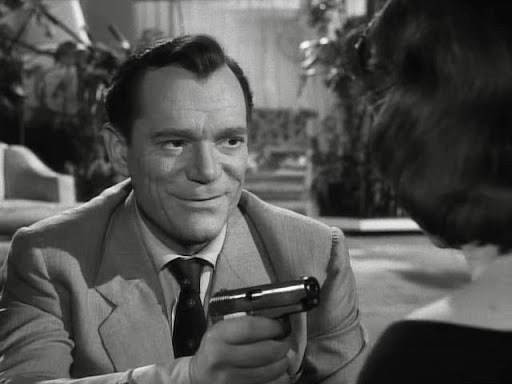
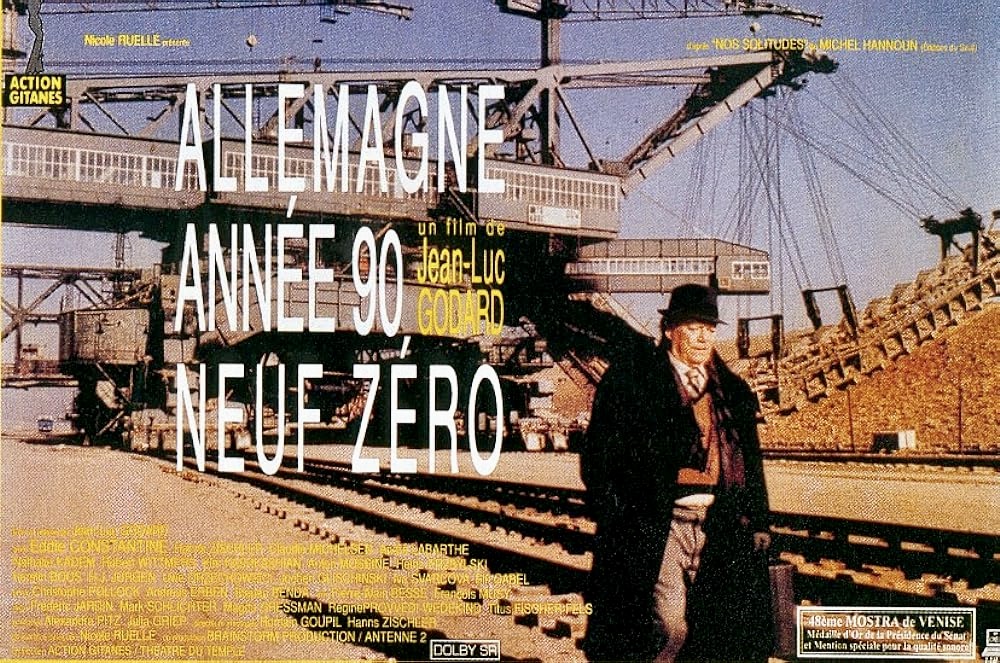
Constantine, who made his film debut in 1953 in Victor Stoloff’s Egypt by Three, would go on to star in many more B-level action adventure/crime thrillers in France but he eventually broke out of that mold and began appearing in more art house fare and serious dramas by world renowned directors. Among some of his more offbeat later work is Agnes Varda’s Lion’s Love (1960), Rainer Werner Fassbinder’s Beware of a Holy Whore (1971), John MacKenzie’s The Long Good Friday (1980), Ulrike Ottinger’s Freak Orlando (1981), Mika Kaurismaki’s Helsinki Napoli All Night Long (1987) and Jean-Luc Godard’s Germany Year 90 Nine Zero (1991) featuring Constantine’s last appearance as Lemmy Caution.
As for Swedish actress May Britt, she made her film debut in the Italian film, Le Infideli (The Unfaithfuls, 1953), co-directed by Mario Monicelli and Steno, and Ca Va Barder was one of her earliest efforts. She makes a feisty but beautiful foil to Johnny’s hulking hero and proved herself to be a capable dramatic actress in later films like The Young Lions (1958) and Murder Inc. (1960). Unfortunately, her film career came to an end in 1960 when she married Sammy Davis Jr. Their mixed marriage was a controversial issue for many moviegoers at the time and Britt would only make one final film in 1976 – the murder-mystery Haunts – before retiring from the profession.
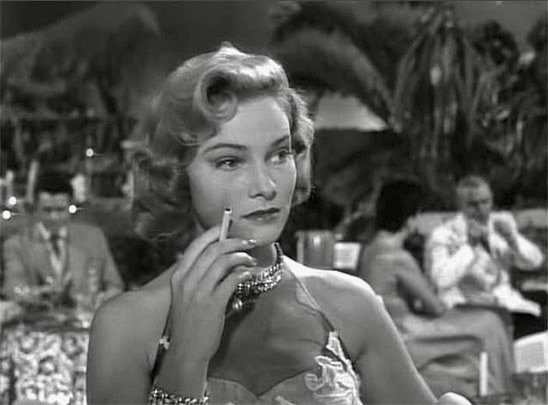
John Berry, the director of Ca Va Barder, has a fascinating backstory that began in 1937 when he joined Orson Welles’s Mercury Theater as an actor. He later followed Welles to Hollywood where he was hired by Welles’s production partner John Houseman to direct the 1946 Paramount drama Miss Susie Slagle’s starring Veronica Lake. He directed five more films including two excellent film noirs Tension (1949) and He Ran All the Way (1951) with John Garfield and Shelley Winters before being blacklisted by Hollywood during the Red Scare witch hunt of the fifties.
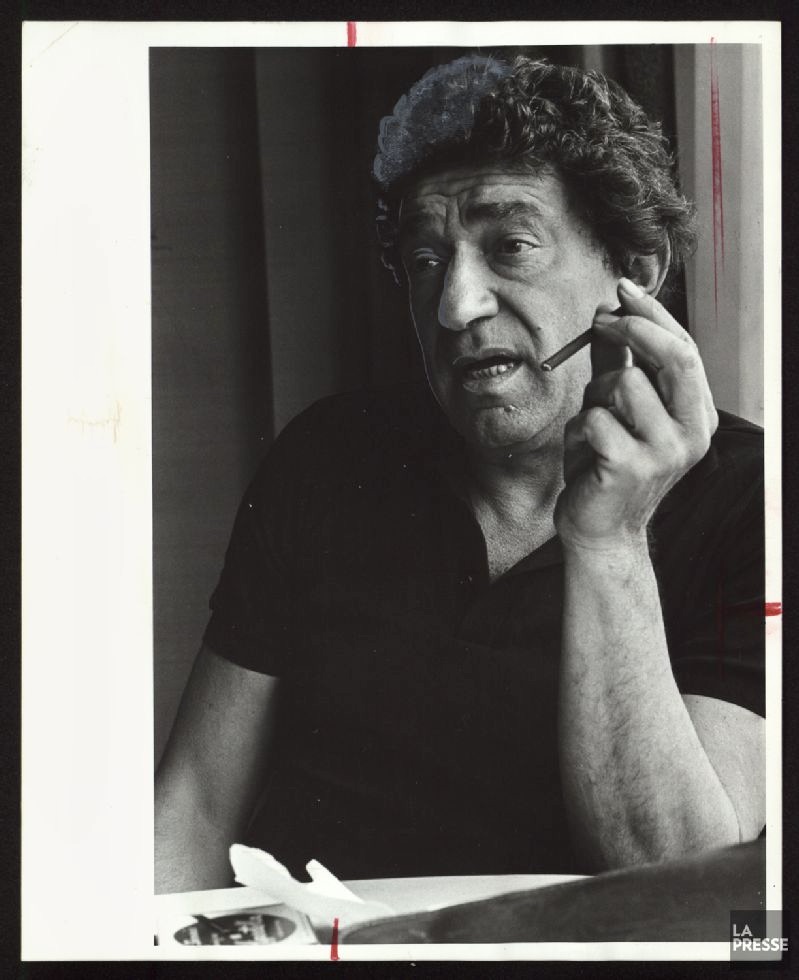
Faced with the possibility of imprisonment, Berry considered his options, later saying in an interview with writer David Walsh, “A friend of mine said, ‘It might not be six months [in jail], it could be for years. You’ve got to know that you could crack.’ I think I’m enough of a resister. I don’t think I would have cracked. Anyway, he told me to go out on the road for a while—some guys had already been sentenced. So I went, as if I were a dangerous criminal. I did that for six weeks. Then I made my way to France. I thought I’d be gone three or four months. I was 11 years without coming back.”
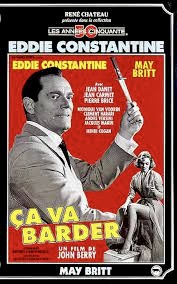
The blacklist had a devastating effect on Hollywood and many actors, directors and screenwriters became unemployable and out of work for years. Who knows what kind of career Berry would have had in Hollywood if the House Un-American Activities investigations had never happened? Luckily, Berry, like blacklisted directors Jules Dassin and Joseph Losey, re-invented himself oversees but his work in France is less well known than the films of Dassin and Losey.
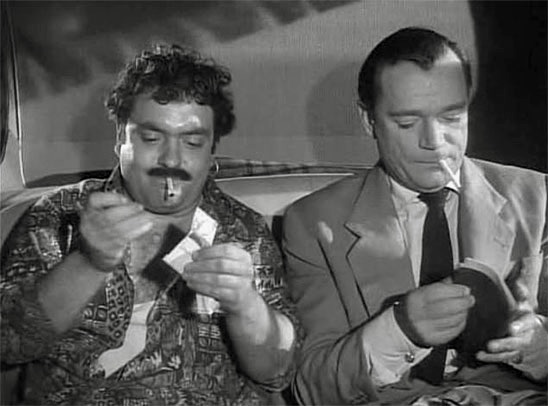
Ca Va Barder marked the beginning of Berry’s feature film directing career in France (he even plays the gangster Lopez in a supporting role) and he followed it with another Eddie Constantine vehicle, Je Suis un Sentimental (1955). Probably the most famous movie he made during his exile was Tamango (1958), a historical drama about a slave rebellion starring Dorothy Dandridge.
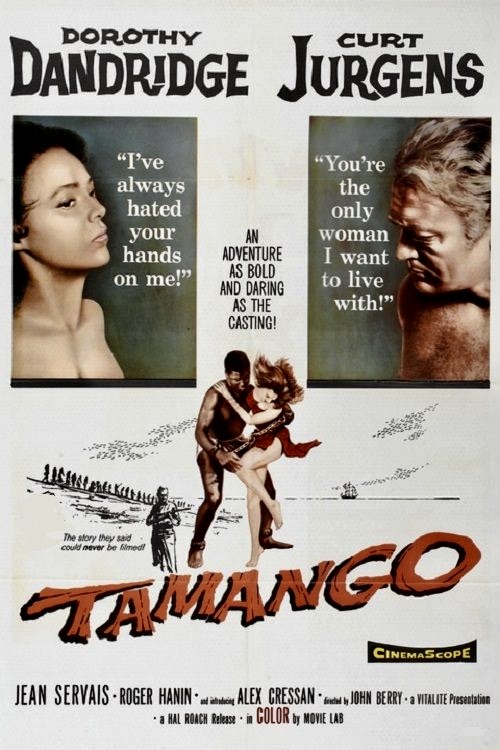
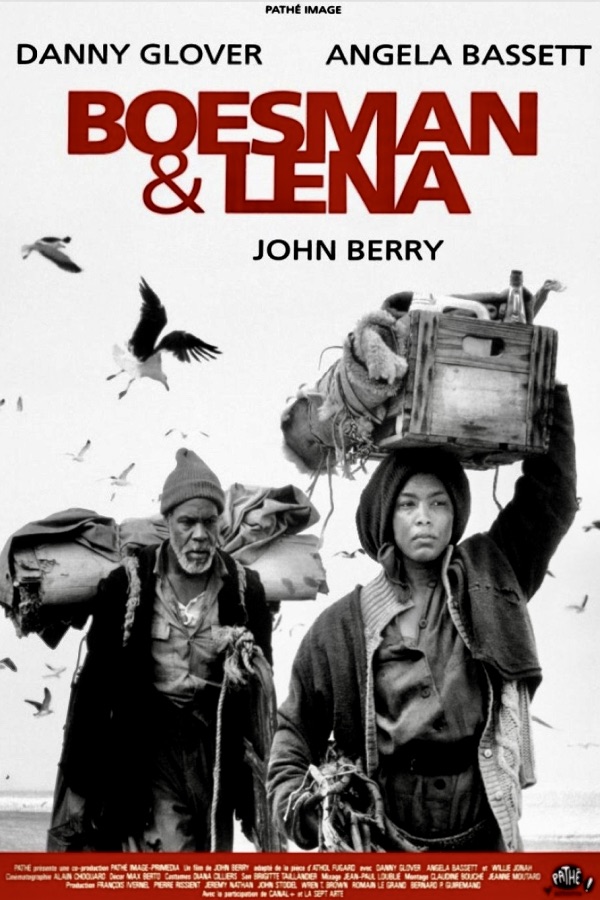
Berry eventually returned to the U.S. in the early sixties, working first in television, before moving back into feature films. In 1974 he scored an unexpected hit with the romantic comedy Claudine, which garnered a Best Actress Oscar nomination for Diahann Carroll and the remainder of his career was split between helming movies in the U.S. (Thieves, The Bad News Bears Go to Japan) and France (Le Voyage a Paimpol, Il y a Maldonne). Berry’s final film was the South African drama Boesman and Lena, based on the play by Athol Fugard and starring Danny Glover and Angela Bassett. It was released in 2000 after Berry’s death at age 82 in November 1999.
Ca Va Barder has never been officially released on any format in the U.S. but you might be able to purchase an import DVD (no English subtitles) from online sellers. It would be wonderful to see this and the other two Eddie Constantine films Berry directed (including 1968’s A Tout Casser) remastered and packaged as a John Berry Blu-ray triple feature someday. Hey you guys at Vinegar Syndrome, how does that sound?
Other links of interest:
https://www.rusc.com/old-time-radio/John-Berry.aspx?t=2482
https://www.wsws.org/en/articles/1998/06/brry-j09.html
https://variety.com/1993/scene/people-news/eddie-constantine-104647
https://www.bear-family.com/constantine-eddie
https://www.thefamouspeople.com/profiles/may-britt-11826.php
https://videowatchdogblog.blogspot.com/2008/02/more-eddie-constantine-from-criterion.html
 Cinema Sojourns