
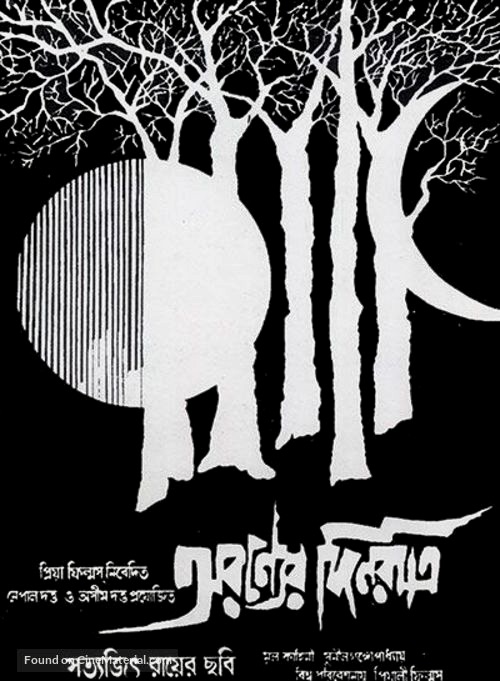
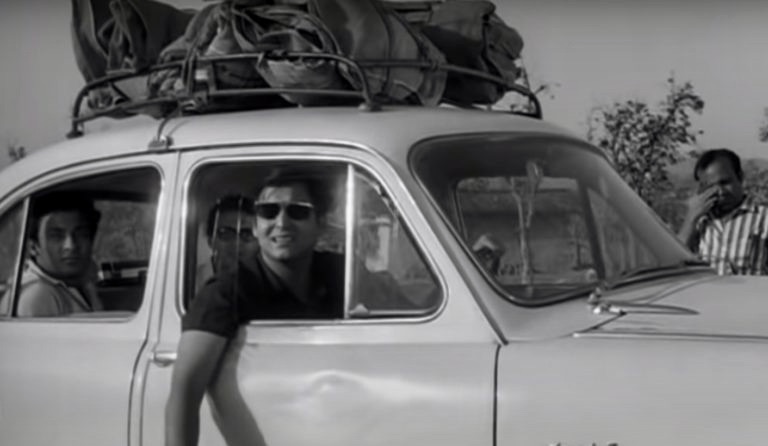
Four carefree middle class bachelors from Calcutta journey deep into the bucolic countryside for a break from city life and to enjoy drinking and partying with the local native women. What they end up experiencing in this unfamiliar locale is both a reflection of their own ignorance and colonialist attitudes inherited from their former British occupiers about the lives of people in rural India. This is the basic premise of Ananyer Din Ratri (English title: Days and Nights in the Forest, 1970), which many film scholars and critics consider a mid-career masterpiece from director Satyajit Ray. Admirers of the movie also cite the plays of Anton Chekhov and the films of Jean Renoir, especially his 1946 short Partie de Campagne (English title, A Day in the Country) as distinct influences on this social comedy with its amusing and sometimes harsh observations about human foibles and cultural differences.

Made between the fairy tale fantasy of The Adventures of Goopy and Bagha (1969) and the thought-provoking drama The Adversary (1970), Days and Nights in the Forest is often deceptively subtle in its critique of its four male protagonists. The unofficial leader of the group Ashim (Soumitra Chaterjee) is a successful businessman with a take-charge attitude that is often presumptuous and entitled. His companion Sanjoy (Subhendu Chatterjee) shares some of Ashim’s traits but he is more cerebral and slow to act when faced with on-the-spot decision making. Less agreeable and more prone to anger when he doesn’t get his way is Hari (Samit Bhanja), the jock in the group, who spends most of the time sleeping and drinking. Rounding out the quartet is the diminutive Shekhar (Rabi Ghosh), who is distinguished by his clownish behavior and a weakness for gambling and silk shirts.
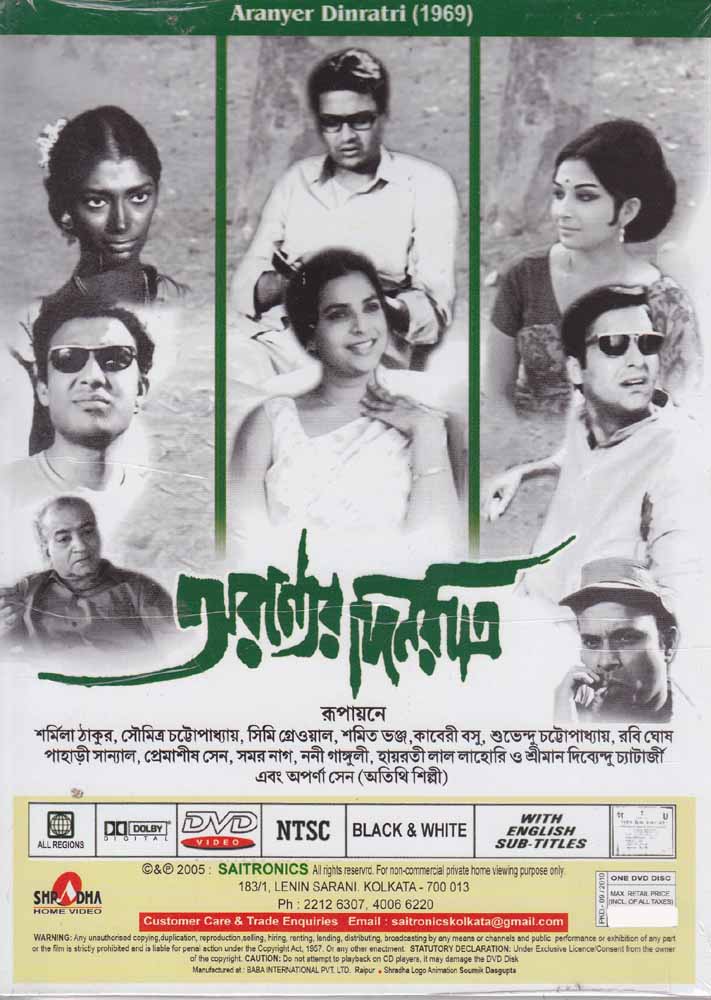
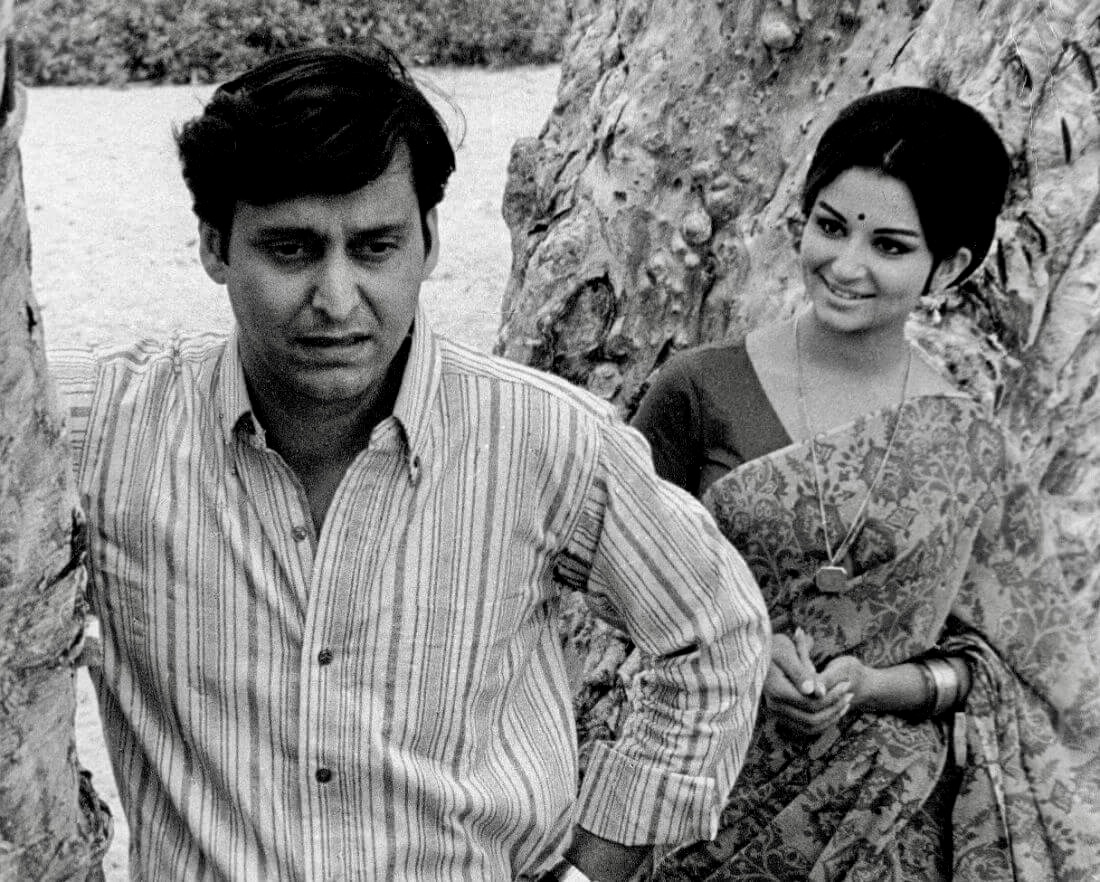
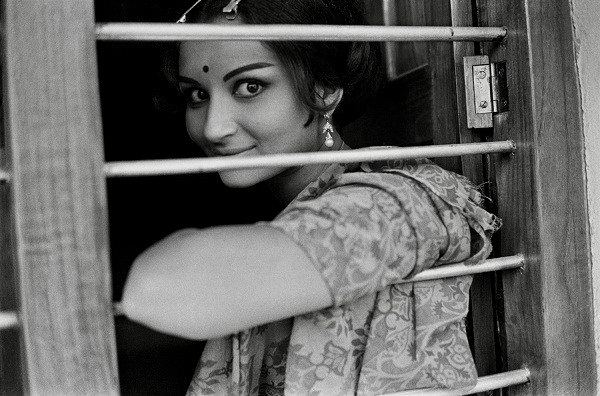
At the beginning of their drive into the country, Ashim announces he is leaving all thoughts of work and the city behind as he embraces the freedom of the open road. As much as he wants to be a nonconformist, however, Ashim soon reverts to his city persona, as do his companions, once they meet two women from their own social class at a home near their vacation bungalow. Ashim is immediately smitten with Aparna aka Mini (Sharmila Tagore) while Sanjoy eventually pairs up with Jaya (Kaberi Bose), Mini’s sister-in-law and a recent widow.
Almost from the start, these troublemakers draw attention to themselves for their condescending attitudes. When they arrive at their vacation destination, the caretaker of the property asks to see their reservation agreement but they don’t have one. Ashim couldn’t be bothered with those formalities and instead offers a bribe to the man, who is reluctant to take it. Eventually Ashim bullies the caretaker into accepting them as guests and the foursome make themselves at home, getting drunk at a local bar. It is there that they meet Duli (Simi Garewal), an inebriated local woman who turns out to be the village prostitute.
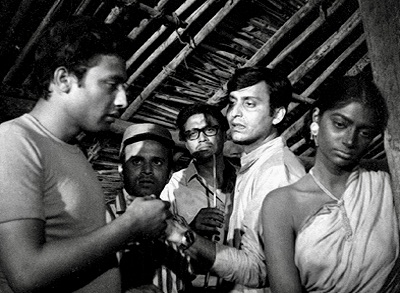
In the course of the film, all four bachelors have various misadventures and awkward encounters which they handle in varying ways. Shekhar remains basically clueless and poorer at the end, having lost the money he borrowed from Ashim at gambling. Hari’s impulsive nature compels him to seduce Duli in the forest where he is beaten unconscious by Lakha, a poor villager Hari falsely accused of stealing his wallet. Sanjoy succeeds in winning Jaya’s affections but when she offers herself to him in a moment of spontaneous passion, he freezes up, unable to react. Similarly, Ashim suffers a blow to his ego when he realizes that Mini intentionally let him win at a game when she could have easily defeated him. Of the four men, however, Ashim shows he is capable of changing for the better and, at the fadeout, there is the possibility that Ashim and Mini may resume their relationship in Calcutta.

Even though the four bachelors are the main focus of Days and Nights in the Forest, it is the three female characters who are depicted in a much more sympathetic light and emerge as stronger, more complex figures, especially Mini. Her serene presence masks a background of tragedy and hard-won wisdom. As soon as she meets Ashim, Mini sees through his false bravado and teasingly calls him on it, saying “You love breaking rules, don’t you?” Yet, she senses that beneath his insecurities and posturing is someone struggling to find himself.
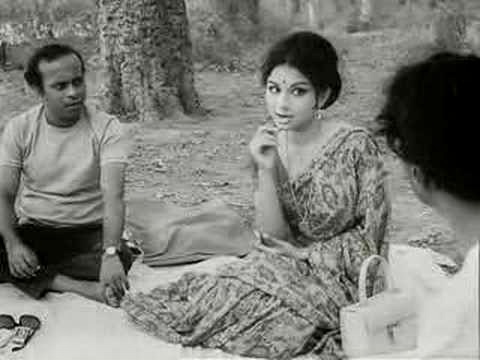
In comparison to Mini, Jaya has less options available to her in India’s social structure. A widow with a small child, she doesn’t stand a very good chance of being remarried or enjoying romantic/sexual relationships. It is not surprising that she sees Sanjoy as a last chance for happiness and her pent-up loneliness and need for love erupts in a scene that demonstrates Sanjoy’s inability to respond to her on an equal level.
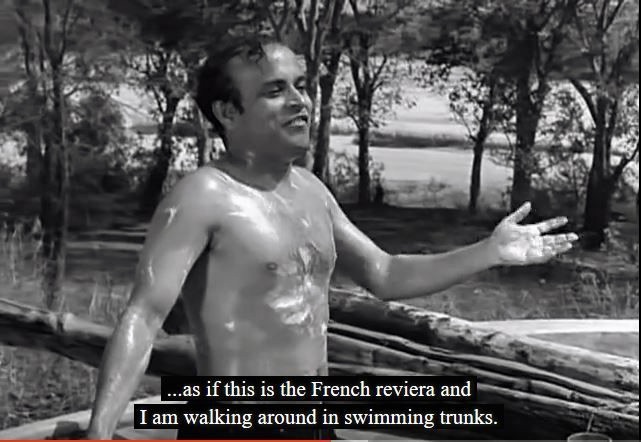
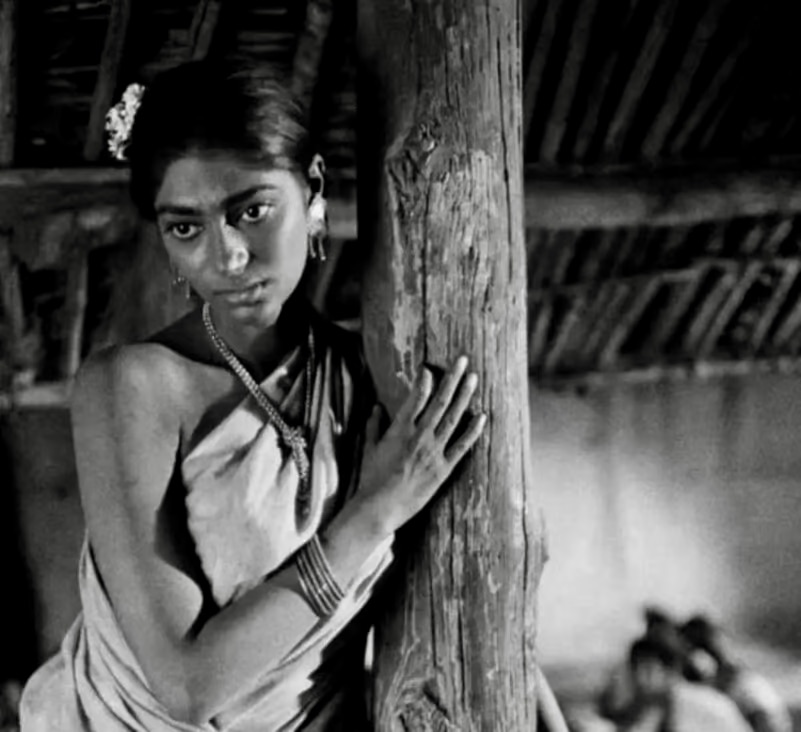
Duli, on the other hand, is the village pariah with no future or any opportunities to change her fate. She can’t even get work as a cleaning woman because she is branded as impure. Her only escape from her situation is through alcohol and sex with strangers like Hari, who are passing through the village.
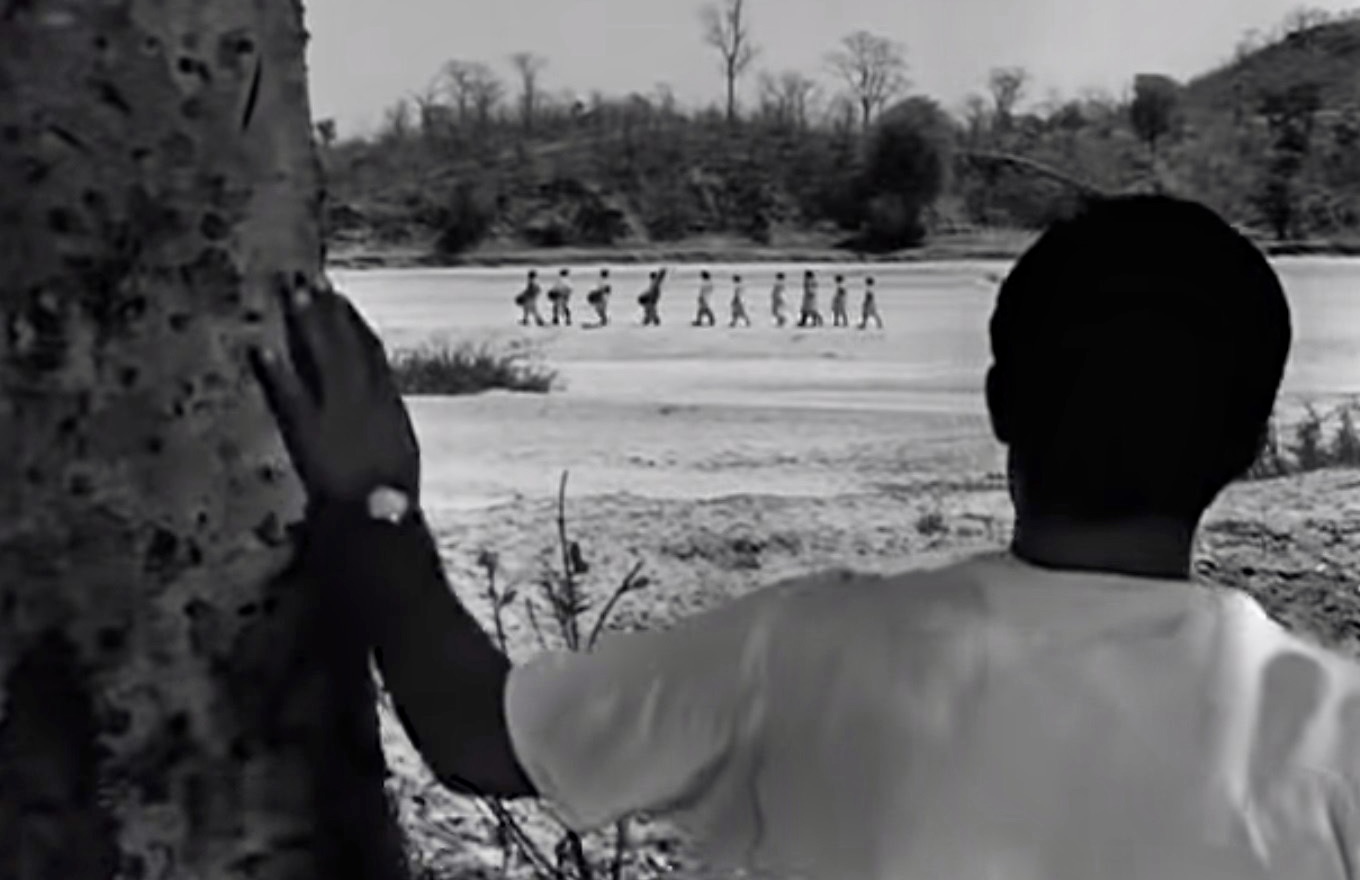
Even though Days and Nights in the Forest is presented as a lighthearted, carefree lark in the beginning, the film hints at more serious and troubling matters underneath the comic bickering in the second half. Satyajit Ray also alternates the mood of the film like changes in music where one scene will be lyrical and free-flowing (the four men exploring the forests near their bungalow) while the next sequence might be quietly contemplative (Ashim staring at a procession of village women in the field). Certainly a key moment in the film, photographed by one of Ray’s favorite cinematographers, Soumendu Roy, features the four Calcutta visitors playing the “Memory Game” with Mini and Jaya. As the camera slowly travels around the group, capturing in close-up, the face of each participant in the game, the viewer gets a distinct impression of what is at stake and how each person is dealing with it.
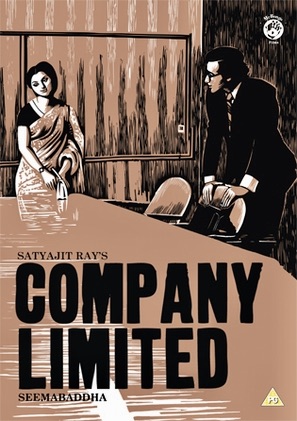
Among the cast members in Days and Nights in the Forest, three of them would work with Ray at least four or more times in their career, such as Rabi Ghosh (in the role of Shekhar), who also appeared in The Expedition (1962), The Holy Man (1965), The Adventures of Goopy & Bagha (1969) and the director’s final film, The Stranger (1991). If Sharmila Tagore looks familiar to Ray devotees, it is because she played the female lead in Devi aka The Goddess (1960) and had starring roles in The World of Apu (1959), The Hero (1966), and Company Limited (1971) aka Seemabaddha.
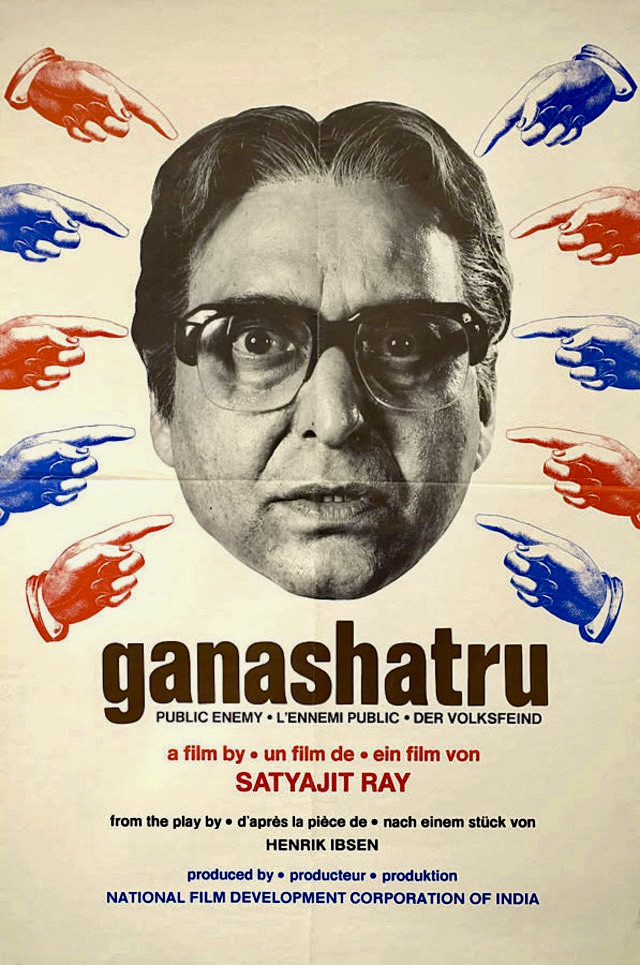
Soumitra Chatterjee, the star of Days and Nights in the Forest, is the actor most associated with Ray from his early years, starting with his film debut in the third film in the Apu trilogy as the adult protagonist in The World of Apu (1959). Other significant roles followed with Devi (1960), Three Daughters (1961), The Expedition (1962), Charulata (1964), The Coward (1965), and Distant Thunder (1973). The actor also appeared in some of Ray’s final movies, The Home and the World (1984), An Enemy of the People (1989), and The Branches of the Tree (1990).
In his own country, Ray’s movies were rarely popular successes at the box office since most Indian audiences preferred the more spectacular escapism offered by the Bollywood musical. Days and Nights in the Forest was a particularly difficult example with Ray later stating, “People in India kept saying: What is it about, where is the story, the theme? People want just one them, which they can hold in their hands.” Not surprisingly, Ray’s work was always better received outside India where it was celebrated in places like Europe and the U.S. Days and Nights in the Forest was hailed as a masterpiece by many film critics when it was first released in 1970. Ray was also nominated for the Golden Bear award for the film at the Berlin International Film Festival.

Pauline Kael of The New Yorker called Days and Nights in the Forest, “a lyrical romantic comedy…The subtext is perhaps the subtlest, most plangent study of the cultural tragedy of imperialism; the young men are self-parodies–clowns who ape the worst snobberies of the British. A major film by one of the great film artists.” Peter Cowie in his 1977 film survey, 80 Years of Cinema, wrote “Throughout the film, Ray hints at the primitive forces that lie just beneath the civilized veneer of these pompous characters…The camera prowls inquisitively, permitting Ashani and his friends to loll and wander in generous long-shots by day, and at the onset of darkness trapping their faces in large close-up as if they were prisoners under interrogation. Few films are at once so graceful and so sinister as Days and Nights in the Forest, its sophisticated satire disguising a profound regard for human indiscretion.”
And Ben Sachs of The Chicago Reader wrote ,”The closest Western equivalent may be Jean Renoir’s The Rules of the Game in that it’s an ensemble comedy-drama about romance and class relations that requires multiple viewings to reveal its true mastery. Ray’s screenplay (a free adaptation of a novel by Sunil Gangopadhyay) is, up until its climax, a carefully plotted collection of nonevents, and his direction focuses on character and setting. The insights seem offhanded and casual despite being profound.”

For some strange reason, Days and Nights in the Forest has been an exceedingly difficult movie to see for years despite its critical acclaim. It was released on VHS but has gone missing in terms of DVD or Blu-ray availability. This seems like a movie The Criterion Collection would champion but, in the meantime, you can stream an acceptable English-subtitled version on Youtube.
Other links of interest:
https://www.satyajitraysociety.org/the_society.html
https://www.artforum.com/features/satyajit-ray-at-home-in-the-world-203554
https://www.filmcomment.com/article/interview-satyajit-ray
 Cinema Sojourns