
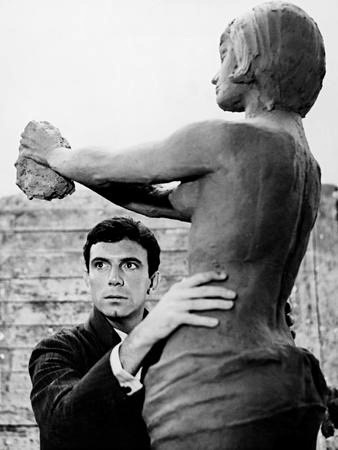
Italian novelist Italo Svevo was the pseudonym for Ettore Schmitz, a novelist and short story writer who was born in Trieste in 1861. After publishing two unsuccessful novels, he gave up writing until his English tutor James Joyce encouraged him to continue and he wrote a third novel in 1823, Confessions of Zeno (considered his masterpiece) and several short stories which were not published until after his early death from an automobile accident in 1928. Svevo never received the acclaim he deserved during his own lifetime but now he is considered one of Italy’s most famous authors and a pioneer of the psychoanalytical novel. His novels and some of his short stories were later adapted for film and television productions but the first one to hit the screen was Senelita (aka Careless, 1962), based on his second novel. The story of an insecure, self-absorbed office worker approaching forty who develops an obsessive love for a beautiful working class girl, the film was an impressive early masterwork for director Mauro Bolognini and helped launch Claudia Cardinale as an international star (The following year she appeared in Federico Fellini’s 8 ½, Luchino Visconti’s The Leopard and made her American film debut in The Pink Panther).
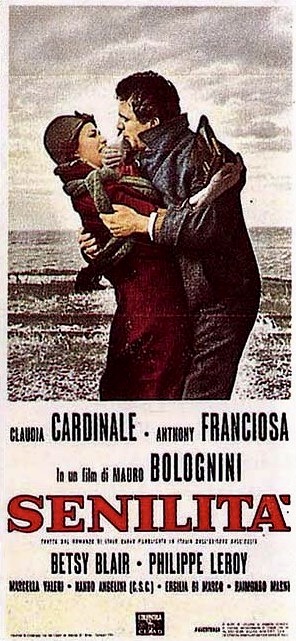
Senelita is also distinguished by the performances of two Oscar nominated American actors, Anthony Franciosa, an Actors Studio graduate, and Betsy Blair, ex-wife of Gene Kelly who was blacklisted and relocated to England in 1957 where she began appearing in international films. Despite this, the film is almost forgotten today (it didn’t receive its U.S. premiere until 1982) but it stands as an insightful critique of male ego and wounded pride as well as a revealing critique of the limited opportunities facing women near the turn of the century in Italy.

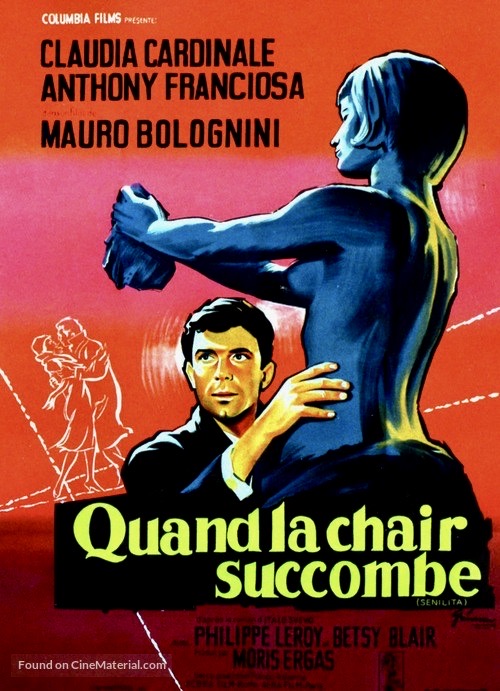
Like the novel (published in 1898), Senilita unfolds in Trieste during the horseless carriage era and the old world charms of that city are highlighted in the rich production design by Luigi Scaccianoce and the black and white cinematography of Armando Nannuzzi. The story begins as Emilio (Anthony Franciosa), serving as narrator, meets and becomes infatuated with Angiolina (Claudia Cardinale), a stunning beauty who lives with her poor family in a claustrophobic apartment.
Emilio has spent most of his life suppressing his own desires due to his self-analytical nature and a fear of intimacy. He is aloof with his co-workers and has no friends except for Stefano (Philippe Leroy), a sculptor and renowned ladies’ man. Emilio’s life at home is equally hermetic. He lives with Amalia (Betsy Blair), his lonely spinster sister, who tends to his needs but is mostly ignored by Emilio as he struggles to complete his novel-in-progress.
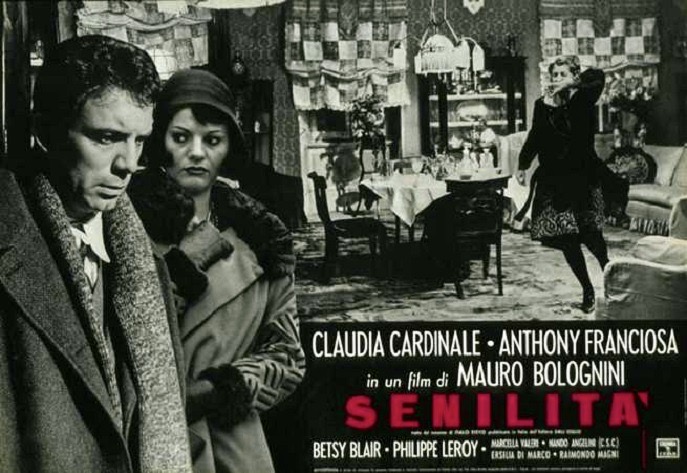
When Angiolina enters Emilio’s life, he is finally inspired to initiate a relationship which, at first, he views as “a short and easy adventure” but he soon becomes besotted with her seemingly innocent and spirited nature. “She’s a girl of the people,” he tells his sister, “but without any heaviness or vulgarity. She has a healthy and spontaneous joy…but she’s just like a little girl with a huge desire to live.”

Emilio’s idealized conception of Angiolina causes him to become increasingly possessive and soon he is trying to control her life. Angiolina, on the other hand, longs to be married as it is the only option for a woman of her low social status, one who needs and desires financial security. Still, Emilio views marriage as a form of slavery and prefers to keep Angiolina as a mistress. This decision triggers a battle of wills between the two as Angiolina reveals her true nature as a skillful opportunist and amoral seductress. By this point, Emilio is hopelessly in love and their clandestine meetings become more passionate and volatile leading to a tragic finale where Emilio is publicly humiliated.
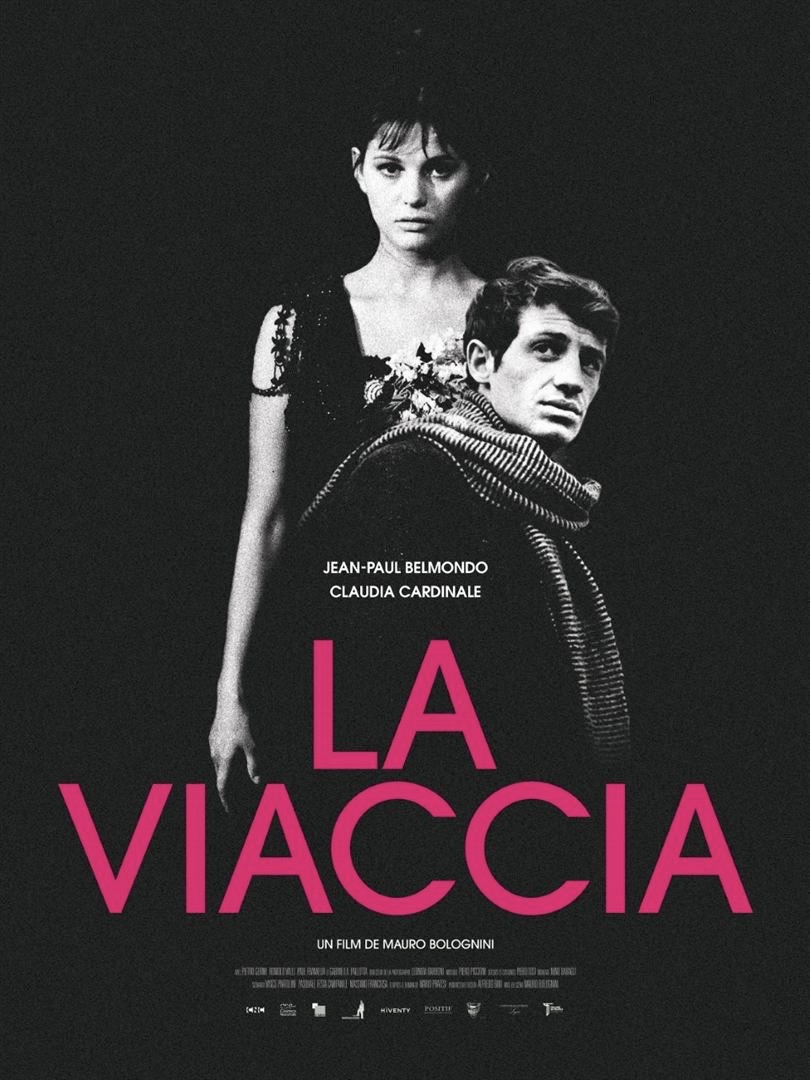
Ineffectual and self-deluded men like Emilio have often been the protagonists of Mauro Bolognini’s best work and includes Marcello Mastroianni as a bridegroom suffering from impotence in Bell’ Antonio (1960) and Jean-Paul Belmondo as a country bumpkin whose life unravels when he falls in love with a prostitute in La Viaccia aka The Lovemakers (1961). Although some critics found Franciosa unconvincing as the tormented Emilio, I find that his mixture of insecurity and pompous male entitlement captures the character perfectly and is one of his finest performances.
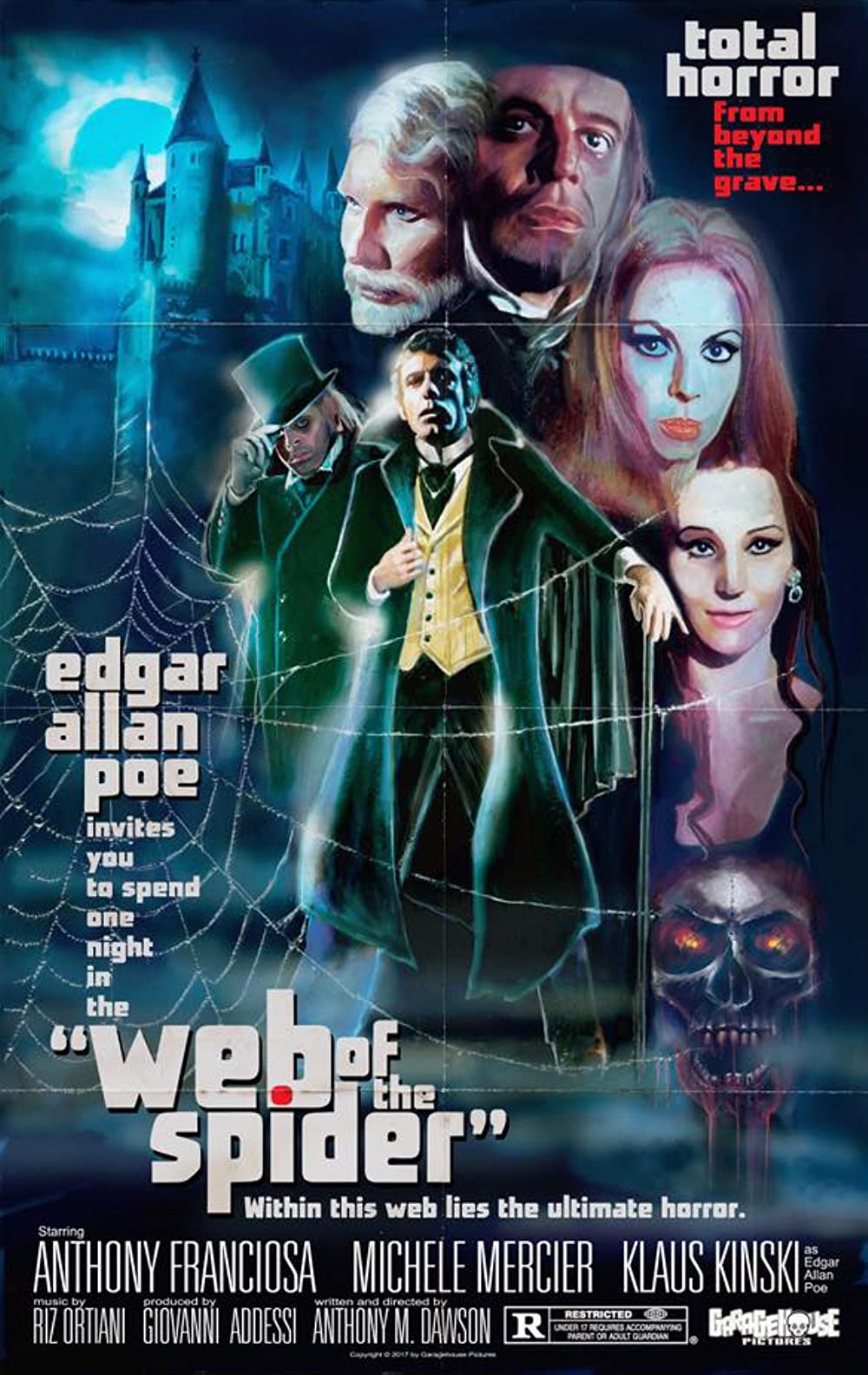
Senilita was the first film Franciosa made in Italy but he would return there later in his career to make numerous movies after work from American film and TV productions declined. Among these Italian imports were cult horror items like Web of the Spider (1971) and Dario Argento’s giallo Tenebrae (1982) and melodramas such as La Cicala aka The Cricket (1980) and Fashion Crimes (1989).
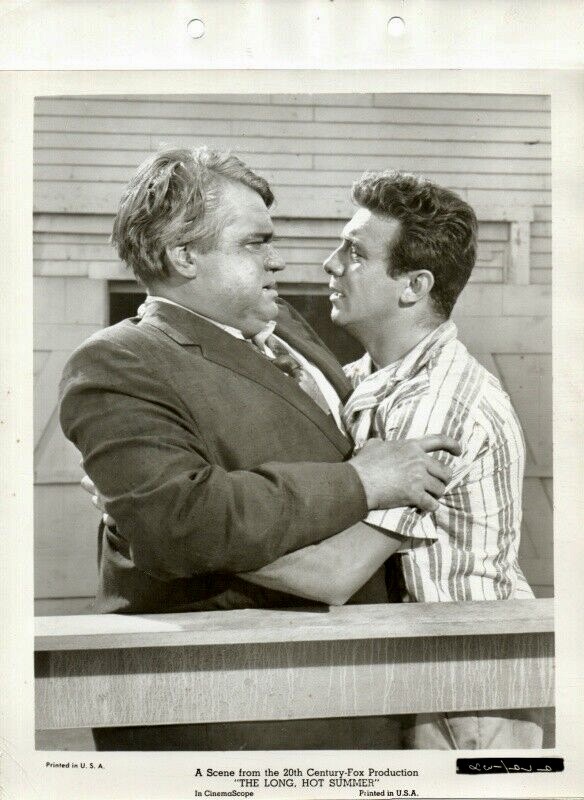
Despite a Best Actor Oscar nomination for A Hatful of Rain (1958), Franciosa never achieved the sort of popularity or box-office success other former Actors Studio graduates achieved like Marlon Brando, Paul Newman or Warren Beatty. Maybe part of the problem was that he too often specialized in playing unsympathetic characters who were neurotic, emotionally volatile or slick phonies but he is nonetheless impressive in Elia Kazan’s A Face in the Crowd (1957) and as the needy, ne’er-do-well son of Orson Welles in The Long, Hot Summer (1958).
Compared to Franciosa at the time, Claudia Cardinale’s career was on the verge of international stardom and she had already attracted favorable attention for her work in such key Italian classics as the heist comedy Big Deal on Madonna Street (1958), Pietro Germi’s The Facts of Murder (1959), Luchino Visconti’s Rocco and His Brothers (1960) and Valerio Zurlini’s Girl with a Suitcase (1961), which won her a special award from Italy’s equivalent of the Oscar ceremony, the David di Donatello Awards.
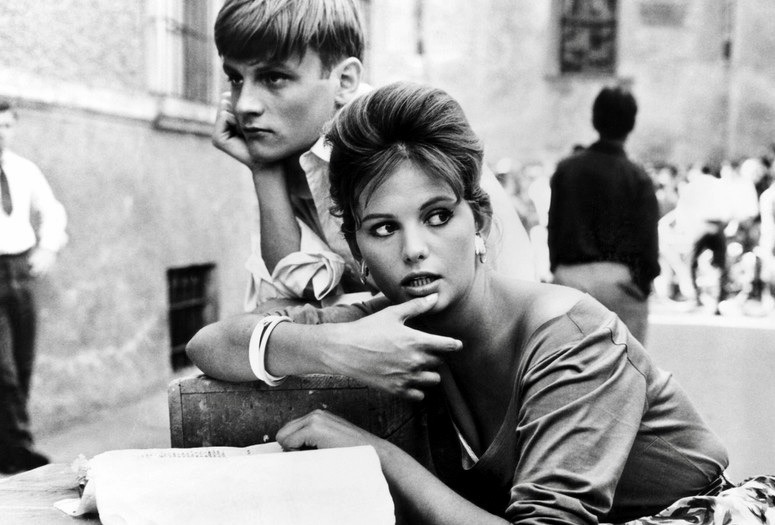
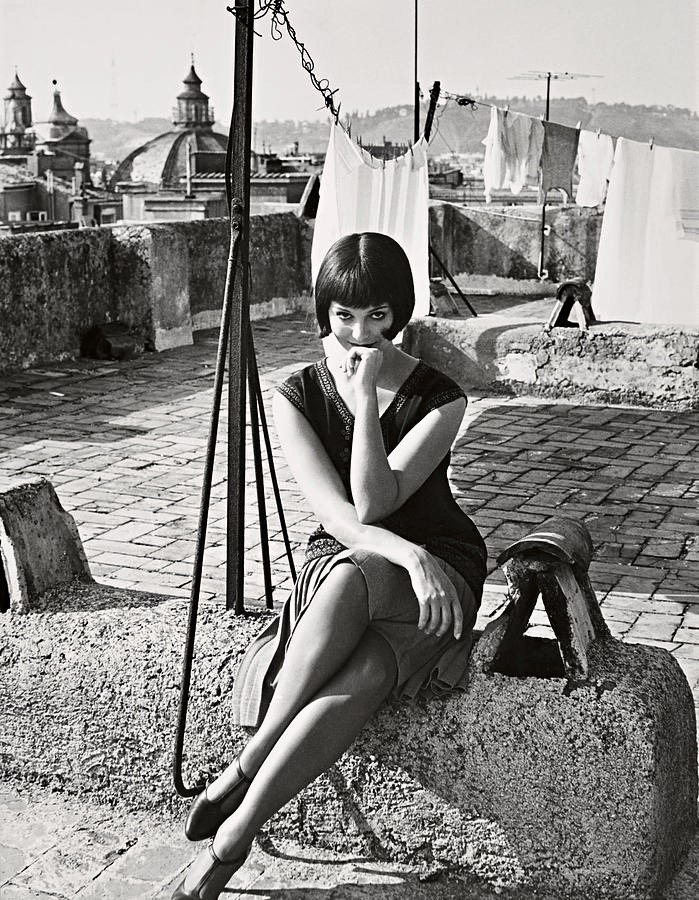
As the deceptive and amorous Angiolina in Senilita, Cardinale is stunningly beautiful and stylish in her Louise Brooks-style haircut. Her casual infidelities and constant prickling of Emilio’s vanity become almost comical as it escalates overtime, especially when her lover confronts her with past affairs and she blithely gives him all the sordid details, knowing how it wounds him. It reminds me of that hilarious scene in The Lady Eve where Barbara Stanwyck regales her newlywed husband Henry Fonda with stories about past affairs as he recoils in shock.
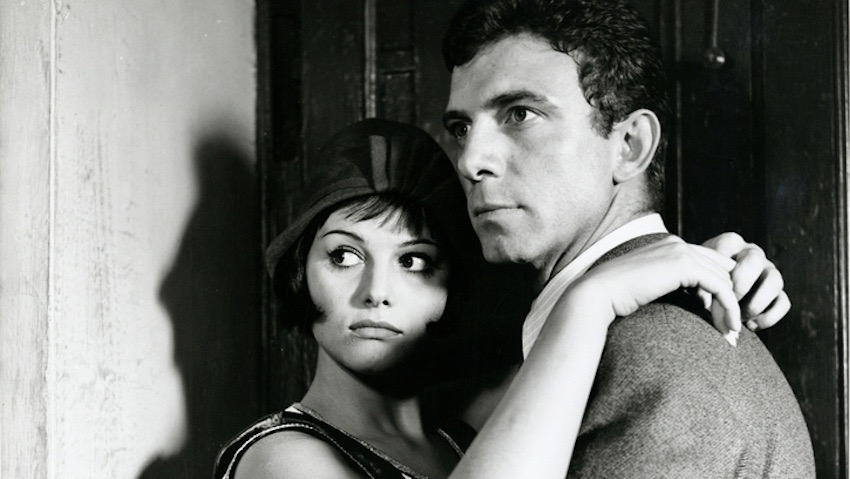
The other two standout performances in Senilita are Betsy Blair as Emilio’s repressed sister and Philippe Leroy as the bohemian artist and gentleman caller whose flirtations with Amalia are misinterpreted and lead to tragedy. Blair is particularly memorable in her mad scene when she starts imagining vermin crawling on her skin after poisoning herself with ether.
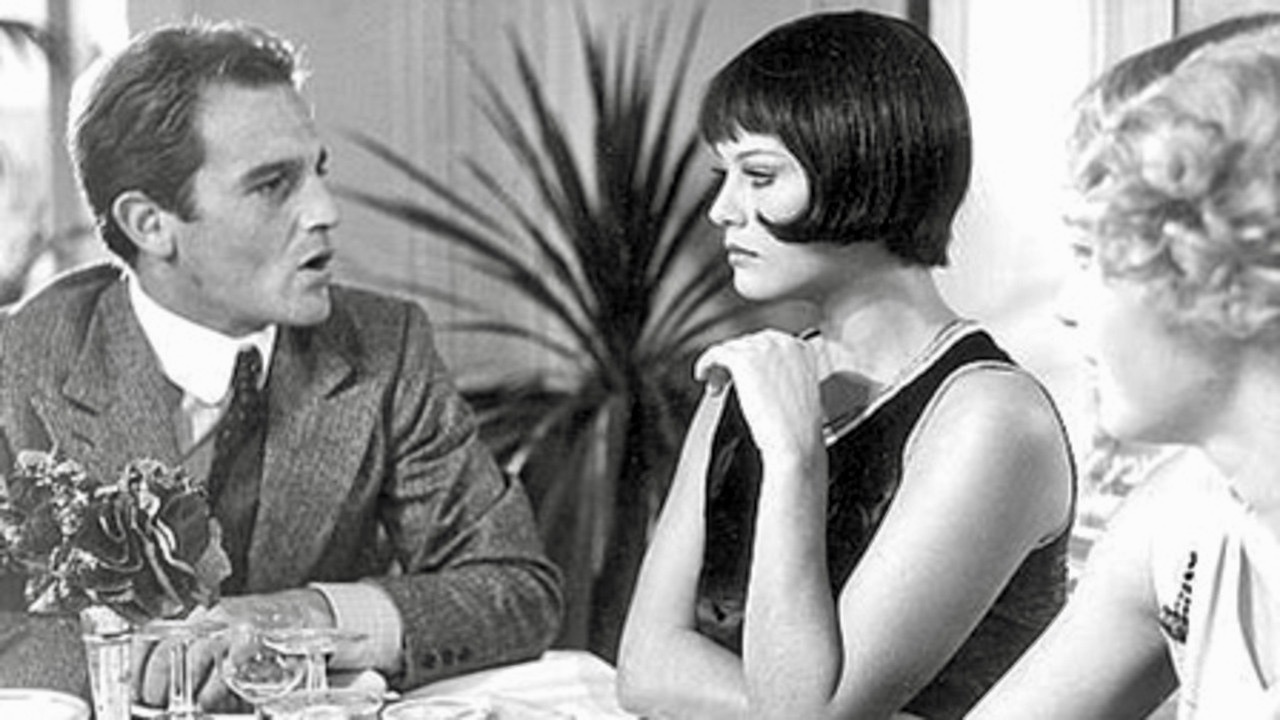
For his part, Leroy takes the stereotype of the jaded sexist artist Stefano and makes him a more complex figure, going from an arrogant know-it-all to a deeply concerned observer of the Emilio-Angiolina relationship. He proves to be a true friend in the end and was the only confidante to Emilio who knew from the start that Angiolina was a transparent and devious trollop.
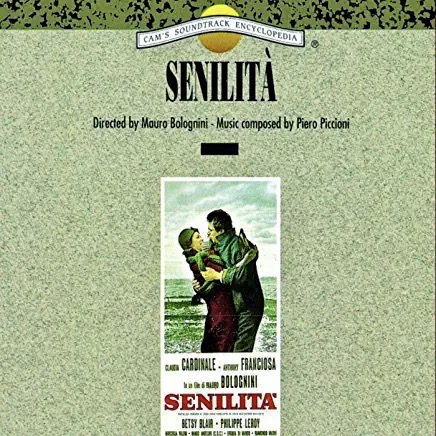
Senilita was well-received in Italy at the time of its release but is now mostly overlooked in Bolognini’s filmography. When the film finally premiered in NYC in 1982, Janet Maslin of The New York Times called it “ponderous and disappointing” but admitted it ”was handsomely photographed by Armando Nannuzi in black and white, and includes many striking views of Trieste, which is the film’s real star. From the opening moments by the waterfront to the many street scenes, Trieste has been photographed with a fondness that would do any travelogue proud.”
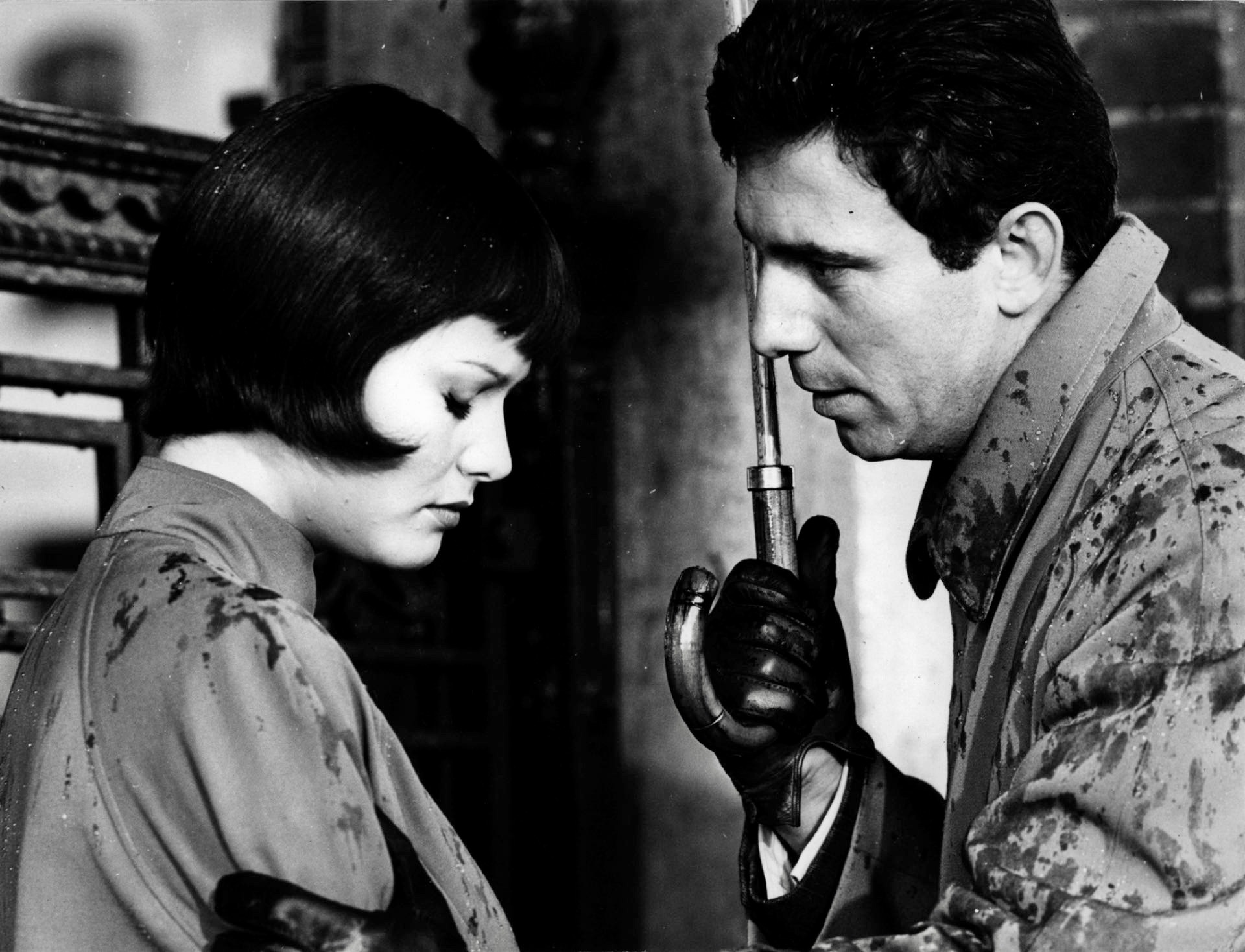
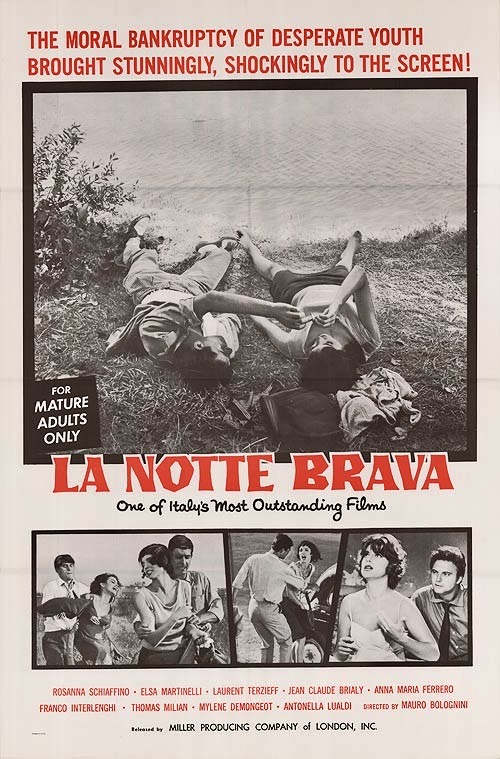
Despite Maslin’s dismissive review, I feel that Senilita is one of Bolognini’s best films from his early period which includes the crime drama La Notte Brava (The Big Night, 1959), co-scripted by Pier Paolo Pasolini, Bell’ Antonio (1960), From a Roman Balcony (1960), based on an Alberto Moravia novel, and La Viaccia (1961). Bolognini would go on to win the Best Director prize for Senilita at the San Sebastian International Film Festival and to garner five Palme d’Or nominations from the Cannes Film Festival for sumptuous period melodramas like The Inheritance (1976) starring Dominique Sanda and Anthony Quinn. Despite this, Bolognini remains one of the most overlooked Italian directors of the 20th century and deserves a retrospective.
Senilita is not currently available on any format in the U.S. but you might be able to find an Italian import version on DVD from online sellers. It may also still be streaming on Youtube in a decent print in the original Italian language version (no English subtitles). Both Franciosa and Blair are dubbed in Italian in the original release version and the dubbing is so well done that I can’t determine if the American actors were actually speaking Italian. What is unusual is that Claudia Cardinale is dubbed by another actress because her voice was considered too rough sounding in contrast to her glamorous screen image. In fact, Cardinale was dubbed often in her early films and it wasn’t until her appearance in Fellini’s 8 1/2 that you begin to hear the actress’s real voice.)
Other links of interest:
https://www.jewishvirtuallibrary.org/svevo-italo
https://www.altfg.com/film/anthony-franciosa/
 Cinema Sojourns