
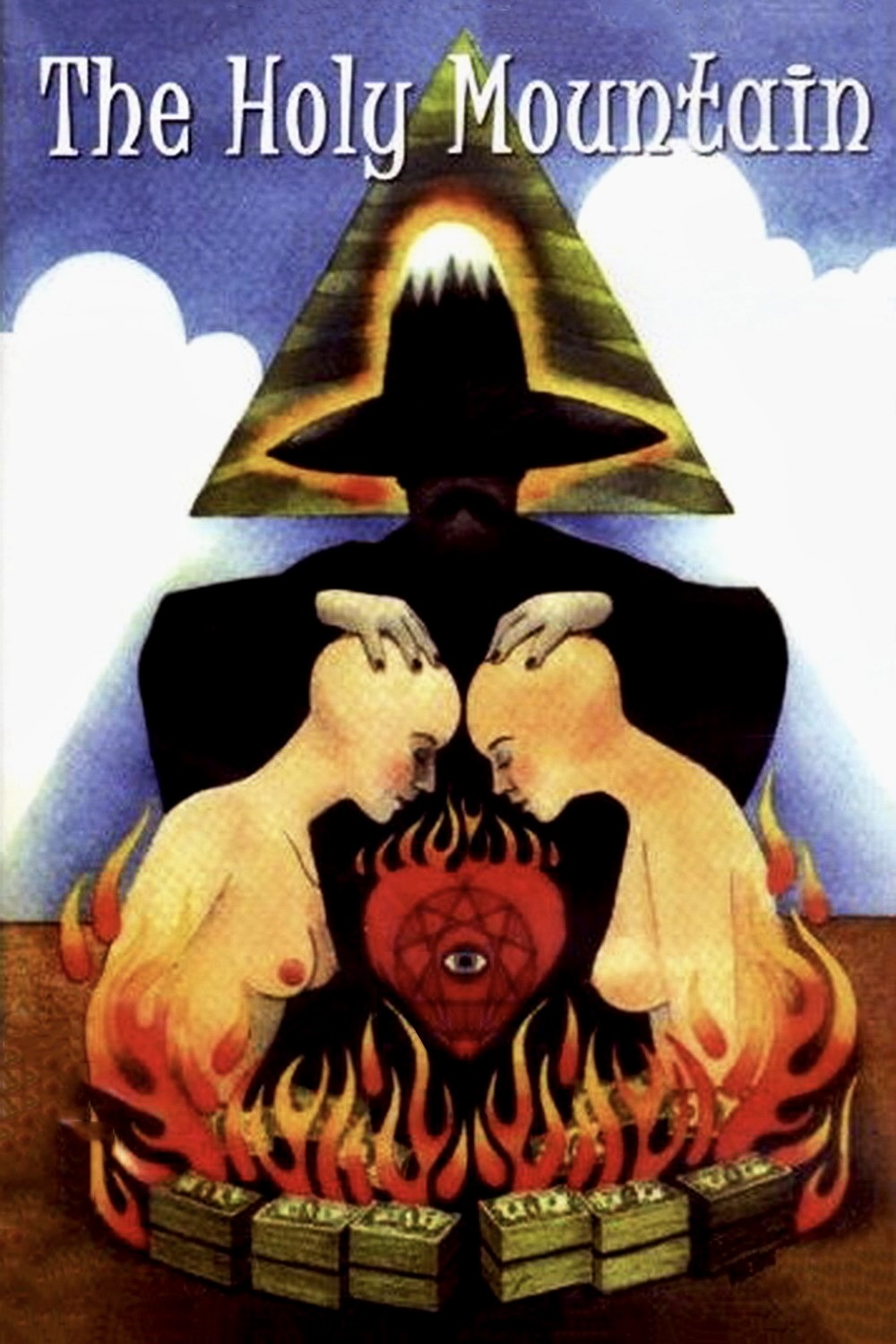
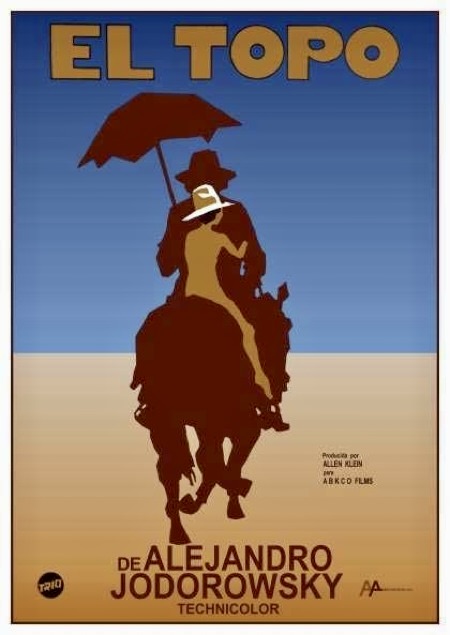
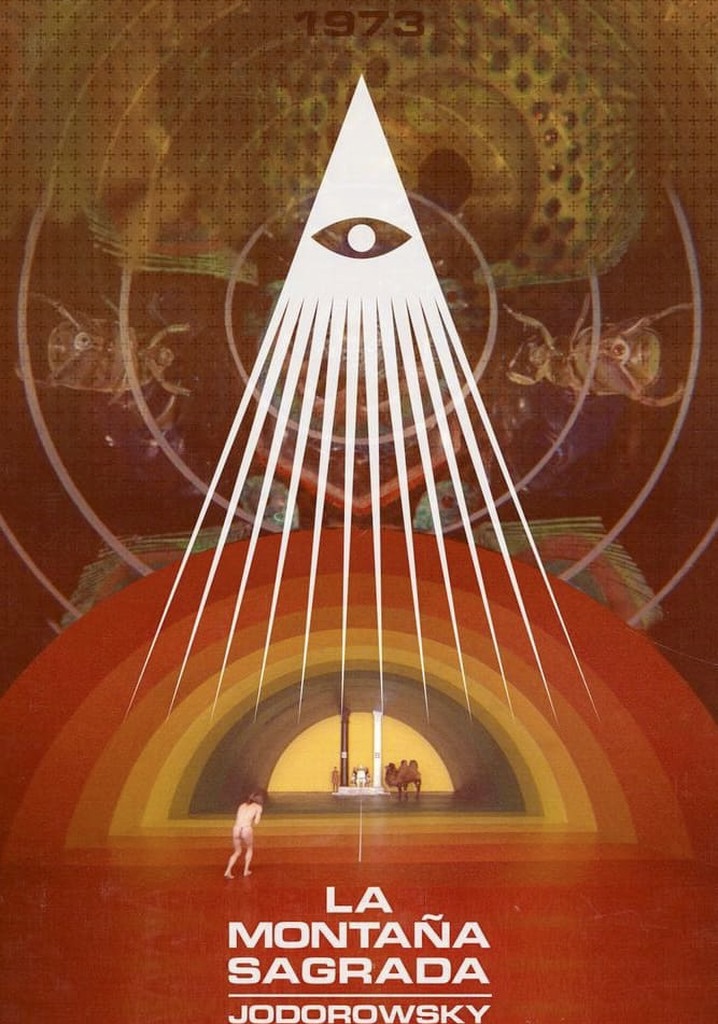
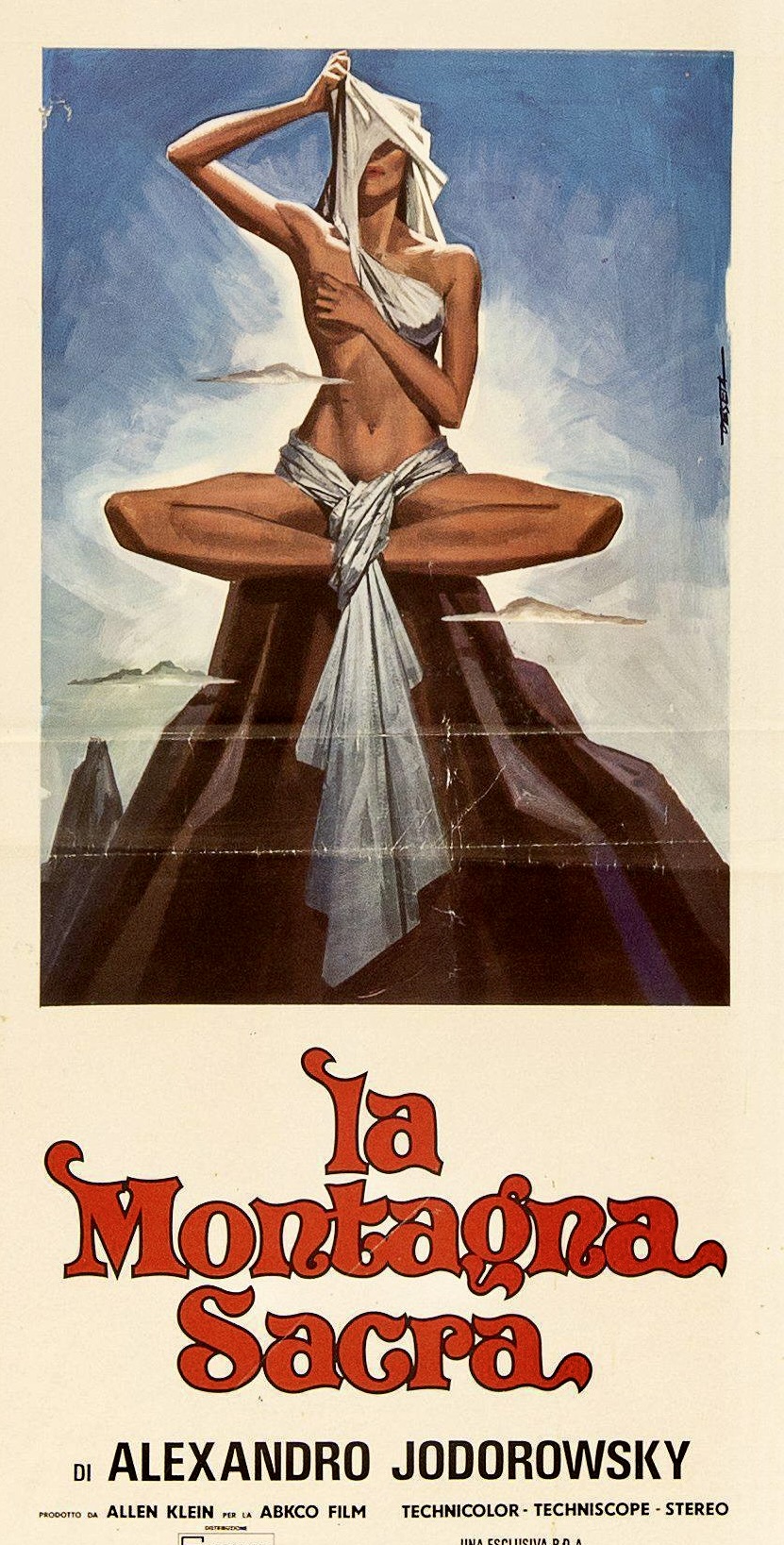
Remember when midnight movies were popular with young moviegoers in the 18 to 25 age range in the early seventies? It was the Elgin theater in New York City which helped launch this cultural phenomenon with late night screenings of offbeat and unusual films. Some of the early discoveries which went on to become bona fide cult hits were Night of the Living Dead (1968), Harold and Maude (1971), Pink Flamingos (1972), The Harder They Come (1972), The Rocky Horror Picture Show (1975) and Eraserhead (1977)? Before any of these movies became perennial fan favorites, however, Alejandro Jodorowsky’s El Topo (1970) was the first one to fly its freak flag and is generally acknowledged as the first midnight movie to prove there was a younger generation hungry for alternative viewing experiences The film, in which a mysterious desert nomad must prove himself against four master gunmen and then rescue a community of disabled people from an evil tyrant, played at the Elgin for almost a year due to an enthusiastic word of mouth campaign. What should have enjoyed the same success as El Topo was Jodorowsky’s follow-up film, The Holy Mountain (1973), but due to a disagreement over ownership rights between the filmmaker and the distributor Allen Klein (manager of The Beatles at the time), it was restricted to playing only New York’s Waverly Theater for a specific period of time and then withdrawn from distribution for almost 34 years. It finally resurfaced in a restored print at Cannes in 2006 and then premiered on DVD in 2007 but its absence on the midnight movie scene in the seventies led many cinephiles to assume that The Holy Mountain was not equal to El Topo. If anything, I think The Holy Mountain is much more audacious, bizarre, provocative and visually dazzling than anything Jodorowsky has made before or since.
In some ways, the film is hard to classify since it encompasses so many film genres but as a surreal tale of spiritual salvation and rebirth The Holy Mountain could be described as a cinematic acid trip on an epic scale. Jodorowsky tries to cram all of his interests and obsessions into one movie and it can be overwhelming at times with its mash-up of religious iconography, literary influences, film references, Theatre of the Absurd stylings and satiric targets which range from capitalism to military dictatorships to organized religion.
More importantly, Jodorowsky intended the movie to be a spiritual journey, not just for audiences but for himself and his cast members. Prior to filming, the director and his troupe of performers (only one was a professional actor – Juan Ferrara in the role of Fon) spent three months studying the teachings of Greco-Armenian mystic George Gurdjieff and practicing spiritual exercises (yoga, sufi, zen) under the direction of Bolivian philosopher Oscar Ichazo of the Arica Institute.
In a 2017 audio commentary for the film, Jodorowsky admitted that he was much more egotistical and pretentious at the time he made The Holy Mountain, referring to himself in the third person: “He was trying with all his soul to make a sacred film. He wanted to change mankind with his films. He thought that cinema was better than LSD. He thought his film would be a source of enlightenment for audiences.”
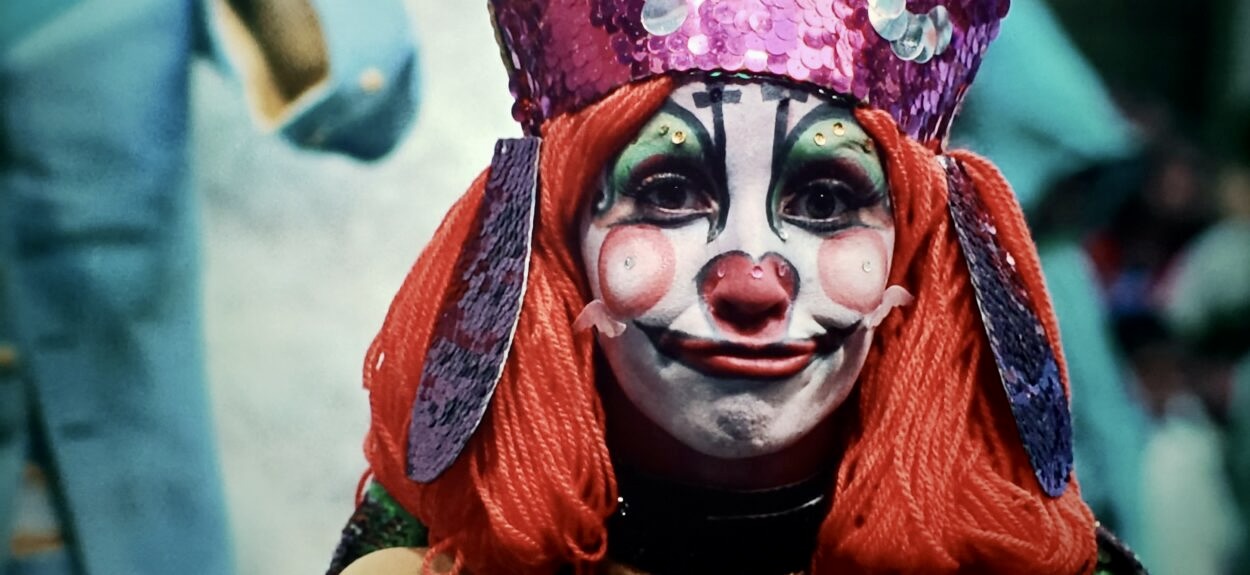
The Holy Mountain, which had a much bigger budget than El Topo and was filmed entirely in Mexico, was executive produced by Allen Klein with additional production money from John Lennon and Yoko Ono, who had been early champions of his work starting with El Topo. George Harrison also expressed a desire to collaborate with Jodorowsky and was offered the lead role of the thief, one of many characters modeled on Tarot card archetypes. Not surprisingly, Harrison changed his mind when the director refused to omit a scene in which Harrison’s character has his anus washed by attendants in a cleansing ritual. (This is only one of countless taboo-shattering scenes involving male and female nudity and sexual behavior that some critics and viewers attacked as pornographic).
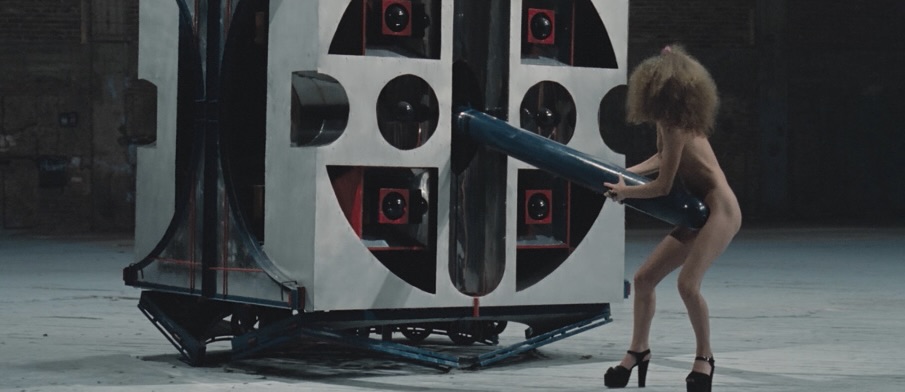
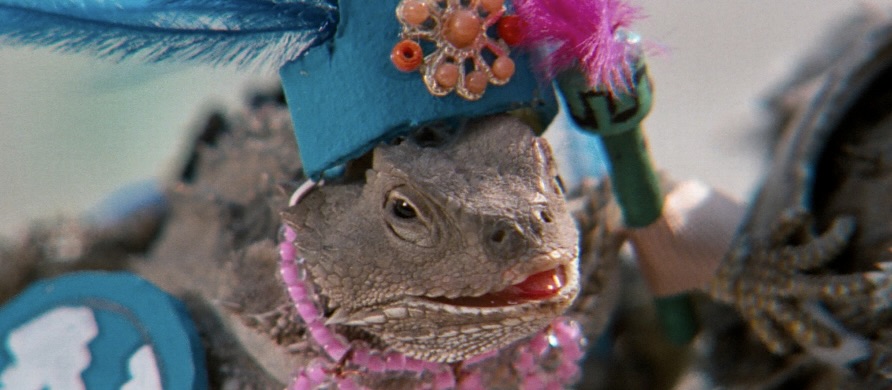
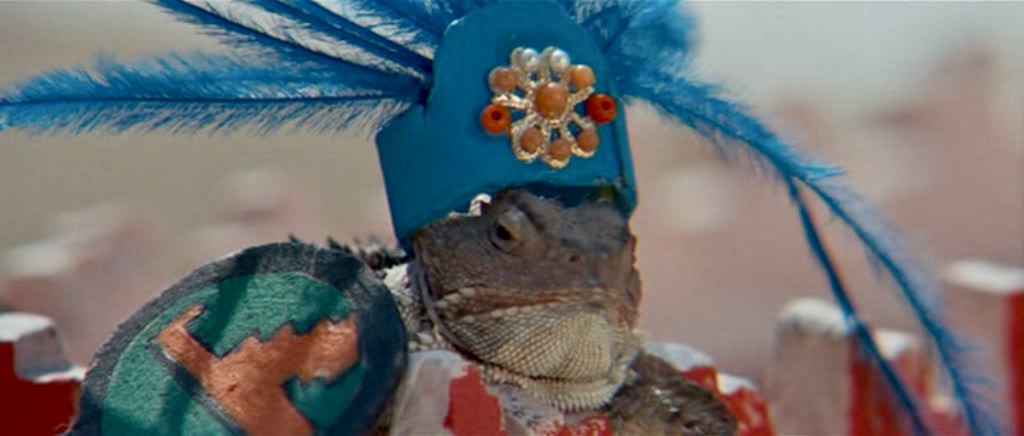
In terms of narrative structure, The Holy Mountain unfolds as a three-part journey. The first section follows the thief (Horacio Salinas) as he is resurrected in the desert by a dwarf amputee and attacked by a tribe of feral boys with green genitals. They travel to a wicked city not unlike Sodom and Gomorrah and experience armed soldiers executing civilians, American tourists happily snapping photos of the decadence, and prostitutes in matching outfits of black mesh see-through blouses, white belts, knee socks and boots (one is accompanied by a monkey). The thief finds work at a street carnival working at the “Conquest of Mexico” exhibition in which the Aztec warriors and their attackers are portrayed by chameleons and toads in colorful uniforms. Eventually the thief leaves the primitive world behind and enters a mystical realm after scaling an enormous tower and discovering a temple painted in the hues of a rainbow.
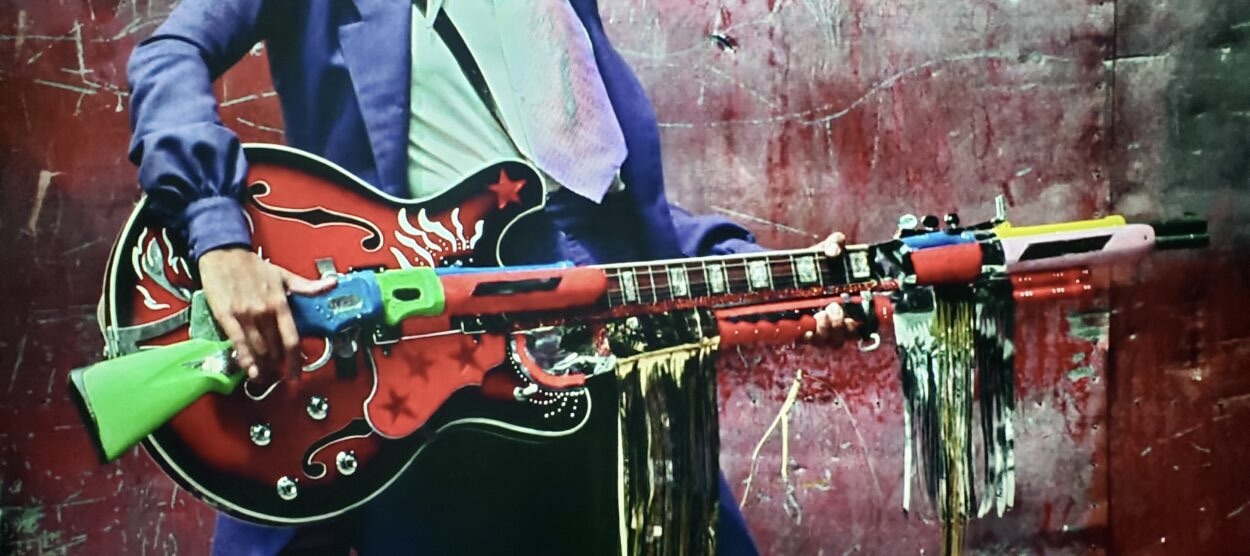
The film’s second section introduces the Alchemist (played by Jodorowsky), who prepares the thief for his next phase which includes joining a group of the most important people on the planet – industrialists, politicians, inventors, etc. All of them must forego their egos, materialism and earthly desires before they can achieve immortality at the top of the holy mountain. Much of this middle section focuses on the seven new disciples and their dubious backgrounds such as Isla (Adriana Page), whose business serves all war efforts with bombs, poisonous gases, grenade necklaces and psychedelic shotguns.
The final third of The Holy Mountain tracks the Alchemist, the thief and the seven disciples as they journey to Lotus Island, the site of the mystical mountain. In their new exalted state, the travelers plan to confront the nine immortals and replace them but there are unexpected surprises along the way involving icy peaks, amputation, vicious dogs and more. In the movie’s final scene, the alchemist breaks the fourth wall and tells his group and the viewer, “If we have not obtained immortality, at least we have obtained reality. We began in a fairy tale and we came to life. But is this life reality? No. It is a film. Zoom back camera.” At which point, we see Jodorowsky and his entire cast and film crew stop their filming and take a break.
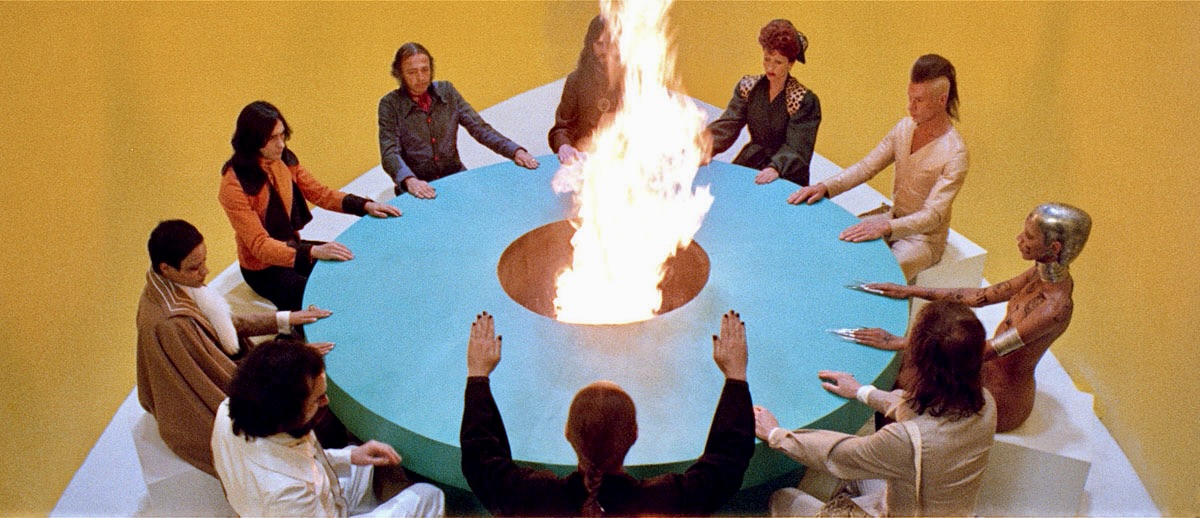
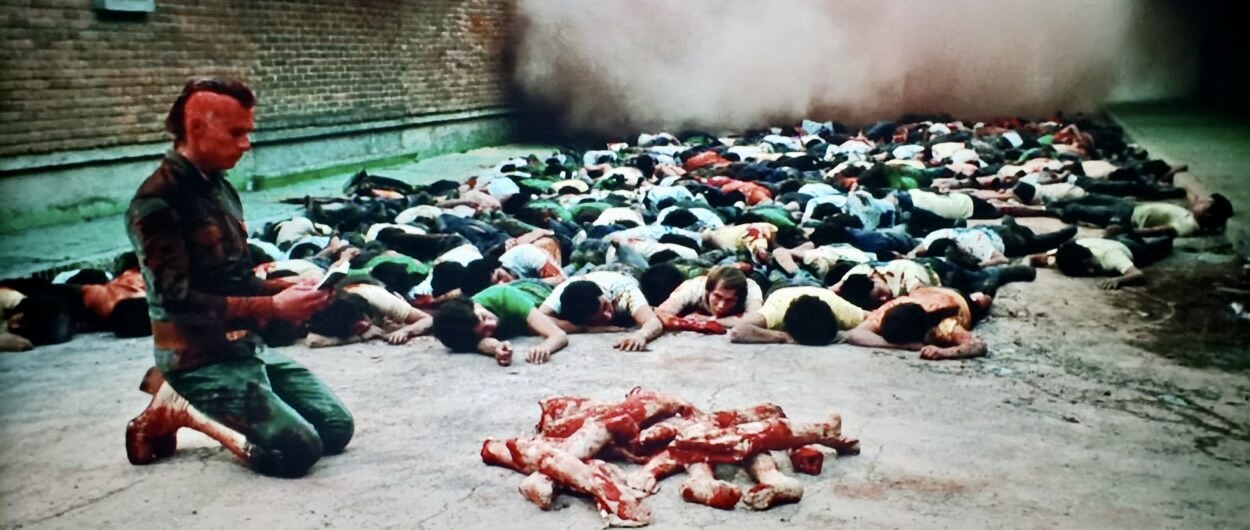
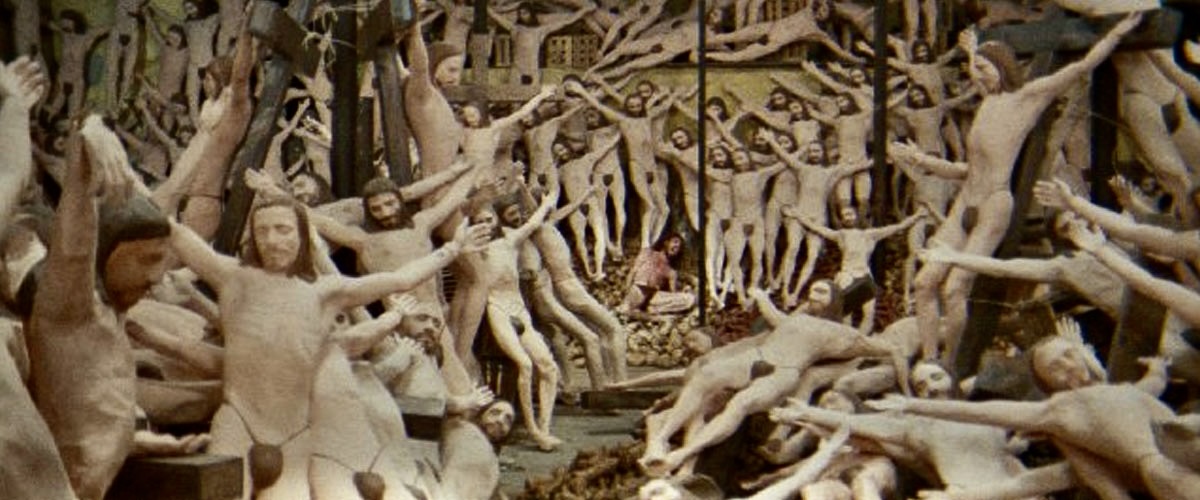
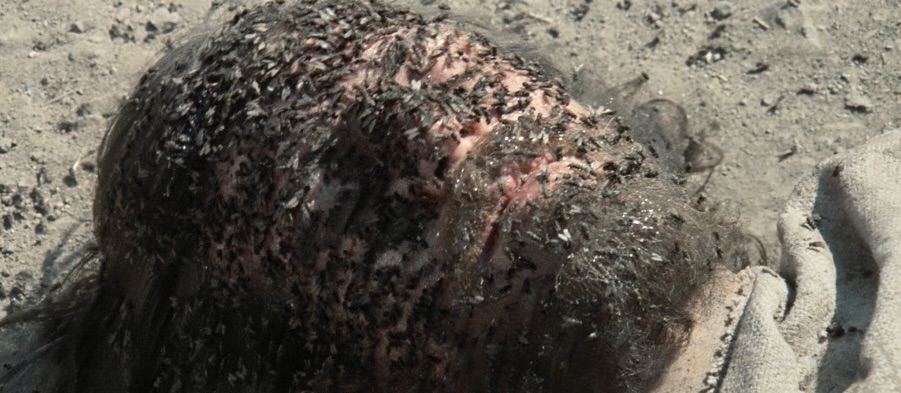
At times The Holy Mountain can be indecipherable or alienating but it is also consistently dazzling on a visual (the cinematography is by Rafael Corkidi) and aural level (the music score by Don Cheery, Ronald Frangipane and Jodorowsky is a fusion of ethnic music and natural sounds). Among some of the more unforgettable images is a scene where the thief finds himself in a factory that manufactures life size figures of Christ on the cross. He bites into the face of one, discovers it’s made out of cake and starts devouring it. Other indelible images include a body covered in tarantulas, a man drinking milk from the breast of a hermaphrodite, the alchemist turning the thief’s feces into gold, birds flying out of the bloody wounds of massacred people, and an elderly man with a glass eye who removes it from its socket and gives it to a child prostitute.
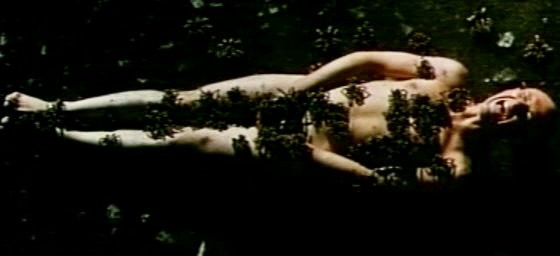
Yes, there is something to offend everyone in The Holy Mountain and Jodorowsky certainly stirred up controversy in Mexico during the filming of the movie, even receiving death threats. The country’s president at the time warned him, “Don’t put uniforms in the film. No priests, no soldiers, no fire fighters.” The director ignored those demands but wisely left the country to edit his film abroad before Mexican officials could see any footage.
If you have seen El Topo, you know Jodorowsky habitually uses disabled people, amputees, dwarves and midgets for actors in his movies. He defends this practice as a way of revealing certain universal truths about the human condition (political correctness or wokeism are probably alien concepts to him). He said in an interview on Bluefat.com, “All these persons who have a deformity for me are the symbol of the egos. Every ego is a deformity. We are mutated by prejudice or religions, politics, economics –– our egos create them; we are like them. So this involves the meaning of symbols. Also, you realize my pictures are not made with these stars who are so beautiful; they are made with monsters. So if you see a dwarf, it is a real dwarf; if you see an amputee it is a real amputee, if you see a prostitute, she is a real prostitute.”
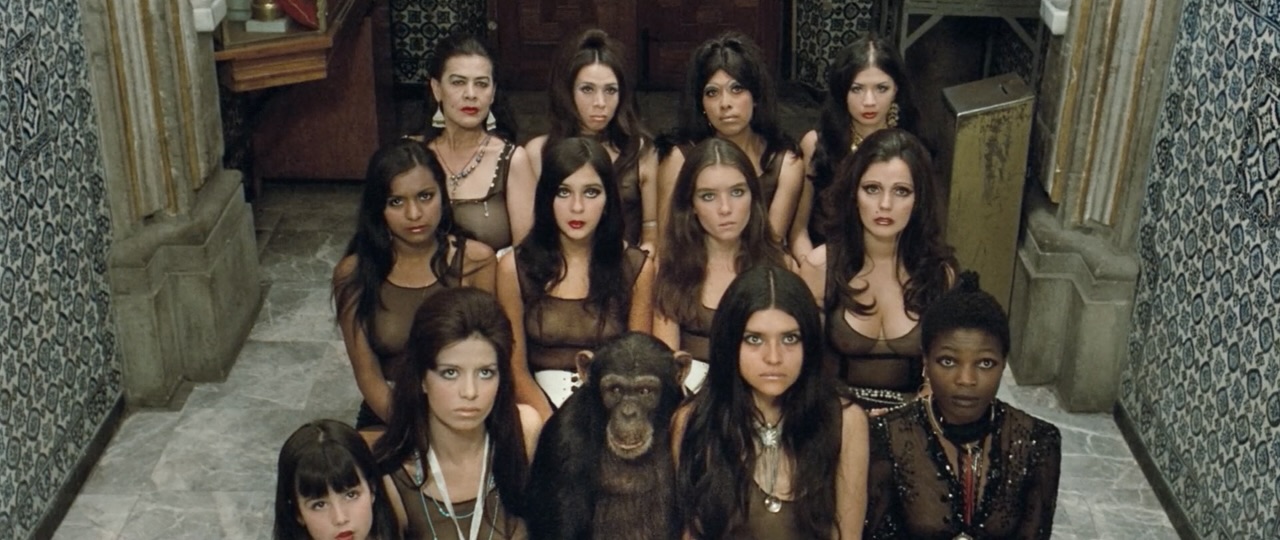
Much more problematic is Jodorowsky’s use of animals in his films, especially in El Topo where dozens of rabbits, horses and sheep were reputedly killed to create visual tableaus in certain scenes. The Holy Mountain is not as extreme in its scenes of animal death and mistreatment but it is obvious that lizards and toads were harmed during his staging of the “Conquest of Mexico.”
Critics were decidedly mixed in their reviews when The Holy Mountain was originally released but over time the movie continues to find new converts. Gregory J. Smalley of 366 Weird Movies wrote, “The Holy Mountain plays like a cut-up version of the world’s sacred texts. If you tore out pages from the Bible, the Bhagavad Gita, The Golden Bough, and a dozen other esoteric works from the Kabbalah to Gurdijeff—throwing in a couple of sleazy pulp novels for good measure—and put them together in a giant cauldron, stirred them up and pulled out sheaves at random and asked a troupe of performance artists, carnival freaks, and hippies tripping on peyote to act them out, you might come up with a narrative something like The Holy Mountain.”
Peter Bradshaw of The Guardian called the film,“a plumply overripe fruit of the counterculture, dripping with the juices of spiritual rebellion, semi-comic posturing, consciousness-raising and all-around freakiness. Hardly a moment passes in this movie without a situationist display of outrageousness; it is a dream tableau of the weird and occasionally wonderful. Unlike his celebrated breakthrough El Topo, this is less like a spaghetti-LSD western and is more urban, notionally more political, and more satirical. But the key Jodorowsky tropes are still there: the absurdism, the hedonism, the tarot mysticism.” And Andrew O’Hehir of Salon remarked that The Holy Mountain was “an extraordinary visual concoction, loaded with stunning primary colors, anti-religious caricatures drawn from Diego Rivera and a succession of dreamlike, grotesque vistas worthy of Dali at his most deranged.”
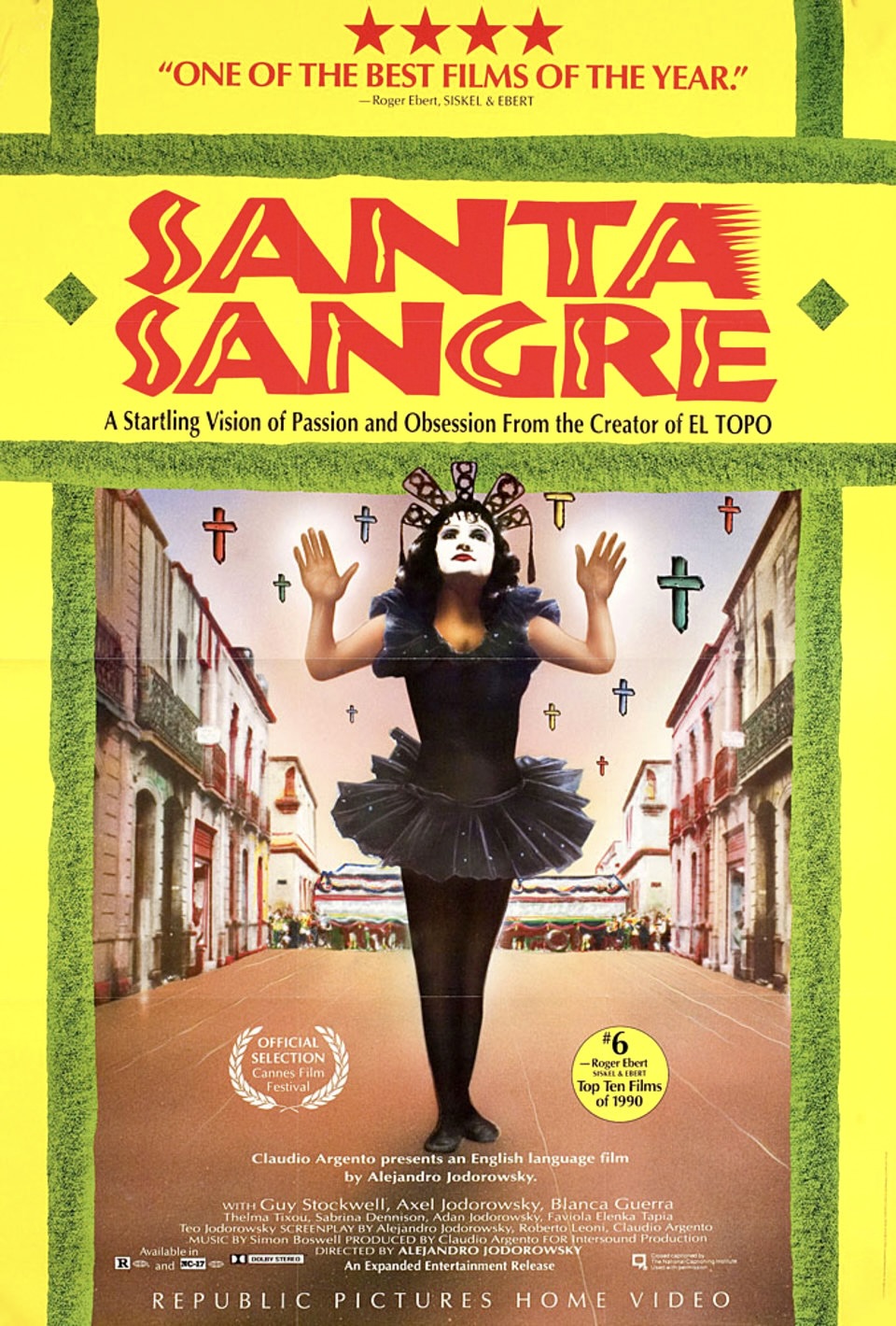
Love it or hate it, there is nothing quite like The Holy Mountain and it might be the most ambitious experimental underground movie ever made. Jodorowsky would go on to direct six more films including Santa Sangre (1989), which also enjoys a cult following and earned the director a nomination for the Un Certain Regard Award at the Cannes Film Festival
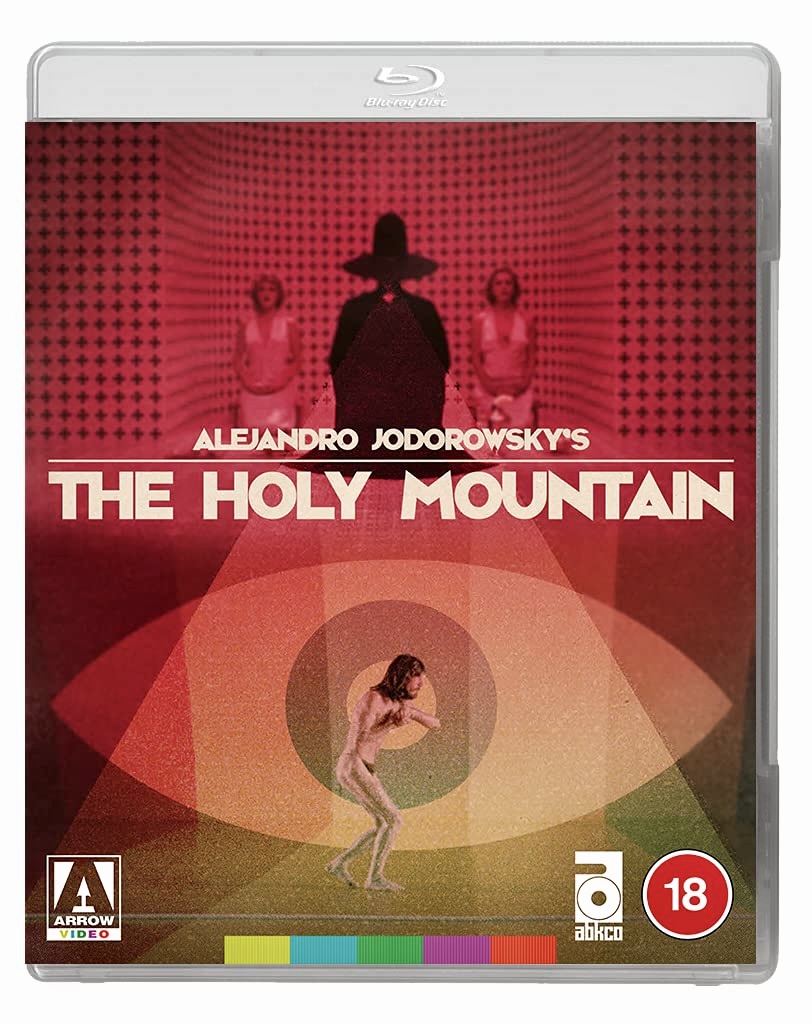
The Holy Mountain was first released on DVD in 2007 by Anchor Bay in the box set The Films of Alejandro Jodorowsky and also included the 1957 La Cravate, Fando and Lis (1968), El Topo, and a host of supplementary material. Best of all, the film appeared on Blu-ray in August 2021 from Arrow Films with a host of new extras including an audio commentary by Jodorowsky, deleted scenes, a short film entitled The Tarot and more.
Other links of interest:
https://www.interviewmagazine.com/film/alejandro-jodorowsky
https://bluefat.com/1108/Alejandro_Jodorowsky2.htm

