
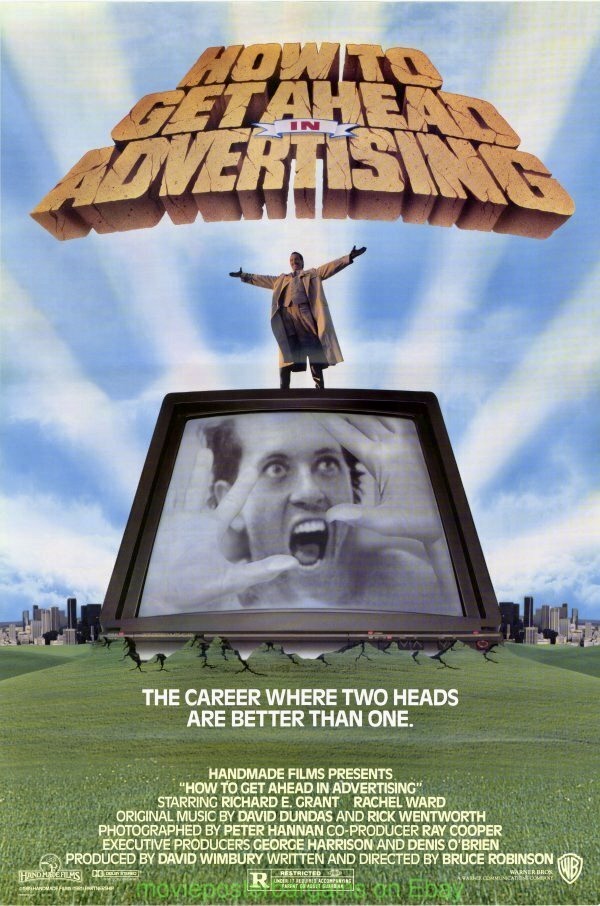
Satiric films about the world of advertising are always welcome and certainly necessary in a world where marketing of some kind is always assaulting the senses of potential consumers. Among some of my favorites in the genre from their respective eras are Will Success Spoil Rock Hunter? (1957), Giants and Toys (1958) from Japan, Putney Swope (1969), The Hudsucker Proxy (1994), the subversively comic documentary The Yes Men (2003), and Thank You for Smoking (2005). But undoubtedly one of the most cynical, biting and deranged of them all is How to Get Ahead in Advertising (1989) in which the title can be taken quite literally. The protagonist of the movie, a self-assured marketing genius, sees his life and career usurped by a boil on his body that ends up replacing his own head and becomes an even more successful version of himself. What? Yes, you read that correctly.
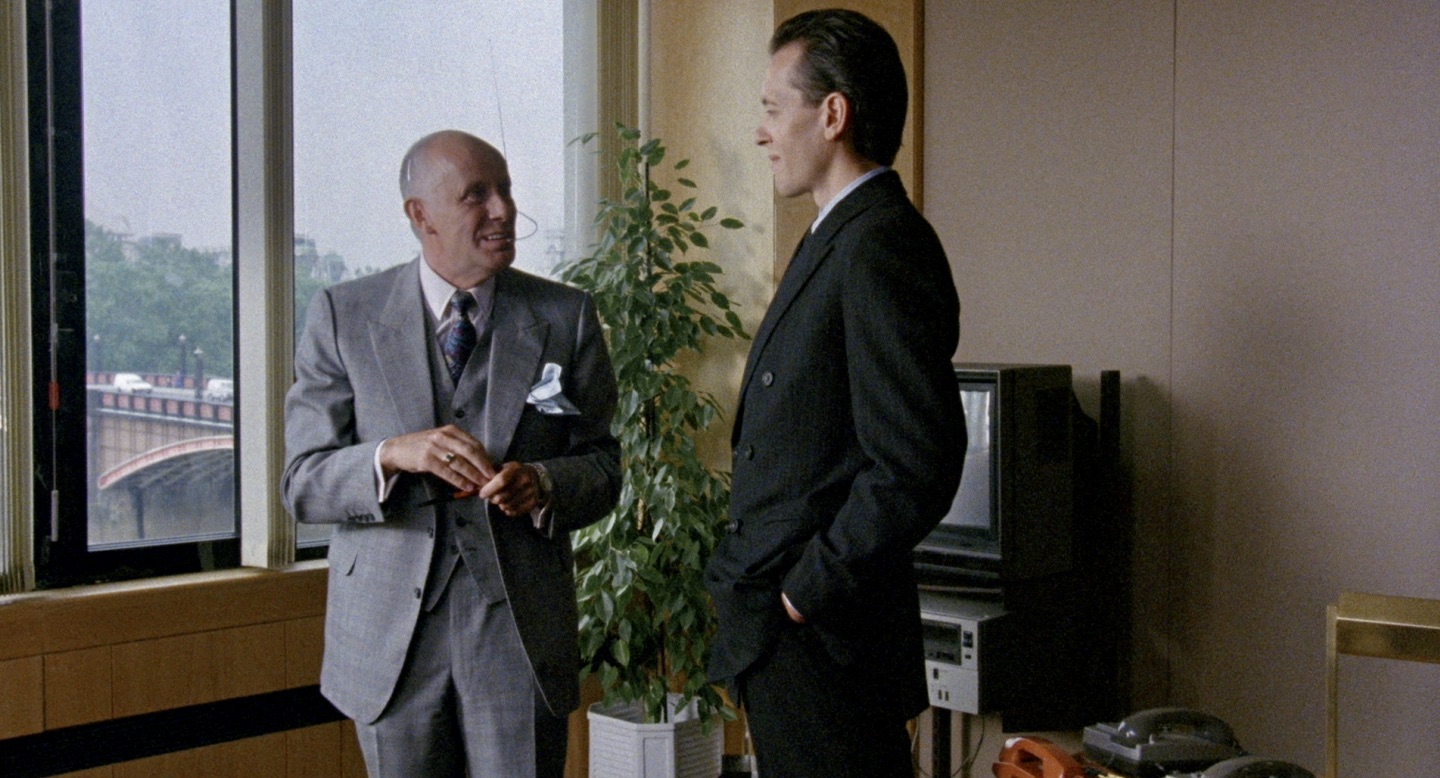
The film, directed by actor-turned-director Bruce Robinson, begins as the viewer gets an insider view of an ad agency meeting led by Dennis Bagley (Richard E. Grant), the top executive in his company which is run by his demanding boss Bristol (Richard Wilson). Dennis is advising the staff on how to position a food distributor which carries unhealthy products. “We need a label brimming with health,” he proclaims, adding, “We are trying to sell to the archetypical average housewife, she who fills her basket.” The golden rule, of course, is “whatever it is, sell it, and if you want to stay in advertising, by god, you better learn that.”

Bagley’s mercenary approach soon hits a snag when he experiences an extended period of writer’s block in regards to a new campaign promoting a pimple cream. His panic over not meeting the deadline for his client soon escalates into a meltdown over his chosen profession. In the midst of his rant, his wife Julia (Rachel Ward) notices a boil on Bagley’s shoulder, which begins to grow at an alarming rate.
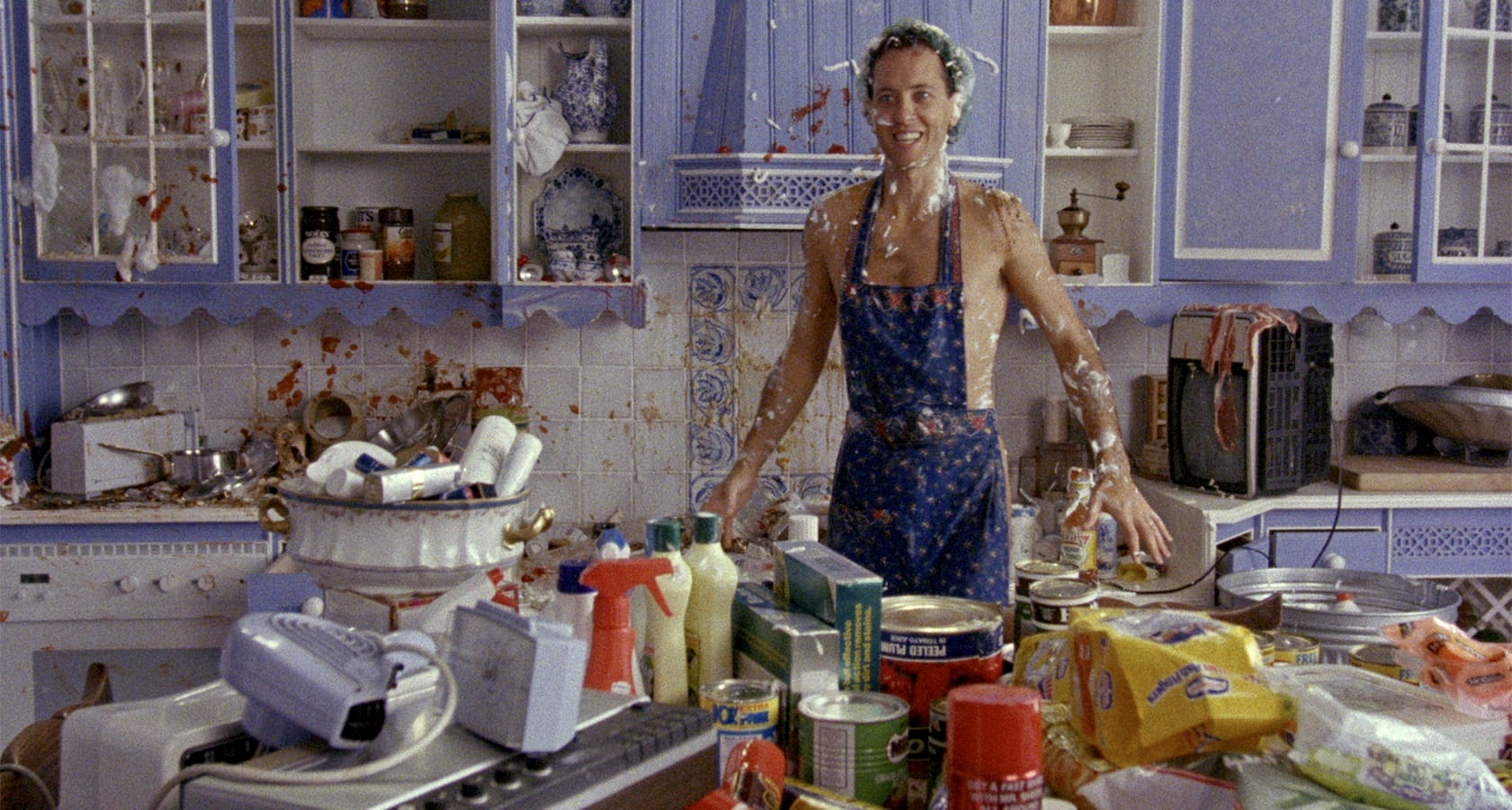
Convinced that his years of shilling bad products to the public has affected his physical and mental health, he tells Bristol he is resigning from his job “to rid his mind and body of poisons” but is convinced to take some time off instead while decompressing in his country home with his wife. Unfortunately, Bagley’s retreat to the country is just the beginning of his problems.

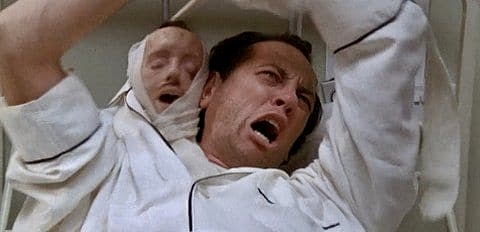
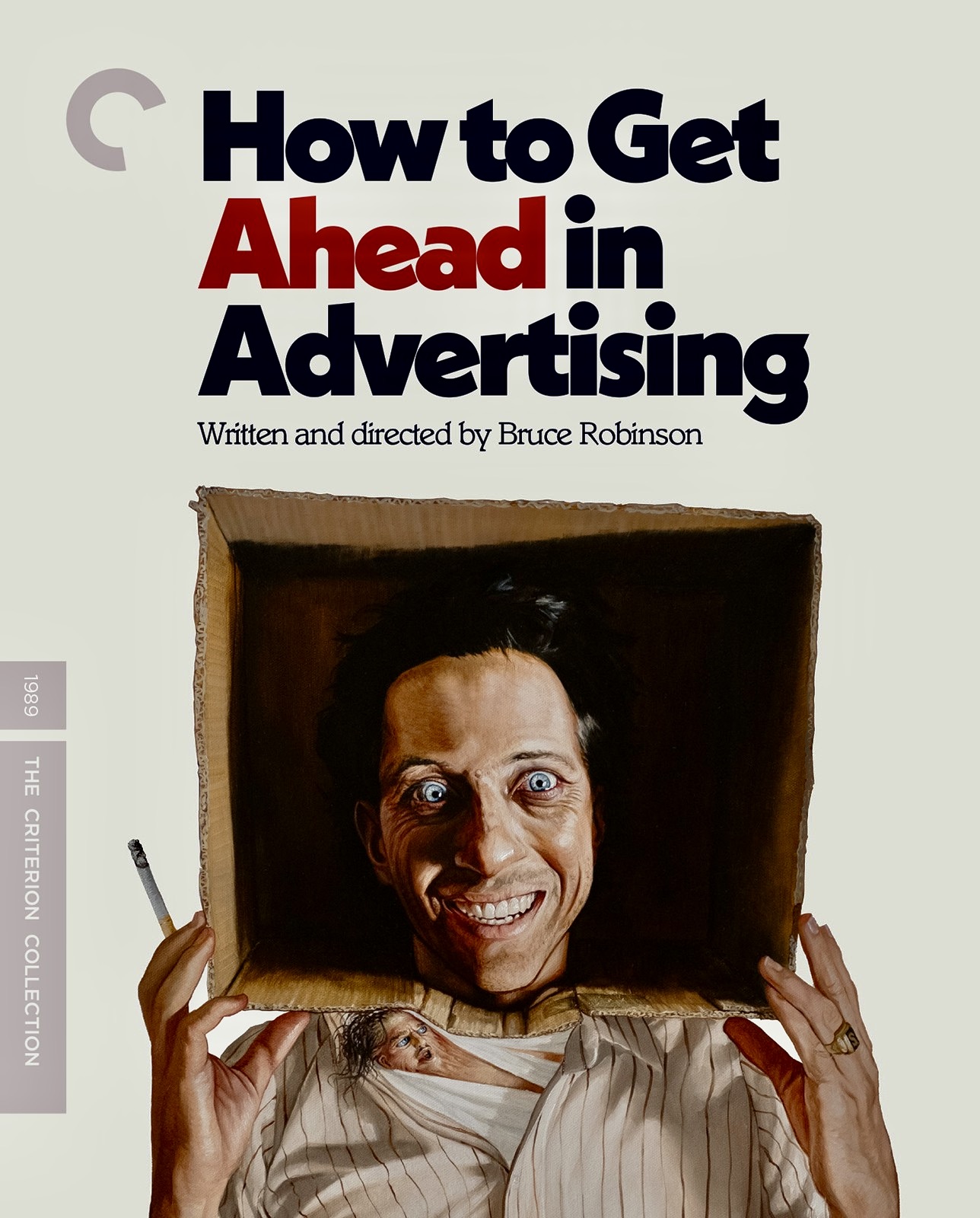
Not only does the boil continue to grow but it soon takes on the appearance of a small head with eyes, a nose and a mouth. And then the boil starts talking and it won’t shut up (Director Robinson provides the voice). Julia thinks her husband is going mad and takes him to a psychiatrist. The odd thing is that everyone can hear what the boil is saying but they think it is Bagley becoming schizophrenic. What follows unfolds like some bizarre variation of Franz Kafka’s The Metamorphosis and is set in a world where “advertising conspires with Big Brother.”

What makes How to Get Ahead in Advertising unique is the way the first half of the film is like some madcap surreal romp before transitioning into a much more savage critique about corporate corruption in the second half. Bagley’s warning to his wife about the boil on a secret videotape is just as timely now as it was when Robinson’s satire was released over 35 years ago. “Greed has installed its lackeys into the highest offices in this land and they’re conducting a crime wave of unprecedented ferocity,” Bagley reveals, citing “oil companies sold as champions of the environment” as an example.

Bruce Robinson certainly has had a fascinating career arc. He started as an actor, making his film debut in Franco Zeffirelli’s Romeo and Juliet (1968) followed by appearances in offbeat indie films such as Roddy McDowell’s Tam Lin (1970) and Barney Platt-Mills’ Private Road (1971). His role as the romantic obsession of Isabelle Adjani in Francois Truffaut’s The Story of Adele H (1975) is probably his most famous role but Robinson would soon try his hand at screenwriting. His first attempt at the craft was The Killing Fields (1984), directed by Roland Jaffe, and it garnered him an Oscar nomination for Best Screenplay. (The film would earn seven Academy Award nominations in all, including Best Picture.).

Most cinephiles, however, know Robinson for his directorial debut (which he also wrote) – Withnail and I (1987), a semi-autobiographical tale of two out-of-work actors trying to survive a bitter winter in a freezing country manor house. The film was beloved by critics and moviegoers who managed to see it during its initial run but it hardly made a splash at the time. Since then, Withnail and I has amassed a huge cult following which continues to grow and part of its appeal is Richard E. Grant’s delightfully manic performance as a perpetually wasted dilettante slacker.

I think Grant is even better in Robinson’s follow-up film, How to Get Ahead in Advertising, even though he barely mentions it in his memoir With Nails: The Film Diaries of Richard E. Grant. The actor really gets to stretch his acting muscles here playing what is essentially two roles – the golden boy ad executive and his demonic replacement which sprouts from his own body. Grant is consistently hilarious, whether it is freaking out over his bizarre physical transformation or spewing vitriolic insults at party guests. The supporting cast is superb as well with a stand out role for Rachel Ward as Grant’s confused but supportive wife…at least, in the beginning.

Equally impressive are the special effects, which are minimal but startling and weird in all of the scenes involving Bagley and his interactions with the competitive boil. In some ways, How to Get Ahead in Advertising would be a perfect fit in any body horror film series alongside the work of David Cronenberg (They Came from Within aka Shivers [1976], Rabid [1977], The Brood [1979]) and more recent entries like The Substance [2024] and Together [2025], which are both macabre and funny in their own sick way.

Due to scant distribution, How to Get Ahead in Advertising did not find its audience when it was first released and has yet to acquire the sort of cult reputation that Withnail & I enjoys. Critics were mostly mixed on the film as well with Roger Ebert of The Chicago Sun-Times writing, “How to Get Ahead in Advertising is a sour, mean-spirited attack on advertising, starring an actor who can be repulsive and hateful without even trying. Those are the good things about it. The film’s weakness is that it hates advertising so much it can’t shut up about it.” I admit Robinson’s film is a scathing critique of the ad profession but its satire is spot on, frequently uproarious and genuinely inspired in conception.
One of the few critics to notice and admire the film as well as Grant’s performance was David Cairns, who wrote an essay on it for The Criterion Collection. He stated, “This is a film of and for Richard E. Grant. Born to play a man warring with his own epidermis, Grant raves, simpers, sneers, cringes, punches himself in the neck, and all but disintegrates before our astonished pans, running the emotional gamut from Genesis to Revelation and nearly tearing the film free from its sprocket holes in a swashbuckling display of utter mental collapse. “Bruce claimed I was the actor who spoke with his ‘voice,’ ” Grant recounted in Very Naughty Boys: The Amazing True Story of Handmade Films, by Robert Sellers. “Playing that part was eight weeks of high-pitched mania that was physically exhausting to maintain,” perhaps the only understatement ever associated with this performance.” How to Get Ahead in Advertising isn’t going to be everyone’s cup of tea but if you are a fan of Richard E. Grant, this is essential viewing.

How to Get Ahead in Advertising was first released on DVD by The Criterion Collection in July 2001 with no extra features. A much better option is the 2k digital restoration on Blu-ray released by Criterion in May 2025, which includes a new documentary on the film with writer-director Robinson and actor Grant.
Other links of interest:
http://www.screenonline.org.uk/people/id/584216/
https://everything.explained.today/Bruce_Robinson/
https://www.criterion.com/current/posts/8808-how-to-get-ahead-in-advertising-monstrous-carbuncle
https://www.richard-e-grant.com/
 Cinema Sojourns