
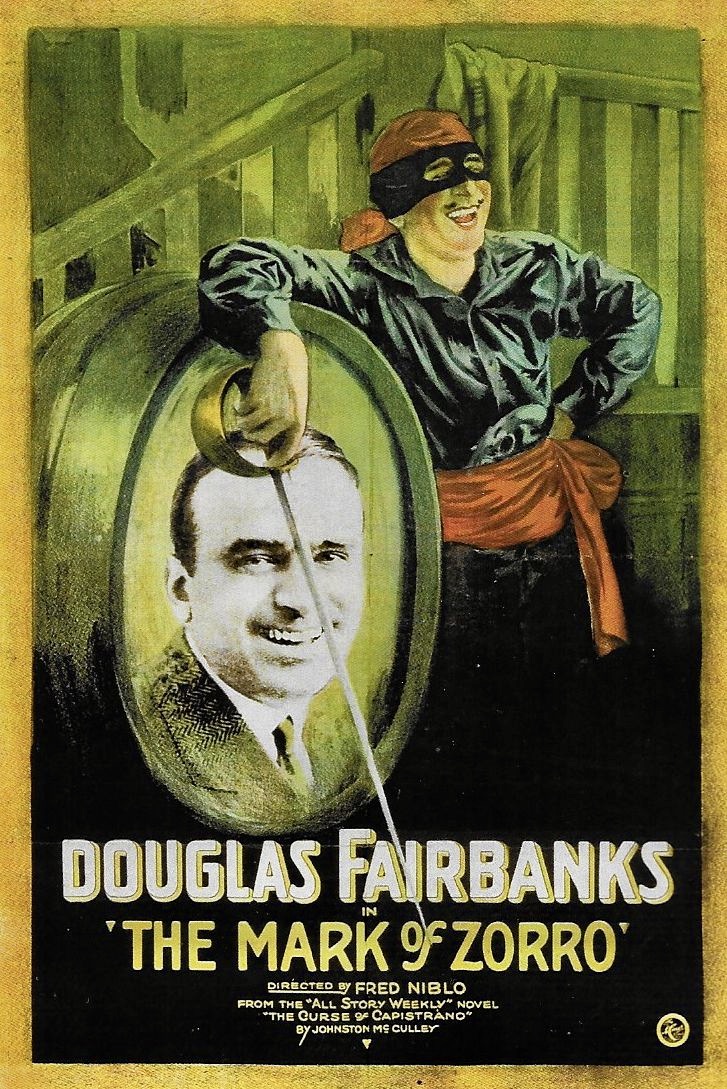
It is a well known fact that Douglas Fairbanks was one of the first superstars of the silent era but he first became famous as a leading man in romantic comedies such as Wild and Woolly (1917) and Reaching for the Moon (1917). In the aftermath of World War I, audiences had grown bored with the cheerful, boy-meets-girl formula that had made Fairbanks a popular screen idol so the star decided to try a different tactic. A short story by Johnston McCulley, “The Curse of Capistrano,” had appeared in the pulp magazine, All-Story Weekly, and he decided to read it during a long train trip from New York to Los Angeles. This was unusual in itself since Fairbanks did not like to read (and that included his movie scripts) but actress Mary Pickford encouraged him to read the serial and McCulley’s story became his next project. It was first called The Curse of Capistrano, which was then changed to The Black Fox and finally released as The Mark of Zorro in 1920.
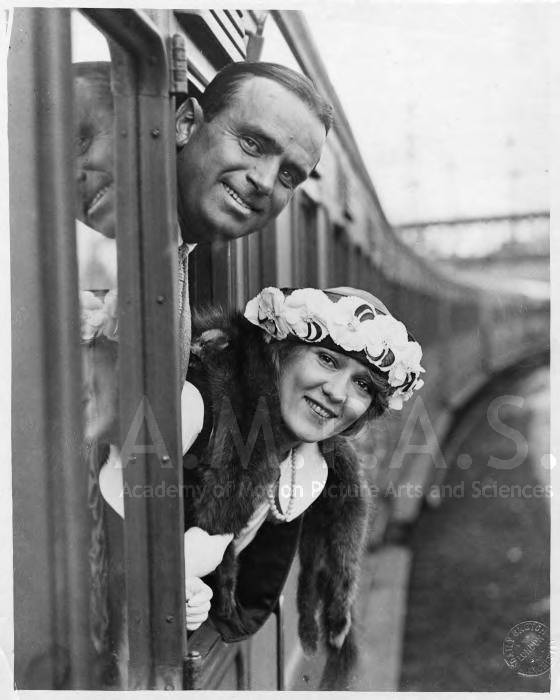
That year marked a major turning point in the career of Fairbanks. Not only did he tie the matrimony knot in March with Pickford, the most popular actress in silent film, he also embarked on a new screen career, going from romantic leading man to a dashing action figure.
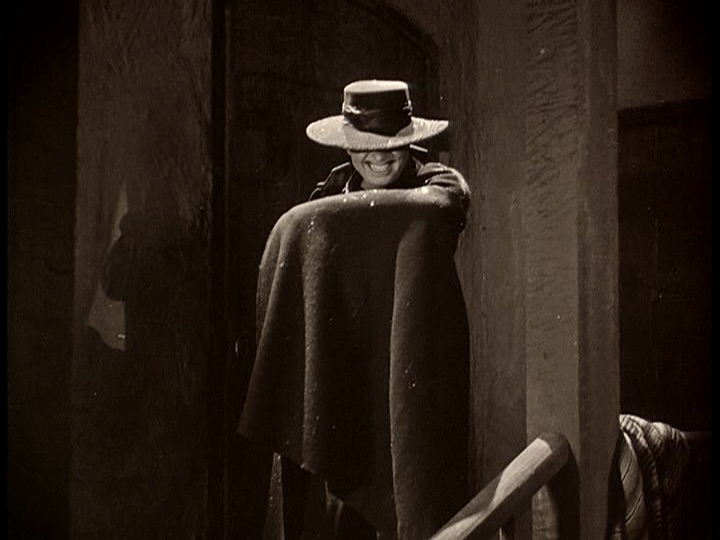
Accounts vary as to who actually encouraged Fairbanks to take a chance on a period costume adventure but whether it was his brother Robert, his wife Mary, or an agent named Ruth Allen, the outcome was the same: Fairbanks simply capitalized on his physical agility and devil-may-care attitude to play the lead in The Mark of Zorro (1920) and, in the process, became the prototype for a new kind of hero – the swashbuckling adventurer. McCulley’s serial (which was later published as The Mark of Zorro in 1924) was most likely inspired by real life Mexican folk heroes like Joaquin Murrieta, Salomon Pico, and other defenders of Hispanic communities against their exploitation and abuse by Americans. For the screen adaptation, Fairbanks (using the pseudonym of Elton Thomas) and screenwriter Eugene Miller teamed up to shape the material into an appropriate vehicle for the silent star.
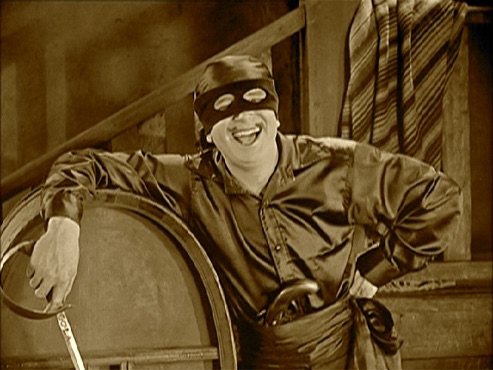
The Mark of Zorro is set in California in the early nineteenth century and the story opens as Don Diego Vega (Fairbanks) returns from Spain to find his family being menaced by a corrupt governor and his henchmen. While Don Diego appears on the surface to be an effete dilettante, his behavior is really an elaborate ruse. In reality, he is Zorro, a master swordsman who has dedicated his life to fighting evil tyrants. Dressed in a purple cloak and black mask, Zorro torments his enemies further by carving a “Z” on the bodies of his adversaries while laughing in their faces.
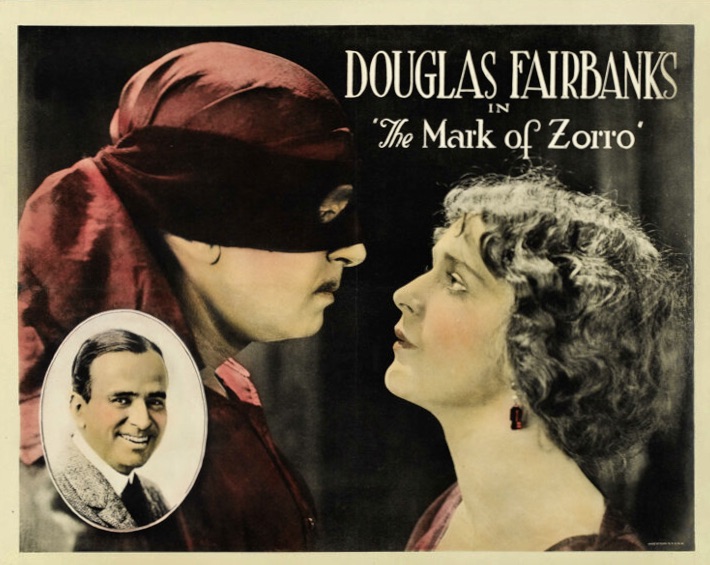
Shot at Clune Studios, a 10-acre parcel of land in Hollywood that later became Raleigh Studios, The Mark of Zorro was directed by Fred Niblo and included location work in the San Fernando Valley. Belgian world fencing champion M. Harry Uttenhover was hired to put Fairbanks through a grueling training regimen of fencing along with co-stars Noah Beery Sr. and Robert McKim, who play his rivals in the movie. It was also the first time dancer turned actress Marguerite De La Motta had appeared opposite Fairbanks and their dynamic on-screen chemistry led to further collaborations between the two, including the screwball comedy The Nut (1921) and The Three Musketeers (1921).
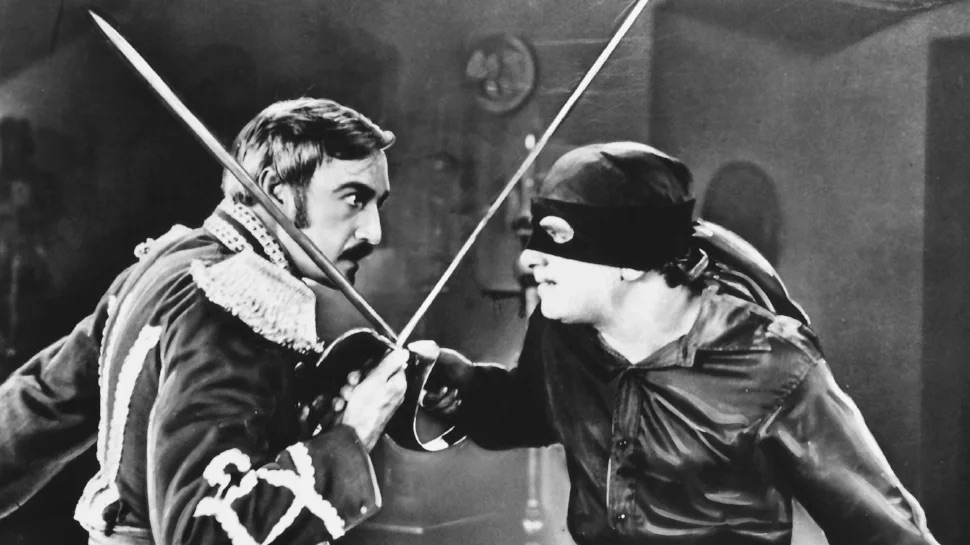
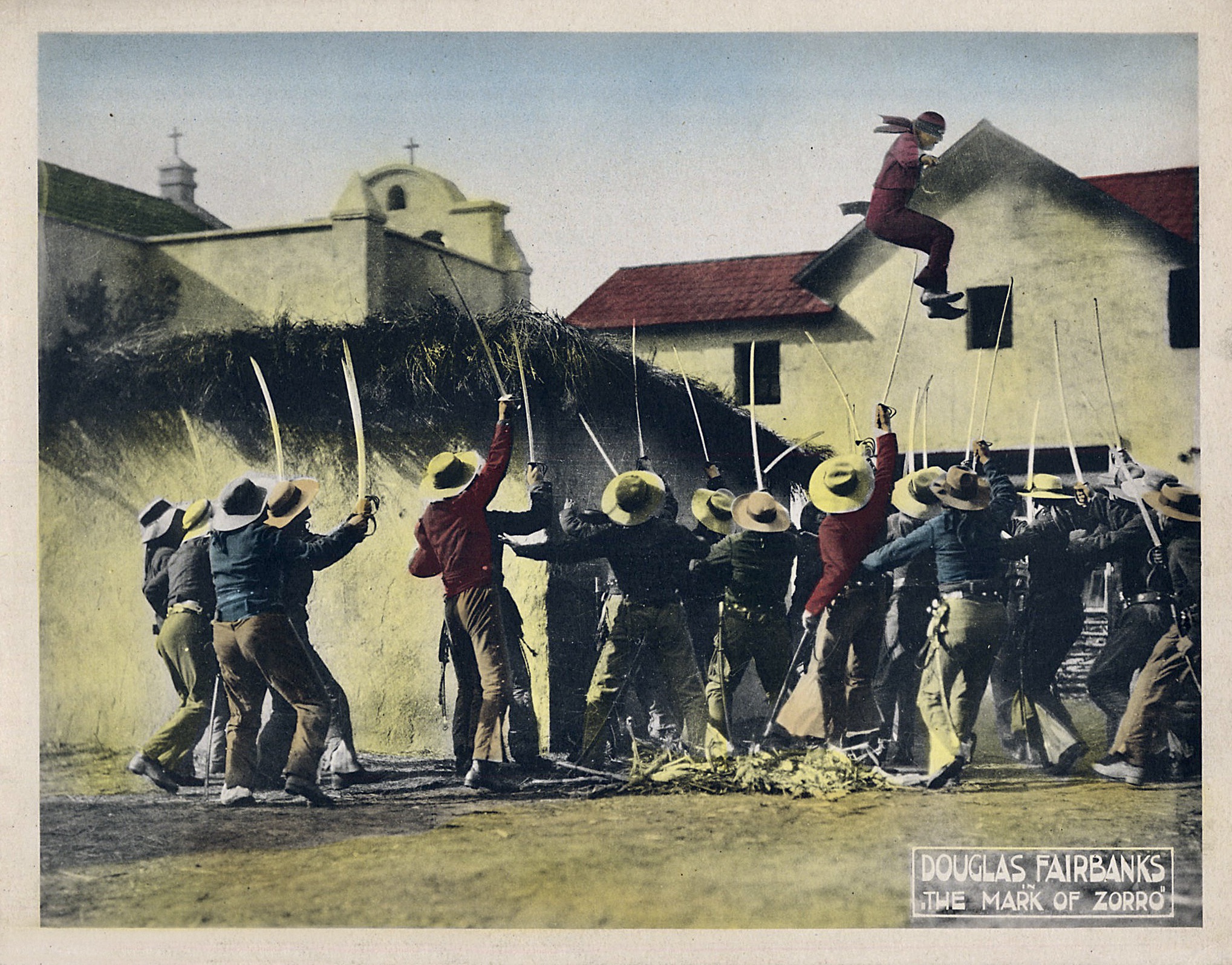
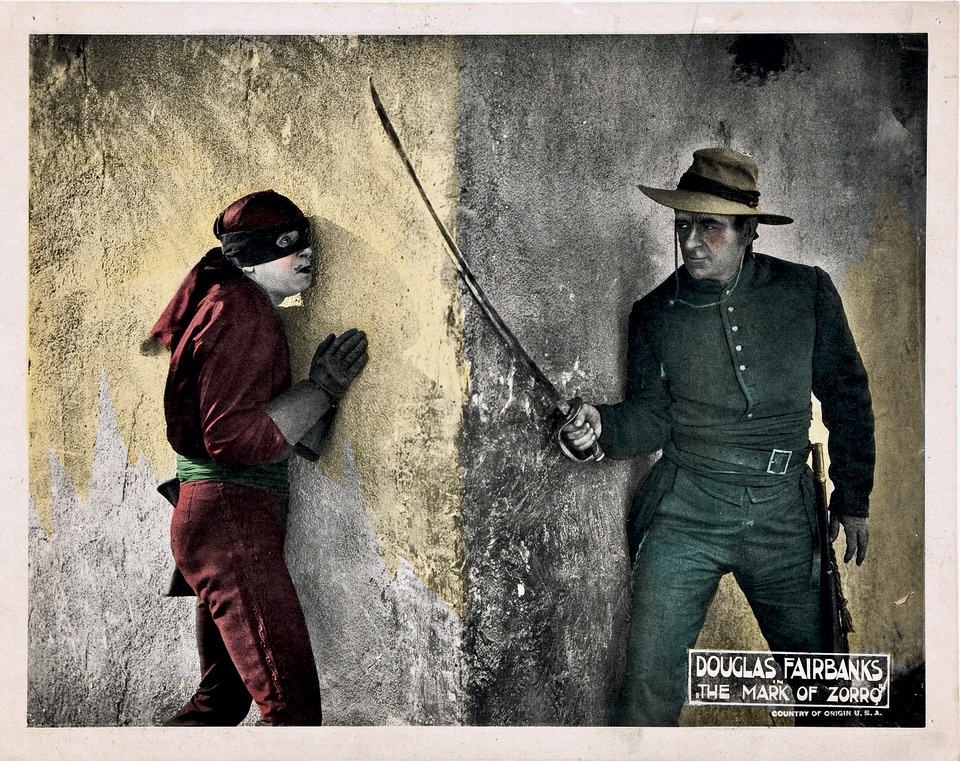
While modestly budgeted in comparison to later swashbucklers, The Mark of Zorro serves up a succession of spectacular swordfights and gravity-defying stunts in lieu of an opulent production. Among the highlights is a scene where Zorro leads the soldiers of arch villain, Captain Juan Ramon, on a wild goose chase through the village and the climactic duel between Zorro and Ramon.
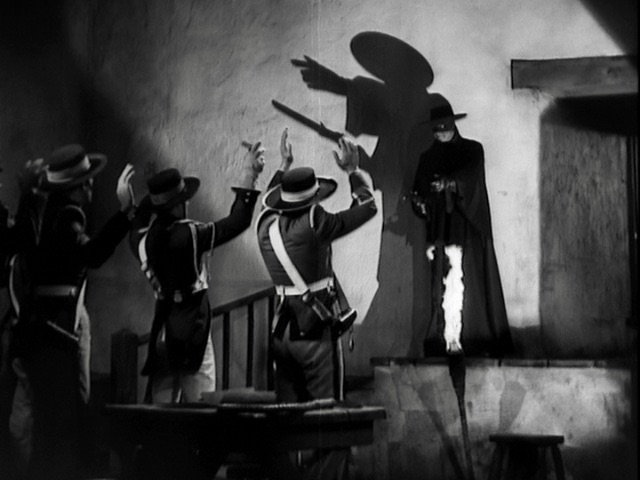
The film would also inspire the creation of a more fantastical superhero in the not too distant future. According to Carl Bennett of SilentEra.com, “In Zorro’s use of a secret identity, his acts of retribution, his family fortune, his trap doors, hidden passages, peep holes and secret entrances to a sub-ground-level lair, it was admitted in later years that the comic book character of Batman was seeded by this film and germinated in the mind of Batman artist and creator, Bob Kane.
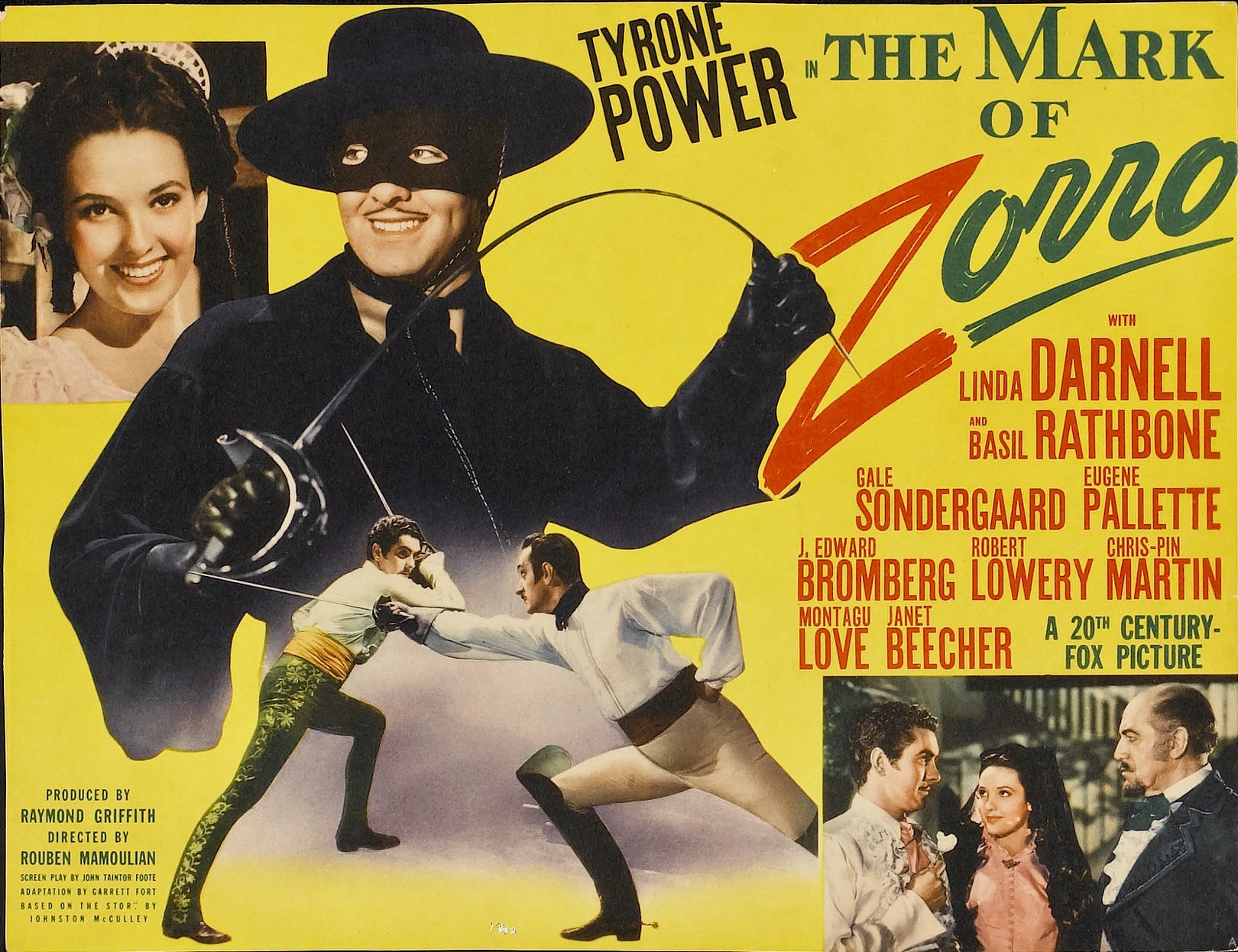
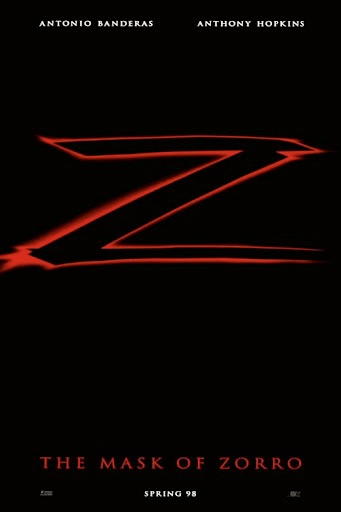
More importantly, Fairbanks’s Zorro became an instant screen legend overnight and would lead to many other film and TV adaptations of McCulley’s masked swashbuckler. The Mark of Zorro was followed by a sequel, Don Q, Son of Zorro (1925) with Fairbanks and Mary Astor, The Bold Caballero (1936) featuring Robert Livingston as Zorro, a series of serials at Republic Pictures, the 1940 remake The Mark of Zorro starring Tyrone Power, the 1957 TV series Zorro produced by Walt Disney and featuring Guy Williams, a 1975 Italian version with Alain Delon, a comedic satire Zorro, the Gay Blade (1981) and 1998’s The Mask of Zorro pairing Antonio Banderas with Catherine Zeta-Jones.
Critics were mixed over Fairbank’s switch to action hero in The Mark of Zorro but the public was obviously ready for a new brand of escapism because the film became a box office smash and allowed Fairbanks the opportunity to create a new gallery of swashbuckling heroes, including D’Artagnan in The Three Musketeers (1921), Robin Hood (1922), The Thief of Bagdad (1924), Don Q Son of Zorro (1925), and The Black Pirate (1926). And director Fred Niblo would also go on to distinguish himself as a costume epic specialist with Blood and Sand (1922) and Ben-Hur (1925).
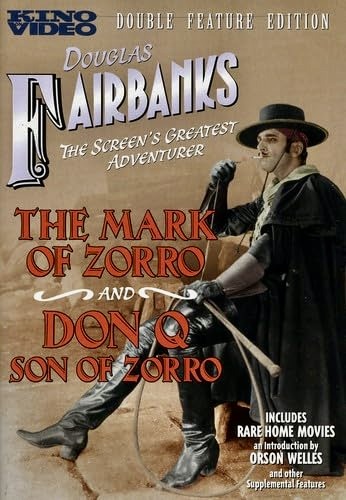
There have been various video releases of The Mark of Zorro over the years including Kino Lorber’s DVD double feature of the film paired with its sequel Don Q, Son of Zorro from June 2002 and Rialto Media’s December 2007 DVD release featuring the original 1920 score performed by Rick Benjamin’s Paragon Orchestra.
*This is a revised and expanded version of an article that originally appeared on the Turner Classic Movies website.
Other links of interest:
https://www.silentera.com/video/markOfZorroHV.html
https://www.albany.edu/writers-inst/webpages4/filmnotes/fnf03n5.html
 Cinema Sojourns